Fetal Malposition
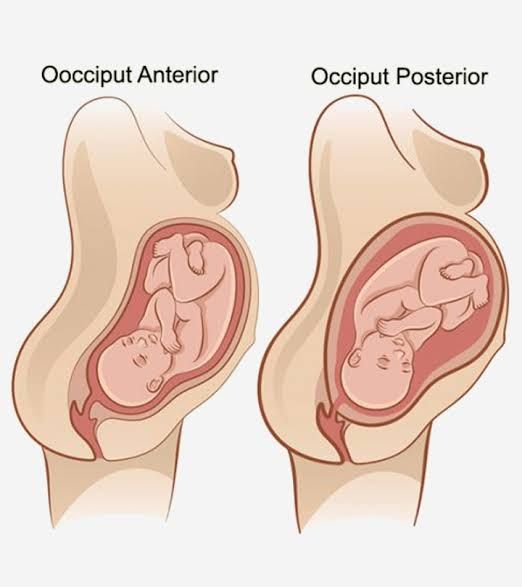
Fetal malposition refers to the orientation of the baby in relation to the mother’s spine when the baby is in a head-down (cephalic) position. In an ideal cephalic presentation, the baby should be facing the mother’s back with its chin tucked to its chest, allowing the back of the head to move towards the pelvis. However, in cases of fetal malposition, this ideal alignment is not achieved. Some common types of fetal malposition include:
- Occiput Posterior (OP) Position: The baby is head-down but faces the mother’s front instead of her spine. This can slow down labor as it makes it harder for the baby to navigate through the birth canal.
- Transverse Position: The baby lies sideways with shoulders or back over the cervix, and either does not engage or is not positioned within the pelvis. This position increases risks such as fetal compromise and uterine rupture if labor begins without correction.
Fetal Malpresentation
Fetal malpresentation describes situations where a part of the baby’s body other than its head leads out of the birth canal first. Unlike malposition, which deals with how a head-down baby is oriented, malpresentation involves different parts of the baby’s body being presented first during delivery. Types of fetal malpresentation include:
- Breech Presentation: The baby’s feet or buttocks are positioned to come out first.
- Transverse Presentation: Similar to transverse malposition but specifically refers to when labor starts with this orientation.
- Brow or Face Presentation: The neck, face, or brow presents first due to partial extension of the baby’s head.
- Compound Presentation: A limb such as a hand or leg presents alongside another part like the bottom or head.
Key Differences:
- Orientation vs. Leading Part:
- Malposition deals with how a head-down baby is oriented relative to the mother’s spine.
- Malpresentation involves which part of the baby’s body leads out of the birth canal.
- Types and Examples:
- Common types of malposition include Occiput Posterior and Transverse positions.
- Common types of malpresentation include Breech, Transverse, Brow/Face, and Compound presentations.
- Risks and Complications:
- Both conditions can complicate labor and increase risks for both mother and child if not properly managed.
- Specific complications vary depending on whether it’s a case of malposition (e.g., prolonged labor) or malpresentation (e.g., need for assisted delivery).
- Detection and Management:
- Both conditions can often be detected via prenatal examinations and ultrasounds.
- Management strategies may differ; for instance, external cephalic version might be attempted for certain malpositions while cesarean sections might be more commonly recommended for unresolved malpresentations.
Overview of management Strategies
Management strategies for fetal malpositions vary based on type and severity but generally include:
- Observation and Monitoring: Continuous fetal monitoring during labor helps assess fetal well-being.
- Maternal Position Changes: Encouraging mothers to change positions can facilitate fetal rotation.
- External Cephalic Version (ECV): A manual procedure performed by trained professionals to turn a breech baby into a head-down position before labor begins.
- Operative Interventions: Depending on circumstances, operative deliveries such as forceps-assisted births or cesarean sections may be necessary for safe delivery.
- Education and Counseling: Providing information about potential outcomes associated with different malpositions helps prepare parents for possible interventions.
In conclusion, understanding different types of fetal malpositions and their management is essential for ensuring safe childbirth practices. Healthcare providers must remain vigilant in assessing fetal positioning throughout pregnancy and labor to mitigate risks associated with these conditions.