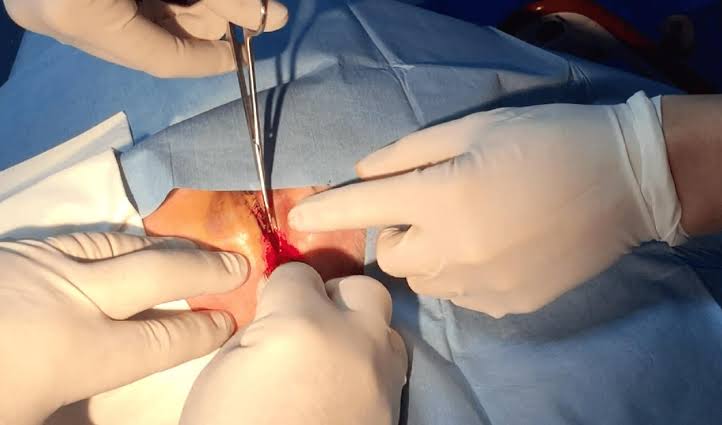
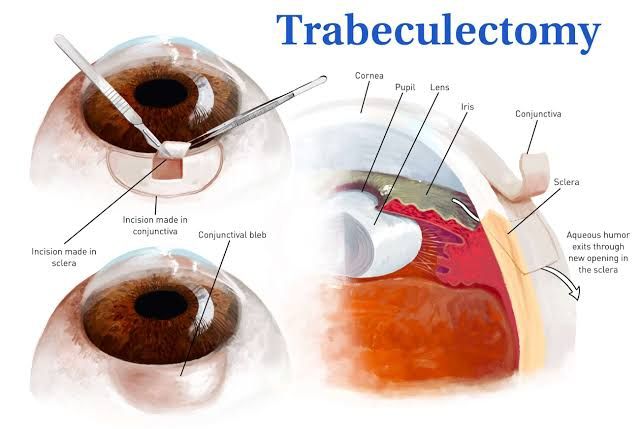
Glaucoma filtration surgery, most commonly executed as a Trabeculectomy, remains the gold standard procedure for lowering refractory intraocular pressure (IOP) when medical or laser therapies fail. The core objective is to create a new, controlled pathway for aqueous humor to drain from the anterior chamber (AC) to the subconjunctival space, forming a filtration bleb. Observation of this intricate procedure requires a detailed understanding of the rationale behind each micro-surgical step.
Pre-operative and Setup Phase (The Foundation)
The success of filtration surgery begins well before the first incision. The observer should note the preparatory steps that define the surgical environment and patient readiness.
A. Patient Positioning and Anesthesia
The patient is positioned supine, with the head slightly elevated to minimize venous pressure.
- Anesthesia: While topical and localized infiltration (peribulbar or retrobulbar block) is standard for adult trabeculectomy, the observer should confirm the type of anesthetic used and the adequacy of akinesia (eye immobilization) and anesthesia. A successful block prevents movement and reduces patient anxiety during the several hours the procedure may require.
- Asepsis: Standard sterile surgical preparation involves cleansing the periocular area with an antiseptic solution (e.g., povidone-iodine). The eye is draped to isolate the operative field, and a wire eyelid speculum is placed to maintain exposure.
B. Defining the Operative Site
The surgeon typically operates in the superonasal or superotemporal quadrant, selecting the area based on the patient’s existing anatomy, prior surgeries, and the quality of the conjunctiva.
- Bridle Suture: A superior rectus bridle suture (often 4-0 silk) may be placed to rotate the globe inferiorly, maximizing exposure of the superior limbus. The tension exerted by this suture is critical for maintaining a stable surgical platform.
Conjunctival and Scleral Flap Dissection (Creating the Chamber)
This phase establishes the physical boundaries for the new drainage pathway—the filtration reservoir.
A. Conjunctival Incision and Dissection
The surgeon must decide between a fornix-based or a limbus-based conjunctival flap.
- Fornix-Based Flap: The incision is made circumferentially near the limbus. This approach offers excellent exposure but necessitates careful, watertight closure at the end.
- Limbus-Based Flap: The incision is made several millimeters posterior to the limbus, allowing the conjunctiva to be pulled forward and attached directly to the limbus. This often results in a more posterior, thicker bleb.
- Observation Point: Note the use of Westcott scissors and blunt instruments (e.g., a cotton-tipped applicator) to dissect the conjunctiva and Tenon’s capsule away from the underlying sclera, ensuring the tissue layer remains intact to form a functional bleb roof. Haemostasis (control of bleeding) is paramount at this stage, achieved via low-power cautery.
B. Application of Anti-Metabolites
This is perhaps the most critical determinant of long-term surgical success, as anti-metabolites (antifibrotic agents) inhibit fibroblast proliferation, preventing scarring and subsequent bleb failure.
- Mitomycin C (MMC): This is the most common agent. The observer should pay close attention to the concentration (usually 0.2 to 0.4 mg/ml) and the duration of application (typically 1 to 5 minutes, depending on risk factors).
- Technique: Sponges soaked in MMC are applied directly to the bare scleral bed and internal aspect of the conjunctival/Tenon’s flap. The observer must ensure the area is meticulously washed with balanced salt solution (BSS) immediately after the required time to neutralize the agent and prevent corneal or limbal toxicity.
C. Creation of the Scleral Flap
A partial-thickness scleral flap is fashioned, usually square or triangular, approximately 3×3 mm to 4×4 mm in size.
- Incision: The surgeon uses a blade (e.g., a diamond knife or a specialized disposable blade) to outline the flap. The depth should be about one-third to one-half the thickness of the sclera.
- Dissection: The flap is dissected anteriorly towards the limbus using a crescent knife or similar instrument, maintaining uniform thickness. The flap should pass into the clear cornea approximately 0.5 to 1.0 mm, slightly anterior to the surgical limbus.
- Observation Point: The quality of the flap dictates the control of flow. A thin flap risks hypotony; a thick flap risks high IOP due to excessive resistance.
Entry into the Anterior Chamber (The Filtration Pathway)
This phase involves creating the actual communication between the anterior chamber and the newly dissected filtration space.
A. Paracentesis
A separate small entry wound (paracentesis) is created in the peripheral clear cornea, usually temporally. This allows the surgeon to inject viscoelastic or BSS later to deepen the chamber or adjust IOP, providing crucial control during subsequent steps.
B. Entry and Trabecular Excision
The main entry into the anterior chamber is performed beneath the elevated scleral flap.
- Initial Entry: A sharp instrument (e.g., a 15-degree blade) is used to carefully pierce the residual sclera beneath the hinge of the flap, entering the AC.
- Punch and Block Excision: Specialized tools, such as the Kelly Descemet’s membrane punch, are used to excise a rectangular block of corneoscleral tissue (the trabeculum) just anterior to the scleral spur. This creates a full-thickness ostium (opening), typically 1.5 to 2.0 mm wide. The successful removal of this tissue block confirms the creation of the primary drainage pore.
- Observation Point: Aqueous humor should immediately begin to flow out of the ostium. The size and shape of the ostium are critical; too small, and flow is restricted; too large, and initial flow is uncontrolled.
C. Peripheral Iridectomy (PI)
To prevent the iris from prolapsing into the newly created ostium and blocking the drainage pathway, a basal peripheral iridectomy is mandatory.
- Procedure: The surgeon gently grasps the iris root through the osteum using fine micro-forceps and excises a small notch using Vannas or de Wecker scissors.
- Rationale: Without a PI, the pupil may block the ostium upon dilation, leading immediately to filtering failure or pupillary block glaucoma.
Scleral Flap Closure and Flow Regulation (The Control Mechanism)
The procedure’s success is determined not by the size of the hole, but by the ability to regulate flow through the scleral flap, preventing both excessive drainage (hypotony) and insufficient drainage (bleb failure).
A. Scleral Flap Suturing
The partial-thickness scleral flap must be reapproximated to the surrounding sclera.
- Placement: Typically, two to four permanent or absorbable sutures (e.g., 10-0 nylon) are placed at the corners and margins of the flap.
- Tension Control: This is the most refined and variable step. The surgeon slowly injects BSS through the paracentesis to restore physiological IOP (around 15-20 mmHg) while observing the flow beneath the flap.
- Observation Point: The tension of the sutures is adjusted iteratively until a slow, steady percolation of fluid is visible leaking out the sides of the flap. If flow is too rapid, additional sutures are placed or existing ones are tightened. If flow is too restricted, sutures may be loosened.
- Adjustable/Releasable Sutures: In many cases, one or more sutures are placed in a releasable fashion. These can be lysed (cut with a laser) or pulled out post-operatively if the IOP remains too high, allowing for controlled, delayed adjustment of flow.
B. Conjunctival and Tenon’s Closure
A watertight closure of the overlying tissues is mandatory to force the aqueous humor to percolate through the intended filtration pathway (the scleral flap) and fill the subconjunctival bleb space.
- Limbus-Based Flap: The posterior incision is closed with running or interrupted sutures (e.g., 8-0 or 9-0 Vicryl).
- Fornix-Based Flap: The anterior edge must be meticulously sutured to the limbus. A continuous running locking suture is often employed, minimizing the risk of a leak, which can lead to disastrous hypotony or bleb infection.
- Observation Point: The surgeon will perform a fluid challenge, injecting BSS through the paracentesis, and observing the conjunctival surface for any ‘weeping’ or leakage (a positive Seidel test). Any leak must be repaired immediately.
Post-Closure Assessment and Conclusion
The final phase involves securing medications and documenting the initial surgical outcome.
A. Subconjunctival Injections
Once closures are complete, the surgeon often injects a combination of antibiotics (to prevent infection) and steroids (to modulate wound healing and inflammation) beneath the conjunctiva, away from the operative site.
B. Bleb Configuration and IOP Confirmation
The observer should note the initial appearance of the filtration bleb:
- Appearance: A successful initial bleb appears diffuse, relatively high, and dome-shaped—not localized or flat.
- IOP Measurement: Immediate, pre-dressing IOP is measured, often digitally or via a portable tonometer. While the IOP is typically low (or even borderline hypotensive) immediately post-surgery, this confirms patent flow.
C. Dressing Application
Topical medications are applied (antibiotic/steroid drops and ointment), and a protective eye shield is placed.
Critical Observational Summary
The observation of glaucoma filtration surgery is a lesson in hydraulic engineering and delicate scarring management. The key takeaways for the observer are:
- Anti-metabolite Management: The precise timing and neutralization of MMC directly correlate with long-term bleb survival.
- Flow Control: The adjustable nature of the scleral flap sutures represents the surgeon’s ability to titrate flow—a balance between preventing catastrophic hypotony and ensuring sufficient drainage.
- Watertight Closure: The integrity of the conjunctival closure is essential to direct flow toward the intended reservoir and protect against infection.
Trabeculectomy is a dynamic procedure; the immediate result is only the beginning. The observer must recognize that the ultimate success of the operation relies heavily on meticulous post-operative management, which aims to guide wound healing toward diffuse, avascular bleb formation.
References
- Cairns, J. E. (1968). Trabeculectomy: preliminary report of a new method. American Journal of Ophthalmology, 66(4), 673-679.
- Migdal, C., & Hitchings, R. (1988). Control of intraocular pressure after trabeculectomy: a randomized controlled study. British Journal of Ophthalmology, 72(10), 735-737.
- Tham, Y. C., Li, X., Wong, T. Y., Quigley, H. A., Aung, T., & Cheng, C. Y. (2014). Global prevalence of glaucoma and projections of glaucoma burden through 2040: a systematic review and meta-analysis. Ophthalmology, 121(11), 2081-2090.
- Wormald, R. P., Kirwan, J. F., & Lockwood, A. J. (2009). The use of anti-metabolites in trabeculectomy. The Cochrane Database of Systematic Reviews, (1). DOI: 10.1002/14651858.CD000490.pub3.
- Zimmerman, T. J., & Worthen, D. M. (1981). Trabeculectomy with 5-fluorouracil. American Journal of Ophthalmology, 91(1), 16-22.