Biochemical Structure of Bone Tissue
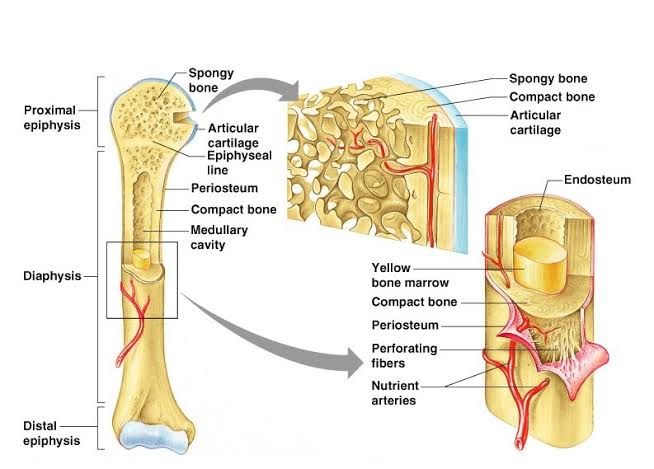
Bone tissue is a complex and dynamic structure that consists primarily of an organic matrix and inorganic mineral components. The organic matrix is predominantly composed of collagen fibers, while the inorganic component mainly consists of hydroxyapatite crystals.
Collagen Matrix
The collagen matrix in bone tissue is primarily made up of type I collagen, which constitutes over 90% of the organic material. This collagen is organized into fibrils that provide tensile strength and flexibility to the bone. The arrangement of these collagen fibers is crucial; they are deposited in lamellae, with their orientation alternating between parallel and orthogonal to the main stress axis of the bone. This structural organization allows bones to withstand various mechanical forces effectively.
The collagen molecules themselves are triple helices formed by three polypeptide chains, which provide stability and strength. These chains are rich in glycine, proline, and hydroxyproline, which contribute to the unique properties of collagen. Additionally, cross-linking between collagen fibrils enhances the overall mechanical properties of the bone matrix.
Hydroxyapatite Cement
Hydroxyapatite (HA) is the primary inorganic component of bone tissue and provides rigidity and compressive strength. The chemical formula for hydroxyapatite is Ca10(PO4)6(OH)2, indicating that it contains calcium (Ca), phosphate (PO4), and hydroxide (OH) ions. Hydroxyapatite crystals form within the collagen matrix through a process known as biomineralization.
During this process, calcium and phosphate ions precipitate from body fluids into the spaces within the collagen fibrils, leading to the formation of crystalline structures. Initially, this mineralization occurs as amorphous calcium phosphate before transforming into crystalline hydroxyapatite over time. This maturation process involves at least two-phase changes where intermediates such as tropocollagen fibrils play a role in forming a composite structure that combines both organic and inorganic materials.
The integration of hydroxyapatite with the collagen matrix creates a composite material that exhibits remarkable mechanical properties—combining flexibility from collagen with hardness from hydroxyapatite—making bone both strong and resilient under various loading conditions.
In summary, the biochemical structure of bone tissue comprises an organic matrix predominantly made up of type I collagen arranged in a specific orientation for optimal strength, combined with an inorganic mineral phase primarily consisting of hydroxyapatite crystals that provide rigidity and compressive strength.
Bone Matrix Proteins and Their Functions
Bone matrix proteins are critical components of the bone tissue that contribute to its structure, strength, and functionality. These proteins can be broadly categorized into two groups: collagenous and non-collagenous proteins. Below is a detailed explanation of some key bone matrix proteins and their respective functions.
1. Collagen
Collagen is the most abundant protein in the bone matrix, primarily type I collagen, which constitutes about 90% of the organic matrix. It provides tensile strength and structural integrity to bones. The collagen fibers form a scaffold that supports mineralization, allowing for the deposition of hydroxyapatite crystals (a mineral form of calcium phosphate) that give bones their hardness.
Function:
- Provides mechanical strength and flexibility.
- Serves as a framework for mineral deposition.
- Facilitates cell attachment and signaling.
2. Osteocalcin
Osteocalcin is a non-collagenous protein synthesized by osteoblasts. It is a vitamin K-dependent protein that plays a significant role in bone mineralization and calcium homeostasis.
Function:
- Binds calcium ions, contributing to the regulation of bone mineral density.
- Involved in the process of bone remodeling by influencing osteoclast activity.
- May have roles in energy metabolism and insulin sensitivity.
3. Osteopontin
Osteopontin is another non-collagenous protein found in the bone matrix that is involved in cell adhesion processes. It is produced by osteoblasts and osteocytes.
Function:
- Mediates cell-matrix interactions, facilitating osteoclast attachment to the bone surface.
- Plays a role in regulating mineralization and inhibiting crystal growth.
- Involved in immune responses within the bone microenvironment.
4. Bone Sialoprotein (BSP)
Bone sialoprotein is an acidic glycoprotein that promotes cell adhesion and plays a crucial role during the early stages of bone formation.
Function:
- Enhances osteoblast adhesion to the extracellular matrix.
- Stimulates mineralization by promoting hydroxyapatite formation.
- Involved in regulating osteoclast function during bone remodeling.
5. Fibronectin
Fibronectin is a glycoprotein that exists both as soluble plasma fibronectin and as insoluble fibronectin within tissues, including bone. It plays an essential role in cell adhesion, migration, and differentiation.
Function:
- Facilitates cell attachment to collagen fibers within the bone matrix.
- Promotes wound healing by aiding in cellular migration during tissue repair.
- Influences osteoblast proliferation and differentiation.
6. Dentin Matrix Protein 1 (DMP1)
Although primarily associated with dentin formation, DMP1 also has important roles in bone biology due to its presence in the bone matrix.
Function:
- Regulates mineralization processes within bones.
- Influences osteocyte function through signaling pathways related to phosphate metabolism.
In summary, these proteins collectively contribute to various aspects of bone health, including structural integrity, mineralization processes, cellular communication, and regulation of metabolic activities related to calcium homeostasis.
Composition of Calcified Tissues
Calcified tissues, primarily found in bones and teeth, are characterized by their mineral content, which is predominantly composed of hydroxyapatite. Hydroxyapatite is a crystalline structure that consists of calcium and phosphate ions, specifically represented by the chemical formula (Ca10(PO4)6(OH)2). This mineral provides the rigidity and strength necessary for bone and tooth structure. In addition to hydroxyapatite, calcified tissues contain organic components such as collagen fibers, which provide flexibility and tensile strength. The organic matrix also includes non-collagenous proteins like osteopontin, osteonectin, and bone sialoprotein that play crucial roles in regulating mineralization processes.
Calcification in Bones and Teeth
Calcification is a highly regulated physiological process that occurs during the formation of bones and teeth. In bones, calcification begins with the secretion of an organic matrix by osteoblasts, which are specialized cells responsible for bone formation. This matrix is rich in collagen and other proteins that facilitate the nucleation of hydroxyapatite crystals. As the matrix matures, minerals are deposited within it, leading to the hardening of the tissue.
In teeth, a similar process occurs where odontoblasts synthesize an organic matrix that becomes mineralized over time. The enamel of teeth is primarily composed of hydroxyapatite crystals arranged in a highly organized manner to provide durability against wear.
The regulation of calcification involves various factors including hormones (such as parathyroid hormone and calcitriol), mechanical stress on bones, and local cellular signaling pathways that respond to changes in calcium (Ca2+) and phosphate (PO43−) concentrations.
Formation of Hydroxyapatite
The formation of hydroxyapatite occurs through a process known as biomineralization. Initially, there must be a nidus or site for crystallization to occur. This requires an adequate supply of local Ca2+ and PO43− ions. Under physiological conditions, these ions exist at metastable concentrations in body fluids but do not precipitate due to the presence of inhibitors that prevent unwanted calcification in soft tissues.
Once conditions favoring precipitation arise—such as localized increases in ion concentration or changes in pH—hydroxyapatite crystals begin to form around existing collagen fibers within the organic matrix. The process is tightly regulated by various proteins that promote or inhibit crystal growth. For instance, osteopontin can inhibit excessive crystal growth while facilitating proper mineralization when needed.
In summary, calcified tissues consist mainly of hydroxyapatite embedded within an organic matrix rich in collagen and regulatory proteins. The processes governing calcification are complex and involve precise control mechanisms to ensure proper bone and tooth formation.
Role of Alkaline Phosphatase, Calcium, Phosphate, and Vitamin D in Bone Formation and Remodeling
1. Introduction to Bone Formation and Remodeling
Bone formation and remodeling are critical processes that maintain skeletal integrity throughout life. These processes involve a dynamic balance between bone resorption (the breakdown of bone tissue) and bone formation (the creation of new bone). Key players in these processes include alkaline phosphatase, calcium, phosphate, and vitamin D, specifically its active form 1,25-dihydroxyvitamin D.
2. Role of Alkaline Phosphatase
Alkaline phosphatase (ALP) is an enzyme that plays a crucial role in bone mineralization. It is produced by osteoblasts, the cells responsible for bone formation. ALP facilitates the hydrolysis of phosphate esters, which increases the availability of inorganic phosphate ions in the local environment. This increase is essential for the mineralization process because:
- Mineralization Process: ALP helps convert organic phosphate into inorganic phosphate, which combines with calcium ions to form hydroxyapatite crystals (Ca10(PO4)6(OH)2), the primary mineral component of bone.
- Marker for Bone Activity: Elevated levels of ALP in serum can indicate increased osteoblastic activity and are often used as a biomarker for conditions involving increased bone turnover.
3. Importance of Calcium and Phosphate
Calcium and phosphate are vital minerals required for healthy bone structure:
- Calcium: Approximately 99% of the body’s calcium is stored in bones. It provides strength to bones and is essential for various physiological functions such as muscle contraction and nerve transmission.
- Phosphate: Like calcium, phosphate is also predominantly found in bones. It contributes to the structural framework of bones through its incorporation into hydroxyapatite crystals.
The interplay between calcium and phosphate is crucial; an adequate balance must be maintained to ensure proper mineralization. Insufficient levels of either can lead to weakened bones or conditions such as osteomalacia or rickets.
4. Role of Vitamin D (1,25-Dihydroxyvitamin D)
Vitamin D is essential for maintaining calcium and phosphate homeostasis:
- Synthesis: The body synthesizes vitamin D from sunlight exposure or dietary sources. The liver converts it into 25-hydroxyvitamin D (calcidiol), which is then converted by the kidneys into its active form, 1,25-dihydroxyvitamin D (calcitriol).
- Calcium Absorption: Calcitriol enhances intestinal absorption of calcium and phosphate from food. It promotes the expression of proteins involved in calcium transport across intestinal cells.
- Bone Health Regulation: Calcitriol also influences osteoblasts and osteoclasts (cells responsible for bone resorption). It stimulates osteoblast differentiation while inhibiting excessive osteoclast activity, thus promoting a balanced remodeling process.
5. Interrelationship Among These Factors
The relationship among alkaline phosphatase, calcium, phosphate, and vitamin D is intricate:
- Bone Mineralization Process: Adequate levels of vitamin D ensure sufficient absorption of calcium and phosphate from the diet; this availability supports ALP activity necessary for effective mineralization.
- Feedback Mechanisms: When blood calcium levels drop, parathyroid hormone (PTH) is released to stimulate both renal conversion of vitamin D to its active form and mobilization of calcium from bones through increased osteoclastic activity.
- Homeostasis Maintenance: The body maintains tight regulation over these components through hormonal feedback loops involving PTH and calcitonin alongside vitamin D’s actions.
In summary, alkaline phosphatase facilitates mineralization by increasing available inorganic phosphate; calcium provides structural integrity; phosphate contributes to mineral composition; while 1,25-dihydroxyvitamin D ensures proper absorption and utilization of these minerals within the body’s skeletal system.
Calcium and Phosphate Homeostasis
Calcium and phosphate are critical minerals in the human body, playing essential roles in various physiological processes, including bone formation, energy metabolism, and cellular signaling. The maintenance of calcium and phosphate homeostasis is vital for overall health, as imbalances can lead to significant health issues such as osteoporosis, cardiovascular diseases, and kidney disorders.
1. Regulation of Calcium and Phosphate Levels
The body regulates calcium and phosphate levels through a complex interplay of hormones that control their absorption in the intestines, reabsorption in the kidneys, and mobilization from bones. The primary hormones involved include:
- Parathyroid Hormone (PTH): Secreted by the parathyroid glands when blood calcium levels drop. PTH increases calcium reabsorption in the kidneys, stimulates the conversion of vitamin D to its active form (calcitriol), which enhances intestinal absorption of calcium and phosphate, and promotes the release of calcium from bones.
- Vitamin D: This fat-soluble vitamin is crucial for maintaining calcium levels. It facilitates intestinal absorption of both calcium and phosphate. Active vitamin D also works synergistically with PTH to mobilize calcium from bone.
- Fibroblast Growth Factor 23 (FGF23): A hormone produced by osteocytes that primarily regulates phosphate homeostasis. FGF23 decreases renal tubular reabsorption of phosphate and inhibits vitamin D activation, leading to reduced intestinal absorption of phosphate.
- Klotho: A protein that acts as a cofactor for FGF23. Klotho enhances the action of FGF23 on the kidneys, promoting urinary excretion of phosphate.
2. Role of Kidneys in Homeostasis
The kidneys play a pivotal role in regulating both calcium and phosphate levels through filtration and reabsorption processes:
- In healthy individuals, approximately 99% of filtered calcium is reabsorbed in the renal tubules.
- Phosphate reabsorption occurs mainly in the proximal tubule; however, this process is modulated by PTH and FGF23.
When there is an excess or deficiency of these minerals in circulation, hormonal signals adjust renal handling accordingly to maintain balance.
3. Bone’s Contribution to Mineral Homeostasis
Bone serves as a reservoir for both calcium and phosphate. Osteoblasts (bone-forming cells) are responsible for depositing these minerals into bone tissue while osteoclasts (bone-resorbing cells) release them back into circulation when needed. This dynamic process ensures that mineral levels remain stable despite fluctuations due to dietary intake or hormonal changes.
4. Implications for Health
Disruptions in calcium or phosphate homeostasis can lead to various health conditions:
- Hypocalcemia: Low blood calcium can result from inadequate dietary intake, vitamin D deficiency, or excessive secretion of PTH.
- Hypercalcemia: Elevated blood calcium levels may occur due to hyperparathyroidism or malignancies.
- Hypophosphatemia: Low serum phosphate can arise from increased renal excretion due to elevated FGF23 or inadequate dietary intake.
- Hyperphosphatemia: High serum phosphate often occurs in chronic kidney disease where impaired excretion leads to elevated levels.
Maintaining proper balance between these two minerals is crucial not only for skeletal health but also for cardiovascular function and metabolic processes throughout the body.
In summary, calcium and phosphate homeostasis involves a complex regulatory system mediated by hormones like PTH, vitamin D, FGF23, and Klotho, with significant contributions from kidney function and bone metabolism.