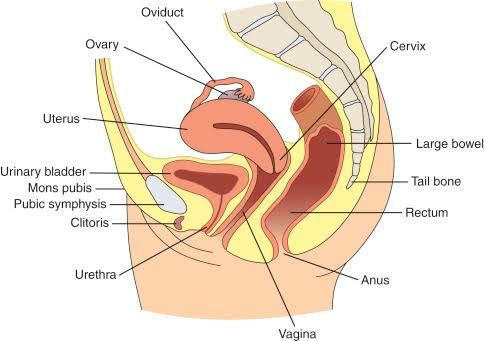
Parts of the Vulva and Their Anatomical Characteristics
The vulva is a complex structure that encompasses various parts, each with distinct anatomical characteristics and functions. Understanding these components is essential for recognizing their roles in reproductive and sexual health.
1. Mons Pubis
- The mons pubis is a rounded, fatty tissue pad located anterior to the pubic symphysis. It serves as a protective cushion during sexual activity and absorbs impact during penetration. From puberty onward, pubic hair grows on this area, which can vary in density and texture among individuals.
2. Labia Majora
- The labia majora are two prominent folds of skin that extend from the mons pubis to the posterior commissure (the area overlying the perineal body). These external skin folds are covered with hair and contain fatty tissue, providing protection to the inner structures of the vulva. They also play a role in sexual arousal by becoming engorged with blood.
3. Labia Minora
- Situated within the labia majora, the labia minora are two hairless folds of skin that start above the clitoris and extend downward to meet at the vaginal opening. They fuse anteriorly to form the clitoral hood and merge posteriorly at a structure known as the fourchette. The labia minora are highly sensitive due to their rich nerve supply and can vary significantly in size, shape, and color among individuals.
4. Clitoris
- The clitoris is a small but highly sensitive organ located beneath the clitoral hood formed by the labia minora. It consists primarily of erectile tissue that becomes engorged with blood during sexual arousal. The glans (the visible part) contains over 10,000 nerve endings, making it one of the most sensitive areas of human anatomy. The internal structure extends into the body, connecting to deeper erectile tissues.
5. Urethral Opening
- Just below the clitoris lies the urethral opening, which is where urine exits from the body through the urethra. This opening is surrounded by spongy tissue known as the urethral sponge, which plays a role in sexual arousal and lubrication.
6. Vaginal Opening (Introitus)
- The vaginal opening is located just below the urethral opening and serves as an entrance to the vagina. It is bordered by structures such as Bartholin’s glands that secrete lubricating mucus during sexual arousal.
7. Bartholin’s Glands
- These glands are located on either side of the vaginal opening and secrete mucus that provides lubrication during sexual intercourse. They play an important role in reducing friction and enhancing comfort during penetration.
8. Vestibule
- The vestibule refers to the area enclosed by the labia minora, containing both the vaginal opening and urethral opening along with other structures like Bartholin’s glands.
Each part of the vulva has unique anatomical features that contribute not only to reproductive functions but also to sexual pleasure and overall health.
Structures Removed by Female Circumcision and Health Hazards of This Practice
Female circumcision, more accurately referred to as female genital mutilation (FGM), involves the partial or total removal of various parts of the female external genitalia. The World Health Organization (WHO) classifies FGM into four major types, each involving different structures:
- Type 1 (Clitoridectomy): This type involves the partial or total removal of the clitoral glans, which is the external and visible part of the clitoris, and/or the prepuce or clitoral hood that surrounds it.
- Type 2 (Excision): This type includes the partial or total removal of both the clitoral glans and the labia minora (the inner folds of skin surrounding the vaginal opening). It may also involve the removal of part or all of the labia majora (the outer folds).
- Type 3 (Infibulation): This is a more severe form where there is narrowing of the vaginal opening through cutting and repositioning of the labia minora or majora, sometimes with stitching. This can create a covering seal over the vaginal opening.
- Type 4: This category encompasses all other harmful procedures to female genitalia for non-medical reasons, such as pricking, piercing, incising, scraping, and cauterizing.
Health Hazards Associated with FGM
FGM poses significant health risks that can be immediate or long-term. The practice has no health benefits and is associated with numerous complications:
Immediate Health Risks:
- Severe Pain: The procedure causes extreme pain due to cutting sensitive nerve endings.
- Excessive Bleeding (Haemorrhage): Cutting blood vessels can lead to severe bleeding.
- Shock: Pain and infection may result in shock.
- Genital Tissue Swelling: Inflammatory responses can cause swelling.
- Infections: Use of unsterilized instruments increases infection risk.
- Urination Problems: Injuries may lead to painful urination or urinary retention.
- Impaired Wound Healing: Poor healing can result in further complications.
- Death: Severe cases may lead to death from infections or excessive bleeding.
Long-Term Health Risks:
- Chronic Pain: Damage to tissue can result in ongoing pain due to scarring.
- Infections:
- Chronic genital infections leading to pain and discharge.
- Increased risk of urinary tract infections which can escalate to kidney damage if untreated.
- Vaginal Problems: Issues such as discharge, itching, and painful intercourse are common.
- Menstrual Problems: Women may experience painful menstruation due to scarring.
- Childbirth Complications: Increased likelihood of difficult deliveries and newborn deaths due to anatomical changes from FGM.
- Psychological Issues: Many women suffer from depression, anxiety, PTSD, and low self-esteem related to their experiences with FGM.
Overall, FGM is recognized internationally as a violation of human rights and poses serious health risks that affect women’s physical integrity and well-being throughout their lives.
Structure of the Vagina
The vagina is a muscular and elastic tubular structure that extends from the external genitalia to the cervix of the uterus. It is approximately 7.5 to 10 cm in length, although this can vary among individuals. The vaginal wall consists of three layers: an outer adventitia, a middle muscular layer, and an inner mucosal layer.
- Adventitia: This outermost layer is composed of connective tissue that provides structural support and elasticity.
- Muscular Layer: The middle layer contains smooth muscle fibers that allow for contraction and expansion during various physiological processes, such as sexual intercourse and childbirth.
- Mucosal Layer: The innermost layer is lined with stratified squamous epithelium, which provides protection and lubrication through secretions.
The vagina has a pH that typically ranges from 3.8 to 4.5, which helps maintain a healthy balance of flora and prevents infections.
Axis of the Vagina
The axis of the vagina is not straight but rather forms an angle with the horizontal plane due to its anatomical positioning within the pelvis. This angle varies depending on factors such as age, hormonal status, and whether a woman has given birth. Generally, the vagina runs posteriorly and superiorly from the vulva towards the cervix at about a 45-degree angle relative to the horizontal plane.
Relations of the Vagina
The vagina has several important anatomical relationships:
- Anteriorly: It is related to the urethra and bladder; damage or dysfunction in these areas can lead to urinary incontinence.
- Posteriorly: The rectum lies adjacent to the posterior vaginal wall, separated by connective tissue known as the rectovaginal septum.
- Laterally: The vagina is flanked by pelvic sidewalls which contain various structures including blood vessels and nerves.
- Superiorly: The cervix protrudes into the upper end of the vagina, marking its connection with the uterus.
These relations are crucial for understanding conditions such as pelvic organ prolapse or urinary incontinence.
Supports of the Vagina
The support structures for the vagina are complex and include:
- Pelvic Bones: The bony pelvis provides foundational support through its fused hip bones (pubis, ilium, ischium) connected to the sacrum.
- Muscles:
- Pelvic Diaphragm: Composed mainly of levator ani muscles (including pubococcygeus) which provide dynamic support.
- Urogenital Diaphragm (Perineal Membrane): Located below the pelvic diaphragm; it supports urogenital structures.
- Fascia:
- Endopelvic Fascia: This connective tissue surrounds pelvic organs and provides additional support by attaching them to surrounding structures.
- Cardinal Ligament: Supports the apex of the vagina; it contains vascular tissues that contribute strength.
- Perineal Body: A fibromuscular structure located between the anus and vagina that plays a key role in maintaining pelvic floor integrity.
These supports work together to maintain vaginal position within the pelvic cavity and ensure normal function during activities like urination, defecation, sexual intercourse, and childbirth.
In summary, understanding these aspects—structure, axis, relations, and supports—is essential for diagnosing and treating conditions related to vaginal health.
Morphological Description of the Uterus
The uterus is a hollow, muscular organ located in the female pelvis. It has several distinct parts:
- Fundus: The uppermost dome-shaped portion of the uterus, situated above the openings of the fallopian tubes.
- Body (Corpus): The main part of the uterus, which expands during pregnancy to accommodate a growing fetus.
- Cervix: The lower cylindrical part that connects the uterus to the vagina. It has an internal os (opening into the uterus) and an external os (opening into the vagina).
Uterine Ligaments
The uterus is supported by several ligaments:
- Round Ligaments: These extend from the fundus through the inguinal canal to attach to the labia majora, helping maintain uterine position.
- Broad Ligaments: A peritoneal fold that extends from each side of the uterus to the lateral pelvic walls, providing support and containing blood vessels and nerves.
- Uterosacral Ligaments: These connect the cervix to the sacrum, providing posterior support.
- Cardinal Ligaments (Transverse Cervical Ligaments): These provide lateral support to the cervix.
Position of the Uterus
The normal position of the uterus is anteverted and anteflexed, meaning it tilts forward over the bladder and bends forward at its junction with the cervix. However, variations can occur; for instance, some women may have a retroverted uterus, where it tilts backward.
Blood Supply
The blood supply to the uterus primarily comes from:
- Uterine Arteries: Branches of the internal iliac arteries that supply blood directly to the uterus.
- Ovarian Arteries: Also contribute blood supply via anastomoses with uterine arteries.
- Vaginal Arteries: Provide additional vascularization particularly to lower portions.
These arteries form a rich network within uterine tissue, ensuring adequate perfusion.
Lymphatics
Lymphatic drainage from the uterus occurs through several pathways:
- Superficial Lymphatic Vessels: Drain lymph from superficial layers towards inguinal nodes.
- Deep Lymphatic Vessels: Drain deeper tissues towards pelvic lymph nodes including external iliac nodes and internal iliac nodes.
This drainage system plays a crucial role in immune response and fluid balance.
Nerve Supply
The nerve supply to the uterus is derived from both sympathetic and parasympathetic systems:
- Sympathetic Nerves: Originate from T10-L2 spinal segments via hypogastric plexus; they are involved in vasoconstriction and pain sensation during menstruation or labor.
- Parasympathetic Nerves: Arise from S2-S4 spinal segments via pelvic splanchnic nerves; they facilitate vasodilation and promote uterine contractions during labor.
This dual innervation allows for complex regulation of uterine function.
Lining Epithelium
The lining epithelium of the uterus consists primarily of:
- Endometrium: The inner mucosal layer that undergoes cyclical changes during menstrual cycles; it has two layers:
- Stratum Functionalis: This functional layer sheds during menstruation.
- Stratum Basalis: This basal layer remains intact and regenerates new endometrial tissue after menstruation.
The endometrium is crucial for implantation of embryos and supports early pregnancy.
In summary, understanding these anatomical features provides insight into reproductive health and conditions affecting women’s health.
Morphological Description of the Fallopian Tube
The fallopian tubes, also known as uterine tubes or oviducts, are a pair of slender tubes that connect the ovaries to the uterus. Each tube is approximately 10-12 cm long and is divided into several distinct regions: the infundibulum, ampulla, isthmus, and interstitial part.
1. Components of the Fallopian Tube
- Infundibulum: This is the funnel-shaped distal end of the fallopian tube that opens into the peritoneal cavity. It has finger-like projections called fimbriae that help capture the ovum released from the ovary during ovulation.
- Ampulla: The ampulla is the widest section of the fallopian tube and is typically where fertilization occurs. It has a larger lumen compared to other sections and provides an optimal environment for sperm and egg interaction.
- Isthmus: This segment connects the ampulla to the uterus. It is narrower than the ampulla and has a thicker muscular wall.
- Interstitial Part: This portion passes through the uterine wall and opens into the uterine cavity. It is very short but crucial for connecting the fallopian tube to the uterus.
2. Blood Supply
The blood supply to the fallopian tubes primarily comes from branches of two main arteries:
- Ovarian Artery: This artery arises from the abdominal aorta and supplies blood to both ovaries and fallopian tubes.
- Uterine Artery: A branch of the internal iliac artery, it also provides significant blood flow to the fallopian tubes through its tubal branches.
These arteries form anastomoses along with smaller vessels that ensure adequate perfusion throughout all segments of the fallopian tube.
3. Lymphatics
Lymphatic drainage from the fallopian tubes follows a similar pattern to their blood supply:
- Lymphatic vessels drain into regional lymph nodes, primarily those associated with ovarian drainage (para-aortic lymph nodes) and pelvic lymph nodes (internal iliac lymph nodes).
This drainage system plays an essential role in immune response and fluid balance within this region.
4. Nerve Supply
The nerve supply to the fallopian tubes comes from both sympathetic and parasympathetic fibers:
- Sympathetic Innervation: Primarily derived from T10-T12 spinal segments via lumbar splanchnic nerves, these fibers contribute to vasoconstriction and motility regulation within tubular smooth muscle.
- Parasympathetic Innervation: Comes from sacral segments (S2-S4) via pelvic splanchnic nerves, which facilitate vasodilation and enhance peristaltic movements necessary for transporting ova or embryos toward the uterus.
5. Lining Epithelium
The lining epithelium of the fallopian tube consists predominantly of ciliated columnar epithelial cells interspersed with secretory cells:
- Ciliated Cells: These cells play a critical role in moving both sperm towards eggs in fertilization as well as facilitating transport of fertilized eggs towards the uterus.
- Secretory Cells (Peg Cells): These non-ciliated cells secrete various substances that provide nourishment to sperm and oocytes while also creating an optimal environment for fertilization.
The combination of these cell types ensures effective transport mechanisms within this reproductive structure while maintaining a suitable microenvironment for gametes.
In summary, understanding these aspects—morphology, blood supply, lymphatics, nerve supply, and epithelial lining—provides insight into how vital functions such as fertilization occur within this anatomical structure.
Parts of the Ovary
The ovary is a complex organ with distinct anatomical and histological components:
- Surface Epithelium: The outer layer of the ovary is formed by simple cuboidal epithelium, known as germinal epithelium. This layer is underlined by a dense connective tissue capsule called the tunica albuginea.
- Cortex: Beneath the surface epithelium lies the cortex, which consists of connective tissue stroma and numerous ovarian follicles. Each follicle contains an oocyte surrounded by follicular cells, which are crucial for the development and maturation of the oocyte.
- Medulla: The innermost part of the ovary is the medulla, composed of loose connective tissue that houses a rich network of blood vessels and nerves entering through the hilum of the ovary.
Relations of the Ovary
The ovaries are located in the true pelvis and have specific anatomical relations:
- Superior Pole: The superior pole is covered by fimbriae from the fallopian tube and is attached to the pelvic wall via the suspensory ligament of the ovary, which contains neurovascular structures.
- Inferior Pole: This pole connects to the body of the uterus through the ligament of the ovary, which continues as the round ligament that secures both ovaries to their respective uterine cornua.
- Mesovarium: A fold of peritoneum called mesovarium attaches to the anterior surface of each ovary, anchoring it to the broad ligament.
- Surrounding Structures: The medial border relates to structures such as uterine ligaments, while its lateral aspect is associated with major vascular structures like internal and external iliac vessels.
Blood Supply
The blood supply to the ovaries comes primarily from:
- Ovarian Arteries: These arise directly from the abdominal aorta just below the renal arteries. They travel inferolaterally across ureters and enter each ovary at its superior pole via suspensory ligaments.
- Uterine Arteries: There is also a contribution from uterine arteries, which provide additional blood flow through anastomoses with branches from ovarian arteries.
- Venous Drainage: Venous blood drains via paired ovarian veins; specifically, the left ovarian vein drains into the left renal vein while the right ovarian vein empties directly into the inferior vena cava.
Histological Structure
The histological structure can be summarized as follows:
- Germinal Epithelium: This simple cuboidal epithelium covers most surfaces except where it attaches via mesovarium.
- Follicular Development in Cortex:
- Primordial Follicles: Present at birth; consist of an oocyte surrounded by a single layer of flattened follicular cells.
- Primary Follicles: Characterized by an increase in size and cuboidal shape of follicular cells.
- Secondary Follicles: Contain multiple layers (granulosa) around an enlarging oocyte.
- Graafian Follicles (Mature): These are ready for ovulation, containing a large antrum filled with fluid surrounding a mature oocyte.
- Medullary Region: Contains loose connective tissue interspersed with blood vessels, lymphatics, and nerves that support ovarian function.
In summary, understanding these aspects provides insight into how ovaries function in gametogenesis and hormone production essential for female reproductive health.
Anatomy of the Female Pelvic Floor and Its Supports
The female pelvic floor is a complex structure composed of muscles, connective tissues, and ligaments that support the pelvic organs, including the bladder, uterus, and rectum. Understanding its anatomy is crucial for recognizing how it functions in maintaining continence and supporting pelvic organ health.
1. Structure of the Pelvic Floor
The pelvic floor consists of several layers of muscles and connective tissues that form a supportive hammock-like structure at the base of the pelvis. The primary muscles involved are:
- Levator Ani Muscles: This group includes three main components:
- Pubococcygeus: This muscle runs from the pubic bone to the coccyx (tailbone) and plays a significant role in supporting pelvic organs.
- Iliococcygeus: Located more laterally than the pubococcygeus, this muscle also contributes to pelvic support.
- Puborectalis: This muscle forms a sling around the rectum, aiding in bowel control.
- Coccygeus Muscle: Positioned posteriorly to the levator ani, this muscle extends from the ischial spine to the coccyx and supports the pelvic floor.
These muscles work together to create a functional unit that can contract and relax, allowing for control over urinary and fecal continence.
2. Connective Tissues and Ligaments
In addition to muscles, various connective tissues provide structural integrity to the pelvic floor:
- Endopelvic Fascia: This fibrous tissue supports pelvic organs by connecting them to surrounding structures. It plays an essential role in maintaining organ position within the pelvis.
- Urogenital Diaphragm: A layer of muscle and fascia located beneath the levator ani that provides additional support for the urethra and vagina.
- Sacrospinous Ligament: Extending from the sacrum to ischial spines, this ligament helps stabilize pelvic structures during movement.
- Sacrotuberous Ligament: This ligament connects the sacrum to the ischial tuberosity, providing further support to prevent prolapse of pelvic organs.
3. Bony Framework
The bony pelvis serves as a scaffold for these soft tissues:
- The pelvis consists of two innominate bones (hip bones) fused with the sacrum at its posterior aspect.
- The shape of a female pelvis is generally wider than that of males, facilitating childbirth but also making it more susceptible to conditions like pelvic organ prolapse due to increased stress on supportive structures during pregnancy and delivery.
4. Functionality
The coordinated action of these muscles allows for essential bodily functions such as urination, defecation, and sexual activity. Healthy pelvic floor function relies on both strength (to maintain organ position) and flexibility (to allow passage during urination or defecation).
Weakness or dysfunction in any part of this system can lead to conditions such as urinary incontinence or pelvic organ prolapse. Therefore, understanding this anatomy is vital for diagnosing issues related to pelvic health.
Course of the Female Pelvic Part of the Ureter
The female pelvic part of the ureter follows a specific anatomical course as it transitions from the abdominal cavity into the pelvic cavity and approaches the bladder. This course can be described in several key steps:
- Entry into the Pelvic Cavity: The ureters enter the pelvic cavity by crossing over the pelvic brim at the level of the sacroiliac joints. At this juncture, they are positioned close to important vascular structures, particularly near the bifurcation of the common iliac arteries.
- Lateral Course Along Pelvic Walls: Once inside the pelvis, each ureter travels down along the lateral walls of the pelvis. They maintain a relatively close proximity to one another, typically within 5 cm apart, as they descend toward their termination point.
- Relationship with Ovarian Vessels: As they descend, each ureter runs posterior to the ovary and is closely associated with ovarian vessels that travel within the suspensory ligament of the ovary (infundibulopelvic ligament). These vessels cross anteriorly to each ureter.
- Turning Medially: Upon reaching approximately the level of the ischial spines, each ureter makes a significant turn anteromedially. This change in direction is crucial as it prepares for penetration into the bladder.
- Penetration into Bladder: The ureters then pierce through the lateral aspect of the bladder wall in an oblique manner. This oblique entry creates a functional one-way valve mechanism; when urine enters from the ureters into the bladder, high intramural pressure collapses their openings, preventing any backflow of urine.
- Clinical Considerations: It is important to note that during surgical procedures involving female reproductive organs, such as hysterectomies or oophorectomies, care must be taken to avoid damaging these ureters due to their close anatomical relationships with other structures like uterine arteries.
In summary, the female pelvic part of each ureter descends laterally along pelvic walls after entering through the pelvic brim, runs posterior to ovarian vessels before turning medially at ischial spines, and finally penetrates obliquely into the bladder wall, ensuring a one-way flow of urine.
Empathy with Circumcised Females
Understanding the experiences of women who have undergone female genital mutilation/cutting (FGM/C) requires a deep sense of empathy and recognition of the profound physical, psychological, and emotional impacts that this practice can have on their lives.
Physical Impact
Many circumcised females endure significant physical health complications as a result of FGM/C. These can include chronic pain, infections, complications during childbirth, and other reproductive health issues. The trauma inflicted by such procedures often leads to lifelong health challenges that can affect their quality of life. It is essential to acknowledge the pain and suffering these women may experience daily, which can be both visible and invisible.
Psychological Impact
The psychological ramifications of FGM/C are equally severe. Research indicates that many women report feelings of fear, helplessness, shame, and guilt associated with their experiences. For instance, studies have shown that a high percentage of circumcised women suffer from post-traumatic stress disorder (PTSD), anxiety disorders, and depression. These mental health issues can stem from the trauma of the procedure itself as well as from societal stigma and discrimination faced afterward. Recognizing these emotional struggles is crucial in fostering an empathetic understanding.
Cultural Context
It is also important to consider the cultural context in which FGM/C occurs. Many women who undergo this procedure do so due to deeply ingrained cultural beliefs and practices that dictate gender roles and expectations. Understanding this context helps to frame their experiences not just as individual tragedies but as part of broader societal issues related to gender inequality and human rights violations. This perspective fosters compassion for those affected by FGM/C while also highlighting the need for systemic change.
Support Systems
Circumcised females often face barriers when seeking support or healthcare services due to a lack of understanding or sensitivity among providers regarding their experiences. Empathy involves recognizing these barriers and advocating for more informed care that respects their unique needs. Encouraging open dialogues about FGM/C within communities can help create supportive environments where survivors feel safe to share their stories and seek help.
Conclusion
In conclusion, expressing empathy towards circumcised females involves acknowledging the multifaceted impacts of FGM/C on their physical health, mental well-being, cultural identity, and access to support systems. It requires a commitment to listening to their stories without judgment and advocating for their rights while promoting awareness about the harmful effects of this practice.