Definition of Chelating Agents
Chelating agents are chemical compounds that can form multiple bonds with a single metal ion, effectively “grabbing” or “binding” the metal. This process is known as chelation. Chelating agents typically have two or more functional groups that can donate electron pairs to the metal ion, forming a stable ring-like structure called a chelate. This property makes them particularly useful in various applications, including medicine, where they are employed to treat heavy metal poisoning by facilitating the excretion of toxic metals from the body.
Chelating Agents Used in Heavy Metal Poisoning
- EDTA (Ethylenediaminetetraacetic Acid)
- Mechanism of Action: EDTA is one of the most commonly used chelating agents for treating heavy metal poisoning, particularly lead and mercury. It works by binding to metal ions in the bloodstream and forming a stable complex that can be excreted through the kidneys.
- Administration: EDTA is usually administered intravenously for acute cases of heavy metal toxicity. The dosage and duration depend on the severity of poisoning and the specific metal involved.
- Indications: It is primarily indicated for lead poisoning but can also be used for other metals like cadmium and arsenic.
- DMSA (Dimercaptosuccinic Acid)
- Mechanism of Action: DMSA is an oral chelating agent that binds to heavy metals such as lead, mercury, and arsenic. It contains two thiol groups (-SH) that interact with metal ions, facilitating their removal from biological systems.
- Administration: DMSA is typically given orally in capsule form, making it convenient for outpatient treatment. It is often preferred for children due to its safety profile compared to other chelators.
- Indications: DMSA is effective in treating lead poisoning and has been shown to reduce blood lead levels significantly.
- DMPS (Dimercaptopropanesulfonic Acid)
- Mechanism of Action: DMPS functions similarly to DMSA but has a sulfonic acid group that enhances its solubility in water. It binds to heavy metals through its thiol groups, promoting their excretion via urine.
- Administration: DMPS can be administered orally or intravenously, depending on the clinical scenario and urgency of treatment.
- Indications: It is used for mercury and arsenic poisoning and may also be effective against other heavy metals.
- Penicillamine
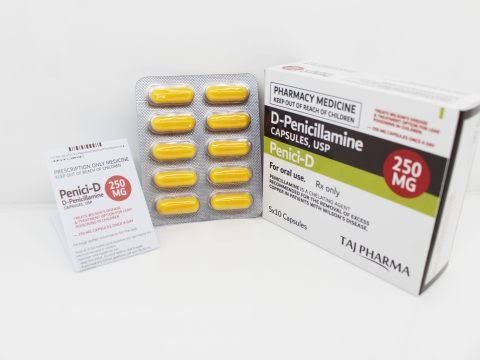
- Mechanism of Action: Penicillamine is a chelating agent derived from penicillin that forms complexes with copper, lead, mercury, and other metals. Its mechanism involves thiol groups that bind to these metals.
- Administration: Penicillamine is taken orally and requires careful monitoring due to potential side effects such as allergic reactions or renal impairment.
- Indications: While it was historically used for lead poisoning, it is now more commonly associated with conditions like Wilson’s disease (copper accumulation).
- Succimer
- Mechanism of Action: Succimer is another oral chelator similar to DMSA but with some differences in pharmacokinetics and side effects profile. It binds heavy metals through its thiol groups.
- Administration: Succimer is taken orally in capsule form and has a favorable safety profile compared to older agents like penicillamine.
- Indications: It is primarily used for treating lead poisoning in children.
- Calcium Disodium EDTA
- Mechanism of Action: This variant of EDTA specifically helps reduce calcium loss while effectively binding toxic metals like lead.
- Administration: Administered intravenously or intramuscularly depending on clinical needs.
- Indications: Primarily indicated for acute lead toxicity.
In summary, these chelating agents play crucial roles in managing heavy metal poisoning by binding toxic metals within the body and facilitating their elimination through urine or feces.
Mechanism of Action of Chelating Agents
The mechanism of action of chelating agents involves several key steps:
1. Binding to Metal Ions: Chelating agents contain functional groups that can donate electron pairs to metal ions, forming coordinate covalent bonds. This process typically involves donor atoms such as nitrogen, sulfur, or oxygen within the chelator molecule. For example, in the case of ethylenediamine (en), two nitrogen atoms can simultaneously coordinate to a metal ion, creating a stable complex.
2. Formation of Stable Complexes: Once the chelating agent binds to the metal ion, it forms a stable complex that often has a ring structure due to the bidentate or multidentate nature of the chelator. This stability is crucial because it prevents the metal from participating in toxic reactions within the body. The formation of these complexes reduces the free concentration of toxic metals in biological fluids.
3. Increased Solubility and Excretion: The metal-chelate complex generally exhibits increased solubility in water compared to the unbound metal ion. This enhanced solubility facilitates renal excretion through urine. For instance, hydrophilic chelators like meso-2,3-dimercaptosuccinic acid promote renal excretion effectively by binding to heavy metals such as lead or arsenic.
4. Reduction of Toxicity: By binding to toxic metals and preventing their interaction with biological molecules (such as proteins and enzymes), chelating agents help mitigate the harmful effects associated with metal toxicity. This is particularly important in cases of heavy metal poisoning where rapid detoxification is necessary.
5. Combination Therapy: Recent advancements have introduced strategies such as combination therapy, where different chelating agents are used together or alongside antioxidants to enhance efficacy and reduce side effects. This approach aims to improve access to intracellular metals while minimizing potential toxicity from individual agents.
In summary, chelation therapy works by using chelating agents that bind to toxic metal ions, forming stable complexes that increase solubility and facilitate excretion from the body while reducing toxicity associated with these metals.
Chelating Agents Used in the Management of Intoxication
1. Iron Intoxication
For the management of iron intoxication, the primary chelating agent used is Deferoxamine. Deferoxamine is a siderophore that binds free iron in the bloodstream and facilitates its excretion through the kidneys. It is particularly effective in cases of acute iron poisoning, where it can help reduce serum iron levels and prevent further damage to organs such as the liver and heart.
2. Lead Intoxication
In cases of lead intoxication, EDTA (Ethylenediaminetetraacetic acid) is commonly used as a chelating agent. EDTA forms stable complexes with lead ions, allowing for their excretion via the kidneys. Another agent that may be used is DMSA (Dimercaptosuccinic acid), which is effective for both acute and chronic lead poisoning and has a favorable safety profile compared to EDTA.
3. Copper Intoxication
For copper intoxication, Penicillamine is the primary chelating agent utilized. Penicillamine works by binding to copper ions, facilitating their excretion through urine. It is particularly useful in conditions such as Wilson’s disease, where copper accumulation occurs due to genetic defects in copper metabolism.
4. Arsenic Intoxication
In arsenic poisoning, Dimercaprol (British Anti-Lewisite or BAL) is often employed as a chelating agent. Dimercaprol binds to arsenic and promotes its elimination from the body through renal pathways. Another option for arsenic detoxification includes DMSA, which can also effectively bind arsenic and enhance its excretion.
In summary, the following are the key chelating agents used for specific metal intoxications:
- Iron: Deferoxamine
- Lead: EDTA, DMSA
- Copper: Penicillamine
- Arsenic: Dimercaprol, DMSA
Clinical Uses of Penicillamine
Penicillamine is a medication with several important clinical applications, primarily due to its ability to bind certain metals and modify immune responses. Below are the key clinical uses of penicillamine:
1. Wilson’s Disease
Wilson’s disease is a genetic disorder that leads to excessive accumulation of copper in the body, which can cause severe liver and neurological damage. Penicillamine acts as a chelating agent, binding to excess copper and facilitating its excretion through urine. This helps reduce copper levels in the body, alleviating symptoms and preventing further organ damage. Treatment typically requires long-term management and monitoring of copper levels.
2. Cystinuria
Cystinuria is an inherited condition characterized by high levels of cystine in the urine, leading to the formation of kidney stones. Penicillamine works by binding to cystine, thus increasing its solubility and reducing stone formation. Patients with cystinuria may require ongoing treatment with penicillamine to manage their condition effectively and prevent recurrent kidney stones.
3. Rheumatoid Arthritis
In cases where rheumatoid arthritis does not respond adequately to conventional treatments, penicillamine can be used as a second-line therapy. It modifies the immune response by decreasing the activity of certain immune cells and inflammatory mediators, which helps reduce joint inflammation and pain associated with this autoimmune condition. The onset of therapeutic effects may take several weeks to months.
4. Lead Poisoning
Penicillamine is sometimes utilized as a follow-up treatment for lead poisoning after initial chelation therapy with other agents such as EDTA (ethylenediaminetetraacetic acid). It aids in removing lead from the body by binding to it and promoting urinary excretion.
5. Other Conditions
While less common, penicillamine has been explored for use in various other conditions such as certain types of liver disease and some forms of heavy metal toxicity beyond lead. However, these uses are typically considered on a case-by-case basis depending on individual patient needs and responses.
In summary, penicillamine serves critical roles in managing Wilson’s disease, cystinuria, rheumatoid arthritis, lead poisoning, and potentially other conditions requiring metal chelation or immune modulation.