Long-acting reversible contraceptives (LARCs) represent a cornerstone of modern family planning, offering highly effective, convenient, and reversible birth control options. Among these, hormonal methods delivered via injection or subcutaneous implant have played a significant role in empowering individuals with greater control over their reproductive health.
Parenteral Medroxyprogesterone Acetate (DMPA) – The Injectable Contraceptive
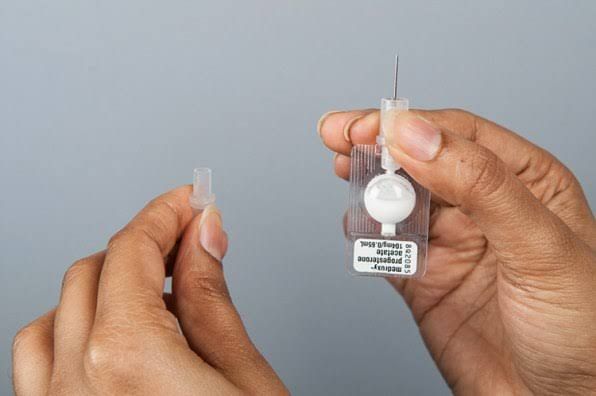
Parenteral medroxyprogesterone acetate (DMPA) is a highly effective, progestin-only injectable contraceptive commonly known by brand names like Depo-Provera. Administered as an intramuscular (IM) or subcutaneous (SC) injection, it offers sustained contraceptive protection for an extended period, typically 3 months.
1. Mechanism of Action
DMPA primarily prevents pregnancy through several integrated actions, all mediated by its progestin content:
- Inhibition of Ovulation: The primary mechanism is the suppression of gonadotropin-releasing hormone (GnRH) from the hypothalamus, which in turn inhibits the release of follicle-stimulating hormone (FSH) and luteinizing hormone (LH) from the pituitary gland. This prevents follicular development and ovulation, effectively blocking the release of an egg from the ovary.
- Thickening of Cervical Mucus: DMPA causes the cervical mucus to become thick and sticky, creating a physical barrier that is impenetrable to sperm, thus preventing their ascent into the uterus and fallopian tubes.
- Thinning of the Endometrial Lining: The progestin also induces atrophy of the endometrium (the lining of the uterus), making it unsuitable for implantation should fertilization somehow occur.
2. Composition and Administration
DMPA contains synthetic progestin, medroxyprogesterone acetate. It is available in two main formulations:
- Intramuscular (DMPA-IM): This formulation, typically 150 mg, is administered deep into a large muscle, such as the gluteal muscle or deltoid muscle. The injection is given every 12-13 weeks (approximately every 3 months). The first injection is typically given within the first 5 days of a menstrual period to ensure the individual is not pregnant.
- Subcutaneous (DMPA-SC) or Depo-SubQ Provera 104: This newer formulation, typically 104 mg, is administered just under the skin, usually in the abdomen or thigh. It offers the convenience of self-administration after initial training by a healthcare provider. Like DMPA-IM, it is administered every 12-13 weeks.
Administration (General Guide for Healthcare Provider):
- Patient Assessment: Confirm no contraindications, discuss side effects, and obtain informed consent. Rule out existing pregnancy.
- Preparation: Prepare the injection site (clean with antiseptic), draw up the medication.
- Injection: For IM, administer deep into the muscle. For SC, inject into the subcutaneous tissue.
- Post-Injection: Advise against massaging the site (which might hasten absorption), and schedule the next injection. Reiterate the importance of adhering to the 3-month schedule for sustained efficacy.
3. Efficacy
DMPA is one of the most effective reversible contraceptive methods. With perfect use, its failure rate is less than 0.3% per year. With typical use (which accounts for late re-injections), its failure rate is around 6% per year. This high efficacy largely stems from the fact that it eliminates the need for daily user action.
4. Advantages
- Highly Effective: Among the most effective reversible methods available.
- Long-Acting: Only requires administration every 3 months, eliminating daily reminders.
- Discreet: No visible signs of contraception.
- Convenient: No actions required before or during intercourse.
- Progestin-Only: Suitable for individuals who cannot use estrogen (e.g., those with a history of deep vein thrombosis, breastfeeding individuals).
- Non-Contraceptive Benefits: Can reduce menstrual pain and heavy bleeding, may offer some protection against endometrial cancer.
5. Disadvantages and Side Effects
While highly effective, DMPA does have potential drawbacks and side effects:
- Menstrual Irregularities: This is the most common side effect. Initially, users may experience irregular bleeding, spotting, or prolonged bleeding. Over time, many users experience amenorrhea (absence of menstruation), which is generally considered safe and often preferred.
- Weight Gain: Some users report weight gain, although studies on the extent and direct causation vary.
- Bone Mineral Density (BMD) Loss: DMPA use is associated with a reversible decrease in BMD, especially with long-term use. This loss appears to be largely reversible after discontinuation. Healthcare providers should counsel patients, especially adolescents, about adequate calcium and vitamin D intake and weight-bearing exercise.
- Mood Changes/Depression: Some users report mood swings, irritability, or depressive symptoms.
- Delayed Return to Fertility: While fertility eventually returns, it can take an average of 6-10 months after the last injection for conception to occur, which may be a disadvantage for those planning a pregnancy in the near future.
- No STI Protection: DMPA offers no protection against sexually transmitted infections (STIs).
- Injection-Related: Pain or bruising at the injection site.
6. Contraindications
DMPA is generally contraindicated in individuals with:
- Known or suspected pregnancy.
- Undiagnosed abnormal uterine bleeding.
- Current or history of breast cancer.
- Severe liver disease.
- History of stroke or transient ischemic attack (TIA).
- Uncontrolled hypertension.
7. Return to Fertility
As noted, the return to fertility after stopping DMPA can be delayed compared to other methods, averaging 6-10 months. This delay is due to the sustained release and metabolism of the progestin.
8. Patient Counseling
Healthcare providers should thoroughly discuss all aspects of DMPA with prospective users, including its high efficacy, potential menstrual changes, the risk of temporary BMD loss, and the delayed return to fertility. Adequate counseling helps manage expectations and ensures informed decision-making.
The Implantable Contraceptive System – Norplant
The Norplant system was a groundbreaking LARC that revolutionized contraceptive options upon its introduction. While largely replaced by newer single-rod implants (e.g., Implanon, Nexplanon, Jadelle) due to easier insertion/removal and fewer capsules, understanding Norplant is crucial as it established the paradigm for modern contraceptive implants. The Norplant system consisted of six small, flexible capsules inserted subcutaneously and designed to provide contraception for up to five years.
1. Mechanism of Action
The Norplant system worked primarily through the continuous, low-dose release of the synthetic progestin levonorgestrel. Its contraceptive effects mirror those of other progestin-only methods:
- Inhibition of Ovulation: While not universally suppressed, ovulation is inhibited in a significant percentage of cycles. The continuous release of levonorgestrel interferes with the hormonal cascade necessary for follicular development and egg release.
- Thickening of Cervical Mucus: Levonorgestrel causes the cervical mucus to become thick and impermeable to sperm, preventing their passage into the upper reproductive tract.
- Thinning of the Endometrial Lining: The progestin thins the uterine lining, making it unfavorable for implantation of a fertilized egg.
2. Composition and Design
The original Norplant system consisted of six thin, flexible silicone rubber capsules, each approximately 34 mm long and 2.4 mm in diameter. Each capsule contained 36 mg of crystalline levonorgestrel. The silicone membrane allowed for the slow, steady diffusion of levonorgestrel into the bloodstream over an extended period. The total dose of levonorgestrel was 216 mg across the six capsules.
3. Insertion Procedure
The insertion of Norplant required a minor surgical procedure performed by a trained healthcare provider, typically in an outpatient setting.
Step-by-Step Insertion:
- Patient Assessment and Counseling: Confirm no contraindications, discuss benefits, risks, and side effects. Rule out existing pregnancy.
- Site Preparation: The inner aspect of the upper arm (usually non-dominant) was chosen, about 8-10 cm above the medial epicondyle. The area was cleaned with antiseptic, and a local anesthetic was injected to numb the site.
- Incision: A small superficial incision (about 2-4 mm) was made through the skin.
- Insertion of Capsules: A trochar (a specialized insertion tool) was passed subcutaneously, making a fan-like pattern away from the incision. Each of the six capsules was then inserted one by one through the trochar, ensuring they lay just under the skin in a non-intersecting pattern to allow for easy removal.
- Closure and Dressing: The incision was typically closed with a sterile strip or a single suture, and a sterile dressing was applied. The patient was instructed to keep the area dry and avoid strenuous arm activity for a few days.
4. Efficacy
Norplant was one of the most effective contraceptive methods available. With perfect use, its failure rate was less than 0.05-1% per year, primarily due to user weight variations affecting hormone metabolism. Its long-term efficacy, however, diminished slightly towards the end of its 5-year lifespan.
5. Advantages
- Highly Effective: Considered one of the most effective reversible methods.
- Long-Acting: Provided continuous contraception for up to 5 years without daily action.
- Convenient: Once inserted, no further user action required for years.
- Reversible: Fertility returned relatively quickly after removal.
- Progestin-Only: Suitable for individuals unable to use estrogen.
- Discreet: Not visible once inserted (except for potential slight bulging under the skin).
6. Disadvantages and Side Effects
- Menstrual Irregularities: The most common side effect, including irregular bleeding, spotting, prolonged bleeding, or amenorrhea. These changes are unpredictable and a frequent reason for discontinuation.
- Insertion/Removal Procedure: Requires a minor surgical procedure for both insertion and removal, which can be burdensome, lead to scarring, pain, bruising, or infection. Removal could sometimes be challenging if capsules migrated or were difficult to locate.
- No STI Protection: Norplant offered no protection against STIs.
- Other Potential Side Effects: Headache, nausea, dizziness, breast tenderness, weight changes, mood changes, and acne were reported in some users.
- Visibility: In some individuals, the capsules could be felt or, in very thin individuals, even seen under the skin.
7. Contraindications
Norplant was generally contraindicated in individuals with:
- Known or suspected pregnancy.
- Undiagnosed abnormal uterine bleeding.
- Current or history of breast cancer.
- Acute liver disease or liver tumors.
- Active thrombophlebitis or thromboembolic disorders.
8. Return to Fertility
Fertility typically returned rapidly after the removal of the Norplant system, often within a few weeks to months, as the levonorgestrel levels quickly drop once the capsules are out.
9. Patient Counseling
For Norplant (and its successors), thorough counseling is critical, particularly regarding the expectation of irregular bleeding patterns, the minor surgical procedures for insertion and removal, and the importance of professional removal at the end of its effective lifespan.
Conclusion
Parenteral medroxyprogesterone and the implantable Norplant system represent pivotal developments in contraceptive technology, providing highly effective, long-acting, and reversible options. DMPA continues to be a widely used and effective injectable, offering convenience and suitability for many individuals. The Norplant system, while no longer available in its original multi-capsule form, laid the groundwork for contemporary single-rod implants, which uphold its legacy of superior efficacy and user convenience. Healthcare providers must engage in comprehensive patient counseling, addressing the specific mechanisms, administration steps, benefits, and potential side effects of each method to ensure informed choice and optimal contraceptive management for individuals seeking to control their reproductive lives.
References
- World Health Organization. (2018). Medical eligibility criteria for contraceptive use. 5th ed. WHO Press.
- American College of Obstetricians and Gynecologists. (2019). ACOG Practice Bulletin No. 121: Long-Acting Reversible Contraception: Implants and Intrauterine Devices. Obstetrics & Gynecology, 134(1), e1-e12.
- Centers for Disease Control and Prevention. (2016). U.S. Medical Eligibility Criteria for Contraceptive Use, 2016. Morbidity and Mortality Weekly Report, 65(3), 1-104.
- Archer, D. F., et al. (2009). Bone mineral density in adolescent and adult women using depot medroxyprogesterone acetate. Contraception, 80(3), 226-235.
- Sivin, I. (1993). International experience with Norplant and Norplant-2 contraceptives. Studies in Family Planning, 24(Suppl), 1-30.
- Mansour, D. (2016). Implanon NXT: a review of the benefits and risks of use. Therapeutic Advances in Drug Safety, 7(2), 52-64.