Pediatric Pulmonary Air-Leak Syndromes (PALS) represent a spectrum of critical conditions characterized by the extravasation of air from the alveoli or airways into potential spaces within the thoracic cavity. These syndromes are not isolated events but rather complications arising from various underlying pulmonary pathologies or iatrogenic interventions. In the neonatal intensive care unit (NICU) and pediatric intensive care unit (PICU), air leaks are significant causes of morbidity and mortality, complicating the management of respiratory distress syndrome (RDS), meconium aspiration syndrome (MAS), asthma, pneumonia, and acute respiratory distress syndrome (ARDS).
The pathophysiology of air leaks involves a rupture of the alveolar-capillary membrane, allowing air to dissect into the perivascular sheaths, pleural space, mediastinum, or subcutaneous tissues. The clinical significance lies in the compromise of gas exchange and the potential for hemodynamic instability due to increased intrathoracic pressure. Understanding the nuances of PALS is essential for healthcare providers to implement timely diagnostic interventions, appropriate therapeutic strategies, and long-term management plans.
Understanding the Pathophysiology
To effectively manage air leaks, one must first understand the mechanical forces at play within the pediatric lung.
1. The Alveolar Rupture Mechanism
The primary event in an air leak is the rupture of the alveolar wall. In a healthy lung, the alveoli maintain integrity through a balance of intraluminal pressure and structural elasticity. However, in diseased lungs (e.g., surfactant-deficient lungs in RDS), alveolar instability leads to uneven distribution of tidal volume. This results in “volutrauma” or “barotrauma,” where localized alveolar overdistension causes shearing forces that tear the alveoli.
2. The Path of Least Resistance
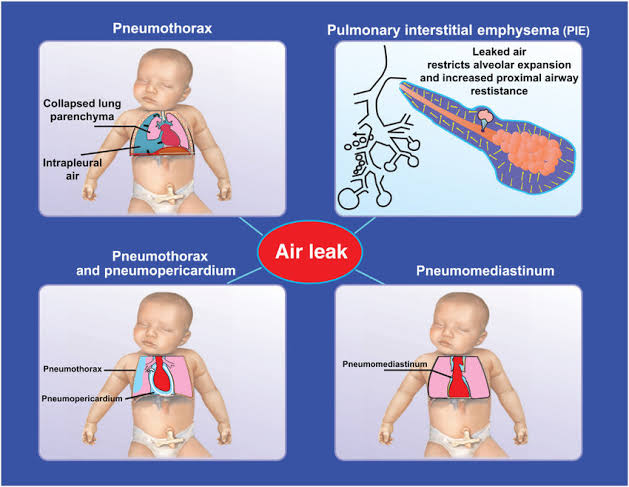
Once air escapes the alveoli, it dissects along the peribronchial and perivascular sheaths. This is known as interstitial emphysema (IE). From the interstitium, air may:
- Rupture into the pleural space: Causing Pneumothorax.
- Track centrally into the mediastinum: Causing Pneumomediastinum.
- Track further into the subcutaneous tissues: Causing Subcutaneous Emphysema.
- Dissect into the pericardial space: Causing Pneumopericardium.
- Rupture through the visceral pleura into the pulmonary vessels: Leading to Air Embolism (rare but fatal).
3. The Boyle’s Law Application
In mechanically ventilated patients, Boyle’s Law (Pressure × Volume = Constant) dictates that if volume increases, pressure decreases. However, in the context of a trapped air pocket (e.g., a pneumothorax), positive pressure ventilation increases the size of the air pocket, exacerbating lung collapse and shifting mediastinal structures. This creates a vicious cycle of worsening respiratory and hemodynamic compromise.
Etiology and Risk Factors
Air leaks can occur spontaneously or, more commonly, as a complication of underlying conditions or therapies.
1. Neonatal Causes
- Respiratory Distress Syndrome (RDS): Premature infants lack surfactant, leading to high alveolar surface tension and collapse. Mechanical ventilation is often required, significantly increasing the risk.
- Meconium Aspiration Syndrome (MAS): Meconium acts as a plugging agent, creating ball-valve mechanisms that trap air and lead to hyperinflation and eventual rupture.
- Persistent Pulmonary Hypertension of the Newborn (PPHN): Often treated with high-frequency oscillatory ventilation (HFOV) or extracorporeal membrane oxygenation (ECMO), both of which carry air-leak risks.
- Resuscitation: Positive pressure ventilation during neonatal resuscitation, particularly if inadvertent high pressures are delivered, is a common precipitant.
2. Pediatric Causes
- Asthma: Severe status asthmaticus can cause dynamic hyperinflation and high intrathoracic pressure, leading to spontaneous pneumothorax.
- Pneumonia: Necrotizing bacterial pneumonias (e.g., Staphylococcus aureus, Legionella) can destroy lung architecture and cause bronchopleural fistulas.
- Trauma: Blunt or penetrating chest trauma disrupts the visceral pleura.
- Iatrogenic: Central venous catheterization, transthoracic needle aspiration, and lung biopsy are procedural risks.
3. Ventilator-Induced Lung Injury (VILI)
Regardless of age, the use of positive pressure ventilation (PPV) is the single largest risk factor. High Peak Inspiratory Pressures (PIP), high Positive End-Expiratory Pressure (PEEP), and large Tidal Volumes (Vt) stretch the lung beyond its elastic limit.
Classifications of Air-Leak Syndromes
PALS encompasses several distinct clinical entities, each requiring specific diagnostic and therapeutic considerations.
A. Pneumothorax (PTX)
Air accumulates in the pleural space between the lung and the chest wall.
- Tension Pneumothorax: A life-threatening variant where air enters the pleural space during inspiration but cannot escape during expiration. This creates a “one-way valve” effect, causing the lung to collapse completely and shifting the mediastinum to the opposite side, compressing the heart and great vessels.
B. Pulmonary Interstitial Emphysema (PIE)
Air is trapped within the lung interstitium (the tissue framework surrounding alveoli and bronchioles). It is most common in premature infants on mechanical ventilation. PIE reduces lung compliance, impairs gas exchange, and creates a stiff lung that is difficult to ventilate. It appears radiographically as bubbly or cystic lucencies within the lung fields.
C. Pneumomediastinum
Air dissects centrally into the anatomical space bounded by the pleural sacs, containing the heart, great vessels, trachea, and esophagus. While often benign, massive pneumomediastinum can compress the heart (tamponade physiology).
D. Pneumopericardium
Air enters the pericardial sac surrounding the heart. This is rare but dangerous, often causing acute cardiac tamponade and severe hypotension.
E. Subcutaneous Emphysema
Air tracks from the mediastinum up the fascial planes into the neck and chest wall, causing crepitus (crackling sensation) upon palpation.
F. Systemic Air Embolism
The most catastrophic complication, usually resulting from a bronchopulmonary fistula allowing air to enter the pulmonary veins. It presents as sudden cardiovascular collapse, seizures, and cyanosis.
Clinical Presentation and Diagnosis
The presentation of PALS depends on the volume of air, the speed of accumulation, and the underlying lung condition.
1. Signs and Symptoms
- Respiratory: Tachypnea, increased work of breathing (retractions, grunting), cyanosis, sudden desaturation, or a sudden improvement in compliance during ventilation (a “pop” felt in the circuit).
- Cardiovascular: Tachycardia (early sign of hypoxia), hypotension, thready pulses, and distended neck veins. In tension physiology, the pulse pressure may widen, and the heart sounds may be distant or displaced.
- Physical Exam: Asymmetrical chest expansion, hyperresonance to percussion on the affected side, and loss of breath sounds. Subcutaneous emphysema presents as skin swelling and crepitus.
2. Diagnostic Imaging
- Chest X-Ray (CXR): The gold standard.
- Pneumothorax: Visible visceral pleural line with absent lung markings peripherally.
- PIE: Reticulogranular or bubbly pattern distinct from RDS.
- Pneumomediastinum: The “Nautilus sign” (visualization of the thymic sail border) or air outlining the aorta.
- Lung Ultrasound: Increasingly used in point-of-care diagnostics. Lung sliding absence and the “stratosphere sign” (barcode sign) indicate pneumothorax. It is highly sensitive and avoids radiation exposure.
- Echocardiogram: Used to diagnose pneumopericardium and assess for tamponade (right atrial collapse) or air within the heart chambers (air embolism).
Management and Therapeutic Interventions
Management is a stepwise approach ranging from observation to aggressive surgical intervention.
1. Conservative Management: Small, asymptomatic pneumothoraxes (<1-2 cm in size) in stable infants or children often resolve spontaneously. The strategy involves:
- Observation with continuous pulse oximetry.
- Minimizing handling and crying to prevent Valsalva maneuvers.
- Supplemental oxygen (if hypoxemic) to aid nitrogen washout and absorption of air (though this is debated in modern neonatology regarding retinopathy of prematurity risks).
2. Oxygen Therapy: High concentrations of oxygen (normobaric oxygen therapy) can speed up the absorption of air from body cavities by creating a large diffusion gradient for nitrogen (washout). However, this must be balanced against oxygen toxicity and the risk of retinopathy of prematurity in neonates.
3. Needle Aspiration: In stable patients with a moderate pneumothorax, simple needle aspiration (thoracentesis) can be attempted, particularly in neonates. A butterfly needle is inserted into the pleural space, and air is aspirated. If the lung re-expands and the infant remains stable, further invasive intervention may be avoided.
4. Chest Tube Thoracostomy (Tube Thoracostomy): This is the standard of care for symptomatic or large air leaks.
- Technique: A small-caliber pigtail catheter (8-10 Fr for neonates, 12-16 Fr for children) or a larger bore chest tube is inserted into the pleural space under sterile conditions, connected to an underwater seal drainage system, and placed on suction.
- Goal: To evacuate air, allow the lung to re-expand, and seal the leak.
5. Chemical Pleurodesis: If air leaks persist despite chest tube placement, chemical pleurodesis may be attempted. This involves instilling a sclerosing agent (e.g., Betadine, doxycycline, or minocycline) into the pleural space to induce inflammation and adhesion between the visceral and parietal pleura, sealing the leak. This is a salvage therapy.
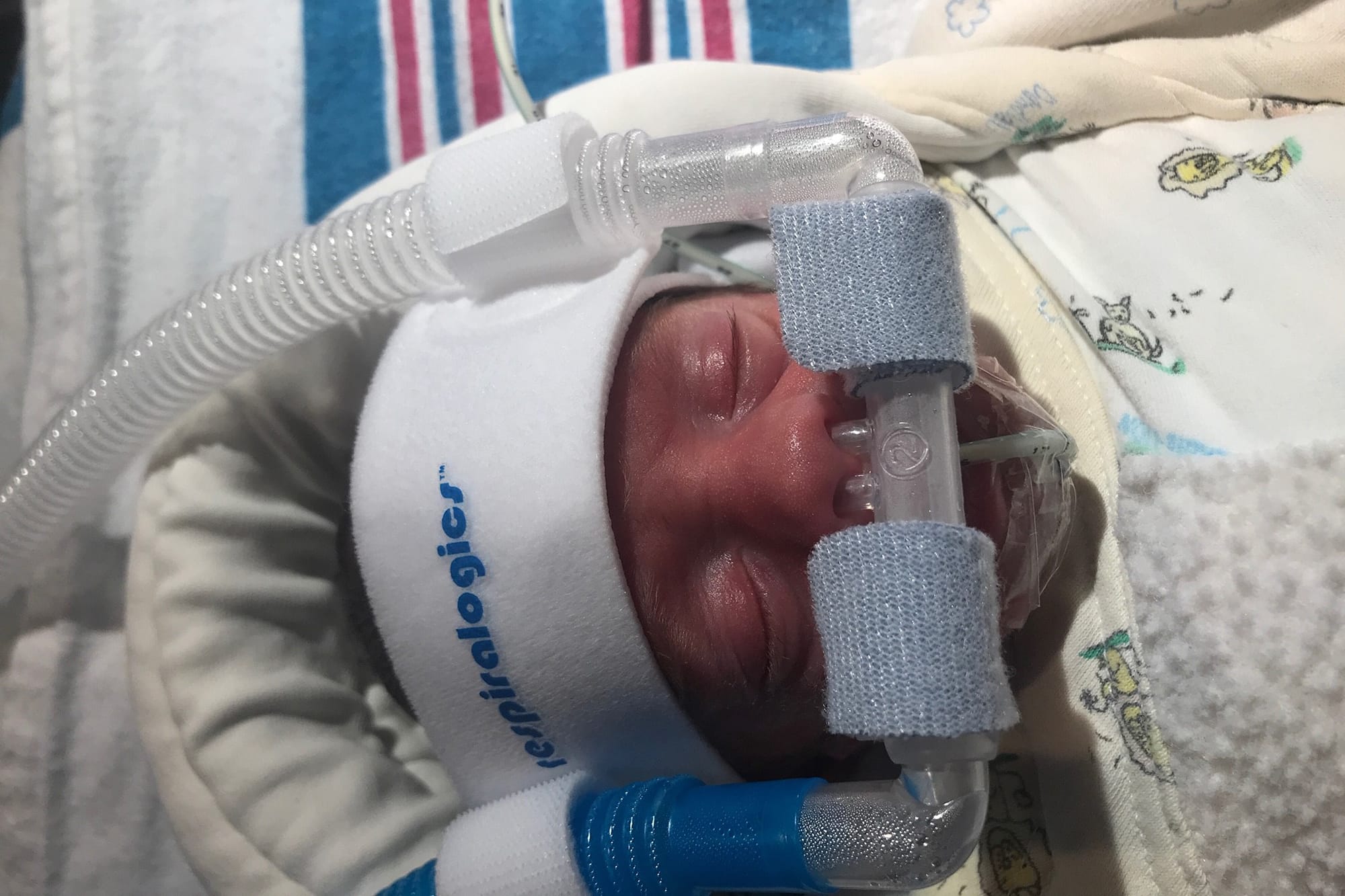
6. High-Frequency Oscillatory Ventilation (HFOV): In neonates with severe PIE or refractory air leaks, switching from conventional ventilation to HFOV is beneficial. HFOV uses very small tidal volumes and a continuous distending pressure, minimizing the shear forces that cause air leaks while maintaining recruitment.
7. Extracorporeal Membrane Oxygenation (ECMO): ECMO is the final rescue therapy for infants or children with refractory hypoxemia or air leaks despite optimal medical management. It allows the lungs to be “rested” (ventilated with very low settings or not at all) while the circuit provides gas exchange. Large air leaks are often an indication for veno-venous (VV) ECMO, but if hemodynamic instability exists, veno-arterial (VA) ECMO may be required.
8. Surgical Intervention: Thoracotomy with wedge resection or decortication is rarely required but may be necessary for persistent bronchopleural fistulas or trapped lungs that fail all other therapies.
Complications and Sequelae
Managing air leaks introduces its own set of complications:
- Infection: Chest tubes carry a risk of empyema (infected pleural fluid).
- Re-expansion Pulmonary Edema: Rapid re-expansion of a chronically collapsed lung can cause fluid leakage into the alveoli.
- Recurrence: Children who have had a spontaneous pneumothorax have a higher risk of recurrence, particularly in adolescence.
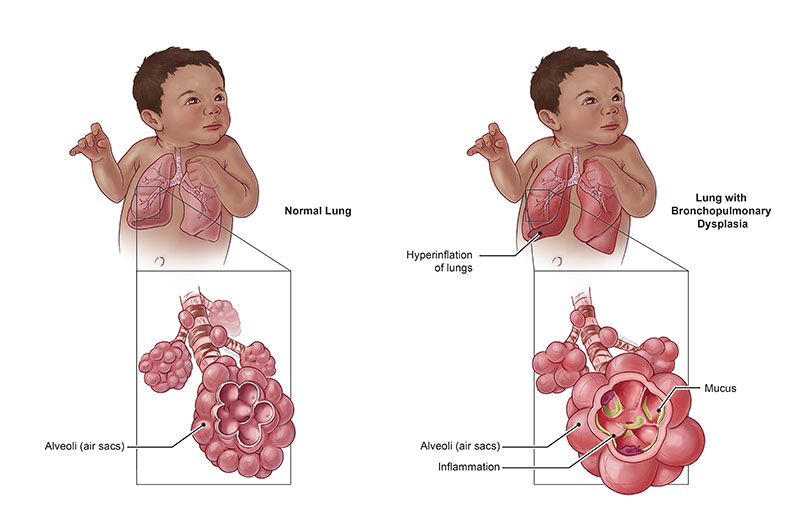
- Pulmonary Interstitial Emphysema (PIE) Sequelae: Untreated PIE can progress to cystic pulmonary disease or bronchopulmonary dysplasia (BPD).
Outcomes and Prognosis
The prognosis of pediatric pulmonary air-leak syndromes is highly variable.
1. Neonates: In premature infants, the presence of significant air leaks (especially PIE) is strongly associated with the development of BPD, a chronic lung disease characterized by inflammation and scarring. The need for ECMO in neonates for air leaks carries a mortality risk of 20-40%, depending on the underlying etiology (e.g., MAS vs. RDS).
2. Older Children: Spontaneous pneumothorax in otherwise healthy children (often due to ruptured apical blebs) has an excellent prognosis following chest tube insertion and chemical pleurodesis. Recurrence rates are approximately 20-30%, prompting discussions about surgical bullectomy/pleurectomy for recurrent cases.
3. Long-term Pulmonary Function: Survivors of severe air leak syndromes, particularly those requiring high-intensity ventilation, may exhibit restrictive lung defects or obstructive patterns on pulmonary function testing later in childhood. Close follow-up with a pediatric pulmonologist is recommended.
Conclusion
Pediatric Pulmonary Air-Leak Syndromes are complex, dynamic conditions that require a high index of suspicion and a systematic approach to management. From the subtle presentation of pulmonary interstitial emphysema to the dramatic tension pneumothorax, the clinician must be prepared to intervene rapidly. The cornerstone of therapy remains the judicious use of mechanical ventilation to prevent iatrogenic injury, coupled with a stepwise escalation of interventions—needle aspiration, chest tube drainage, and advanced rescue therapies like ECMO. By adhering to this structured, evidence-based framework, clinicians can minimize morbidity and optimize the respiratory outcomes of their pediatric patients.
References
Abman, S. H., & Kinsella, J. P. (2016). Schiff and Petty’s Pediatric Respiratory Medicine. Elsevier.
Cheatham, M. L., & Safcsak, K. (2013). Air leak syndrome: A review of the literature and a proposal for a standardized approach to management. Journal of Trauma and Acute Care Surgery, 74(2), 532-539.
Choi, M., & Hwang, Y. (2020). The etiology and outcome of pneumothorax in children: A retrospective cohort study. Medicine, 99(21), e20173.
Fischer, J. E., & Langer, J. C. (2018). Pediatric Surgery. Springer.
Foster, D. J., & Clarke, J. R. (2021). Air leak syndromes in the neonate: Pathophysiology and management. Neonatal Network, 40(3), 145-154.
Gammon, R. B., & Shin, M. S. (2019). Radiologic Clinics of North America: Thoracic Imaging. Elsevier.
Gibson, G. J. (2019). Clinical Tests of Respiratory Function. CRC Press.
Harrison, M. R., & Adzick, N. S. (2019). The Fetus and Neonate: Principles and Practice. Saunders.
Keszler, M. (2015). Air leak syndrome in premature infants: Mechanisms, prevention, and management. Clinics in Perinatology, 42(4), 815-825.
Laughlin, M. M., & Spitzer, A. R. (2018). Manual of Neonatal Respiratory Care. Springer.
Martin, R. J., & Fanaroff, A. A. (2015). Fanaroff and Martin’s Neonatal-Perinatal Medicine. Elsevier.
Mugford, M., & Elbourne, D. (2012). Extracorporeal membrane oxygenation for severe respiratory failure in newborn infants. Cochrane Database of Systematic Reviews, (4).
O’Brien, J. M., & Dobson, C. (2018). Pediatric Intensive Care Unit: A Practical Guide. Cambridge University Press.
Rojas, M. A., & Lozano, J. M. (2019). Management of persistent pulmonary interstitial emphysema in neonates. Journal of Perinatology, 39(5), 612-618.
Sharma, A., & Ford, S. (2020). Clinical Pediatrics. Oxford University Press.
Smyth, A. R., & Cafferty, F. (2018). Practical Pediatric Respiratory Disease. Wiley-Blackwell.
Thille, A. W., & Gattinoni, L. (2019). Ventilator-induced lung injury: From physiology to bedside. Intensive Care Medicine, 45(7), 926-928.
Todd, D. A., & Jana, A. (2017). Neonatology for the Clinician. Springer.
Wheeler, A. P., & Bernard, G. R. (2007). Acute lung injury and the acute respiratory distress syndrome: A clinical review. The Lancet, 369(9572), 1553-1564.
Wilkinson, D. J., & Lister, G. (2016). Pediatrics. Elsevier.
Wong, J. J., & Lee, J. H. (2019). Pediatric Critical Care Medicine: Basic Science and Clinical Applications. Springer.
Yamamoto, K., & Nishimura, M. (2018). Respiratory Care. Springer.
Zapol, W. M., & Lemaire, L. C. (2018). Extracorporeal Life Support. Springer.
Zoban, P., & Hradil, H. (2019). Neonatal and Pediatric Pulmonary Hypertension. Springer.