Hereditary Hemochromatosis (HH) is a common genetic disorder characterized by excessive iron absorption from the diet, leading to progressive iron overload in various organs. If left untreated, this accumulation can cause significant tissue damage, organ failure, and a range of debilitating symptoms. Early diagnosis and intervention are critical to prevent irreversible complications and ensure a normal life expectancy.
Etiology of Hereditary Hemochromatosis
The primary cause of hereditary hemochromatosis is genetic mutations that impair the body’s ability to regulate iron absorption. The most common form, Type 1 Hemochromatosis, is linked to mutations in the HFE gene, located on chromosome 6.
- HFE Gene Mutations: The vast majority of HH cases (approximately 85-90%) are associated with two specific mutations in the HFE gene:
- C282Y mutation: This is the most prevalent and severe mutation. Individuals who are homozygous for C282Y (C282Y/C282Y) are at the highest risk of developing clinically significant iron overload.
- H63D mutation: This mutation is less common and generally less penetrant. While H63D homozygosity can occasionally lead to mild iron overload, symptomatic hemochromatosis is rare. Compound heterozygosity (C282Y/H63D) can also lead to iron overload, though typically less severe than C282Y homozygosity.
- The HFE gene provides instructions for making an HFE protein, which interacts with other proteins on the cell surface to detect iron levels and regulate the production of hepcidin, the master iron-regulatory hormone. Mutations in HFE disrupt this signaling pathway.
- Other Genetic Forms (Non-HFE Hemochromatosis): While HFE mutations account for the majority, other, rarer genetic forms of hemochromatosis exist, categorized as Type 2 (juvenile hemochromatosis), Type 3 (TFR2-related hemochromatosis), Type 4 (ferroportin disease), and others. These are caused by mutations in genes such as HJV (hemojuvelin), HAMP (hepcidin), TFR2 (transferrin receptor 2), and SLC40A1 (ferroportin). These forms often present with more severe iron overload and earlier onset, particularly juvenile hemochromatosis.
- Inheritance Pattern: Most forms of HH, including Type 1, follow an autosomal recessive inheritance pattern. This means an individual must inherit two copies of the mutated gene (one from each parent) to be at high risk for the condition. Carriers (inheriting only one mutated copy) typically do not develop clinical iron overload but can pass the gene to their offspring.
- Penetrance: It is important to note that even with the C282Y/C282Y genotype, not everyone will develop symptomatic disease. The penetrance of HH is incomplete, meaning other genetic modifiers, environmental factors, and lifestyle choices (e.g., alcohol consumption, dietary iron intake, blood loss through menstruation or donation) can influence the severity and onset of iron overload.
Pathophysiology of Hereditary Hemochromatosis
The core pathophysiological defect in HH is the dysregulation of iron homeostasis, primarily due to insufficient hepcidin activity.
- Role of Hepcidin: Hepcidin is a small peptide hormone produced mainly by the liver. It acts as the “master regulator” of iron metabolism. Hepcidin controls iron entry into the bloodstream by binding to ferroportin, an iron exporter protein found on the surface of enterocytes (intestinal cells), macrophages, and hepatocytes. When hepcidin levels are high, it degrades ferroportin, reducing iron absorption from the gut and preventing iron release from cellular stores. Conversely, low hepcidin levels lead to increased ferroportin activity, allowing more iron to enter the circulation.
- Hepcidin Deficiency in HH:
- In HFE-related hemochromatosis, mutations in the HFE gene impair the signaling pathway that normally stimulates hepcidin production in response to rising iron levels. The liver perceives a state of iron deficiency, even when the body is overloaded with iron.
- This leads to inappropriately low levels of hepcidin for the given iron status.
- The absence of adequate hepcidin allows ferroportin to function unchecked.
- Uncontrolled Iron Absorption and Accumulation:
- With reduced hepcidin, ferroportin on enterocytes becomes highly active, leading to excessive and unregulated absorption of dietary iron from the small intestine.
- This excess iron enters the bloodstream, where it is primarily bound to transferrin. However, when transferrin binding sites become saturated (reflected by high transferrin saturation), unbound or non-transferrin-bound iron (NTBI) appears in the circulation.
- NTBI is highly toxic and is readily taken up by parenchymal cells in various organs, including the liver, heart, pancreas, joints, and endocrine glands (e.g., pituitary, thyroid).
- Mechanism of Tissue Damage:
- Accumulated iron within cells, particularly the highly reactive ferrous iron (Fe2+), participates in Fenton and Haber-Weiss reactions, generating highly damaging reactive oxygen species (ROS), such as hydroxyl radicals.
- These free radicals cause oxidative stress, leading to lipid peroxidation, protein damage, and DNA damage within the cells.
- Chronic oxidative stress triggers inflammation, cellular dysfunction, and eventually fibrosis, culminating in organ damage (e.g., cirrhosis in the liver, cardiomyopathy in the heart, diabetes in the pancreas).
Symptoms and Signs of Hereditary Hemochromatosis
Hereditary hemochromatosis is often called a “silent disease” because symptoms typically do not appear until significant iron overload and organ damage have occurred, usually between the ages of 40 and 60 for men and after menopause for women (due to menstrual blood loss). Early symptoms are often non-specific and can be mistaken for other conditions.
- Early and Non-Specific Symptoms:
- Chronic fatigue and weakness: One of the most common early complaints, often profound.
- Arthralgia (joint pain): Typically affects small joints of the hands (especially the second and third metacarpophalangeal joints), knees, hips, and shoulders. It can resemble osteoarthritis.
- Abdominal pain: Often in the right upper quadrant, related to early liver involvement.
- Loss of libido/Erectile dysfunction: Due to iron deposition in the pituitary gland or gonads, leading to hypogonadism.
- Symptoms and Signs of Advanced Organ Damage:
- Liver:
- Hepatomegaly (enlarged liver).
- Elevated liver enzymes (AST, ALT).
- Cirrhosis (scarring of the liver), which significantly increases the risk of hepatocellular carcinoma (liver cancer).
- Jaundice (yellowing of skin/eyes) in end-stage liver disease.
- Heart:
- Cardiomyopathy (dilated or restrictive), leading to heart failure.
- Arrhythmias (irregular heartbeats), such as atrial fibrillation.
- Chest pain, shortness of breath.
- Pancreas:
- Diabetes mellitus (“bronze diabetes” due to skin hyperpigmentation and diabetes). Iron deposition destroys insulin-producing beta cells.
- Skin:
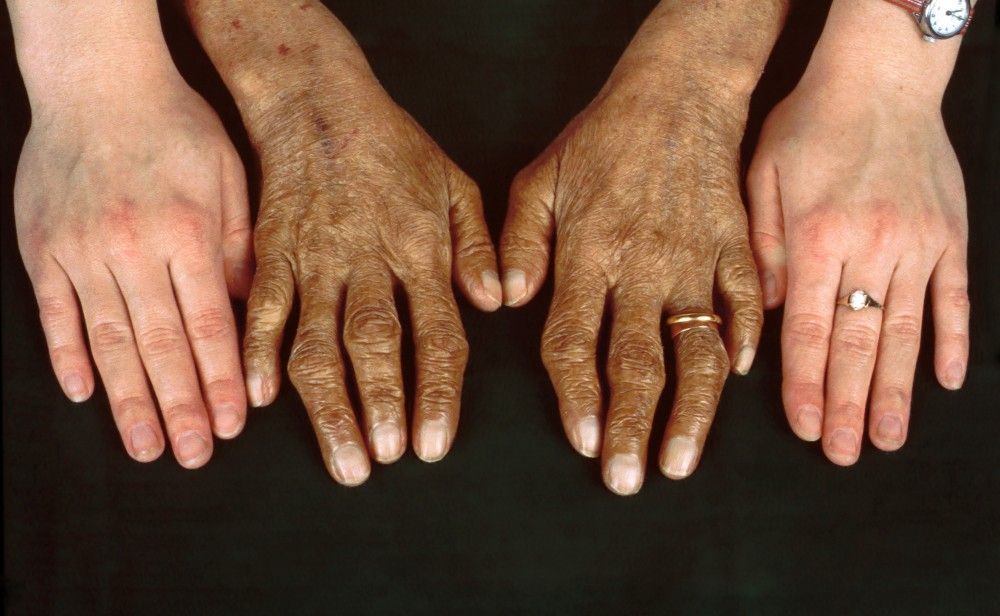
- Hyperpigmentation: A characteristic “bronze,” “slate-gray,” or “metallic” skin discoloration, particularly in sun-exposed areas. This is due to melanin and iron deposition.
- Endocrine Glands:
- Hypogonadism: Leading to infertility, amenorrhea (in women), testicular atrophy (in men).
- Hypothyroidism.
- Hypopituitarism.
- Joints:
- Chronic arthropathy, sometimes resembling pseudo-gout due to chondrocalcinosis (calcium pyrophosphate crystal deposition).
- Neurological symptoms: Although less common, iron accumulation can rarely affect the brain, leading to cognitive impairment or movement disorders.
- Liver:
Diagnosis of Hereditary Hemochromatosis
Early diagnosis is crucial for preventing irreversible organ damage. The diagnostic process typically involves a combination of blood tests, genetic testing, and imaging studies.
- Initial Screening Blood Tests:
- Serum Ferritin: This is a measure of the body’s iron stores. Elevated serum ferritin levels are a hallmark of iron overload, though it can also be acute phase reactant elevated in inflammation, infection, liver disease, or malignancy. A level >200 ng/mL in women and >300 ng/mL in men is generally considered abnormal.
- Transferrin Saturation (TSAT): This measures the percentage of transferrin (the protein that transports iron in the blood) that is saturated with iron. An elevated TSAT is often the earliest biochemical indicator of HH. A fasting TSAT >45% in men and >40% in women is highly suggestive of HH and warrants further investigation. It is critical to perform TSAT on a fasting blood sample as it can fluctuate post-prandially.
- Confirmatory Tests:
- Genetic Testing: If serum ferritin and TSAT levels are elevated, genetic testing for HFE mutations (C282Y and H63D) is the definitive diagnostic step for Type 1 HH. Homozygosity for C282Y is highly predictive, while compound heterozygosity (C282Y/H63D) or heterozygosity for C282Y may also indicate a risk, especially with sustained elevated iron markers. If HFE mutations are absent despite strong clinical suspicion, genetic testing for non-HFE related hemochromatosis genes may be considered.
- Liver Biopsy: Historically the gold standard, a liver biopsy with quantitative iron measurement and histological assessment of fibrosis/cirrhosis was used to confirm iron overload and stage liver disease. While still valuable, its use has diminished due to the availability of non-invasive methods.
- Non-invasive Iron Quantification (MRI): Magnetic Resonance Imaging (MRI) using T2* or R2* relaxometry sequences is now the preferred non-invasive method for accurately quantifying iron concentration in the liver and heart. It can also detect early signs of fibrosis. This is particularly useful for assessing the severity of iron overload and monitoring treatment efficacy.
- Differential Diagnosis: It’s important to differentiate HH from other causes of elevated ferritin, such as chronic inflammation, metabolic syndrome, non-alcoholic fatty liver disease (NAFLD), alcoholic liver disease, and other less common iron overload disorders (e.g., sideroblastic anemia, chronic transfusions). High TSAT helps distinguish HH from these conditions where ferritin might be elevated but TSAT is normal or low.
- Family Screening: Given the genetic basis, screening of first-degree relatives (parents, siblings, children) of affected individuals is strongly recommended. This allows for early detection and treatment before irreversible damage occurs.
Treatment of Hereditary Hemochromatosis
The primary goal of treatment is to remove excess iron from the body, prevent further iron accumulation, and manage any existing organ damage. Early and consistent treatment can prevent complications and allow individuals to live a normal life.
- Phlebotomy (Therapeutic Bloodletting):
- Mechanism: Phlebotomy is the cornerstone of HH treatment. It involves the controlled removal of a unit of blood (typically 500 mL, containing about 200-250 mg of iron). The body responds by drawing iron from tissue stores to produce new red blood cells, thereby depleting iron overload.
- Induction Phase: Initially, phlebotomies are performed frequently (e.g., once or twice a week) until iron stores are depleted. This is monitored by regular measurements of serum ferritin and transferrin saturation. The goal is to reduce ferritin to a low-normal range (e.g., 50-100 ng/mL) and TSAT to below 50%. This phase can take several months to over a year, depending on the initial iron burden.
- Maintenance Phase: Once iron stores are depleted, phlebotomies are performed less frequently (e.g., every 2-4 months) to maintain iron levels within the desired range. This is a lifelong treatment.
- Monitoring: Regular monitoring of complete blood count (CBC), serum ferritin, and TSAT is essential to guide the frequency of phlebotomies and prevent anemia.
- Side Effects: Phlebotomy is generally well-tolerated. Potential side effects include mild fatigue, dizziness, or bruising at the venipuncture site.
- Iron Chelation Therapy:
- Indications: Chelation therapy is an alternative for individuals who cannot tolerate phlebotomy (e.g., severe anemia, advanced heart disease, poor venous access) or in specific situations like juvenile hemochromatosis where organ damage is severe.
- Mechanism: Iron chelators are medications that bind to excess iron in the body, forming a complex that can be excreted through urine or feces.
- Examples: Deferoxamine (administered intravenously or subcutaneously), deferasirox (oral), and deferiprone (oral). These drugs have their own side effect profiles and require careful monitoring.
- Dietary and Lifestyle Considerations:
- Avoid Iron Supplements: Individuals with HH should strictly avoid iron-containing vitamins or supplements.
- Limit Vitamin C with Meals: Vitamin C enhances non-heme iron absorption. While a balanced diet is fine, high-dose vitamin C supplements should not be taken concurrently with iron-rich meals.
- Moderate Alcohol Intake: Alcohol can exacerbate liver damage, especially in patients with existing liver iron overload or fibrosis, and should be consumed in moderation or avoided, particularly if cirrhosis is present.
- Avoid Raw Shellfish: Iron overload increases susceptibility to infections with certain bacteria (e.g., Vibrio vulnificus) found in raw seafood.
- Balanced Diet: Otherwise, a general healthy, balanced diet is recommended. There is no need for severe dietary restrictions of iron-containing foods, as phlebotomy effectively removes absorbed iron.
- Management of Complications:
- Liver Surveillance: Patients with cirrhosis due to HH require regular surveillance (e.g., ultrasound every 6 months) for hepatocellular carcinoma.
- Diabetes Management: Requires standard diabetic care.
- Arthritis Treatment: Symptomatic management with pain relievers and anti-inflammatory drugs.
- Endocrine Replacement: Hormone replacement therapy may be needed for hypogonadism or hypothyroidism.
With early diagnosis and consistent phlebotomy, individuals with hereditary hemochromatosis can prevent irreversible organ damage, resolve symptoms, and lead a normal, healthy life. Lifelong adherence to the treatment regimen and regular monitoring are essential for optimal outcomes.
References
- Bacon, B. R., Adams, P. C., Kowdley, K. V., Powell, L. W., & Tavill, A. S. (2011). Diagnosis and management of hemochromatosis: 2011 practice guideline by the American Association for the Study of Liver Diseases. Hepatology, 54(1), 328–343.
- Ganz, T., & Nemeth, E. (2012). Iron homeostasis in the central nervous system. Nature Reviews Neuroscience, 13(10), 687–699.
- MacDonald, G. A., & Croes, K. (2018). Hemochromatosis: A clinical trial of the 21st century. Journal of Gastroenterology and Hepatology, 33(1), 77–86.
- Pietrangelo, A. (2010). Hereditary hemochromatosis: a new look at an old disease. New England Journal of Medicine, 362(3), 225–234.
- Wallace, D. F., & Subramaniam, V. N. (2016). The global prevalence of HFE-associated hereditary hemochromatosis and the potential for increased early diagnosis. The Medical Journal of Australia, 204(11), 406–410.