The continuous, real-time measurement of arterial blood pressure (ABP) via direct cannulation provides indispensable physiological data in the critical care environment, during high-risk surgery, and in situations requiring frequent arterial blood gas (ABG) analysis. While various sites exist for arterial access (femoral, brachial, dorsalis pedis), the radial artery is overwhelmingly the preferred site due to its accessibility, superficial location, ease of immobilization, and, crucially, the presence of robust collateral circulation supplied by the ulnar artery.
Indications and Contraindications
Before initiating the procedure, a thorough assessment of the patient’s clinical status and the rationale for cannulation is mandatory.
A. Primary Indications
- Continuous Hemodynamic Monitoring: Essential for patients receiving vasoactive or inotropic agents, those in shock (septic, cardiogenic, hypovolemic), or those undergoing procedures where rapid, profound hemodynamic shifts are anticipated (e.g., cardiopulmonary bypass, major vascular surgery).
- Frequent Blood Sampling: Required for managing patients needing hourly or more frequent ABG analysis, electrolyte monitoring, or lactate clearance measurements (e.g., severe respiratory failure, diabetic ketoacidosis, or sepsis protocols).
- Failure of Non-Invasive Monitoring: When cuff pressures are unreliable or inaccurate due to severe obesity, arrhythmias, or application limitations.
B. Absolute and Relative Contraindications
- Inadequate Collateral Circulation: The primary absolute contraindication, determined by a failed Allen’s Test (discussed below).
- Local Infection/Trauma: Cellulitis, burns, or local hematoma at the insertion site.
- Severe Coagulopathy or Anticoagulation: While often necessary in critically ill patients, severe bleeding diatheses demand meticulous technique and careful post-procedure monitoring.
- Previous Surgical Procedures: History of arteriovenous (AV) fistula creation, previous ligation, or extensive scarring proximal to the site.
- Peripheral Vascular Disease: Severe atherosclerosis or Buerger’s disease affecting the limb.
Required Equipment and Preparation
A successful procedure relies on methodical preparation and the use of a sterile, dedicated kit.
A. Equipment Checklist
- Aseptic Supplies: Sterile gloves, mask, cap, large sterile drape, chlorhexidine or povidone-iodine antiseptic solution.
- Access Supplies: Arterial catheterization kit (typically 20-gauge, 1.75-inch or 22-gauge catheter), local anesthetic (1% lidocaine without epinephrine), 3-mL syringe, 25-gauge needle.
- Pressure Monitoring System: Pressure tubing, transducer kit, sterile non-compressible flush solution (saline), and a pressure bag inflated to 300 mmHg.
- Fixation Supplies: Suture (e.g., 3-0 silk or nylon) or securement device, transparent sterile dressing (e.g., Tegaderm), and protective wrist board.
- Resuscitation Equipment: Standard monitoring equipment must be attached, and emergency endotracheal intubation supplies should be immediately available, though typically the procedure is low risk.
B. Pre-Procedure Patient Preparation
- Informed Consent: The risks (bleeding, thrombosis, infection, neuropathy) and benefits must be thoroughly discussed and documented.
- Patient Positioning: The wrist should be comfortably extended (dorsiflexed) to 45 to 60 degrees. This positioning stretches the skin and superficial fascia, stabilizing the radial artery between the radius and the flexor carpi radialis tendon. A rolled towel or specialized wrist board placed beneath the wrist assists in maintaining this position.
- Site Examination and Palpation: Locate the strongest pulse point, typically lateral to the flexor carpi radialis tendon, just proximal to the wrist crease.
- The Modified Allen’s Test (Assessment of Collateral Flow): This is the essential safety step.
- Instruct the patient to clench their fist.
- Apply firm pressure simultaneously to occlude both the radial and ulnar arteries.
- Ask the patient to open the hand; the palm should appear blanched (ischemic).
- Release pressure only on the ulnar artery.
- Interpretation: Capillary refill and return of normal color to the hand must occur within 5 to 10 seconds. If perfusion takes longer than 10 seconds, the ulnar artery collateral circulation is deemed inadequate, and the radial artery should not be cannulated.
The Step-by-Step Insertion Guide
The procedure can be performed using either the transfixion technique (simple puncture) or the modified Seldinger technique (guidewire-based). The Seldinger technique is often preferred as it allows for safer catheter placement, particularly when initial attempts at direct puncture fail.
A. Preparation and Local Anesthesia
- Asepsis: Don sterile attire. Prepare the site using sterile technique, applying antiseptic solution in concentric circles and allowing adequate drying time. Apply the sterile drape.
- Local Anesthesia: Inject 1-2 mL of lidocaine using the fine-gauge needle subcutaneously, directly over the planned puncture site. Avoid injecting into the artery itself to prevent spasm or distortion.
B. Radial Artery Cannulation (Modified Seldinger Technique)
- Initial Puncture: Hold the introducer needle and catheter assembly at a shallow angle—typically between 30 and 45 degrees—aiming toward the pulse. The shallower angle reduces the risk of transfixing the back wall initially.
- Observation of Flashback: Advance the needle slowly until a consistent pulsatile flow of bright red arterial blood is observed in the catheter hub (flashback).
- Lowering the Angle: Once flashback is confirmed, immediately lower the angle of the needle assembly to approximately 10 to 15 degrees, bringing it parallel to the skin.
- Advancement of Guidewire: Carefully advance the lubricated guidewire (J-tip preferred) through the needle lumen and into the artery. The wire should advance smoothly and without resistance. If resistance is met, reposition the needle slightly; never force the wire, as this risks vessel dissection or perforation.
- Needle Removal: Once the guidewire is securely threaded (leaving a segment protruding), hold the wire firmly and withdraw the introducer needle. A small incision with a scalpel (nicking the skin next to the wire) may sometimes be necessary to facilitate catheter passage, though this is minimized by the use of modern dedicated kits.
- Catheter Insertion: Thread the arterial catheter over the guidewire. Advance the catheter until its tip is entirely within the arterial lumen.
- Guidewire Removal and Connection: Hold the catheter securely while withdrawing the guidewire. Immediately attach the pre-flushed pressure monitoring tubing to the catheter hub to prevent blood loss and air aspiration.
C. Securing the System
- Confirmation of Waveform: Observe the patient monitor for a clear, crisp arterial waveform exhibiting sharp upstroke, distinct systolic peak, dicrotic notch (representing aortic valve closure), and diastole. A “dampened” waveform suggests obstruction, kinking, or air bubbles.
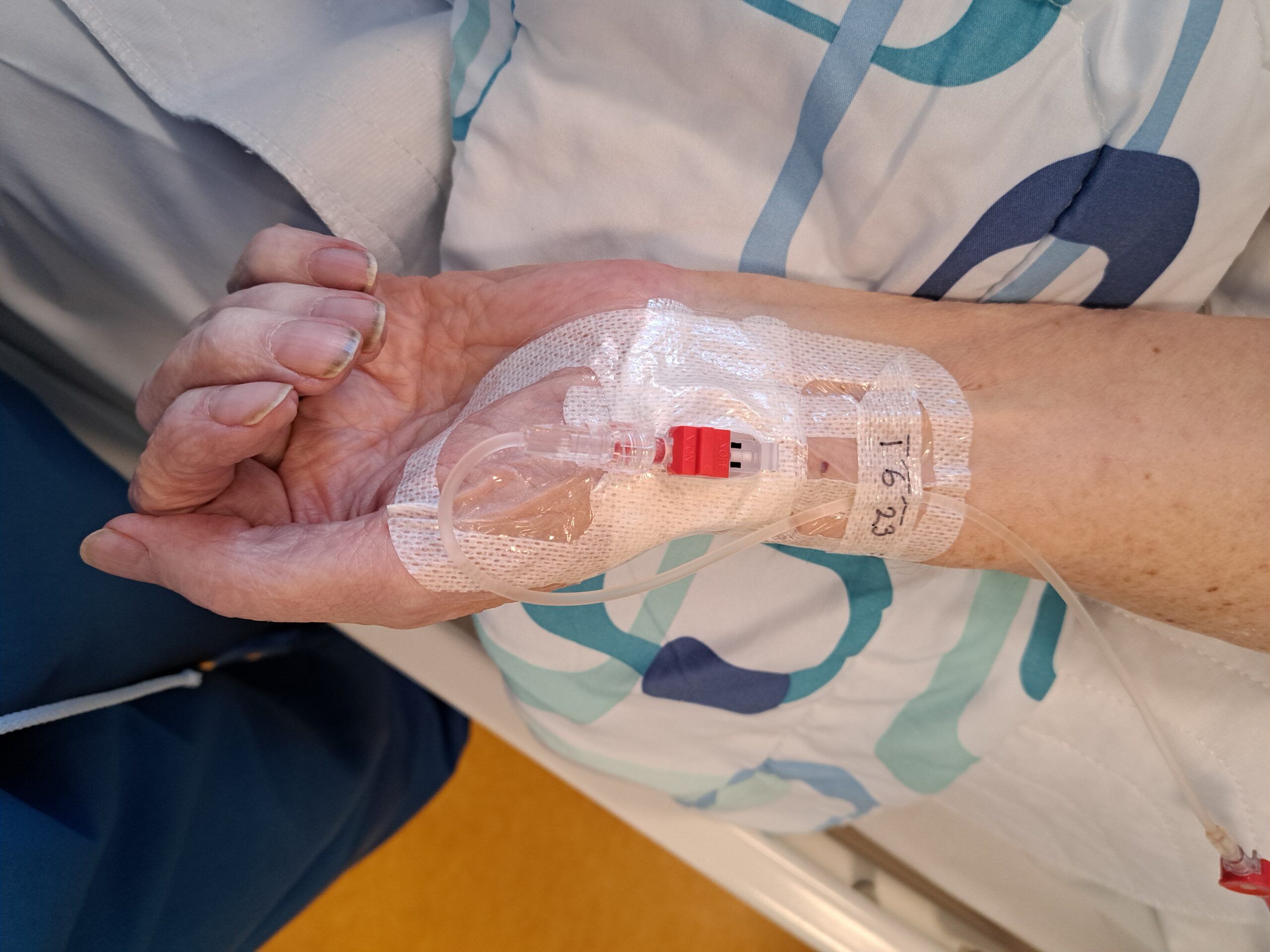
- Suture and Dressing: Secure the catheter to the skin using non-absorbable suture material (e.g., figure-of-eight stitch). Apply a sterile, transparent, occlusive dressing to cover the insertion site, ensuring the junction with the pressure tubing remains visible for inspection.
- Zeroing and Calibration: The system must be “zeroed” to atmospheric pressure at the level of the desired measurement point—usually the phlebostatic axis (mid-axillary line at the fourth intercostal space)—to ensure accurate readings.
Post-Procedure Management and Complications
Continuous vigilance is required to ensure the longevity and safety of the arterial line.
A. Ongoing Line Management
The integrity of the arterial line depends on maintaining sterility, patency, and accurate zeroing. The flush solution must be continuously pressured to greater than the patient’s systolic pressure (300 mmHg) to prevent backflow and clotting. Tubing and transducers should be changed according to institutional infection control protocols (typically every 72 to 96 hours).
B. Potential Complications
The overall complication rate for radial arterial cannulation is low, but serious sequelae can occur.
- Thrombosis (Most Common): Vessel occlusion due to clot formation is the most frequent complication, especially with larger catheters or prolonged cannulation. Clinically, this manifests as absent radial pulse distal to the catheter. Mitigating factors include using the smallest effective catheter gauge and ensuring continuous, adequate flushing.
- Infection: Catheter-related bloodstream infection (CRBSI) or local site infection. Prevention relies entirely on strict adherence to maximum sterile barrier precautions during insertion and continuous meticulous site care.
- Hemorrhage: Excessive bleeding can occur, particularly upon removal or in anticoagulated patients. Ensure secure suturing and apply sustained pressure (minimum 5 minutes, 10 minutes or more for anticoagulated patients) after decannulation.
- Arterial Spasm: A temporary but severe constriction of the artery wall, leading to a dampened waveform or failed placement attempt. This can sometimes be relieved by local injection of anesthetic or vasodilators (e.g., nitroglycerin).
- Neuropathy: Direct nerve injury (median or ulnar nerve) or compression from a large expanding hematoma is rare but serious. Any complaint of paresthesia or motor weakness warrants immediate investigation and potential line removal.
- Ischemia: The feared complication of radial artery cannulation. While the Allen’s test minimizes this risk, prolonged thrombosis or embolism can compromise blood flow, potentially leading to fingertip necrosis. This requires immediate intervention and surgical consultation.
Conclusion
Insertion of an arterial catheter into the radial artery is a foundational skill in critical care and anesthesiology, providing crucial real-time data for complex medical management. Adherence to a standardized, methodical, and strictly aseptic step-by-step approach—from pre-procedural risk assessment (especially the Allen’s Test) through precise cannulation using the Seldinger technique, to vigilant post-insertion management—is essential to maximize accuracy and minimize devastating iatrogenic complications. When the procedure is performed correctly and managed diligently, the arterial line remains an invaluable tool for optimal patient care.
References
- Dellinger, R. P., et al. (2016). Surviving Sepsis Campaign: International Guidelines for Management of Sepsis and Septic Shock 2016. Critical Care Medicine, 45(3), 486-552.
- Levy, J. H., & Kitch, B. T. (2018). Principles of Critical Care, 4th Edition. McGraw Hill Education.
- McGee, W. T., & Heard, S. O. (2009). Complications of arterial catheters: a systematic review of the literature. Critical Care Medicine, 37(12), S120-S128.
- Scheer, B., Perel, A., & Pfeiffer, U. J. (2002). Clinical review: complications and risk factors of peripheral arterial cannulation. Critical Care, 6(3), 198-204.
- Umscheid, C. A., et al. (2011). Catheter-related bloodstream infections in arterial catheters: a systematic review and meta-analysis. Critical Care Medicine, 39(8), 162-171.