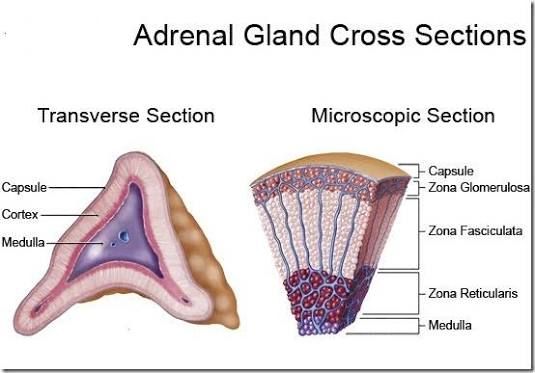
The adrenal glands, crucial components of the endocrine system, are small, triangular organs located atop each kidney. Their intricate anatomy comprises two distinct regions: the outer adrenal cortex and the inner adrenal medulla, each responsible for producing a unique set of hormones vital for regulating a myriad of physiological processes, including metabolism, blood pressure, stress response, and electrolyte balance. Disruptions in the delicate balance of hormone secretion, manifesting as either hyper-secretory (excessive production) or hypo-secretory (deficient production) disorders, can lead to severe and often life-threatening conditions. Understanding these disorders is paramount for accurate diagnosis and effective management.
Adrenal Cortex: Hormones and Disorders
The adrenal cortex is responsible for synthesizing three main classes of steroid hormones:
- Glucocorticoids (e.g., Cortisol): Regulate metabolism, immune response, and stress adaptation.
- Mineralocorticoids (e.g., Aldosterone): Control electrolyte balance and blood pressure.
- Adrenal Androgens (e.g., DHEA, Androstenedione): Contribute to secondary sex characteristics.
I. Hyper-secretory Disorders of the Adrenal Cortex
Hyper-secretion from the adrenal cortex results in conditions characterized by an excess of one or more of these steroid hormones.
A. Cushing’s Syndrome (Excess Cortisol) Cushing’s Syndrome is a constellation of signs and symptoms resulting from prolonged exposure to excessively high levels of cortisol.
- Causes:
- Exogenous: Most commonly caused by the overuse of corticosteroid medications (e.g., prednisone) for various inflammatory or autoimmune conditions.
- Endogenous (ACTH-dependent):
- Cushing’s Disease: Pituitary adenoma secreting excessive Adrenocorticotropic Hormone (ACTH), which stimulates the adrenal glands to produce more cortisol (accounts for ~70% of endogenous cases).
- Ectopic ACTH Syndrome: Non-pituitary tumors (e.g., small cell lung cancer, carcinoid tumors) secrete ACTH, leading to adrenal hyperplasia and cortisol overproduction.
- Endogenous (ACTH-independent):
- Adrenal Adenoma: Benign tumor in the adrenal cortex autonomously produces cortisol.
- Adrenal Carcinoma: Malignant tumor producing large amounts of cortisol, often with other adrenal steroids.
- Bilateral Macronodular Adrenal Hyperplasia: Enlarged adrenal glands overproducing cortisol.
- Symptoms: Central obesity (truncal obesity and “buffalo hump”), moon face (facial plethora), striae (purple stretch marks), muscle weakness and wasting, thin skin, easy bruising, hypertension, diabetes mellitus, osteoporosis, hirsutism (in women), menstrual irregularities, psychiatric disturbances (depression, anxiety).
- Diagnosis: Involves screening tests like 24-hour urinary free cortisol (UFC), late-night salivary cortisol, or low-dose dexamethasone suppression test. If elevated, further tests to differentiate ACTH-dependent from ACTH-independent causes include plasma ACTH measurement. Imaging (MRI of pituitary, CT/MRI of adrenals, CT of chest/abdomen/pelvis for ectopic sources) is used to localize the tumor.
- Treatment: Aims to normalize cortisol levels.
- Exogenous: Gradual withdrawal of corticosteroid medication.
- Cushing’s Disease: Transsphenoidal surgery to remove the pituitary adenoma. Radiation therapy or medical therapy (e.g., pasireotide, cabergoline) may be considered if surgery fails or is contraindicated.
- Adrenal Tumors: Surgical removal (adrenalectomy).
- Ectopic ACTH: Surgical removal of the ectopic tumor. Medical therapy (e.g., ketoconazole, metyrapone, mitotane) may be used to inhibit cortisol synthesis, especially if the tumor cannot be removed.
B. Primary Hyperaldosteronism (Conn’s Syndrome) (Excess Aldosterone) Primary hyperaldosteronism is characterized by excessive and autonomous production of aldosterone from the adrenal cortex, independent of the renin-angiotensin system, leading to hypertension and hypokalemia.
- Causes:
- Aldosterone-Producing Adenoma (APA): A benign tumor (Conn’s adenoma) in one adrenal gland (accounts for ~30-40% of cases).
- Bilateral Idiopathic Adrenal Hyperplasia (BIAH): Both adrenal glands are enlarged and overproduce aldosterone (accounts for ~60-70% of cases).
- Unilateral Adrenal Hyperplasia: Rare.
- Aldosterone-Producing Adrenocortical Carcinoma: Very rare malignant tumor.
- Familial Hyperaldosteronism (FH) Types I, II, III: Genetic forms.
- Symptoms: Predominantly hypertension (often resistant to conventional treatment), hypokalemia (leading to muscle weakness, fatigue, polyuria, nocturia, muscle cramps), metabolic alkalosis. Edema is usually absent due to “aldosterone escape.”
- Diagnosis: Initial screening involves measuring plasma aldosterone concentration (PAC) and plasma renin activity (PRA) or direct renin concentration (DRC). A high PAC/PRA ratio coupled with suppressed PRA is highly suggestive. Confirmatory tests include saline infusion test, oral sodium loading test, or fludrocortisone suppression test. Subtype differentiation (APA vs. BIAH) is crucial for guiding treatment and involves adrenal CT scan, followed by adrenal venous sampling (AVS) if surgical intervention is contemplated.
- Treatment:
- Aldosterone-Producing Adenoma: Unilateral laparoscopic adrenalectomy.
- Bilateral Idiopathic Adrenal Hyperplasia: Medical management with mineralocorticoid receptor antagonists (e.g., spironolactone, eplerenone) to block aldosterone’s effects, along with other antihypertensive agents. Spironolactone is also used for APA patients who are not surgical candidates.
C. Congenital Adrenal Hyperplasia (CAH) (Excess Adrenal Androgens from Precursor Accumulation) CAH refers to a group of inherited disorders characterized by enzyme deficiencies in the adrenal steroidogenesis pathway. While primarily leading to hypo-secretion of cortisol and/or aldosterone (see below), the block in synthesis often causes an accumulation of precursor hormones, which are then shunted towards androgen production, leading to hyper-secretion of adrenal androgens. The most common form is 21-hydroxylase deficiency.
- Causes: Autosomal recessive genetic defects in enzymes required for cortisol synthesis (e.g., 21-hydroxylase, 11β-hydroxylase, 17α-hydroxylase).
- Symptoms (due to androgen excess):
- Classic CAH (severe enzyme deficiency): In females, ambiguous genitalia at birth (virilization: clitoromegaly, partial labial fusion). In both sexes, precocious puberty, rapid growth in childhood followed by premature epiphyseal fusion and short adult stature.
- Non-classic CAH (NCCAH) (mild enzyme deficiency): Later onset of symptoms, often in adolescence or adulthood, mimicking polycystic ovary syndrome (PCOS) in females (hirsutism, acne, menstrual irregularities). Males may be asymptomatic or have early balding.
- Diagnosis: Elevated levels of 17-hydroxyprogesterone (17-OHP) for 21-hydroxylase deficiency (measured in newborn screening). ACTH stimulation test may be used for milder forms (NCCAH). Genetic testing confirms the diagnosis.
- Treatment: Glucocorticoid replacement therapy (e.g., hydrocortisone, dexamethasone) to suppress ACTH and, consequently, reduce adrenal androgen production. Mineralocorticoid replacement (fludrocortisone) is needed in salt-wasting forms. Surgical correction of ambiguous genitalia may be performed in affected females.
II. Hypo-secretory Disorders of the Adrenal Cortex
Hypo-secretion from the adrenal cortex results in conditions characterized by a deficiency of one or more steroid hormones.
A. Adrenal Insufficiency (Addison’s Disease) (Deficient Cortisol and/or Aldosterone) Adrenal insufficiency is a disorder characterized by inadequate production of adrenal hormones, primarily cortisol and often aldosterone.
- Causes:
- Primary Adrenal Insufficiency (Addison’s Disease): Direct damage to the adrenal cortex.
- Autoimmune Adrenalitis: Most common cause (~80%), where the immune system attacks and destroys the adrenal cortex. Often associated with other autoimmune diseases (e.g., Hashimoto’s thyroiditis, type 1 diabetes – Autoimmune Polyendocrine Syndromes, APS).
- Infections: Tuberculosis (historically common), fungal infections, HIV.
- Adrenal Hemorrhage: Bilateral bleeding into the adrenals (e.g., associated with sepsis, anticoagulation).
- Metastatic Cancer: Spread of cancer to the adrenal glands.
- Genetic Disorders: Congenital adrenal hyperplasia (severe forms), adrenoleukodystrophy.
- Drugs: Ketoconazole, etomidate.
- Secondary Adrenal Insufficiency: Deficiency of ACTH secretion from the pituitary gland, leading to reduced cortisol but usually preserved aldosterone production (as aldosterone is primarily regulated by the renin-angiotensin system).
- Causes: Pituitary tumors, cranial radiation, pituitary surgery, Sheehan’s syndrome (postpartum pituitary necrosis).
- Tertiary Adrenal Insufficiency: Deficiency of CRH (Corticotropin-Releasing Hormone) from the hypothalamus, leading to reduced ACTH and then cortisol.
- Causes: Most commonly, prolonged exogenous glucocorticoid therapy, which suppresses the HPA axis. Abrupt withdrawal can precipitate an adrenal crisis.
- Primary Adrenal Insufficiency (Addison’s Disease): Direct damage to the adrenal cortex.
- Symptoms: Chronic fatigue, weight loss, anorexia, nausea, vomiting, abdominal pain, hypotension, salt craving, hyperpigmentation of skin and mucous membranes (only in primary due to elevated ACTH), muscle and joint pain, hypoglycemia, hyponatremia, hyperkalemia (in primary due to aldosterone deficiency). An “adrenal crisis” is a life-threatening acute exacerbation with severe hypotension, shock, and electrolyte derangements.
- Diagnosis: Initial screening involves plasma cortisol levels (morning cortisol <3 mcg/dL is highly suggestive) and ACTH levels. The definitive test is the ACTH (cosyntropin) stimulation test: failure of cortisol to rise adequately after synthetic ACTH administration confirms primary adrenal insufficiency. Plasma renin activity and aldosterone levels help differentiate primary from secondary/tertiary causes (high renin/aldosterone with low cortisol/ACTH in primary, low renin/aldosterone with low cortisol/ACTH in secondary/tertiary). Imaging (CT of adrenals for primary, MRI of pituitary for secondary/tertiary) may identify underlying causes.
- Treatment: Lifelong hormone replacement therapy.
- Glucocorticoid Replacement: Hydrocortisone or prednisone in physiological doses.
- Mineralocorticoid Replacement: Fludrocortisone (only for primary adrenal insufficiency, due to aldosterone deficiency).
- Patient Education: Stress dosing (increasing glucocorticoid dose during illness, surgery, or stress), carrying an emergency identification and injectable glucocorticoid.
B. Congenital Adrenal Hyperplasia (CAH) (Deficient Cortisol and/or Aldosterone) As mentioned earlier, CAH encompasses a spectrum of enzyme deficiencies. While the block in synthesis leads to androgen excess, it simultaneously results in a deficiency of cortisol and/or aldosterone depending on the specific enzyme involved.
- Causes: Autosomal recessive genetic defects, most commonly 21-hydroxylase deficiency (90-95% of cases). This enzyme is crucial for converting 17-OHP to 11-deoxycortisol (a precursor to cortisol) and progesterone to deoxycorticosterone (a precursor to aldosterone).
- Symptoms (due to cortisol and/or aldosterone deficiency):
- Salt-wasting CAH (severe 21-hydroxylase deficiency): In addition to virilization, newborns present with an adrenal crisis 1-3 weeks after birth, characterized by vomiting, poor feeding, lethargy, dehydration, hypotension, hyponatremia, and hyperkalemia. This is due to both cortisol and aldosterone deficiency.
- Non-salt-wasting (simple virilizing) CAH: Sufficient aldosterone is produced, but cortisol is deficient, leading to chronic adrenal insufficiency.
- Diagnosis: Elevated 17-OHP (newborn screening). Electrolyte imbalances (hyponatremia, hyperkalemia) in salt-wasting forms. Genetic testing.
- Treatment: Lifelong glucocorticoid replacement (hydrocortisone) to provide physiological cortisol and suppress ACTH, thereby reducing androgen excess. Mineralocorticoid replacement (fludrocortisone) and salt supplementation are necessary for salt-wasting forms.
Adrenal Medulla: Hormones and Disorders
The adrenal medulla, the inner part of the adrenal gland, synthesizes and secretes catecholamines:
- Epinephrine (Adrenaline): Primary hormone, involved in “fight or flight” response.
- Norepinephrine (Noradrenaline): Also a neurotransmitter, involved in vasoconstriction and blood pressure.
I. Hyper-secretory Disorders of the Adrenal Medulla
Hyper-secretion from the adrenal medulla is almost exclusively due to catecholamine-producing tumors.
A. Pheochromocytoma and Paraganglioma (Excess Catecholamines) Pheochromocytoma is a rare tumor of the chromaffin cells in the adrenal medulla that produces and secretes excessive amounts of catecholamines (epinephrine, norepinephrine, and dopamine). Paragangliomas are extra-adrenal tumors arising from sympathetic or parasympathetic paraganglia that also secrete catecholamines (sympathetic paragangliomas) or are non-secretory (parasympathetic paragangliomas).
- Causes:
- Sporadic (most cases).
- Genetic Syndromes (~30-40% of cases): Multiple Endocrine Neoplasia type 2 (MEN2A and MEN2B), Von Hippel-Lindau (VHL) disease, Neurofibromatosis type 1 (NF1), Succinate Dehydrogenase (SDH) gene mutations (SDHA, SDHB, SDHC, SDHD, SDHAF2).
- Symptoms: Highly variable and often paroxysmal (“spells” or “attacks”). The classic triad includes:
- Hypertension: Often severe, sustained or paroxysmal, resistant to treatment.
- Headache: Severe, throbbing.
- Palpitations: Tachycardia, forceful heartbeats.
- Other symptoms: Sweating, tremor, anxiety, pallor, chest pain, abdominal pain, weight loss, glucose intolerance.
- Diagnosis: Biochemical testing for elevated catecholamines and their metabolites.
- Plasma Free Metanephrines: Highly sensitive, preferred screening test.
- 24-hour Urinary Fractionated Metanephrines and Catecholamines: Also highly sensitive and specific.
- Imaging: Once biochemical diagnosis is confirmed, CT or MRI of the abdomen is used to localize the tumor. MIBG (metaiodobenzylguanidine) scintigraphy or PET scanning (e.g., using 18F-FDOPA) may be used for identifying metastatic or extra-adrenal disease, especially in genetic cases. Genetic testing is recommended for most patients.
- Treatment:
- Surgical Resection: The definitive treatment. Laparoscopic adrenalectomy for adrenal pheochromocytomas.
- Preoperative Alpha-Blockade: Crucial to prevent a hypertensive crisis during surgery. Phenoxybenzamine (non-selective, irreversible alpha-blocker) or prazosin/doxazosin/terazosin (selective alpha-blockers) are used for 7-14 days prior to surgery.
- Beta-Blockade: Added only after adequate alpha-blockade has been established, to control tachycardia and arrhythmias.
- For metastatic or inoperable disease, chemotherapy, radiotherapy, or targeted radionuclide therapy (e.g., 177Lu-DOTATATE) may be considered.
II. Hypo-secretory Disorders of the Adrenal Medulla
Isolated hypo-secretion of the adrenal medulla is an exceedingly rare condition and typically does not manifest as a distinct clinical syndrome.
A. Adrenal Medulla Hypofunction
- Causes:
- Severe, bilateral destruction of the adrenal glands, which might also lead to cortical insufficiency (e.g., massive adrenal hemorrhage, extensive adrenalectomy).
- Rare genetic conditions or congenital agenesis of the adrenal medulla.
- Symptoms: Clinical symptoms directly attributable to isolated adrenal medulla hypofunction are usually absent or very subtle. This is because the sympathetic nervous system, through its direct innervation of target organs and the release of norepinephrine from nerve endings, can largely compensate for the absence of adrenal medullary catecholamines. Other organs (e.g., brain) also produce some catecholamines.
- Patients might experience a slightly impaired ability to respond to severe stress (e.g., hypoglycemia, extreme cold, intense exercise) where a surge of adrenal epinephrine would normally play a crucial role. Some might have orthostatic hypotension, although this is more commonly associated with widespread autonomic dysfunction.
- Diagnosis: Measurement of plasma and urinary catecholamines (epinephrine, norepinephrine) and metanephrines would show very low or undetectable levels of epinephrine. However, this is rarely clinically pursued unless as part of a broader investigation into adrenal function or severe autonomic failure.
- Treatment: No specific treatment for isolated adrenal medulla hypofunction is typically required due to the compensatory mechanisms of the sympathetic nervous system. Management focuses on the underlying cause if identifiable, and support for any related autonomic dysfunction.
Conclusion
The adrenal glands are integral to endocrine homeostasis, producing a complex array of hormones essential for life. Both hyper-secretory and hypo-secretory disorders of the adrenal cortex and medulla present with distinct and often severe clinical syndromes. From the metabolic derangements of Cushing’s syndrome and the electrolyte imbalances of primary hyperaldosteronism and Addison’s disease, to the dramatic hypertensive crises of pheochromocytoma, accurate and timely diagnosis is critical. Therapeutic strategies range from surgical intervention to lifelong hormone replacement, demanding a nuanced understanding of adrenal physiology and pathology. Continued research into the genetic and molecular underpinnings of these disorders further refines our diagnostic and therapeutic approaches, ultimately improving patient outcomes.
References:
- Williams Textbook of Endocrinology. 14th ed. Melmed S, Auchus RJ, Goldfine AB, Koenig RJ, Rosen CJ (Eds). Elsevier; 2020.
- Harrison’s Principles of Internal Medicine. 21st ed. Loscalzo J, Fauci AS, Kasper DL, Hauser SL, Longo DL, Jameson JL (Eds). McGraw Hill; 2022.
- Endocrine Society Clinical Practice Guidelines:
- Funder JW, Carey RM, Mantero A, et al. The Management of Primary Aldosteronism: An Endocrine Society Clinical Practice Guideline. J Clin Endocrinol Metab. 2016;101(5):1889-1916.
- Nieman LK, Biller BM, Findling JW, et al. The Diagnosis of Cushing’s Syndrome: An Endocrine Society Clinical Practice Guideline. J Clin Endocrinol Metab. 2008;93(5):1526-1540.
- Bornstein SR, Allolio B, Arlt W, et al. Diagnosis and Treatment of Primary Adrenal Insufficiency: An Endocrine Society Clinical Practice Guideline. J Clin Endocrinol Metab. 2016;101(2):364-389.
- Pheochromocytoma and Paraganglioma (PPGL): An Endocrine Society Clinical Practice Guideline. J Clin Endocrinol Metab. 2022;107(1):1-58.
- National Institute of Diabetes and Digestive and Kidney Diseases (NIDDK). Adrenal Gland Disorders. Available at: www.niddk.nih.gov/health-information/endocrine-diseases/adrenal-gland-disorders.
- Newell-Price J, Bertagna X, Grossman AB, Nieman LK. Cushing’s syndrome. Lancet. 2 006;367(9524):1605-1617.
- Arlt W, Allolio B. Adrenal insufficiency. Lancet. 2003;361(9374):1881-1893.