Acid-fast staining is a crucial differential staining technique employed in microbiology to identify bacteria possessing a waxy cell wall. This unique characteristic, conferred by mycolic acids, makes these organisms resistant to decolorization by acid-alcohol, a property that forms the bedrock of this staining method. The primary clinical significance of acid-fast staining lies in its ability to detect Mycobacterium species, including Mycobacterium tuberculosis, the causative agent of tuberculosis, and Mycobacterium leprae, responsible for leprosy. Understanding the principle behind this staining and meticulously following its procedural steps are paramount for accurate diagnosis and effective treatment.
Principle of Acid-Fast Staining:
The principle of acid-fast staining hinges on the differential permeability and resistance of bacterial cell walls to certain reagents. Bacteria are broadly classified into two groups based on their response to this staining technique: acid-fast and non-acid-fast.
- Acid-Fast Bacteria: These bacteria, predominantly Mycobacterium species, possess a cell wall rich in lipids, particularly mycolic acids. Mycolic acids are long-chain fatty acids that contribute significantly to the hydrophobic nature and impermeability of the mycobacterial cell envelope. During the staining procedure, when a strong primary stain, typically carbolfuchsin, combines with heat or a wetting agent, it penetrates the waxy cell wall. Once the stain has permeated, the mycolic acid layer acts as a barrier, preventing the subsequent decolorizing agent (acid-alcohol) from washing the stain out. Consequently, acid-fast bacteria retain the primary stain, appearing red or magenta under the microscope.
- Non-Acid-Fast Bacteria: In contrast, non-acid-fast bacteria, such as most Gram-positive and Gram-negative organisms, have cell walls that lack or have significantly lower concentrations of mycolic acids. Their cell walls are more permeable. While the primary stain (carbolfuchsin) may initially adhere to these bacteria, the acid-alcohol decolorizing agent effectively removes it. These bacteria then become decolorized and are subsequently counterstained with a contrasting dye, usually methylene blue. This allows them to be visualized as blue or green under the microscope, distinguishing them from the red acid-fast bacilli.
Key Components and Their Roles:
- Carbolfuchsin: This is the primary stain. It is an aniline dye dissolved in an aqueous solution of phenol. Phenol acts as a wetting agent, helping the stain to penetrate the waxy cell wall, and also increases the affinity of the dye for the cell. The combination of carbolfuchsin and phenol is crucial for its efficacy.
- Heat or a Wetting Agent: Applying heat (steam) during the application of carbolfuchsin is the traditional and most effective method. The heat helps to liquefy the waxy mycolic acids, allowing the carbolfuchsin to penetrate deep into the cell wall. Alternatively, a wetting agent like tergitol can be used to lower the surface tension and facilitate the penetration of carbolfuchsin without the need for heat, making it a safer option in some settings.
- Acid-Alcohol (Decolorizing Agent): This is the differential decolorizing agent. It is a solution of concentrated hydrochloric acid (HCl) in ethanol. The acid weakens the cell wall structure, and the alcohol dehydrates and removes lipids. For acid-fast bacteria, the waxy mycolic acids resist decolorization. Non-acid-fast bacteria, lacking this resistance, are easily decolorized.
- Methylene Blue (Counterstain): This is the secondary stain, chosen for its contrasting color to carbolfuchsin. Once the non-acid-fast bacteria have been decolorized, methylene blue stains them blue, making them visible against the red background of any acid-fast bacilli present.
Procedure of Acid-Fast Staining (Kinyoun Method – Cold Method):
The Kinyoun staining method, also known as the “cold” method, is a popular and often preferred alternative to the Ziehl-Neelsen method because it does not require heating. This makes it safer, more convenient, and suitable for situations where heating is impractical or hazardous. The procedure involves several distinct steps, each contributing to the differential staining outcome:
1. Preparation of the Smear:
- Sample Collection: Obtain the appropriate biological sample (e.g., sputum, urine, cerebrospinal fluid, tissue biopsy).
- Smear Preparation: Place a small drop of the sample onto a clean, grease-free glass microscope slide. If the sample is solid, emulsify a small portion in a drop of sterile water or saline.
- Spreading: Spread the sample thinly and evenly to create a thin smear. Avoid making the smear too thick, as this can impede proper staining and visualization.
- Air Drying: Allow the smear to air dry completely. This is crucial for fixing the bacteria to the slide.
- Heat Fixing: Gently pass the underside of the slide through a Bunsen burner flame a few times. This heat fixes the bacteria to the slide, preventing them from washing off during the staining process and coagulates cellular proteins, aiding in cell wall penetration. Be careful not to overheat, as this can distort the cells.
2. Application of the Primary Stain (Carbolfuchsin):
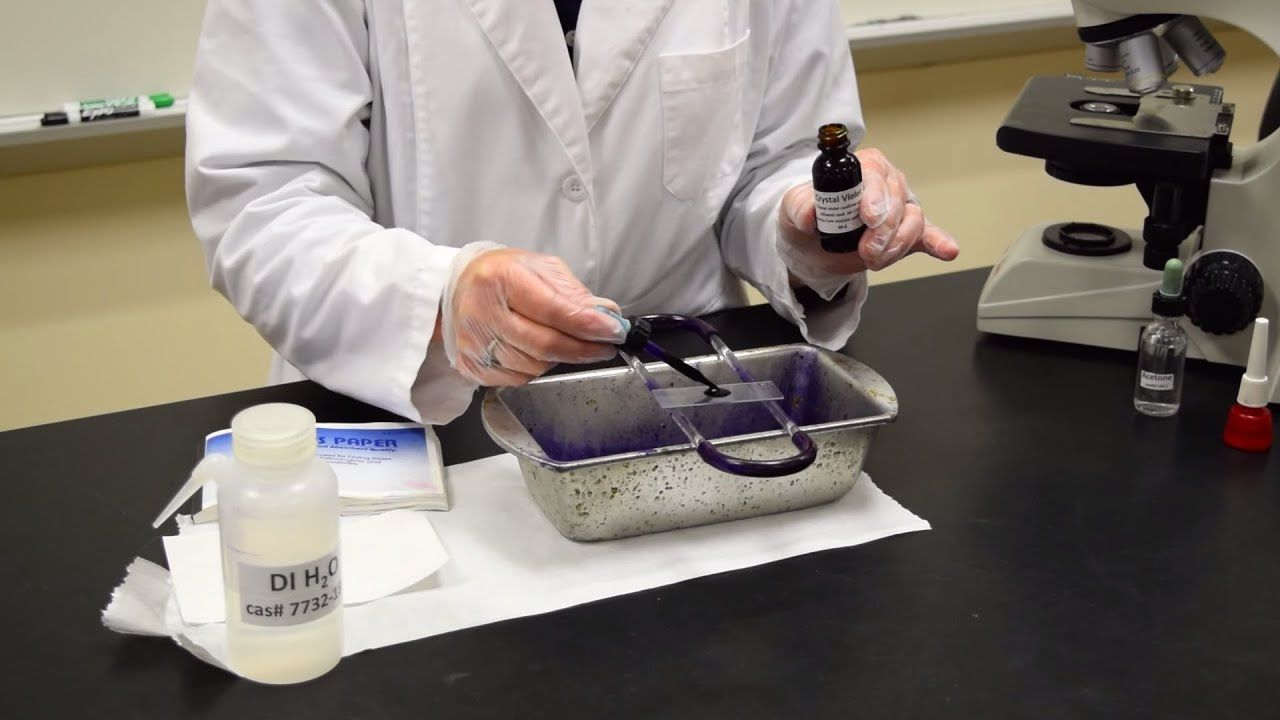
- Flooding the Smear: Flood the entire smear with the carbolfuchsin solution. Ensure that the stain completely covers the fixed smear.
- Contact Time: Allow the carbolfuchsin to remain in contact with the smear for 5 minutes.
- Wetting Agent’s Role: In the Kinyoun method, carbolfuchsin is typically prepared with a higher concentration of phenol or a wetting agent. This facilitates the penetration of the stain into the mycolic acid layer of the cell wall, even without the application of heat.
3. Decolorization (Washing with Acid-Alcohol):
- Rinsing: After 5 minutes of contact with carbolfuchsin, gently rinse the slide with tap water to remove excess stain.
- Application of Acid-Alcohol: Hold the slide at an angle and carefully apply the acid-alcohol solution. Allow the acid-alcohol to run down the smear.
- Decolorization Time: Continue applying the acid-alcohol until the decolorizing fluid runs off the slide almost colorless. This typically takes 15-30 seconds. The exact time will depend on the thickness of the smear and the strength of the acid-alcohol.
- Crucial Step: This is the critical differentiation step. Acid-fast bacilli will retain the red carbolfuchsin due to their resistant cell wall. Non-acid-fast bacteria will be decolorized.
4. Counterstaining (Methylene Blue):
- Rinsing: Rinse the slide thoroughly with tap water to remove all traces of the acid-alcohol.
- Application of Methylene Blue: Flood the smear with methylene blue solution.
- Staining Time: Allow the methylene blue to stain the smear for 1-2 minutes.
- Purpose: This counterstain will color the decolorized (non-acid-fast) bacteria.
5. Final Rinsing and Drying:
- Rinsing: Gently rinse the slide with tap water to remove excess methylene blue.
- Blotting: Carefully blot the slide dry with bibulous paper or a clean, lint-free cloth. Avoid rubbing the smear, as this can damage it.
6. Microscopic Examination:
- Magnification: Examine the stained smear under an oil immersion objective lens (100x magnification).
- Observation: Look for red or magenta rod-shaped bacteria (acid-fast bacilli). These are the target organisms, such as Mycobacterium tuberculosis. The background and any non-acid-fast bacteria will appear blue or green.
- Reporting: The presence of acid-fast bacilli in significant numbers can be indicative of an infection. The number of bacilli observed per field of view is often quantified to assess the bacterial load and guide treatment.
Procedure of Acid-Fast Staining (Ziehl-Neelsen Method – Hot Method):
The Ziehl-Neelsen method is the original and more sensitive acid-fast staining technique, utilizing heat to enhance the penetration of the primary stain. While highly effective, it requires more caution due to the use of heat and carries a higher risk of damaging the specimen if not performed meticulously.
1. Preparation of the Smear (Identical to Kinyoun Method):
- Sample collection, smear preparation, air drying, and heat fixing are performed as described for the Kinyoun method.
2. Application of the Primary Stain (Carbolfuchsin with Heat):
- Placing the Slide: Place the fixed smear on a staining rack positioned over a beaker of water being heated to steaming point. Alternatively, directly steam the slide over a Bunsen burner.
- Flooding with Carbolfuchsin: Thoroughly saturate the smear with carbolfuchsin solution.
- Heating: Apply heat to the slide by holding it over the steam. The carbolfuchsin should steam but not boil. Continue heating for 5 minutes. Replenish the carbolfuchsin if it evaporates too quickly.
- Significance of Heat: The heat melts the waxy mycolic acids, allowing the carbolfuchsin to penetrate effectively.
3. Decolorization (Washing with Acid-Alcohol):
- Rinsing: After steaming, rinse the slide gently with tap water.
- Application of Acid-Alcohol: Hold the slide at an angle and carefully apply the acid-alcohol solution.
- Decolorization Time: Continue applying the acid-alcohol until the decolorizing fluid runs off the slide almost colorless. This typically takes 15-30 seconds.
- Critical Differentiation: Similar to the Kinyoun method, this step differentiates acid-fast from non-acid-fast organisms.
4. Counterstaining (Methylene Blue):
- Rinsing: Rinse the slide thoroughly with tap water to remove all traces of acid-alcohol.
- Application of Methylene Blue: Flood the smear with methylene blue solution.
- Staining Time: Allow the methylene blue to stain the smear for 1-2 minutes.
5. Final Rinsing and Drying (Identical to Kinyoun Method):
- Rinse the slide gently with tap water.
- Carefully blot the slide dry with bibulous paper or a clean, lint-free cloth.
6. Microscopic Examination (Identical to Kinyoun Method):
- Examine under oil immersion (100x).
- Observe for red/magenta acid-fast bacilli and blue/green non-acid-fast organisms and background.
Quality Control and Troubleshooting
- Reagent Quality: Ensure that all reagents are fresh and properly prepared. Stale reagents can lead to unreliable results.
- Smear Thickness: Overly thick smears can lead to over-decolorization and false negatives.
- Decolorization Time: Inadequate decolorization can result in false positives (non-acid-fast organisms appearing red). Over-decolorization can lead to false negatives (acid-fast organisms losing their stain).
- Heat Application (Ziehl-Neelsen): Excessive heat can rupture the cells, leading to poor staining. Insufficient heat may result in incomplete penetration of the primary stain.
- Positive and Negative Controls: It is good practice to run known positive (e.g., a culture known to contain Mycobacterium) and negative (e.g., a smear of a non-mycobacterial organism) control slides alongside patient samples to validate the staining procedure.
Conclusion
Acid-fast staining, whether performed using the Kinyoun (cold) or Ziehl-Neelsen (hot) method, is an indispensable diagnostic tool in microbiology. Its principle, rooted in the unique lipid composition of the mycobacterial cell wall, allows for the specific identification of these clinically significant pathogens. By meticulously adhering to the step-by-step procedure, including proper smear preparation, controlled application of stains, and critical decolorization, clinicians and laboratorians can reliably detect the presence of acid-fast bacilli, facilitating timely diagnosis and intervention for diseases like tuberculosis and leprosy. A thorough understanding of both the underlying principle and the procedural nuances ensures the accuracy and efficacy of this vital staining technique.
References
- Banchroft, J. D., & Gamble, M. (2017). Theory and Practice of Histological Techniques (7th ed.). Churchill Livingstone.
- Cappuccino, J. G., & Sherman, N. (2019). Microbiology: A Laboratory Manual (11th ed.). Pearson.
- Forbes, B. A., Sahm, D. F., & Weissfeld, A. S. (2018). Bailey & Scott’s Diagnostic Microbiology (14th ed.). Elsevier.
- Geoffrey, S. (2013). Bacteriology Illustrated (3rd ed.). Churchill Livingstone.
- Murray, P. R., Rosenthal, K. S., & Pfaller, M. A. (2020). Medical Microbiology (9th ed.). Elsevier.
- Reeves, M. W. (2010). Staining Methods. In Manual of Clinical Microbiology (10th ed., pp. 253-264). ASM Press.