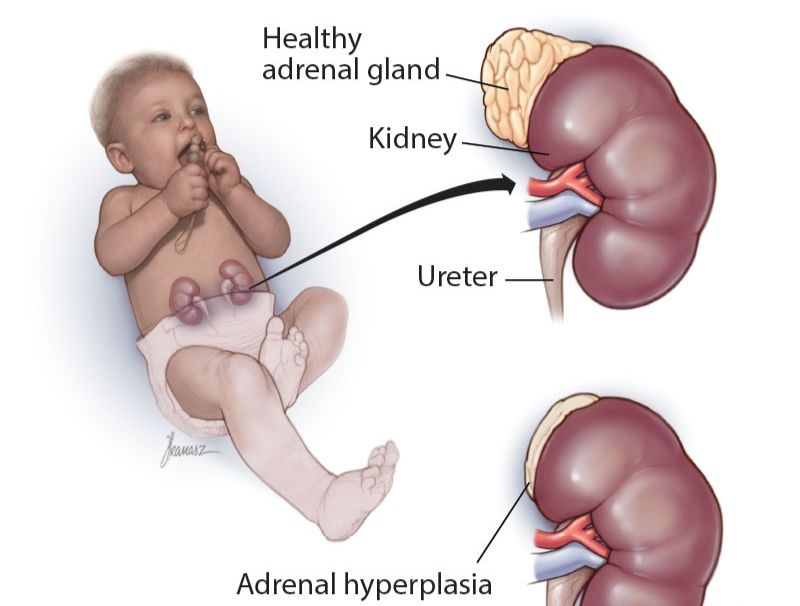
Adrenogenital Syndrome (AGS), most commonly referred to as Congenital Adrenal Hyperplasia (CAH), is a group of autosomal recessive disorders characterized by deficient enzyme activity in the adrenal cortex, leading to impaired cortisol synthesis. This metabolic block results in a compensatory increase in adrenocorticotropic hormone (ACTH) secretion from the pituitary, which in turn causes adrenal hyperplasia and the overproduction of steroid precursors, particularly androgens. The clinical presentation varies widely depending on the specific enzyme deficiency and the severity of the block, ranging from life-threatening salt-wasting crises in neonates to asymptomatic forms discovered in adulthood. Understanding the spectrum of AGS is crucial for timely diagnosis and effective management, which are paramount for preventing severe complications and improving quality of life.
Etiology of Adrenogenital Syndrome
The primary etiology of Adrenogenital Syndrome lies in genetic mutations affecting the enzymes involved in adrenal steroidogenesis. Over 90% to 95% of all CAH cases are due to a deficiency of the 21-hydroxylase enzyme (CYP21A2 gene), located on chromosome 6p21.3. This enzyme is critical for converting 17-hydroxyprogesterone (17-OHP) into 11-deoxycortisol (a precursor to cortisol) and progesterone into deoxycorticosterone (a precursor to aldosterone). The deficiency leads to a build-up of upstream precursors, which are then shunted into the adrenal androgen pathway, resulting in excessive production of androstenedione and testosterone.
While 21-hydroxylase deficiency is by far the most prevalent, other less common enzymatic defects can also cause AGS:
- 11β-hydroxylase Deficiency (CYP11B1 gene): This deficiency leads to an inability to convert 11-deoxycortisol to cortisol and deoxycorticosterone to corticosterone. It results in elevated levels of 11-deoxycortisol and deoxycorticosterone. Deoxycorticosterone has mineralocorticoid activity, often leading to hypertension and hypokalemia, in addition to androgen excess.
- 3β-hydroxysteroid Dehydrogenase Deficiency (HSD3B2 gene): This enzyme is required for the synthesis of all major adrenal steroids (cortisol, aldosterone, androgens) from their precursors. Deficiency can lead to varying degrees of cortisol and aldosterone deficiency, along with an accumulation of weak androgens (DHEA, DHEAS), often resulting in incomplete virilization in genetic males and mild virilization in genetic females.
- 17α-hydroxylase Deficiency (CYP17A1 gene): This rare deficiency impairs both glucocorticoid and sex steroid synthesis. It leads to cortisol deficiency, a lack of sex steroids, and an accumulation of mineralocorticoid precursors, causing hypertension and hypokalemia, along with sexual infantilism.
- Steroidogenic Acute Regulatory (StAR) Protein Deficiency: A very severe form (lipoid CAH) where cholesterol transport into the mitochondria is impaired, leading to a near-complete block in all adrenal and gonadal steroid synthesis. It presents with severe adrenal insufficiency and complete sex reversal in genetic males.
All forms of CAH are inherited in an autosomal recessive pattern, meaning an individual must inherit two copies of the mutated gene (one from each parent) to be affected. The severity of the clinical manifestation correlates with the degree of enzymatic impairment, influenced by the specific gene mutation.
Clinical Features
The clinical presentation of AGS is highly variable, largely dictated by the specific enzyme deficiency and its severity. It is broadly categorized into classic and non-classic forms, primarily based on the degree of 21-hydroxylase activity.
(a) Classic Forms of 21-Hydroxylase Deficiency:
These are the most severe forms, typically presenting in infancy:
- Salt-Wasting CAH (SW-CAH): This is the most severe and common classic form, occurring in approximately 75% of classic CAH cases. It involves a severe deficiency of both cortisol and aldosterone.
- In Genetic Females (XX): At birth, external genitalia are ambiguous due to excessive prenatal androgen exposure (virilization). This can range from moderate clitoromegaly with labial fusion to a nearly male-like appearance with a urogenital sinus. Internally, the reproductive organs (uterus, fallopian tubes, ovaries) are normal.
- In Genetic Males (XY): External genitalia appear normal at birth, as they are already exposed to endogenous testosterone. This often leads to delayed diagnosis until a salt-wasting crisis occurs.
- Salt-Wasting Crisis: Typically manifests between 1-3 weeks of life, regardless of sex. Symptoms include vomiting, poor feeding, lethargy, weight loss, dehydration, hyponatremia, hyperkalemia, metabolic acidosis, hypotension, and potentially shock, which can be life-threatening if not promptly treated.
- Simple Virilizing CAH (SV-CAH): This form involves a less severe enzyme deficiency, allowing for sufficient aldosterone production to prevent a salt-wasting crisis, but cortisol deficiency still leads to androgen excess.
- In Genetic Females (XX): Ambiguous genitalia at birth, similar to SW-CAH but often less severe. They do not experience a salt-wasting crisis in infancy.
- In Genetic Males (XY): Normal genitalia at birth. Signs appear later, including premature pubarche, rapid growth, advanced bone age, phallic enlargement, and acne by childhood. Untreated, they will experience true precocious puberty.
(b) Non-Classic CAH (NC-CAH):
This is the mildest form of 21-hydroxylase deficiency, often presenting later in childhood, adolescence, or adulthood. It involves a partial enzyme deficiency where enough cortisol can be produced even under stress, and aldosterone production is usually normal.
- In Females: Clinical signs are often subtle and include premature pubarche (early development of pubic or axillary hair), hirsutism (excessive hair growth in a male pattern), acne, oligomenorrhea or amenorrhea, polycystic ovary syndrome (PCOS)-like symptoms, and infertility. Virilization is usually absent at birth.
- In Males: Often asymptomatic, but can present with premature pubarche, accelerated growth, advanced bone age, or sometimes male pattern baldness and oligozoospermia/infertility.
(c) Other Forms:
Clinical features for other enzyme deficiencies are distinct:
- 11β-hydroxylase Deficiency: Virilization (ambiguous genitalia in females, precocious puberty in males) combined with hypertension and hypokalemia.
- 3β-hydroxysteroid Dehydrogenase Deficiency: Varies from severe adrenal insufficiency in infancy to mild virilization in females and incomplete virilization (hypospadias) in males.
- 17α-hydroxylase Deficiency: Sexual infantilism (lack of puberty, primary amenorrhea in females, pseudohermaphroditism in males) along with hypertension and hypokalemia.
Diagnostic Workup
Prompt and accurate diagnosis of AGS is crucial, especially for preventing life-threatening salt-wasting crises.
- Newborn Screening: All states in the U.S. and many other countries include CAH in their newborn screening programs. A heel prick blood sample is analyzed for elevated 17-hydroxyprogesterone (17-OHP) levels.
- Interpretation: Significantly elevated 17-OHP strongly suggests CAH. However, false positives can occur, especially in premature or stressed infants, necessitating confirmatory testing.
- Hormonal Assays (Confirmatory):
- 17-OHP: The cornerstone of diagnosis for 21-hydroxylase deficiency. Markedly elevated basal levels are diagnostic for classic CAH. For milder forms (NC-CAH), a baseline 17-OHP may be normal or mildly elevated, and an ACTH stimulation test is required.
- ACTH Stimulation Test: Synthetic ACTH (cosyntropin) is administered, and blood samples are drawn before and 30-60 minutes after administration to measure 17-OHP, cortisol, and other steroid precursors. A robust rise in 17-OHP, DHEA, androstenedione, and testosterone with a blunted cortisol response is diagnostic for 21-hydroxylase deficiency, particularly in NC-CAH where baseline levels may be equivocal.
- Adrenal Androgens: Elevated DHEA, DHEAS, androstenedione, and testosterone are characteristic of androgen excess. Androstenedione is a particularly useful marker for monitoring treatment effectiveness.
- Renin Activity and Aldosterone: For salt-wasting forms, plasma renin activity (PRA) will be elevated due to aldosterone deficiency, while aldosterone levels will be low or undetectable. These are critical for assessing mineralocorticoid status.
- Electrolytes: In salt-wasting crisis, hyponatremia and hyperkalemia are present. Blood glucose may be low due to cortisol deficiency.
- Genetic Testing:
- CYP21A2 Gene Analysis: Confirmation of the diagnosis and identification of specific mutations provides prognostic information regarding the severity of the disease (e.g., specific mutations associated with salt-wasting vs. simple virilizing forms). This is valuable for genetic counseling and prenatal diagnosis.
- Karyotyping (Chromosomal Analysis): Essential for genetic females (XX) with ambiguous genitalia to confirm their genetic sex and rule out other causes of ambiguous genitalia (e.g., mixed gonadal dysgenesis, androgen insensitivity syndrome).
- Imaging Studies:
- Pelvic Ultrasound: In genetic females, it can identify normal internal female reproductive organs (uterus, ovaries), which distinguishes CAH from certain forms of DSD.
- Bone Age Radiographs: Used to monitor the effect of androgen excess and treatment on skeletal maturation; advanced bone age suggests poor disease control.
- Adrenal Ultrasound/MRI: May show adrenal hyperplasia but is not typically diagnostic.
Management
The management of AGS is multifaceted and lifelong, requiring a dedicated multidisciplinary team comprising endocrinologists, geneticists, surgeons, psychologists, and social workers. The primary goals are to replace deficient hormones, suppress excessive androgen production, manage ambiguous genitalia, and ensure normal growth, puberty, and psychosocial development.
1. Acute Management (Salt-Wasting Crisis):
This is a medical emergency requiring immediate intervention:
- Fluid Resuscitation: Intravenous normal saline and dextrose to correct dehydration, hypotension, and hypoglycemia.
- Glucocorticoid Replacement: Bolus intravenous hydrocortisone (stress dose) is administered immediately to replace cortisol and suppress ACTH, thereby halting androgen overproduction.
- Mineralocorticoid Replacement: Intravenous fludrocortisone can be initiated once the patient is stabilized, or oral fludrocortisone once the patient can tolerate oral intake.
- Electrolyte Correction: Hyperkalemia may require specific treatments (e.g., insulin and glucose, calcium gluconate).
2. Chronic Hormone Replacement Therapy:
- Glucocorticoids (Hydrocortisone): This is the cornerstone of chronic therapy for all classic forms of CAH. The lowest effective dose of hydrocortisone is administered to replace cortisol and suppress ACTH to normalize adrenal androgen levels (androstenedione and testosterone). Dosing needs careful titration to balance androgen suppression with avoiding iatrogenic Cushing’s syndrome (e.g., growth retardation, weight gain). Stress doses are required during illness, surgery, or psychological stress.
- Mineralocorticoids (Fludrocortisone): Essential for patients with salt-wasting CAH. Fludrocortisone replaces aldosterone, improving blood pressure, preventing sodium loss, and normalizing plasma renin activity. Salt supplementation (sodium chloride) is frequently added, especially in infancy, to ensure adequate sodium intake.
- Non-Classic CAH: Many individuals with NC-CAH do not require continuous treatment. Therapy may be initiated for managing specific symptoms like severe hirsutism, acne, menstrual irregularities, or infertility. Low-dose glucocorticoids are typically used.
3. Surgical Management:
- Genitoplasty (Reconstructive Surgery): For genetic females with ambiguous genitalia, surgical correction may be considered. This typically involves clitoroplasty (reduction of clitoral size) and vaginoplasty (creation or enlargement of the vaginal opening). The timing of surgery is a subject of ongoing debate, with some advocating for early surgery in infancy to assign a clear gender, and others preferring to defer major surgeries until the child is old enough to participate in decision-making. A multidisciplinary approach involving pediatric endocrinologists, surgeons, and psychologists is essential.
4. Monitoring and Follow-up:
Lifelong monitoring is critical:
- Hormonal Levels: Regular measurement of 17-OHP, androstenedione, and testosterone to assess exogenous glucocorticoid effectiveness and control of androgen production. Plasma renin activity (PRA) is monitored in salt-wasting patients to assess mineralocorticoid adequacy.
- Growth and Development: Serial measurement of height, weight, and Tanner staging. Bone age radiographs are periodically obtained to assess skeletal maturation and ensure optimal growth.
- Blood Pressure and Electrolytes: Especially important for patients on mineralocorticoid replacement and those with 11β-hydroxylase deficiency.
- Psychological Support: Patients and families often benefit from psychological counseling to cope with the chronic nature of the disease, body image issues (especially in females), gender identity, and potential fertility challenges. Support groups can also play a vital role.
5. Fertility and Pregnancy:
- Females: With optimal management, women with classic CAH can often achieve pregnancy, though they may require assisted reproductive technologies. Glucocorticoid adjustment during pregnancy is crucial.
- Males: Fertility in males with classic CAH can be complicated by adrenal rest tumors in the testes, which can impair spermatogenesis.
6. Prenatal Diagnosis and Treatment (Controversial):
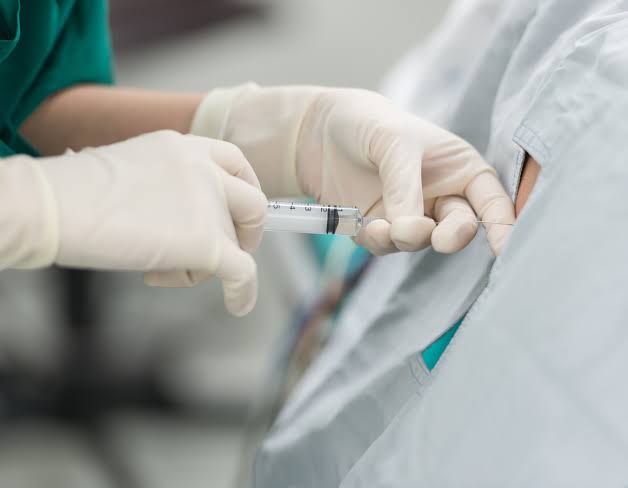
For at-risk pregnancies (when both parents are carriers of a severe CAH mutation), prenatal diagnosis via chorionic villus sampling or amniocentesis can determine fetal genotype and sex. If it’s a female fetus affected with classic CAH, prenatal treatment with maternal dexamethasone can be initiated in the first trimester to suppress fetal adrenal androgen production and prevent or reduce virilization of the external genitalia. However, this treatment is controversial due to potential maternal and fetal side effects, and the fact that most treated fetuses would be unaffected or male, for whom the treatment is unnecessary.
In conclusion, Adrenogenital Syndrome, predominantly 21-hydroxylase deficiency, is a complex endocrine disorder with varied clinical manifestations stemming from specific enzyme defects in steroidogenesis. Early diagnosis through newborn screening and a comprehensive diagnostic workup are critical. Lifelong management involves meticulously titrated hormone replacement, surgical intervention when appropriate, and robust psychosocial support, all aimed at optimizing health outcomes and enabling individuals to lead full and productive lives.
References:
- Speiser, P. W., & White, P. C. (2020). Congenital Adrenal Hyperplasia. The New England Journal of Medicine, 383(17), 1649–1661.
- Merke, D. P., & Auchus, R. J. (2020). Congenital Adrenal Hyperplasia Due to 21-Hydroxylase Deficiency. The New England Journal of Medicine, 383(17), 1639–1649.
- Witchel, S. F. (2018). Congenital Adrenal Hyperplasia. Journal of Pediatric and Adolescent Gynecology, 31(5), 458–466.
- Miller, W. L., & Auchus, R. J. (2018). The Molecular Biology, Biochemistry, and Physiology of Human Steroidogenesis and Its Disorders. Endocrine Reviews, 39(2), 177–208.
- Joint LWPES-ESPE CAH Working Group. (2018). Consensus Statement on 21-Hydroxylase Deficiency from the European Society for Paediatric Endocrinology and the Lawson Wilkins Pediatric Endocrine Society. Retrieved from: https://www.espe-society.org/publications/espe-clinical-practice-guidelines/congenital-adrenal-hyperplasia/ (While the direct link to the 2018 consensus is sometimes behind a paywall, the information is widely cited and available through major endocrine societies like ESPE and Endocrine Society).