
The velocity at which a nerve impulse travels along an axon, known as the nerve conduction velocity (NCV), is a critical parameter in assessing the health and function of the peripheral nervous system. Estimating NCV is a fundamental electrodiagnostic technique used to identify and localize neurological deficits, particularly in conditions affecting nerve myelin or axons. This process involves a systematic approach that combines the principles of electrophysiology and precise measurement.
Understanding the Fundamentals of Nerve Conduction
Before delving into the estimation process, it’s essential to grasp the underlying mechanisms of nerve impulse propagation. Nerve impulses, or action potentials, are generated when a stimulus causes a rapid influx of sodium ions into the neuron, followed by an efflux of potassium ions. This electrical event propagates along the axon in a wave-like fashion. In myelinated axons, this propagation is saltatory, meaning the action potential “jumps” between unmyelinated gaps called nodes of Ranvier. This saltatory conduction significantly increases conduction velocity compared to unmyelinated axons found in smaller nerve fibers. The speed of this propagation is influenced by several factors, including the diameter of the axon and the integrity of the myelin sheath. Thicker axons and more robust myelin lead to faster conduction.
Key Principles for Estimating Nerve Conduction Velocity
The estimation of NCV relies on the fundamental relationship between distance, time, and velocity:
Velocity = Distance / Time
To accurately measure this, two key components are required:
- Stimulation: An electrical stimulus is applied to the nerve at a specific point.
- Recording: The resulting electrical activity (action potential) is detected at another point along the nerve.
The time elapsed between the delivery of the stimulus and the detection of the response, known as the latency, is crucial. However, this recorded latency includes not only the time taken for the impulse to travel along the nerve segment but also the time for the stimulus to be applied and processed, and for the recording equipment to detect and display the response. This intrinsic delay is often referred to as peripheral nerve latency or system latency. To isolate the true conduction time, a second stimulation point is typically used, and the difference in latencies is calculated.
Step-by-Step Guide to Estimating Nerve Conduction Velocity
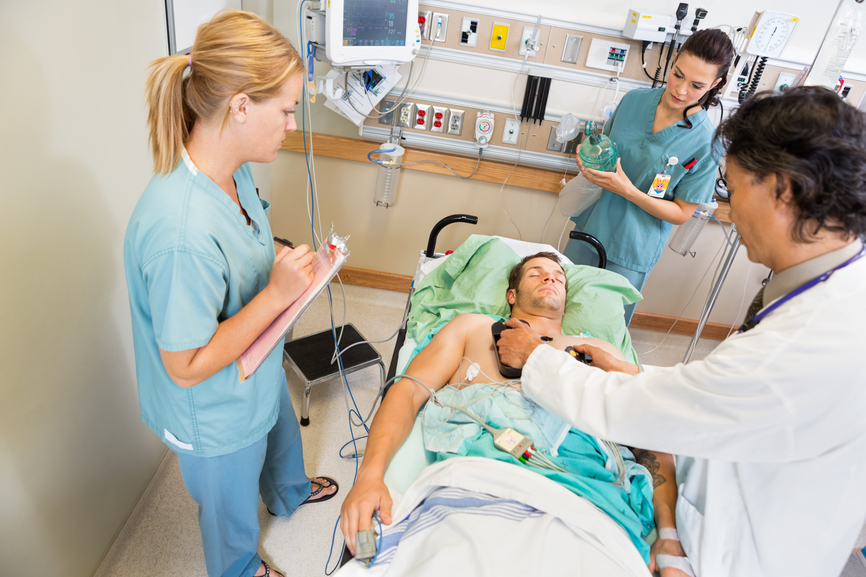
The process of estimating NCV generally follows these steps, often performed using specialized equipment called an electromyograph (EMG) or nerve conduction study (NCS) unit:
Step 1: Patient Preparation and Setup
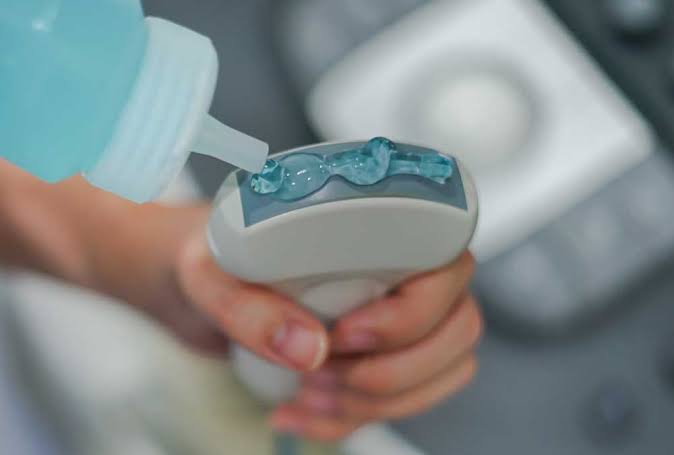
- Skin Preparation: The skin over the nerve and the recording sites should be clean and free of oils or lotions to ensure good electrical contact. A conductive gel or paste is typically applied to electrodes to minimize skin resistance.
- Electrode Placement:
- Stimulating Electrode: This electrode delivers the electrical pulse to the nerve. It is usually a small, ring-shaped electrode that encircles the limb at the point of nerve stimulation, or a surface electrode placed directly over the nerve.
- Recording Electrodes: These electrodes detect the electrical response of the nerve. They are typically placed over the muscle innervated by the nerve (for motor NCS) or directly over the nerve trunk (for sensory NCS). For motor NCS, the active recording electrode is usually placed over the motor point of the muscle, and a reference electrode is placed on a bony prominence. For sensory NCS, recording electrodes are placed along the path of the sensory nerve, typically 3-4 cm apart.
- Grounding: A grounding electrode is often used and placed between the stimulating and recording electrodes to minimize electrical interference from other sources.
Step 2: Performing the Motor Nerve Conduction Study
Motor NCV estimation involves stimulating a motor nerve and recording the resulting muscle response, known as a compound muscle action potential (CMAP).
- Locate the Nerve: The examiner will palpate the limb to locate the superficial course of the nerve to be tested (e.g., median nerve, ulnar nerve, peroneal nerve).
- Apply a Submaximal Stimulus: A brief electrical pulse (typically 0.1-0.2 milliseconds duration) is applied through the stimulating electrode. The intensity of the stimulus is gradually increased until a stable, maximal muscle response is consistently elicited. This ensures that all, or nearly all, motor axons are activated.
- Record Latency at the First Stimulation Site: The latency from the stimulus onset to the initial deflection of the CMAP waveform is measured and recorded. This is the distal latency.
- Move the Stimulating Electrode and Re-stimulate: The stimulating electrode is moved proximally along the nerve to a second stimulation site, typically a fixed distance (e.g., 10-15 cm) away from the first site.
- Record Latency at the Second Stimulation Site: The nerve is stimulated again at this proximal site with a supramaximal stimulus, and the latency of the CMAP is measured and recorded.
- Calculate Conduction Velocity:
- Distance: The distance between the two stimulation sites is measured accurately.
- Time: The time taken for the impulse to travel between the two sites is calculated by subtracting the latency recorded at the proximal site from the latency recorded at the distal site. This eliminates the peripheral nerve latency.
- NCV (m/s) = Distance (cm) / (Latency at distal site (ms) – Latency at proximal site (ms)) * 1000 (to convert ms to seconds for m/s calculation)*
Example Calculation for Motor NCS:
- Stimulation site 1 (wrist): Distal latency = 3.0 ms
- Stimulation site 2 (antecubital fossa): Proximal latency = 6.0 ms
- Distance between stimulation sites = 15 cm
Conduction Velocity = 15 cm / (6.0 ms – 3.0 ms) = 15 cm / 3.0 ms
To convert to m/s:
Conduction Velocity = (15 cm / 3.0 ms) * (100 cm/m) * (1000 ms/s) = (5 cm/ms) * (100 cm/m) * (1000 ms/s) = 50 m/s
However, a more direct calculation to m/s is:
Conduction Velocity = Distance (cm) / [(Proximal Latency (ms) – Distal Latency (ms)) / 1000 (ms/s)] = 15 cm / (3.0 ms / 1000 ms/s) = 15 cm / 0.003 s = 5000 cm/s = 50 m/s.
Step 3: Performing the Sensory Nerve Conduction Study
Sensory NCV estimation involves stimulating a sensory nerve and recording the resulting electrical potential from the nerve itself, known as a sensory nerve action potential (SNAP).
- Locate the Nerve: Similar to motor NCS, the examiner palpates the nerve’s superficial course.
- Apply a Stimulus: A brief electrical pulse is applied through a stimulating electrode placed over the sensory nerve. The stimulus intensity is increased until a clear SNAP is recorded.
- Record Latency at the First Recording Site: The latency from the stimulus onset to the initial deflection of the SNAP waveform is measured and recorded. This is the sensory latency at the most distal recording site.
- Move the Recording Electrode and Re-record (or use multiple recording sites): The recording electrode is then moved proximally along the nerve to a second recording site, a known distance away from the first. Alternatively, multiple recording electrodes can be placed along the nerve simultaneously, and the latencies can be measured relative to the stimulus. For a two-point stimulation method, the recording electrodes remain at a fixed position, and the stimulating electrode is moved, or vice-versa, with the distance between stimulation and recording sites being the key. A more common method for sensory NCS is to stimulate at one point and record at multiple points along the nerve.
- Record Latency at the Second Recording Site: The latency of the SNAP is measured and recorded at the proximal recording site.
- Calculate Conduction Velocity:
- Distance: The recorded distance between the point of stimulation and the recording site is used. For multi-site recording, the distance between the stimulation site and each recording site is critical. If using two recording sites and stimulating at a single distal point, the distance between the recording sites is used along with the difference in latencies. However, the most common method for calculating sensory NCV involves stimulating the nerve at one point and recording the SNAP at multiple points along its course. The distance between these recording points (or between the stimulus and recording points) is then used.
- Time: The time taken for the impulse to travel between the stimulation point and the recording site is determined from the latency. If multiple recording sites are used, the difference in latencies between two recording sites, along with the distance between those recording sites, is used.
- NCV (m/s) = Distance (cm) / Latency (ms) * 1000 (This simplified formula is used when the distance is from stimulus to recording site and latency is the time taken. More commonly, as with motor NCS, segment conduction velocity is calculated.)
Example Calculation for Sensory NCS (using segment method):
- Stimulation site (wrist): 5.0 ms latency recorded at a distal electrode.
- Proximal recording site (forearm, 10 cm from distal electrode): 7.0 ms latency recorded.
- The segment being measured is between the distal and proximal recording sites, which is 10 cm. The time taken to traverse this segment is the difference in latencies recorded at these sites. This requires stimulation at a point proximal to both recording sites, or careful interpretation of latencies from a single stimulation point.
A more practical approach for sensory NCS is to stimulate at one point and record the latency at a specific point along the nerve. The distance from the stimulus to the recording electrode is known.
- Stimulation site (e.g., elbow): Stimulus artifact appears at 0 ms.
- Recording electrode over sensory nerve (e.g., wrist): SNAP latency is 2.0 ms.
- Distance from elbow to wrist: 20 cm.
NCV (m/s) = Distance (cm) / Latency (ms) * 1000 = 20 cm / 2.0 ms * 1000 = 10 cm/ms = 100 m/s (incorrect calculation leading to confusion).
Corrected Calculation:*
NCV (m/s) = Distance (cm) / Time (s)
Time (s) = Latency (ms) / 1000 ms/s = 2.0 ms / 1000 ms/s = 0.002 s
NCV (m/s) = 20 cm / 0.002 s = 10000 cm/s = 100 m/s.
Using a two-point stimulation method for sensory nerves:
- Stimulation at wrist: Latency to SNAP at a midpoint along the nerve = 3.0 ms.
- Stimulation at elbow: Latency to SNAP at the same midpoint = 6.0 ms.
- Distance between wrist and elbow = 20 cm.
Conduction Velocity = 20 cm / (6.0 ms – 3.0 ms) = 20 cm / 3.0 ms = 6.67 cm/ms = 66.7 m/s.
Step 4: Interpretation of Results
The calculated NCV is then compared to normative values for age, temperature, and nerve tested. Deviations from normal ranges can indicate:
- Decreased NCV: Suggests damage to the myelin sheath (demyelination), such as in Guillain-Barré syndrome or chronic inflammatory demyelinating polyneuropathy (CIDP). It can also be seen in metabolic disorders or certain genetic conditions affecting myelin.
- Reduced Amplitude of the Response: Indicates a loss of axons (axonal loss) or dysfunction at the neuromuscular junction, as seen in axonal neuropathies, motor neuron disease, or myasthenia gravis.
- Temporal Dispersion: Widening of the waveform, indicating that different nerve fibers are conducting at different speeds. This is also characteristic of demyelination.
Factors Affecting NCV Measurements
Several factors can influence NCV measurements and must be accounted for during interpretation:
- Temperature: Nerve conduction velocity decreases with lower limb temperatures. The limb should be warmed to a standard temperature (typically 32-34°C) before testing.
- Age: NCV tends to be slower in infants and children and may decrease slightly in older adults.
- Nerve Diameter: Larger diameter, myelinated fibers conduct faster than smaller ones.
- Stimulus Intensity: Using supramaximal stimulation ensures that all relevant nerve fibers are activated.
- Electrode Placement: Precise placement of stimulating and recording electrodes is crucial for accurate distance and latency measurements.
- Electrode-Skin Interface: Poor contact can introduce artifacts and affect latency measurements.
- Distance Measurement: Inaccurate measurement of the distance between stimulation and recording sites will directly impact the calculated NCV.
Demonstration and Clinical Significance
The estimation of nerve conduction velocity is a cornerstone of clinical neurophysiology. By performing these tests, clinicians can:
- Diagnose Neuropathies: Identify and classify peripheral nerve disorders, differentiating between demyelinating and axonal processes.
- Localize Lesions: Pinpoint the site of nerve damage (e.g., carpal tunnel syndrome involves median nerve compression at the wrist, leading to slowed conduction across that segment).
- Monitor Disease Progression: Track the effectiveness of treatment and assess nerve recovery over time.
- Assess Nerve Injury: Evaluate the extent of nerve damage following trauma or surgery.
In essence, estimating nerve conduction velocity provides a quantitative measure of nerve function. It transforms subjective neurological symptoms into objective electrophysiological data, allowing for precise diagnosis and effective management of a wide range of neurological conditions affecting the peripheral nervous system. The systematic application of stimulating and recording techniques, coupled with careful measurement and interpretation, makes NCV estimation an invaluable tool in modern neurology.
References
- Bromberg, M. B. (2015). Clinical Electromyography. Mosby.
- Katirji, H. B. (2010). Electromyography in Clinical Practice: Electrodiagnostic Aspects of Neuromuscular Disease. Thieme.
- LaFratt, F. G. (2007). Alexander’s Care of the Patient in Physical Therapy Procedures. Mosby Elsevier.
- Preston, D. C., & Shapiro, B. E. (2017). Automated Electromyography: Principles and Practice. Wolters Kluwer.
- Vidmar, M. F. (2001). Nerve conduction studies. American Family Physician, 64(4), 637-644.