Proteins, the workhorses of biological systems, are highly complex macromolecules essential for virtually all cellular processes, from structural support and enzymatic catalysis to immune defense and signal transduction. Their detection and isolation are critical across diverse fields, including biomedical research, diagnostics, biopharmaceutical manufacturing, and environmental monitoring. While sophisticated methods exist, protein precipitation remains a foundational and widely employed technique for detecting, concentrating, and partially purifying proteins.
Fundamental Principles of Protein Precipitation
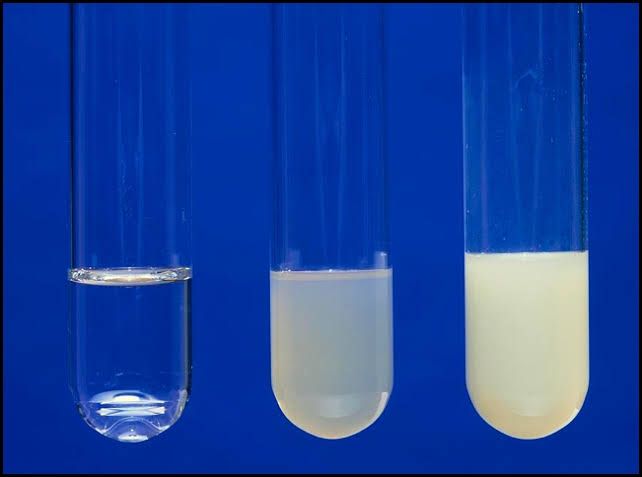
At its core, protein precipitation involves the controlled reduction of protein solubility in an aqueous solution, leading to their aggregation and subsequent separation from the soluble components. Protein solubility is a delicate balance governed by a complex interplay of forces:
- Hydrophobic Interactions: Non-polar amino acid residues tend to minimize contact with water, clustering together. In soluble proteins, these are typically buried in the protein core.
- Hydrophilic Interactions: Polar and charged residues interact favorably with water molecules (hydration shell) and with other charged groups on the protein surface, maintaining solubility and preventing aggregation through electrostatic repulsion.
- Ionic Strength: The concentration of dissolved salts in the solution influences electrostatic interactions. Low salt concentrations can enhance solubility by shielding charged groups, while very high concentrations can “salt out” proteins.
- pH and Isoelectric Point (pI): A protein’s net charge is highly dependent on the pH of its environment. At its isoelectric point (pI), the net charge of a protein is zero.
- Temperature: Elevated temperatures can increase molecular motion, potentially disrupting weak bonds and leading to denaturation and aggregation.
- Steric Hindrance: Large molecules or polymers can physically impede protein-protein interactions.
Precipitation methods exploit these factors to disrupt the delicate balance of forces maintaining protein solubility. This typically involves either reducing the hydration shell around the protein or neutralizing its net charge, thereby promoting protein-protein interactions (often undesirable hydrophobic interactions) that lead to aggregation and macroscopic particle formation.
Step-by-Step Guide to Protein Precipitation Methods
Understanding the various precipitation techniques requires delving into their specific mechanisms and practical execution. Each method offers distinct advantages and is suited for different applications.
1. Salting Out (Ammonium Sulfate Precipitation)
Principle: Salting out is one of the gentlest and most widely used methods for protein fractionation and concentration. It relies on the principle that high concentrations of neutral salts, particularly ammonium sulfate [(NH₄)₂SO₄], compete with proteins for water molecules.
Mechanism: As the salt concentration increases, water molecules preferentially solvate the salt ions, reducing the amount of “free” water available to hydrate the protein surface. This phenomenon, known as “water binding” or “hydrophobic effect enhancement,” effectively reduces the protein’s hydration shell. Consequently, hydrophobic patches on the protein surface, normally shielded by water, become exposed, leading to increased protein-protein interactions (particularly hydrophobic interactions) and subsequent aggregation and precipitation. Different proteins precipitate at different salt concentrations based on their hydrophobicity and surface charge distribution, allowing for fractionation.
Generalized Steps:
- Prepare Sample: Ensure the protein solution is clear and free of particulate matter.
- Add Salt Gradually: Slowly add solid ammonium sulfate (or a concentrated stock solution) to the protein sample while stirring gently on a magnetic stirrer in a cold room or ice bath. Avoid vigorous stirring, which can cause denaturation.
- Monitor Saturation: Calculate the percentage saturation needed. Incremental additions can be made to achieve sequential precipitation.
- Incubation: Allow the mixture to incubate for a period (e.g., 30 minutes to overnight) at low temperatures (4°C) to ensure complete precipitation.
- Centrifugation: Centrifuge the mixture at high speed (e.g., 10,000-20,000 x g) for a specified time (e.g., 15-30 minutes) at 4°C to pellet the precipitated proteins.
- Decant Supernatant: Carefully decant the supernatant, which may contain unwanted proteins or the target protein if it precipitates at a higher salt concentration.
- Re-dissolve Pellet: Re-dissolve the protein pellet in a suitable buffer (e.g., PBS, Tris buffer). The sample will then require desalting (e.g., via dialysis or gel filtration) to remove the high salt concentration before downstream applications.
Applications: Initial protein purification, concentration of dilute protein solutions, and removal of nucleic acids (which precipitate at lower salt concentrations). Advantages: Gentle, preserves protein activity, reversible, scalable, and relatively inexpensive. Disadvantages: Requires subsequent desalting, not highly specific for fine purification.
2. Isoelectric Point (pI) Precipitation
Principle: Proteins are amphoteric molecules, meaning they possess both acidic and basic groups. Their net charge is highly dependent on the pH of the surrounding solution. At the isoelectric point (pI), the pH at which a protein has no net electrical charge, its solubility is typically at its minimum.
Mechanism: When a protein is at its pI, the repulsive electrostatic forces between individual protein molecules are minimized because the positive and negative charges on its surface are balanced. This lack of charge repulsion allows for increased protein-protein aggregation, driven by hydrophobic interactions and van der Waals forces, leading to precipitation.
Generalized Steps:
- Prepare Sample: Ensure the protein solution is clear.
- Adjust pH Systematically: Slowly add a dilute acid (e.g., HCl, acetic acid) or base (e.g., NaOH) to the protein solution while gently stirring and continuously monitoring the pH with a pH meter.
- Identify pI: Observe the formation of precipitate as the pH approaches the known or estimated pI of the target protein.
- Incubation: Allow the mixture to incubate for a short period (e.g., 15-30 minutes) at 4°C to facilitate complete aggregation.
- Centrifugation: Centrifuge at high speed to pellet the precipitated proteins.
- Decant Supernatant: Discard the supernatant, or retain it if it contains other proteins of interest.
- Re-dissolve Pellet: Re-dissolve the protein pellet by adjusting the pH back to a range where the protein is soluble (typically away from its pI).
Applications: Crude protein fractionation, preliminary purification step for proteins with significantly different pIs, removal of specific contaminants. Advantages: Simple, inexpensive, and effective for separating proteins based on their charge properties. Disadvantages: Can lead to irreversible denaturation for some sensitive proteins, less precise than other methods.
3. Precipitation by Organic Solvents
Principle: Organic solvents like acetone, ethanol, or methanol are commonly used to precipitate proteins by reducing the dielectric constant of the solvent and disrupting the hydration shell.
Mechanism: Water has a high dielectric constant, which helps shield and separate charged groups on proteins, contributing to solubility. Organic solvents have lower dielectric constants, which weakens electrostatic interactions between charged groups on the protein surface and between proteins and water. More significantly, organic solvents compete with proteins for water molecules and alter the overall solvent environment, enhancing hydrophobic interactions between protein molecules and promoting aggregation. This method can also lead to protein denaturation due to the disruption of tertiary structure.
Generalized Steps:
- Cool Samples and Solvents: Chill the protein sample and the organic solvent (e.g., acetone) to very low temperatures (e.g., -20°C to -80°C). This helps minimize denaturation.
- Add Solvent Slowly: Slowly add the cold organic solvent to the protein sample, often in a ratio of 1:4 (sample:solvent) or higher, while continuously stirring.
- Incubation: Incubate the mixture at low temperatures (e.g., -20°C) for an extended period (e.g., 30 minutes to several hours) to ensure complete precipitation.
- Centrifugation: Centrifuge at high speed and low temperature to pellet the precipitated proteins.
- Wash Pellet: Wash the protein pellet with cold organic solvent to remove residual contaminants and salts.
- Air Dry/Vacuum Dry: Carefully air-dry the pellet or use a vacuum concentrator to remove all traces of the organic solvent. Residual solvent can hinder re-dissolution.
- Re-dissolve Pellet: Re-dissolve the dried protein pellet in an appropriate buffer.
Applications: Desalting, concentrating very dilute protein solutions, removing lipids and other non-protein contaminants, and preparing samples for 2D-PAGE. Advantages: Rapid, efficient for concentrating dilute samples, and effective for removing small molecules. Disadvantages: Can cause irreversible denaturation in sensitive proteins, re-dissolution of dried pellets can be challenging.
4. Precipitation by Polyionic Polymers (e.g., Polyethylene Glycol – PEG)
Principle: Polyethylene glycol (PEG) and other uncharged polymers are effective protein precipitants, primarily through a mechanism known as “volume exclusion.”
Mechanism: PEG is a hydrophilic, uncharged polymer that occupies a significant volume in solution. It does not directly bind to proteins or alter solvent properties to the same extent as salts or organic solvents. Instead, PEG molecules effectively reduce the available solvent volume for proteins, increasing the effective protein concentration. This elevated effective concentration promotes protein-protein interactions, leading to aggregation and precipitation. Charged polymers, such as dextran sulfate, can also precipitate proteins through electrostatic interactions with oppositely charged proteins.
Generalized Steps:
- Prepare Sample: Ensure the protein solution is clear.
- Add PEG Solution: Prepare a stock solution of PEG (e.g., 50% w/v) and slowly add it to the protein sample to achieve the desired final concentration (typically 5-20% w/v), while stirring gently.
- Incubation: Incubate the mixture at low temperatures (4°C) for a period (e.g., 30 minutes to overnight) to allow for complete precipitation.
- Centrifugation: Centrifuge at moderate to high speed to pellet the precipitated proteins.
- Decant Supernatant: Carefully remove the supernatant.
- Re-dissolve Pellet: Re-dissolve the protein pellet in a suitable buffer. Further purification steps may be required to remove residual PEG.
Applications: Fractionation of proteins, purification of specific protein types (e.g., membrane proteins with PEG), and concentration of protein solutions. Advantages: Gentle, generally non-denaturing, and effective for large proteins. Disadvantages: PEG can be viscous and difficult to remove completely from protein samples, precipitation can be slow.
5. Precipitation by Heat Denaturation
Principle: Heat denaturation exploits the fact that proteins have different thermal stabilities. Heating a protein solution above a certain temperature causes the less stable proteins to unfold and aggregate.
Mechanism: Thermal energy disrupts the non-covalent interactions (hydrogen bonds, hydrophobic interactions, ionic bonds) that maintain a protein’s specific three-dimensional structure. This unfolding process exposes hydrophobic residues, which then associate with each other to form irreversible aggregates, leading to precipitation. If the target protein is exceptionally heat-stabile, this method can be a powerful initial purification step.
Generalized Steps:
- Prepare Sample: Ensure the protein solution is in a suitable buffer.
- Heat Treatment: Incubate the protein solution in a water bath at a specific elevated temperature (e.g., 60-95°C) for a defined period (e.g., 5-30 minutes).
- Cooling (Optional but Recommended): Rapidly cool the sample on ice to prevent further aggregation of stable proteins and to stop the denaturation process.
- Centrifugation: Centrifuge at high speed to pellet the heat-denatured and precipitated proteins.
- Recover Supernatant: The supernatant will contain the heat-stable proteins, while the pellet comprises the heat-labile contaminants.
Applications: Removal of heat-labile contaminants from heat-stable enzymes or proteins, initial purification step. Advantages: Simple, rapid, and effective for specific cases where the target protein is unusually thermostable. Disadvantages: Irreversibly denatures many proteins, thus cannot be used if the target protein is heat-labile.
6. Immunoprecipitation (A Specialized Precipitation Method for Isolation and Detection)
Principle: Immunoprecipitation (IP) is a powerful affinity-based technique that utilizes the highly specific binding between an antibody and its target antigen (protein) to selectively isolate the antigen from a complex mixture. While not a classical bulk precipitation method, the final step involves precipitating the antibody-antigen complex.
Mechanism: A specific antibody is added to a protein lysate or extract. The antibody binds to its target protein. Then, a “capture” mechanism, often protein A or G coupled to agarose or magnetic beads, is used. Protein A/G binds strongly to the Fc region of many antibodies. This creates a macroscopic antibody-antigen-bead complex that can be easily separated from the rest of the lysate by low-speed centrifugation or magnetic separation. The isolated protein is then typically eluted for downstream detection.
Generalized Steps:
- Prepare Lysate: Obtain a cell or tissue lysate containing the target protein.
- Add Antibody: Incubate the lysate with a primary antibody specific for the target protein, allowing antigen-antibody complex formation.
- Add Capture Beads: Add protein A/G-conjugated beads (or secondary antibody-conjugated beads) to bind the primary antibody.
- Incubation: Incubate to allow efficient binding to the beads.
- Washing: Gently centrifuge or use a magnetic rack to separate the beads (with bound complexes) from the supernatant. Wash the beads multiple times with buffer to remove non-specifically bound proteins.
- Elution & Detection: Elute the target protein from the beads (e.g., by boiling in SDS-PAGE sample buffer or by low pH elution). The eluted protein is then typically detected by Western Blotting, mass spectrometry, or enzyme activity assays.
Applications: Isolation of specific proteins for further analysis (e.g., Western blot, mass spectrometry), studying protein-protein interactions (co-immunoprecipitation), identifying post-translational modifications, and quantifying protein levels. Advantages: Extremely specific, highly sensitive, and effective for isolating a single protein from a complex mixture. Disadvantages: Requires highly specific and validated antibodies, can be costly, and prone to non-specific binding if not optimized.
Factors Influencing Protein Precipitation Success
The efficiency and specificity of protein precipitation are significantly influenced by several parameters that require careful optimization for each specific protein and application:
- Protein Concentration: Highly concentrated protein solutions generally precipitate more readily.
- pH: Crucial for pI precipitation and affects the overall charge of proteins in all methods.
- Temperature: Low temperatures generally help maintain protein stability and reduce denaturation during precipitation.
- Ionic Strength: Affects solubility and is the primary principle behind salting out.
- Presence of Detergents/Substances: Detergents can solubilize proteins and prevent aggregation; other macromolecules can interfere.
- Mixing Speed and Duration: Gentle mixing is usually preferred to avoid shearing and denaturation.
- Incubation Time: Sufficient time is needed for complete aggregation and settling.
Downstream Applications and Considerations
Once proteins are precipitated, they are often re-solubilized in a suitable buffer for further analysis, which can include:
- Purity Assessment: Sodium dodecyl sulfate-polyacrylamide gel electrophoresis (SDS-PAGE) or chromatography.
- Quantification: Methods like Bradford, Lowry, or BCA assays.
- Activity Assays: To confirm that the protein retained its functional activity.
- Further Purification: The precipitated sample serves as an enriched starting material for other purification techniques (e.g., ion-exchange chromatography, gel filtration).
A critical consideration is the potential for protein denaturation during precipitation. While some methods like salting out are generally gentle, organic solvent or heat precipitation can irreversibly denature proteins, leading to loss of biological activity. Therefore, selecting the appropriate precipitation method depends heavily on the desired outcome and the inherent stability of the target protein.
Conclusion
Protein detection by precipitation tests encompasses a diverse array of methodologies, each exploiting different physicochemical properties of proteins to induce their aggregation and separation from solution. From the ancient practice of salting out to the highly specific realm of immunoprecipitation, these techniques remain indispensable tools in biochemistry, molecular biology, and diagnostics. They offer versatile and often cost-effective means for concentrating, fractionating, and isolating proteins, serving as crucial preliminary steps for more advanced analytical and purification procedures. A thorough understanding of the underlying principles and meticulous optimization of experimental conditions are paramount to harnessing the full potential of protein precipitation in research and applied science.
References:
- Voet, D., Voet, J. G., & Pratt, C. W. (2016). Fundamentals of Biochemistry: Life at the Molecular Level (5th ed.). Wiley.
- Dennison, C. (2007). Protein Purification Protocols (2nd ed.). Humana Press.
- Scopes, R. K. (1994). Protein Purification: Principles and Practice (3rd ed.). Springer.
- Sambrook, J., & Russell, D. W. (2006). Molecular Cloning: A Laboratory Manual (3rd ed.). Cold Spring Harbor Laboratory Press.
- Deutscher, M. P. (Ed.). (1990). Methods in Enzymology, Volume 182: Guide to Protein Purification. Academic Press.
- Burgess, R. R. (2009). Protein precipitation: still a good first step. The FEBS Journal, 276(6), 1163–1172.
- Maniatis, T., Fritsch, E. F., & Sambrook, J. (1982). Molecular Cloning: A Laboratory Manual. Cold Spring Harbor Laboratory.