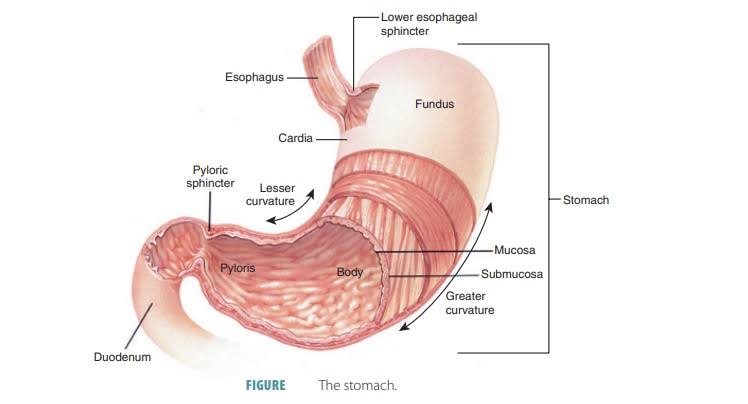
The stomach, a remarkable muscular organ of the upper gastrointestinal tract, plays a pivotal role in the initial stages of digestion. Beyond its chemical function of secreting acid and enzymes, its sophisticated motor activities are crucial for accommodating ingested food, mixing it with gastric secretions, triturating it into a semi-liquid chyme, and precisely controlling its delivery into the duodenum. This intricate coordination ensures optimal digestion and absorption of nutrients while preventing an overload of the small intestine.
Motor Functions of the Stomach
The stomach’s motor functions can be broadly categorized into three primary actions: receptive relaxation, mixing and propulsion (peristalsis), and gastric emptying. These actions are orchestrated by a complex interplay of neural (extrinsic and intrinsic) and humoral (hormonal) mechanisms.
1. Receptive Relaxation and Gastric Accommodation
Upon swallowing, the stomach must expand to accommodate the ingested food without a significant increase in intragastric pressure. This crucial adaptive response is known as receptive relaxation.
- Mechanism: As food enters the esophagus and approaches the stomach, vagal afferent fibers are activated, initiating a vagovagal reflex. This reflex causes the smooth muscle in the fundus and upper body of the stomach to relax.
- Neurotransmitters: The efferent limb of this reflex involves inhibitory non-adrenergic, non-cholinergic (NANC) neurons, which primarily release nitric oxide (NO) and vasoactive intestinal peptide (VIP). These neurotransmitters cause the smooth muscle cells to hyperpolarize and relax.
- Significance: Receptive relaxation allows the stomach to act as a temporary reservoir, holding large volumes (up to 1.5-2 liters) of food and fluid without generating significant pressure. This low-pressure environment is essential for comfortable eating and prevents premature emptying into the duodenum.
2. Gastric Motility: Mixing and Propulsion (Peristalsis)
Following accommodation, the stomach commences its mechanical processing of food through coordinated muscular contractions. This process is driven by peristaltic waves, which vary in intensity and function across different regions of the stomach.
- Gastric Pacemaker and Slow Waves: The rhythmic contractions of the stomach are initiated by specialized pacemaker cells called Interstitial Cells of Cajal (ICCs), located in the greater curvature near the junction of the fundus and body. These ICCs generate spontaneous, rhythmic depolarizations called slow waves (or basic electrical rhythm, BER). While slow waves themselves do not cause contraction, they set the maximal frequency and direction of contractions. When slow waves reach a threshold, they trigger action potentials, which then lead to muscle contraction. In the human stomach, slow waves occur at a frequency of approximately 3 cycles per minute.
- Regional Differences in Contractions:
- Fundus and Upper Body: These regions primarily exhibit tonic contractions that maintain a basal pressure and contribute to receptive relaxation. They act as a storage area, with relatively weak peristaltic waves.
- Antrum: This is the primary site for mixing and grinding. Peristaltic waves originate in the mid-stomach and propagate towards the pylorus, increasing in strength and velocity as they approach the antrum. These strong, annular contractions serve two main purposes:
- Trituration: As the contraction wave approaches the pylorus, it forces the gastric contents against the mostly closed pyloric sphincter. This action, known as retropulsion, causes the semi-solid food particles to be vigorously churned and ground against each other and the antral wall, effectively reducing the size of food particles (trituration) and mixing them thoroughly with gastric juices.
- Propulsion: A small amount of liquefied chyme is propelled through the pyloric sphincter into the duodenum with each strong antral contraction.
- Migrating Motility Complex (MMC): During the interdigestive period (when the stomach is empty, typically 3-4 hours after a meal), the stomach, along with the small intestine, exhibits a distinct pattern of electrical and motor activity known as the Migrating Motility Complex (MMC). These are bursts of intense, high-amplitude contractions that sweep indigestible material, bacteria, and shed cells from the stomach through the small intestine, acting as a “housekeeper” to clear the gut lumen. Motilin is a key hormone involved in initiating MMCs.
3. Gastric Emptying
Gastric emptying is the process by which stomach contents (chyme) are delivered into the duodenum. This is a highly regulated process, ensuring that the small intestine receives chyme at a rate that allows for efficient digestion and absorption without overwhelming its capacity. The pyloric sphincter, a thickened ring of muscle at the gastroduodenal junction, plays a critical role in controlling this flow.
Regulation of Gastric Emptying
The regulation of gastric emptying is a sophisticated interplay between factors originating in the stomach and, more powerfully, in the duodenum. The primary goal is to ensure that the duodenum receives chyme that is appropriately acidified, osmolality-adjusted, and manageable in terms of nutrient load.
1. Gastric Factors (Pro-Emptying)
Factors within the stomach generally promote emptying:
- Volume and Distension: An increased volume of chyme in the stomach stretches the gastric wall, activating mechanoreceptors. This triggers both local enteric nervous system reflexes and vagovagal reflexes that increase the strength of antral contractions and relax the pyloric sphincter, thereby promoting emptying.
- Liquidity of Contents: Liquids tend to empty much faster than solid meals because they do not require extensive trituration.
- Gastrin: Released by G cells in the gastric antrum in response to protein and distension. While its primary role is to stimulate acid secretion, gastrin also has a mild stimulatory effect on gastric motility and an inhibitory effect on the pyloric sphincter, which can facilitate emptying.
2. Duodenal Factors (Inhibitory – The “Gastric Brake”)
The duodenum is the principal regulator of gastric emptying, primarily through inhibitory mechanisms. These mechanisms prevent the duodenum from being overwhelmed by an excessive volume, acidity, or nutrient load.
A. Neural Control (Enterogastric Reflexes):
When chyme enters the duodenum, specific stimuli activate receptors that trigger neural reflexes, collectively known as the enterogastric reflex. These reflexes can be:
- Short Reflexes (Enteric Nervous System): Mediated entirely within the myenteric plexus of the gut wall.
- Long Reflexes (Vagovagal Reflexes): Involve afferent signals traveling to the brainstem (medulla oblongata) via the vagus nerve, and efferent signals returning to the stomach via the vagus nerve.
- Sympathetic Reflexes: Also contribute, with sympathetic input generally being inhibitory to gastric emptying.
These reflexes primarily:
- Inhibit stomach motility (antral contractions).
- Increase the tone (contraction) of the pyloric sphincter.
The key duodenal stimuli that activate these reflexes are:
- Distension of the Duodenum: Mechanoreceptors detect stretching of the duodenal wall, signaling that too much chyme has entered.
- Acidity of Chyme: Chemoreceptors are highly sensitive to a pH below 3.5-4.0. Duodenal enzymes require a neutral or slightly alkaline environment, and the duodenal mucosa needs protection from acid. Acid in the duodenum strongly inhibits gastric emptying to allow time for bicarbonate secretion from the pancreas to neutralize the acid.
- Osmolality of Chyme: Solutions that are either hyperosmolar (e.g., concentrated sugars) or hypoosmolar (though less common physiologically) to plasma trigger osmoreceptors. The small intestine is very sensitive to osmotic changes, and emptying is slowed to allow for water movement and osmolality adjustment.
- Presence of Nutrients:
- Fats: Fatty acids (especially longer-chain fatty acids) in the duodenum are potent inhibitors of gastric emptying. They are difficult to digest and absorb, requiring more time.
- Proteins: Amino acids and small peptides also contribute to the inhibition, though typically less powerfully than fats.
- Carbohydrates: Glucose and other simple sugars contribute to the osmotic effect and also have a direct inhibitory effect.
B. Hormonal Control (Enterogastrones):
In addition to neural reflexes, the duodenal mucosa releases several hormones, collectively called enterogastrones, in response to specific chyme characteristics. These hormones enter the bloodstream and act on the stomach to inhibit gastric emptying and acid secretion.
- Cholecystokinin (CCK):
- Release Stimulus: Primarily fats (fatty acids) and, to a lesser extent, proteins (amino acids/peptides) in the duodenum.
- Actions: Potently inhibits gastric emptying, contracts the pyloric sphincter, stimulates pancreatic enzyme secretion, and gallbladder contraction. CCK ensures that the duodenum is not overloaded with fat before it can be emulsified and digested.
- Secretin:
- Release Stimulus: Strong acid (pH < 4.5) in the duodenum.
- Actions: Inhibits gastric acid secretion and gastric emptying, stimulates pancreatic bicarbonate secretion to neutralize the acid. Secretin protects the duodenal mucosa and provides an optimal pH for pancreatic enzymes.
- Gastric Inhibitory Peptide (GIP) / Glucose-dependent insulinotropic polypeptide:
- Release Stimulus: Fats and glucose in the duodenum.
- Actions: While it has a mild inhibitory effect on gastric emptying, its primary role is to stimulate insulin release from pancreatic beta cells in a glucose-dependent manner (an “incretin” effect), preparing the body for nutrient absorption.
- Glucagon-like Peptide-1 (GLP-1):
- Release Stimulus: Presence of nutrients (especially carbohydrates and fat) in the distal small intestine.
- Actions: Potently inhibits gastric emptying, stimulates insulin secretion, and suppresses glucagon release. Like GIP, it is a significant incretin hormone.
3. Pyloric Sphincter
The pyloric sphincter acts as the gatekeeper between the stomach and the duodenum. Its tonic contraction is modulated by both neural and hormonal signals.
- Relaxation: During antral contractions, the sphincter briefly relaxes to allow a small amount of chyme to pass.
- Contraction: Duodenal inhibitory signals (neural reflexes and enterogastrones like CCK) increase its tone, thereby restricting the flow of chyme into the duodenum, especially when the duodenum is already full, acidic, or nutrient-rich.
Summary of Regulation
In essence, gastric emptying is a finely tuned process where the stomach’s propulsive forces are counterbalanced by the duodenum’s inhibitory signals. The duodenum acts as a “sensor” for the characteristics of the incoming chyme, sending feedback signals (both neural and hormonal) to the stomach to adjust the emptying rate. This ensures that the digestive and absorptive capacities of the small intestine are optimized, preventing digestive distress and maximizing nutrient assimilation. For instance, a meal rich in fat will empty much slower than a carbohydrate-rich meal due to the potent inhibitory effects of fat on CCK release and duodenal feedback.
Conclusion
The motor functions of the stomach are far more sophisticated than simple churning. From the adaptive capacity of receptive relaxation to the powerful mixing waves of the antrum and the precisely regulated gastric emptying, each step is critical for efficient digestion. The intricate network of neural reflexes and hormonal signals originating from both the stomach and, more significantly, the duodenum, ensures that food is processed and delivered at an optimal rate, safeguarding duodenal function and maximizing the availability of nutrients for the body. Understanding these mechanisms is fundamental to comprehending normal digestive physiology and the pathophysiology of various gastrointestinal disorders.
References:
- Boron, W. F., & Boulpaep, E. L. (2017). Medical Physiology. Elsevier.
- Guyton, A. C., & Hall, J. E. (2020). Textbook of Medical Physiology. Elsevier.
- Koeppen, B. M., & Stanton, B. A. (2018). Berne & Levy Physiology. Elsevier.
- Johnson, L. R. (2018). Essential Medical Physiology. Academic Press.
- Parkman, H. P. (2006). Gastric emptying: clinical importance and measurement. Journal of Clinical Gastroenterology, 40(Supplement 2), S35-S41.
- Liu, S., & Conklin, J. L. (2018). Gastric Motility. Current Opinion in Gastroenterology, 34(6), 416-422.