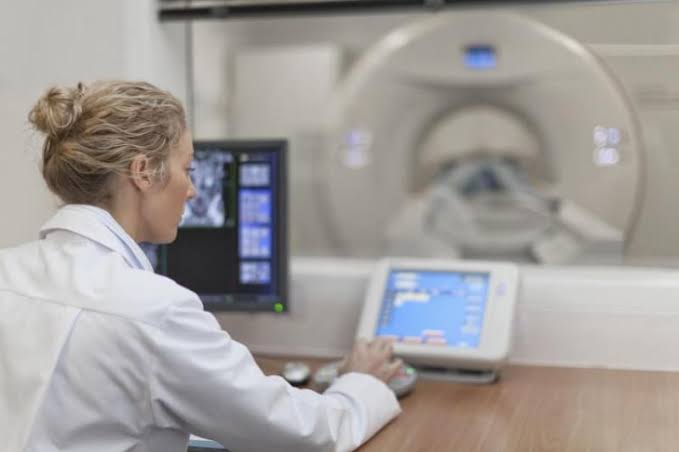
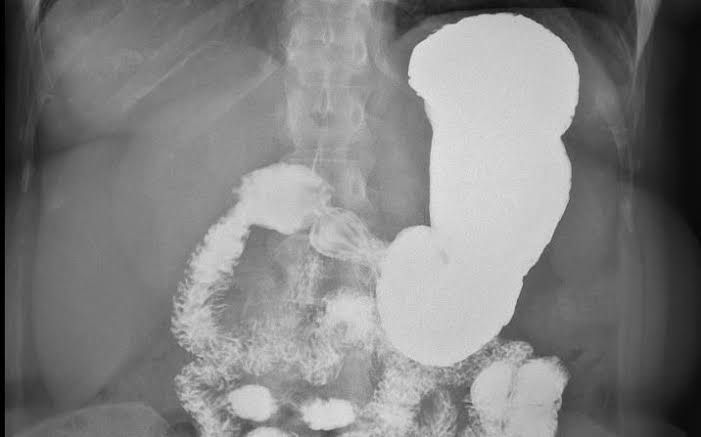
Upper Gastrointestinal (GI) X-rays, often referred to as a barium swallow or upper GI series, remain a fundamental diagnostic imaging procedure in gastroenterology.
Explaining Upper GI X-rays
An Upper GI X-ray is a radiographic examination that visualizes the esophagus, stomach, and the first part of the small intestine (duodenum). Unlike plain X-rays, which offer limited soft tissue contrast, this procedure utilizes a contrast material, typically barium sulfate. Barium is a metallic compound that is radiopaque, meaning it absorbs X-rays, thereby appearing white or bright on the resultant images. This opacity allows radiologists to coat the internal lining of the upper GI tract, making its contours, patency, and mucosal patterns visible.
Purpose and Clinical Indications: The primary purpose of an Upper GI X-ray is to diagnose a variety of conditions affecting the swallowing mechanism and the upper digestive tract. Common indications include:
- Dysphagia: Difficulty swallowing.
- Odynophagia: Painful swallowing.
- Gastroesophageal Reflux Disease (GERD): Assessment of reflux severity or complications like strictures.
- Abdominal Pain: Investigating potential ulcers, inflammation, or masses.
- Unexplained Vomiting or Nausea: Identifying gastric outlet obstruction or motility issues.
- Hiatal Hernia: Visualization of the stomach protruding through the diaphragm.
- Suspected Strictures, Tumors, or Diverticula: Identifying structural abnormalities.
Mechanism and Types: The procedure involves the patient orally ingesting a barium sulfate suspension. As the barium travels through the esophagus, stomach, and duodenum, a radiologist or radiographer uses fluoroscopy (a continuous X-ray beam producing real-time video images) to observe its passage and take still images. The patient is often asked to change positions during the examination to ensure thorough coating of the mucosal surfaces and to distribute the barium appropriately.
Two main types of Upper GI X-rays are performed:
- Single-Contrast Study: Involves only the barium sulfate suspension. This is generally good for assessing the overall lumen, patency, and large filling defects.
- Double-Contrast Study: This technique combines barium with a gas-producing agent (e.g., effervescent granules containing bicarbonate). The gas distends the lumen, and the thin layer of barium adhering to the mucosa provides excellent detail of the mucosal folds, allowing for detection of subtle abnormalities like ulcers, erosions, or polyps.
Patient Preparation and Procedure Overview: Patients are typically required to fast (NPO – nothing by mouth) for 6-8 hours prior to the examination to ensure the stomach is empty, allowing for optimal barium coating and avoiding obscuring food particles. During the procedure, the patient stands or lies on a tilting X-ray table. They are instructed to swallow the barium solution in various positions while the radiologist observes its flow and captures images. The entire procedure usually takes 20-30 minutes.
Risks and Benefits: The benefits of Upper GI X-rays lie in their ability to dynamically assess the swallowing mechanism and depict structural abnormalities that might be missed by static imaging. They are also relatively inexpensive and widely available. However, potential risks include exposure to ionizing radiation (though doses are kept As Low As Reasonably Achievable – ALARA), potential for barium aspiration (especially in patients with severe dysphagia), and, rarely, allergic reactions to barium. Contraindications include suspected bowel perforation (water-soluble contrast is used instead) or complete bowel obstruction.
Interpreting the Normal X-ray of Upper Gastrointestinal Viscera (Esophagus, Stomach, Liver)
Interpreting an Upper GI X-ray requires a systematic approach to ensure all components are thoroughly evaluated. A normal study demonstrates a smooth, unobstructed flow of barium through anatomically correct structures without any filling defects, strictures, or significant reflux.
General Principles of Interpretation: Radiographic interpretation relies on understanding radiodensity. Barium, being radiopaque, appears white. Air/gas appear black (radiolucent), and soft tissues (like organ walls, muscles) appear in shades of gray.
A. The Esophagus:
- Contour and Lumen: On a normal study, the barium-filled esophagus appears as a smooth, continuous column, without abrupt changes in caliber. There should be no indentations, outpouchings (diverticula), or filling defects (suggesting polyps or tumors).
- Motility: During fluoroscopy, normal primary peristalsis (coordinated muscular contractions) should be observed, propelling the barium smoothly from the pharynx to the stomach. Tertiary contractions, which are non-propulsive, disorganized contractions, can be seen in elderly individuals but excessive numbers can indicate a motility disorder.
- Gastroesophageal Junction (GEJ): The junction between the esophagus and the stomach should be smooth and lie anatomically below the diaphragm. There should be no evidence of reflux of barium from the stomach back into the esophagus, or if present, it should be minimal and transient.
B. The Stomach:
- Overall Shape and Position: The normal stomach typically has a J-shape and is situated primarily in the left upper quadrant of the abdomen. Its main parts include the fundus (superior-most, often gas-filled), the body (main central part), the antrum (inferior part leading to the pylorus), and the pylorus (the muscular valve connecting to the duodenum).
- Contour and Wall Smoothness: The stomach walls, when adequately distended with barium (and gas in a double-contrast study), should appear smooth and pliable. There should be no irregular indentations, rigid segments, or focal masses protruding into the lumen.
- Mucosal Folds (Rugae): The inner lining of the stomach is characterized by rugal folds. On a double-contrast study, these folds should appear fine, regular, and uniform throughout the body and antrum. Thickened, nodular, or effaced folds can indicate inflammation, infiltration, or malignancy.
- Filling and Emptying: The stomach should completely fill with barium without any persistent filling defects. While not primarily a motility study, the barium should pass through the pylorus into the duodenum within a reasonable timeframe, without evidence of obstruction.
C. The Liver:
- Indirect Visualization and Influence: It is important to note that the liver parenchyma itself is not directly visualized or interpreted in detail on a standard Upper GI X-ray series, as it has similar radiodensity to surrounding soft tissues and does not take up barium. However, its anatomical presence is crucial for interpreting the position of other structures.
- Diaphragmatic Influence: The liver’s large size and position in the right upper quadrant directly influence the contour and level of the right hemidiaphragm. A normal liver typically elevates the right hemidiaphragm, making it appear higher than the left hemidiaphragm. Significant hepatomegaly (enlarged liver) or ascites could potentially further elevate the right hemidiaphragm or displace surrounding bowel loops, but such findings are usually subtle on an UGI and would prompt further imaging.
Identifying Key Anatomical Landmarks
Accurate identification of specific anatomical landmarks is paramount for proper interpretation of Upper GI X-rays. These structures serve as crucial reference points for assessing normalcy and detecting pathology.
A. Esophageal Shadow:
- Appearance: When filled with barium, the esophagus appears as a distinct, linear, radiopaque (white) column on the X-ray images. This “shadow” represents the outline of the esophageal lumen. Its appearance changes as barium moves through it during fluoroscopy.
- Location: In the thoracic cavity, the esophagus lies posterior to the trachea and anterior to the spine. It typically courses slightly to the left as it descends towards the diaphragm. Tracing this barium column from the pharynx down to its junction with the stomach (the GEJ) is the primary method for evaluating the esophagus.
B. Fundus Gas Shadow:
- Appearance: The fundus is the uppermost part of the stomach. Due to its position, it commonly traps swallowed air or gas produced by the effervescent agent during a double-contrast study. This trapped gas appears as a distinct, radiolucent (dark, air-filled) bubble.
- Location: The fundus gas shadow is almost always seen immediately inferior to the left dome of the diaphragm. Its size and shape can vary depending on the amount of swallowed air and the patient’s position. The presence of this gas bubble is a normal physiological finding and helps delineate the stomach’s superior border. Absence of a fundus gas shadow on an upright film could indicate a gastric volvulus or other unusual anatomical variations, though it is not primarily diagnostic.
C. Right and Left Dome of Diaphragm:
- The Diaphragm: The diaphragm is a large, dome-shaped musculotendinous septum that separates the thoracic cavity from the abdominal cavity. It is visible on X-rays as a smooth, curvilinear, radiopaque line because it is a dense structure overlying air-filled lungs.
- Right Dome of Diaphragm: This is the right half of the diaphragm. It is typically positioned higher than the left dome. This difference in height is primarily due to the large liver occupying the space immediately beneath it, pushing it superiorly. The right dome forms the inferior border of the right lung base and the superior border of the liver.
- Left Dome of Diaphragm: This is the left half of the diaphragm. It is usually slightly lower than the right dome, as the heart rests on it, and the spleen and stomach (with its gas-filled fundus) are directly beneath it. The left dome forms the inferior border of the left lung base and the superior border of the spleen and gastric fundus.
Identifying both domes of the diaphragm is crucial for assessing for conditions like hiatal hernias (where a portion of the stomach herniates through the esophageal hiatus into the chest cavity, displacing or obscuring the normal diaphragmatic contour) or subdiaphragmatic free air (a sign of perforation, appearing as a crescent of air beneath the diaphragm).
Conclusion
Upper GI X-rays, particularly with barium contrast, are invaluable tools for evaluating the anatomy and function of the esophagus, stomach, and duodenum. A thorough understanding of the procedure, coupled with a systematic approach to interpreting normal findings and identifying key anatomical landmarks, forms the cornerstone of accurate diagnosis. While advanced imaging modalities like CT and MRI offer superior soft tissue resolution, the dynamic nature and accessibility of the Upper GI series ensure its continued relevance in the diagnostic arsenal for a wide range of upper gastrointestinal disorders. Mastery of these interpretive skills is essential for healthcare professionals engaged in gastroenterological imaging.
References
- Dahnert, W. (2019). Dahnert’s Radiology Review Manual (9th ed.). Wolters Kluwer.
- Grainger, R. G., Allison, D. J., & Adam, A. (2007). Grainger & Allison’s Diagnostic Radiology: A Textbook of Medical Imaging (5th ed.). Churchill Livingstone.
- Levine, M. S., & Rubesin, S. E. (2012). The barium esophagram: a study whose time has come (again). Gastroenterology, 142(6), 1102-1104.
- Rubesin, S. E., & Levine, M. S. (2009). The esophagus. In E. K. Fishman & R. B. Jeffrey (Eds.), CT and MR of the Whole Body (5th ed., Vol. 1, pp. 1167-1237). Mosby Elsevier.
- RadiologyInfo.org. (2023). Upper GI (Gastrointestinal) Series. Radiological Society of North America (RSNA). Retrieved from https://www.radiologyinfo.org/en/info/uppergi