The liver is the body’s central metabolic powerhouse, playing a critical role in processing nutrients, detoxifying harmful substances, and regulating a vast array of biochemical pathways. In the realm of pharmacology, its function is paramount. The liver’s ability to chemically alter drugs dictates their efficacy, duration of action, and potential for toxicity.
Describing First-Pass Hepatic Metabolism
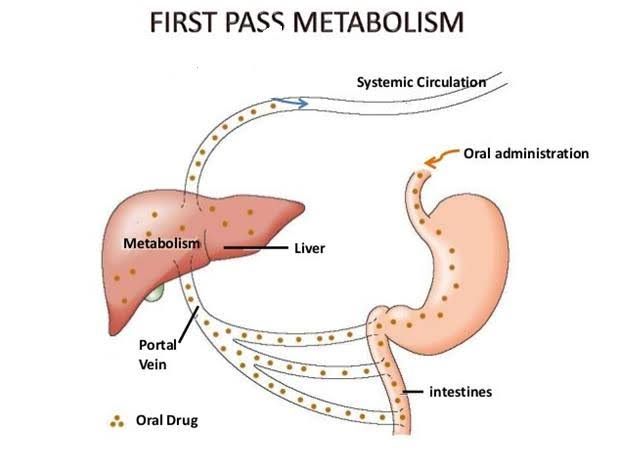
First-pass metabolism, also known as the first-pass effect or presystemic metabolism, is a phenomenon where the concentration of a drug is significantly reduced before it reaches the systemic circulation. This process primarily occurs in the liver, although the gut wall can also contribute. Understanding this concept is fundamental to determining appropriate drug dosages and routes of administration.
Here is a step-by-step breakdown of the process for an orally administered drug:
Step 1: Oral Administration and Absorption
The journey begins when a drug is taken orally (e.g., as a pill, capsule, or liquid). It travels through the esophagus to the stomach and into the small intestine. In the small intestine, the drug is absorbed through the epithelial cells lining the intestinal wall into the bloodstream.
Step 2: The Portal Venous System
Critically, the blood vessels that drain the gastrointestinal tract do not lead directly into the general (systemic) circulation. Instead, they converge to form the hepatic portal vein. This vessel acts as a direct conduit, transporting the newly absorbed drug—along with nutrients and other substances—straight to the liver.
Step 3: The Liver Encounter
Upon arrival at the liver, the drug molecules are exposed to a vast array of metabolic enzymes within the liver cells (hepatocytes). The body perceives most drugs as foreign substances (xenobiotics) and initiates a process of biotransformation to render them more water-soluble (polar), which facilitates their excretion via the kidneys.
Step 4: Biotransformation (Metabolism)
This metabolic process is generally categorized into two phases:
- Phase I Reactions: These reactions typically involve oxidation, reduction, or hydrolysis. They introduce or unmask a functional group (e.g., -OH, -NH2, -SH) on the drug molecule. The most important family of enzymes involved in Phase I metabolism is the Cytochrome P450 (CYP450) system. These enzymes can inactivate a drug, but in some cases, they can convert an inactive prodrug into its active form or, ominously, convert a non-toxic drug into a toxic metabolite.
- Phase II Reactions: These are conjugation reactions. An endogenous, water-soluble molecule (like glucuronic acid, sulfate, or an amino acid) is attached to the drug. This process almost always results in a larger, more polar, and pharmacologically inactive compound that is easily eliminated from the body.
Step 5: Entry into Systemic Circulation
Only after passing through the liver does the remaining fraction of the active, unaltered drug exit via the hepatic vein, enter the inferior vena cava, and finally reach the systemic circulation to be distributed to its target tissues throughout the body.
The Concept of Bioavailability
The clinical significance of first-pass metabolism is its direct impact on a drug’s bioavailability—the fraction of an administered dose of unchanged drug that reaches the systemic circulation. A drug with a high first-pass metabolism will have low oral bioavailability.
- Example: Nitroglycerin, used for angina, undergoes such extensive first-pass metabolism that if taken orally, almost none of the active drug would reach the heart. For this reason, it is administered sublingually (under the tongue) or transdermally (via a patch), bypassing the portal circulation and allowing it to enter the systemic circulation directly.
Common Hepatotoxic Drugs
While metabolism is a protective mechanism, this same enzymatic machinery can inadvertently generate reactive metabolites that damage liver cells, a condition known as Drug-Induced Liver Injury (DILI). DILI is a leading cause of acute liver failure. The damage can be dose-dependent (predictable) or idiosyncratic (unpredictable and rare).
Below is a list of common drug classes and specific agents known for their potential hepatotoxicity:
- Analgesics and Antipyretics:
- Paracetamol (Acetaminophen): The most classic example of dose-dependent hepatotoxicity. Safe at therapeutic doses, but overdose leads to severe liver necrosis.
- Nonsteroidal Anti-inflammatory Drugs (NSAIDs): Drugs like diclofenac and ibuprofen can cause idiosyncratic liver injury.
- Antibiotics:
- Amoxicillin-clavulanate: One of the most common causes of idiosyncratic DILI.
- Isoniazid: A primary drug for treating tuberculosis, known to cause elevated liver enzymes and, occasionally, severe hepatitis.
- Flucloxacillin: An antibiotic frequently associated with cholestatic liver injury (impaired bile flow).
- Macrolides (e.g., Erythromycin): Can also cause cholestatic hepatitis.
- Anticonvulsants (Anti-epileptic Drugs):
- Valproic Acid: Associated with dose-related microvesicular steatosis and, rarely, fatal liver failure, particularly in children.
- Phenytoin and Carbamazepine: Can cause a hypersensitivity reaction that includes fever, rash, and severe hepatitis.
- Statins (Cholesterol-Lowering Drugs):
- Atorvastatin, Simvastatin, Rosuvastatin: While generally safe, they can cause mild, asymptomatic elevation of liver enzymes. Clinically significant liver injury is very rare but possible.
- Antifungals:
- Ketoconazole: Use is now limited due to its high risk of severe liver injury.
- Fluconazole: Has a lower risk but can still cause DILI.
- Anesthetics:
- Halothane: A classic (though now rarely used) example of an anesthetic causing idiosyncratic, severe, and often fatal immune-mediated hepatitis.
- Herbal and Dietary Supplements:
- It is crucial to recognize that “natural” does not mean safe. Supplements are a growing cause of DILI. Examples include Kava, Comfrey, Green Tea Extract, and various weight-loss supplements.
Drug Treatment of Paracetamol Poisoning
Paracetamol (acetaminophen) poisoning is a medical emergency and a textbook model for understanding dose-dependent hepatotoxicity and the life-saving potential of a specific antidote.
The Mechanism of Paracetamol Toxicity
- At Therapeutic Doses: About 90% of a normal dose of paracetamol is safely metabolized via Phase II conjugation reactions (glucuronidation and sulfation) and excreted. A small fraction (~5-10%) is metabolized by the Cytochrome P450 system (specifically, the CYP2E1 isoenzyme).
- The Toxic Metabolite (NAPQI): This CYP2E1 pathway produces a highly reactive and toxic metabolite called N-acetyl-p-benzoquinone imine (NAPQI).
- The Body’s Defense (Glutathione): Under normal conditions, NAPQI is immediately detoxified by conjugation with glutathione, an antioxidant naturally present in the liver. The resulting non-toxic compound is then excreted.
- In an Overdose: When a massive dose of paracetamol is ingested, the primary sulfation and glucuronidation pathways become saturated. A much larger proportion of the drug is shunted down the CYP2E1 pathway, leading to the rapid production of excessive amounts of NAPQI.
- Depletion and Damage: This overproduction of NAPQI quickly depletes the liver’s finite stores of glutathione. Once glutathione is gone, the highly reactive NAPQI is free to bind to essential cellular proteins and lipids within the hepatocytes. This causes widespread oxidative stress, mitochondrial dysfunction, and ultimately, acute hepatocellular necrosis (liver cell death), leading to acute liver failure.
The Antidote: N-acetylcysteine (NAC)
The mainstay of treatment for paracetamol poisoning is the timely administration of N-acetylcysteine (NAC). It is most effective when started within 8-10 hours of ingestion but can still provide benefit even when given later. NAC works through several crucial mechanisms:
- Glutathione Precursor: NAC’s primary role is to serve as a precursor for the synthesis of glutathione. By providing the body with cysteine (a key building block), NAC helps to rapidly replenish the liver’s depleted glutathione stores. Restored glutathione can then effectively neutralize the toxic NAPQI.
- Direct Detoxification: NAC can also act as a direct substitute for glutathione, binding to and detoxifying NAPQI itself.
- Antioxidant and Anti-inflammatory Effects: NAC has inherent antioxidant properties that help mitigate the oxidative damage and inflammation caused by NAPQI, improving blood flow and oxygen delivery to the liver.
Administration Protocol
The decision to treat with NAC is guided by the patient’s history, the time since ingestion, and the paracetamol level in the blood, which is plotted on the Rumack-Matthew nomogram. This graph helps predict the risk of hepatotoxicity based on the paracetamol concentration at a specific time point. Treatment is typically administered intravenously (IV) in a hospital setting, involving a loading dose followed by several maintenance infusions over a period of about 21 hours.
By understanding the liver’s complex role in drug handling, healthcare professionals can better predict drug effects, prevent toxicity, and intervene effectively when poisoning occurs, turning a potentially fatal event into a manageable clinical scenario.
References
- Katzung, B. G., Masters, S. B., & Trevor, A. J. (2021). Basic & Clinical Pharmacology (15th ed.). McGraw-Hill Education.
- Lee, W. M. (2017). Drug-Induced Hepatotoxicity. New England Journal of Medicine, 377(23), 2254-2264. DOI: 10.1056/NEJMra1708483
- Chun, L. J., Tong, M. J., Busuttil, R. W., & Hiatt, J. R. (2009). Acetaminophen hepatotoxicity and acute liver failure. Journal of Clinical Gastroenterology, 43(4), 342–349. DOI: 10.1097/MCG.0b013e31818a3854
- Brunton, L. L., Hilal-Dandan, R., & Knollmann, B. C. (Eds.). (2017). Goodman & Gilman’s: The Pharmacological Basis of Therapeutics (13th ed.). McGraw-Hill Education.
- Larson, A. M. (2010). Acetaminophen hepatotoxicity. Clinics in Liver Disease, 14(3), 381-394. DOI: 10.1016/j.cld.2010.05.003
- Navarro, V. J., & Senior, J. R. (2006). Drug-related hepatotoxicity. New England Journal of Medicine, 354(7), 731-739. DOI: 10.1056/NEJMra052292