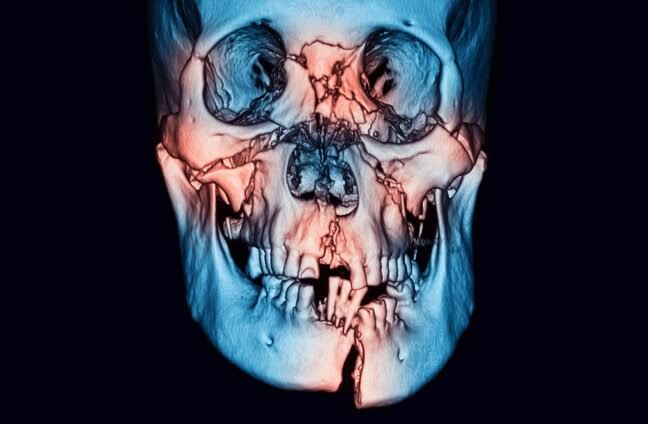
Facial trauma represents a significant public health concern, often leading to functional impairments, aesthetic disfigurement, and psychological distress. Among the various types of facial injuries, midface fractures, particularly those classified by Le Fort, are critical due to their potential for severe complications, including compromise of the airway, vision, and neurological integrity. Accompanying these injuries, or arising from other causes, Cerebrospinal Fluid (CSF) rhinorrhea poses a distinct threat, indicating a breach in the cranial vault and a direct pathway for infection.
1. The Le Fort Classification of Midface Fractures
The Le Fort classification system, established by French surgeon René Le Fort in the early 20th century through cadaveric studies, provides a systematic approach to categorizing midface fractures based on predictable lines of weakness in the facial skeleton. These classifications are crucial for diagnosis, treatment planning, and predicting potential complications.
1.1. Le Fort I Fracture (Horizontal Maxillary Fracture)
This is the lowest and least severe of the Le Fort fractures, characterized by a horizontal fracture line separating the alveolar process and hard palate from the upper facial skeleton.
- Description: The fracture extends above the level of the nasal floor, through the walls of the maxillary sinuses, and posteriorly through the pterygoid plates or the lower part of the pterygoid process of the sphenoid bone.
- Clinical Features:
- Mobility of the hard palate and upper dental arch, which can be seen by grasping the maxillary anterior teeth and attempting to move them.
- Malocclusion is common.
- Swelling and ecchymosis of the upper lip and vestibule.
- Nasal bleeding (epistaxis).
- Rarely, numbness or paresthesia of upper teeth (anterior superior alveolar nerve involvement).
- Radiological Features: Best visualized on axial and coronal Computed Tomography (CT) scans, showing fracture lines through the piriform aperture, lateral maxillary walls, and pterygoid plates. Maxillary sinus opacification due to hemorrhage is often present.
- Management Principles: After initial stabilization, management typically involves reduction of the fracture and stabilization of the maxilla. This often includes intermaxillary fixation (IMF) to establish proper occlusion, followed by open reduction and internal fixation (ORIF) using mini-plates and screws at the buttresses of the maxilla (e.g., zygomaticomaxillary, nasomaxillary, piriform aperture).
1.2. Le Fort II Fracture (Pyramidal Fracture)
This fracture involves the central portion of the midface, creating a pyramidal segment that includes the nasal bones, medial orbital walls, and a portion of the orbital floor.
- Description: The fracture extends from the nasal bones, across the lacrimal bones, through the medial walls and floor of the orbits (often involving the infraorbital rims), across the zygomaticomaxillary sutures, and posteriorly through the pterygoid plates.
- Clinical Features:
- “Dish-face” deformity due to posterior and inferior displacement of the central midface.
- Significant periorbital edema and bilateral circumorbital ecchymosis (“raccoon eyes”).
- Nasal flattening, CSF rhinorrhea (due to involvement of the cribriform plate or ethmoid roof), and profuse epistaxis.
- Infraorbital nerve paresthesia (numbness of cheek, lateral nose, upper lip, and teeth).
- Ocular abnormalities like diplopia (double vision), enophthalmos (posterior displacement of the globe), or rarely, globe injury.
- Radiological Features: CT scans reveal fracture lines extending through the nasal bones, ethmoid sinuses, orbital floor, infraorbital rims, and pterygoid plates. Evidence of orbital soft tissue prolapse or entrapment may be seen.
- Management Principles: Airway management is paramount due to potential posterior displacement. Definitive treatment involves reduction and rigid internal fixation. Multiple mini-plates are typically used to reconstruct the orbital rims, nasal bones, and maxilla, restoring facial projection and occlusal relationships.
1.3. Le Fort III Fracture (Craniofacial Disjunction) This is the most severe type, involving complete separation of the facial skeleton from the cranial base.
- Description: The fracture line extends through the nasofrontal suture, the frontomaxillary suture, the medial and lateral walls of the orbits, the zygomaticofrontal suture, and posteriorly through the body of the sphenoid bone and the pterygoid plates.
- Clinical Features:
- Massive facial edema, extreme “dish-face” deformity with significant elongation of the face.
- Gross mobility of the entire midface relative to the cranium.
- Bilateral “raccoon eyes” and subconjunctival hemorrhage.
- Significant CSF rhinorrhea and severe epistaxis.
- Ocular injuries are common, including globe rupture, retrobulbar hemorrhage, diplopia, and enophthalmos.
- Telecanthus (increased intercanthal distance) due to disruption of the medial canthal ligaments.
- Potential for severe airway compromise and intracranial injury.
- Radiological Features: CT scans demonstrate extensive comminuted fractures involving the frontozygomatic sutures, lateral orbital walls, ethmoid air cells, and sphenoid bone, confirming separation of the entire facial skeleton from the skull base. Intracranial air (pneumocephalus) or hemorrhage may be present.
- Management Principles: These fractures represent a medical emergency due to the high risk of airway obstruction, hemorrhage, and intracranial complications. Initial management focuses on ABCDEs (Airway, Breathing, Circulation, Disability, Exposure). Definitive surgical repair is complex, often requiring a multidisciplinary approach involving maxillofacial surgeons, neurosurgeons, and ophthalmologists. Extensive ORIF via multiple approaches (coronal, subciliary, intraoral) is needed to re-establish the craniofacial buttresses and restore facial projection and occlusion.
1.4. General Clinical and Radiological Investigations for Midface Fractures
Clinical Investigations:
- Primary Survey (ABCDE): Immediate assessment and management of life-threatening conditions. Airway management is critical, especially in Le Fort II and III fractures due to posterior displacement of the maxilla and tongue edema.
- Detailed History: Mechanism of injury (e.g., direct impact, dashboard injury), force and direction of impact, time of injury, loss of consciousness, pre-existing medical conditions, and allergies.
- Physical Examination:
- Inspection: Facial asymmetry, edema, ecchymosis (periorbital, subconjunctival), lacerations, nasal deviation, epistaxis, CSF rhinorrhea.
- Palpation: Systematically palpate bony contours for tenderness, step deformities, crepitus. Evaluate the mobility of the midface (Guerin’s sign for Le Fort I, II, III).
- Ocular Examination: Visual acuity, pupillary reactions, extraocular movements, globe integrity, proptosis/enophthalmos, diplopia.
- Nasal Examination: Septal hematoma (requires prompt drainage to prevent necrosis).
- Intraoral Examination: Bleeding, lacerations, dental injuries, malocclusion, mobility of palate.
- Neurological Assessment: Level of consciousness (Glasgow Coma Scale), cranial nerve function, especially CN V (sensory deficits) and CN II, III, IV, VI (ocular movements and vision).
Radiological Investigations:
- Computed Tomography (CT) Scan: The gold standard for assessing midface fractures.
- Indications: Suspected fracture, significant facial trauma, neurological deficits, or when clinical examination is limited by swelling.
- Views: Axial, coronal, and sagittal views are essential. 3D reconstructions are invaluable for visualizing complex fracture patterns and planning surgical approaches.
- Benefits: Provides detailed information on fracture lines, displacement, comminution, involvement of critical structures (orbits, sinuses, skull base), presence of intracranial injury (hemorrhage, pneumocephalus), and relationship to the cribriform plate.
- Plain Radiographs: While historically used (e.g., Waters’ view, Caldwell view, Lateral view), they have largely been superseded by CT due to their limited detail and superimposition of structures. They may still be useful as initial screening tool in resource-limited settings.
1.5. General Management Principles for Le Fort Fractures
Management of Le Fort fractures is complex and typically follows a systematic approach:
- Emergency Management: Prioritize airway protection (endotracheal intubation, tracheostomy if needed), control of hemorrhage, and management of any associated life-threatening injuries (e.g., intracranial hemorrhage).
- Definitive Management:
- Timing: Often delayed until the patient is medically stable and significant facial edema has subsided (typically 5-10 days post-injury).
- Goals: Restoration of anatomical continuity, proper dental occlusion, facial aesthetics, and functional recovery (vision, breathing, speech).
- Surgical Approaches: Open Reduction and Internal Fixation (ORIF) is the mainstay. Approaches depend on the fracture pattern and include intraoral (vestibular), subciliary, transconjunctival, coronal, and direct laceration approaches.
- Fixation: Mini-plates and screws are used to stabilize fracture segments along the facial buttresses (e.g., nasomaxillary, zygomaticomaxillary, pterygomaxillary) and orbital rims.
- Occlusion: Re-establishment of the pre-injury dental occlusion is paramount. This is achieved through intermaxillary fixation (IMF) using arch bars or screw-retained wires, allowing for accurate positioning of the maxilla relative to the mandible.
- Associated Injuries: Management of orbital soft tissue injuries, globe injuries, nasal septal reconstruction, and skull base defects (including CSF leaks) must be addressed concurrently.
2. Cerebrospinal Fluid (CSF) Rhinorrhea: Diagnosis and Management
CSF rhinorrhea is the leakage of cerebrospinal fluid from the subarachnoid space into the nasal cavity or paranasal sinuses, indicating a breach in the dura mater and skull base. It is a serious condition due to the direct communication it establishes between the external environment and the central nervous system, carrying a significant risk of ascending meningitis or brain abscess.
2.1. Predisposing Factors
- Traumatic:
- Accidental Trauma: Most common cause. Includes severe head injuries, motor vehicle accidents, falls, and assault, leading to fractures of the skull base, anterior cranial fossa (e.g., cribriform plate, ethmoid roof), sphenoid sinus, or petrous temporal bone. Le Fort II and III fractures frequently involve skull base integrity, predisposing to CSF rhinorrhea.
- Iatrogenic Trauma: Occurs as a complication of surgical procedures such as endoscopic sinus surgery, transsphenoidal hypophysectomy, skull base tumor resections, or neurosurgical procedures involving the anterior cranial fossa.
- Non-Traumatic:
- Spontaneous: Can occur without an identifiable cause, often in obese, middle-aged women, potentially related to increased intracranial pressure (ICP) or underlying bony defects.
- Congenital Defects: Rare, such as meningoencephaloceles, cranial dysraphism, or arachnoid cysts, where a portion of the brain or meninges protrudes into the nasal cavity.
- Tumors: Erosion of the skull base by benign or malignant tumors (e.g., pituitary adenoma, inverted papilloma, sinonasal carcinoma).
- Inflammatory/Infectious: Chronic osteomyelitis eroding the skull base (rare).
- Hydrocephalus/Idiopathic Intracranial Hypertension: Elevated ICP can lead to spontaneous dehiscence or enlargement of existing defects.
2.2. Types of CSF Rhinorrhea
- Traumatic: Acute (within 48 hours of injury) or Delayed (appearing days to weeks later).
- Non-Traumatic: Spontaneous, tumor-related, congenital, or iatrogenic (surgical).
2.3. Clinical Features
- Clear, Watery Nasal Discharge: The most hallmark symptom. Typically unilateral, continuous or intermittent, and increases with straining, coughing, or bending forward (Valsalva maneuver). Patients may describe a “salty” or metallic taste.
- “Teardrop” or “Reservoir” Sign: A large gush of fluid may occur after tilting the head forward, or a clear drop may form at the nostril distinct from mucus.
- Headache: Often diffuse, positional (worse when upright), due to intracranial hypotension.
- Nausea and Vomiting: Associated with intracranial hypotension.
- Meningitis Symptoms: Fever, stiff neck (nuchal rigidity), photophobia, altered mental status, if infection develops. This is a critical complication.
- Pneumocephalus: Headache, confusion, or seizures due to air entering the cranial cavity through the defect.
- Anosmia/Hyposmia: Loss or reduction of smell, especially with cribriform plate injury.
2.4. Investigations
- Clinical Suspicion: Based on patient history and characteristic nasal discharge.
- Qualitative/Bedside Tests:
- Glucose Dipstick Test: Historically used, but unreliable. Nasal secretions and tears also contain glucose, leading to false positives. CSF typically has a glucose concentration similar to plasma (often >30 mg/dL).
- Halo Sign (Ring Sign): A drop of fluid on filter paper, where blood collects centrally and CSF forms a clear outer ring. Not definitive, as highly watery blood or tears can produce a similar effect.
- Quantitative/Confirmatory Laboratory Tests:
- Beta-2 Transferrin Assay: The gold standard for confirming CSF. This glycoprotein is unique to CSF (and perilymph) and is not found in other body fluids like nasal mucus, tears, or serum. Requires a sufficient sample of fluid.
- Beta-Trace Protein (BTP) Assay: Another highly specific CSF marker, though less commonly available than beta-2 transferrin.
- Localization (Imaging Studies): Essential for identifying the site of the leak for surgical planning.
- High-Resolution Computed Tomography (HRCT) of the Skull Base and Paranasal Sinuses: Identifies bony defects, fracture lines, opacification of sinuses (fluid level), and pneumocephalus. It is typically the first-line imaging study.
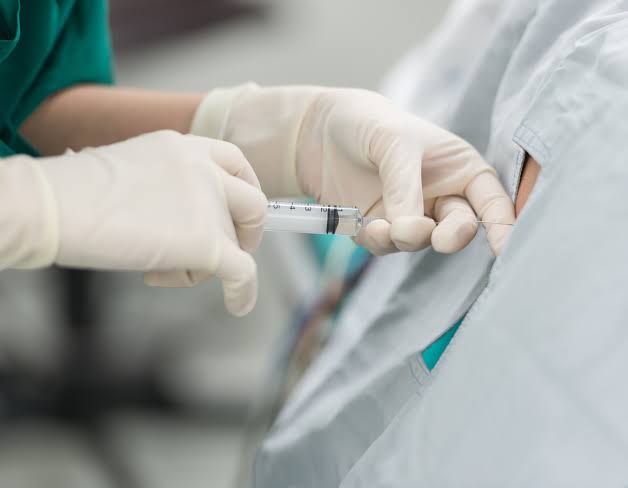
- CT Cisternography: Involves intrathecal (spinal) injection of a water-soluble contrast agent, followed by repeat CT scans. The contrast leaks through the defect, making it visible. Very effective for localizing leaks.
- Magnetic Resonance Imaging (MRI): Useful for identifying associated soft tissue abnormalities, meningoencephaloceles, brain herniation, and assessing brain/meningeal involvement. MRI cisternography can also highlight CSF pathways without radiation, but less precise for bony defects.
- Endoscopic Examination: Direct visualization of the nasal cavity and skull base with an endoscope can sometimes reveal the leak site, especially if actively dripping. Intrathecal fluorescein (controversial due to neurotoxicity) can be used intraoperatively to confirm the leak visually.
2.5. Treatment
The management of CSF rhinorrhea aims to stop the leak, prevent infection, and address any associated complications.
Conservative Management:
- Indications: Primarily for traumatic CSF leaks, especially those without large bony defects or signs of intracranial air, and in stable patients. Most traumatic leaks (up to 80%) resolve spontaneously.
- Measures:
- Bed Rest: Head elevation (30 degrees) to reduce intracranial pressure at the leak site.
- Avoid Straining: Prohibit nose blowing, coughing, sneezing, bending, and Valsalva maneuvers to prevent increasing intracranial pressure. Stool softeners may be prescribed.
- Lumbar Drain: Placement of a lumbar drain to divert CSF and reduce intracranial pressure (5-10 ml/hour) can promote healing of the dural defect. Usually kept for 3-7 days.
- Antibiotics: Prophylactic antibiotics are controversial and generally not recommended due to concerns about promoting resistant strains and a lack of clear evidence of benefit in preventing meningitis. They are indicated if meningitis develops.
- Monitoring: Close monitoring for signs of meningitis (headache, fever, nuchal rigidity).
- Duration: If the leak persists beyond 7-10 days of conservative management, or if there is a large defect, surgical intervention is usually considered.
Surgical Management:
- Indications:
- Failure of conservative management (persistent leak beyond 2-3 weeks).
- Large bony defects identified on imaging.
- Recurrent episodes of meningitis.
- Presence of pneumocephalus.
- Non-traumatic leaks (e.g., spontaneous, tumor-related).
- Concurrent surgery for traumatic facial fractures where a leak is identified.
- Approaches:
- Endoscopic Endonasal Approach: The preferred and most common technique. Minimally invasive, high success rates (90-95%). Allows direct visualization and repair of the defect using various grafting materials (fascia lata, fat, mucoperiosteum, synthetic grafts) and fibrin glue.
- Transcranial Approach (Craniotomy): Reserved for very large, complex defects, those involving significant encephaloceles, or when intracranial access is required for other reasons (e.g., tumor removal).
- Repair Techniques: Reconstruction of the skull base defect typically involves:
- Multi-layered repair: Using autologous tissues (e.g., fascia lata, fat, nasal septal mucoperiosteal flap) or synthetic materials.
- Onlay and Underlay grafts: Placing graft material over and under the defect.
- Fibrin glue: Used to seal the repair and aid adherence.
- Post-operative Management: Continued bed rest, avoidance of straining, and sometimes a temporary lumbar drain for a few days to reduce pressure on the repair.
Conclusion
Le Fort midface fractures and CSF rhinorrhea represent critical aspects of maxillofacial and neurosurgical care, demanding prompt and accurate diagnosis followed by meticulous management. The Le Fort classification remains an invaluable tool for understanding the complexity of midface trauma, guiding clinical assessment, and informing surgical repair to restore facial integrity and function. Concurrently, CSF rhinorrhea, whether traumatic or spontaneous, signifies a breach in the cranial protective barrier, necessitating careful investigation and timely intervention to prevent life-threatening complications like meningitis. A multidisciplinary approach, integrating the expertise of oral and maxillofacial surgeons, neurosurgeons, ENT surgeons, and ophthalmologists, is paramount to optimizing outcomes for patients with these challenging conditions. Modern imaging, diagnostic assays, and advanced surgical techniques have significantly improved the prognosis, emphasizing the importance of a comprehensive and structured approach to patient care.
References
- Ellis E III, Hupp JR, Tucker MR. Contemporary Oral and Maxillofacial Surgery. 7th ed. Elsevier Mosby; 2019.
- Greenberg MS. Handbook of Neurosurgery. 9th ed. Thieme Medical Publishers; 2020.
- Fonseca RJ, Marciani RD, Turvey TA. Oral and Maxillofacial Trauma. 4th ed. Saunders; 2017.
- Schlosser RJ, Bolger WE. Cerebrospinal Fluid Leak. In: Kennedy DW, Bolger WE, Zinreich SJ, eds. Diseases of the Sinuses: Diagnosis and Endoscopic Management. BC Decker Inc.; 2001.
- Chaiban G, Abou Jaoude RM, Sleilaty F. Le Fort Fractures: A Review of Classification, Diagnosis, and Management. Current Opinion in Otolaryngology & Head and Neck Surgery. 2021;29(4):247-253.
- Chiu TW, Chan JH, Poon WS. Traumatic Cerebrospinal Fluid Leaks: A Contemporary Review. Journal of Clinical Neuroscience. 2004;11(6):597-601.