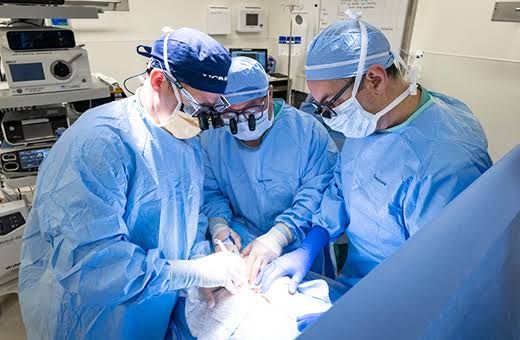
Pancreas transplantation stands as the definitive treatment for select patients with labile type 1 diabetes, offering the potential for insulin independence and the restoration of normal glucose metabolism (euglycemia). The procedure, often performed simultaneously with a kidney transplant (SPK) in patients with end-stage renal disease, is a technically demanding operation that has undergone significant evolution. A successful outcome hinges on meticulous surgical technique, from the strategic placement of the allograft to the precise creation of vascular lifelines and the judicious use of intra-operative medications.
Graft Placement – Intraperitoneal versus Retroperitoneal Positioning
The initial and one of the most fundamental decisions in a pancreas transplant procedure is the anatomical location for the allograft. The surgeon must choose between placing the pancreas graft within the peritoneal cavity (intraperitoneal) or behind it (retroperitoneal). This choice influences the surgical approach, the management of exocrine drainage, and the profile of potential post-operative complications.
1. Intraperitoneal (IP) Placement
The intraperitoneal approach is currently the most widely adopted technique in centers across the globe.
- Technique: The procedure is typically performed through a midline laparotomy, providing wide access to the abdominal cavity. The pancreas allograft, which includes a duodenal segment, is placed freely within the peritoneal cavity, usually in the right lower quadrant. The exocrine drainage of the pancreas is managed via a side-to-side duodenojejunostomy or duodenoileostomy, where the duodenal segment of the graft is anastomosed to a loop of the recipient’s small bowel. Venous drainage is systemic, with the graft’s portal vein connected to the recipient’s iliac vein or superior vena cava.
- Advantages:
- Simplified Re-intervention: Should complications like bleeding, thrombosis, or anastomotic leak arise, the intraperitoneal location allows for more direct and easier surgical access.
- Ease of Biopsy: Percutaneous or endoscopic biopsies of the graft are generally more straightforward.
- Physiological Drainage: Draining pancreatic enzymes directly into the bowel lumen via an enteric anastomosis is considered more physiological, avoiding the metabolic complications associated with bladder drainage (a now mostly historical technique).
- Disadvantages:
- Diffuse Peritonitis: A leak from the enteric anastomosis can lead to widespread, life-threatening peritonitis and intra-abdominal sepsis, as the contents are not contained.
- Internal Hernia: The creation of a new bowel anastomosis and the presence of a mobile graft can create potential spaces for the development of internal hernias.
2. Retroperitoneal (RP) Placement
The retroperitoneal approach positions the graft in a space anatomically similar to a transplanted kidney.
- Technique: The graft is placed in the iliac fossa, typically on the right side, behind the posterior peritoneum. The vascular anastomoses are performed to the iliac vessels in a manner similar to a kidney transplant. While the vascular connections are made retroperitoneally, a window must be created in the peritoneum to allow the duodenal segment of the graft to be brought into the abdominal cavity for enteric anastomosis to the bowel.
- Advantages:
- Containment of Complications: A primary benefit is the potential containment of complications. A vascular or anastomotic leak may be confined to the retroperitoneal space, potentially leading to a more localized abscess or fluid collection rather than diffuse peritonitis.
- Anatomical Familiarity: For transplant surgeons accustomed to kidney transplantation, the dissection and placement within the iliac fossa are very familiar.
- Disadvantages:
- Technical Complexity: Creating the retroperitoneal pocket and safely performing the anastomoses can be more challenging, particularly in obese patients or those with prior surgeries.
- Difficult Re-access: Re-operation for bleeding or thrombosis in the retroperitoneal space can be significantly more difficult due to inflammation and scarring in a confined area.
Conclusion on Placement: The shift towards intraperitoneal placement reflects a preference for easier re-intervention and a belief that meticulous surgical technique can minimize the risk of anastomotic leaks. The final decision rests on surgeon experience, institutional protocol, and patient-specific anatomical considerations.
Iliac Vessel Isolation and Vascular Anastomoses
The viability of the pancreas allograft is entirely dependent on the successful creation of patent and durable vascular anastomoses. This is the most critical and technically intricate portion of the operation.
Step 1: Isolation of the Iliac Vessels
Before the graft is brought to the surgical field, the recipient’s vessels must be prepared.
- Exposure: Through a midline incision, the posterior peritoneum overlying the right common iliac vessels is incised longitudinally. This incision is extended superiorly to the aortic bifurcation and inferiorly past the iliac bifurcation.
- Dissection: Careful dissection is performed to expose and mobilize the common iliac artery, external iliac artery, and common iliac vein. Utmost care is taken to identify, ligate, and divide the overlying lymphatic channels. Failure to do so is a primary cause of post-operative lymphocele formation.
- Control: Vessel loops are passed around the arteries and veins to gain proximal and distal control, allowing for temporary occlusion during anastomosis. The vessels are palpated to assess for atherosclerotic plaque.
Step 2: Performing the Vascular Anastomoses
The pancreas allograft is prepared on a separate “back table,” where the donor’s splenic artery and superior mesenteric artery (SMA) are typically joined to a donor iliac artery “Y-graft.” This converts the dual arterial supply into a single vessel for anastomosis.
- Arterial Anastomosis: The standard technique is to create an end-to-side anastomosis between the donor’s common iliac artery (the base of the Y-graft) and the recipient’s common or external iliac artery.
- After systemic heparinization, vascular clamps are applied. An arteriotomy is made on the recipient vessel.
- The anastomosis is performed using a running, non-absorbable monofilament suture (e.g., 5-0 or 6-0 Prolene). Sutures are placed meticulously from inside-out on the graft and outside-in on the recipient to ensure good intimal apposition and prevent dissection flaps.
- Venous Anastomosis: The venous outflow of the graft is the donor portal vein. This is anastomosed end-to-side to the recipient’s common iliac vein or, in some cases, the superior vena cava for systemic drainage.
- A partial-occlusion clamp (e.g., Satinsky clamp) is placed on the recipient vein, and a venotomy is made.
- The anastomosis is similarly performed with a running monofilament suture. It is critical to ensure the graft is oriented correctly to prevent kinking or tension on the portal vein, which could lead to venous thrombosis—a catastrophic complication.
Reperfusion: After completing the anastomoses, the clamps are released in a specific order: first the venous clamp to decompress the graft, followed by the arterial clamp. The surgeon immediately observes the pancreas “pink up” as it is reperfused with blood. The anastomotic lines are inspected carefully for hemostasis.
Strategies for Complex Anatomy:
- Severe Atherosclerosis: If the recipient’s iliac artery is heavily calcified and unsuitable for anastomosis (“egg-shell” aorta/iliac), several options exist. The surgeon may perform a limited endarterectomy to remove plaque, select a healthier segment of the common iliac artery, or, in rare cases, use the aorta as the inflow site.
- Short Donor Vessels: If the donor vessels on the Y-graft are short, extensive mobilization of the recipient’s iliac vessels may be required to bring them closer to the graft without tension.
- Previous Transplant: In a re-transplant scenario, vessels on the contralateral (left) side are typically used.
Use of Intra-operative Adjunctive Medications
Pharmacological support during the operation is essential to prevent immediate graft failure and infection.
- Anticoagulation: Systemic anticoagulation with intravenous heparin (e.g., 5,000 units) is administered just before the application of vascular clamps. This prevents the formation of thrombi within the stagnant blood of the clamped vessels and, crucially, within the microvasculature of the pancreas graft upon reperfusion. The pancreas is a low-flow organ highly susceptible to thrombosis. Some surgeons may reverse the heparin with protamine sulfate after reperfusion if there is concern for bleeding, while others allow it to wear off naturally.
- Induction Immunosuppression: To prevent hyperacute and T-cell-mediated acute rejection, the first dose of powerful induction immunosuppressive therapy is administered intra-operatively. This is typically a monoclonal antibody like basiliximab (an IL-2 receptor antagonist) or a polyclonal antibody like anti-thymocyte globulin (ATG). Giving this dose in the OR ensures that a therapeutic level of immunosuppression is present at the moment the graft is exposed to the recipient’s immune system.
- Prophylactic Antibiotics: A broad-spectrum antibiotic covering gram-positive, gram-negative, and anaerobic organisms is given prior to the skin incision. This is critical for preventing surgical site infections, especially given the enteric anastomosis which connects a sterile field to a non-sterile one.
- Fluid Management: The anesthesiology team plays a vital role in maintaining hemodynamic stability. Adequate central venous pressure and mean arterial pressure are crucial for ensuring robust perfusion of the newly transplanted graft. Vasoactive agents (vasopressors) may be used as needed to support blood pressure.
By integrating these precise surgical maneuvers with strategic pharmacological interventions, surgeons can provide patients with a functional pancreas allograft, offering a transformative therapy for diabetes.