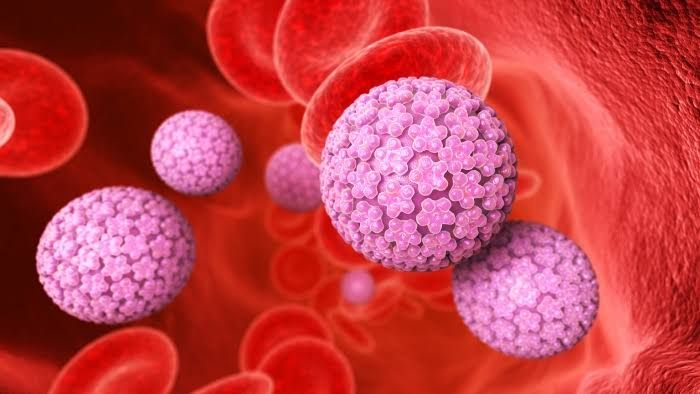
Human Papillomavirus (HPV) is a common viral infection that affects millions worldwide. While often asymptomatic, certain types of HPV can lead to serious health issues, including various cancers.
Causes of Human Papillomavirus (HPV)
What is HPV? Human Papillomavirus (HPV) is a group of over 200 related viruses, some of which are transmitted through sexual contact. These viruses are named “papilloma” because some types can cause warts or papillomas, which are non-cancerous tumors. HPV primarily targets epithelial cells, which line the surfaces of the body, including the skin, mouth, throat, anus, and genitals.
The Infective Agent: HPV is a DNA virus belonging to the Papillomaviridae family. Infection occurs when the virus enters the body through microscopic breaks in the skin or mucous membranes. This typically happens during skin-to-skin contact, particularly sexual contact. The virus then replicates within the epithelial cells, potentially altering their growth patterns. The persistence of certain high-risk HPV types can lead to cellular changes that, over time, may progress to cancer.
Types of HPV
HPV types are broadly categorized into two main groups based on their association with cancer: low-risk and high-risk types.
A. Low-Risk HPV Types:
- These types are generally not associated with cancer.
- They commonly cause benign growths such as warts on the skin (common warts, plantar warts, flat warts) or genital warts.
- Common Low-Risk Types: HPV-6 and HPV-11 are responsible for approximately 90% of genital wart cases. While visually concerning, genital warts rarely progress to cancer.
B. High-Risk HPV Types (Oncogenic HPV):
- These types have the potential to cause cellular changes that can lead to cancer.
- They are primarily responsible for almost all cases of cervical cancer, and a significant percentage of other cancers, including:
- Vaginal cancer
- Vulvar cancer
- Anal cancer
- Penile cancer
- Oropharyngeal cancer (cancers of the back of the throat, including the base of the tongue and tonsils)
- Common High-Risk Types: HPV-16 and HPV-18 are the most dangerous, accounting for about 70% of all cervical cancers and a large proportion of other HPV-related cancers. Other high-risk types include HPV-31, 33, 35, 39, 45, 51, 52, 56, 58, 59, 66, and 68.
- It is crucial to understand that infection with a high-risk HPV type does not automatically mean cancer will develop. In most cases, the immune system clears the infection. However, persistent infection with high-risk HPV types is a necessary precursor for the development of these cancers.
Transmission of HPV
HPV is primarily transmitted through direct skin-to-skin contact, most commonly during sexual activity.
A. Sexual Transmission:
- Genital-to-genital contact: This is the most common mode of transmission for genital HPV. It does not require penetrative intercourse; simple skin-to-skin contact in the genital area is sufficient.
- Oral-genital contact (oral sex): Can transmit HPV to the mouth and throat, potentially leading to oropharyngeal cancers.
- Anal-genital contact (anal sex): Can transmit HPV to the anal region, increasing the risk of anal cancer.
- Hand-to-genital contact: While less common, HPV can theoretically be transmitted this way if the virus is present on the hands.
- Fomite transmission: Transmission through inanimate objects (e.g., toilet seats, towels) is highly unlikely as HPV is fragile outside of human cells.
B. Non-Sexual Transmission (Rare):
- Perinatal transmission (mother to child): In rare cases, a mother with HPV can transmit the virus to her baby during childbirth. This can lead to recurrent respiratory papillomatosis (RRP) in the child, where warts grow in the airways, potentially causing breathing difficulties.
- Autoinoculation: An individual can transmit HPV from one part of their body to another (e.g., from a genital wart to another area of the skin).
Factors Influencing Transmission:
- Number of sexual partners: The risk of exposure increases with a higher number of lifetime sexual partners.
- Concurrent sexually transmitted infections (STIs): Presence of other STIs might increase susceptibility.
- Compromised immune system: Individuals with weakened immune systems (e.g., HIV-positive individuals, organ transplant recipients) are more susceptible to persistent HPV infections and higher risk of progression to cancer.
- Age of sexual debut: Younger age at first sexual activity is associated with higher risk.
Symptoms of HPV
One of the challenging aspects of HPV is that most infections are asymptomatic, meaning they produce no visible signs or symptoms. This allows the virus to spread unknowingly. When symptoms do occur, they vary depending on the HPV type and location of the infection.
A. Asymptomatic Infection:
- The vast majority of HPV infections, especially with high-risk types, are transient and cleared by the immune system within 1-2 years without causing any symptoms or health problems.
- Individuals may be infected and contagious without ever knowing it.
B. Genital Warts (Caused by Low-Risk HPV Types):
- Appearance: These are typically flesh-colored, soft, moist bumps that can be flat, raised, cauliflower-shaped, or resemble small stems. They can appear individually or in clusters.
- Location: In males, they commonly appear on the penis, scrotum, groin, thighs, or around the anus. In females, they can be found on the vulva, in or around the vagina, on the cervix, or around the anus. They can also appear in the mouth or throat.
- Symptoms: Genital warts are usually painless, though they may cause itching, burning, discomfort, or bleeding during intercourse.
- Onset: Warts can appear weeks, months, or even years after exposure to the virus.
C. Abnormal Cell Changes (Dysplasia) Caused by High-Risk HPV Types:
- High-risk HPV types cause changes to cells that are not immediately cancerous but can progress if left untreated. These changes are typically asymptomatic in their early stages.
- Cervical Dysplasia: In women, high-risk HPV can lead to abnormal cells on the cervix (cervical intraepithelial neoplasia – CIN). These changes are detected through routine cervical cancer screening (Pap tests).
- Other Dysplasias: Similar pre-cancerous changes can occur in the anus (anal intraepithelial neoplasia – AIN), vulva (vulvar intraepithelial neoplasia – VIN), vagina (vaginal intraepithelial neoplasia – VaIN), and penis (penile intraepithelial neoplasia – PeIN).
D. HPV-Related Cancers (Result of Persistent High-Risk HPV Infection):
- Cancers typically develop very slowly, often over 10-20 years or more, after persistent infection with high-risk HPV types.
- Cervical Cancer: Early stages are usually asymptomatic. As cancer progresses, symptoms may include abnormal vaginal bleeding (after sex, between periods, or post-menopause), unusual vaginal discharge, or pelvic pain.
- Anal Cancer: Symptoms may include anal bleeding, pain, itching, or a lump in the anal area.
- Oropharyngeal Cancer: Symptoms can include a persistent sore throat, difficulty swallowing, ear pain, a lump in the neck, or changes in voice.
- Vulvar/Vaginal/Penile Cancers: Symptoms vary depending on the site but may include lumps, sores, itching, pain, or bleeding in the affected area.
Screening for HPV and Related Conditions
Early detection of HPV-related cellular changes is critical for preventing cancer progression. Screening methods vary depending on the gender and potential site of infection.
A. Cervical Cancer Screening (for individuals with a cervix):
- Pap Test (Papanicolaou Test): This test collects cells from the cervix to check for abnormal changes (dysplasia) that could be pre-cancerous or cancerous. It detects cell abnormalities, not the virus itself.
- Frequency: Recommendations vary by age and history, but typically start around age 21, then every 3 years.
- HPV Test (Primary HPV Screening or Co-testing): This test directly detects the presence of high-risk HPV DNA in cervical cells.
- Primary HPV Testing: Approved for initial screening in some guidelines for women aged 25 or 30 and older, performed every 5 years.
- Co-testing: Involves performing both a Pap test and an HPV test simultaneously, particularly for women aged 30 and older, typically every 5 years.
- Follow-up for Abnormal Results: If Pap or HPV tests are abnormal, further evaluation such as colposcopy (magnified examination of the cervix) and biopsy may be recommended to assess the severity of cellular changes and guide treatment.
B. Anal Cancer Screening (for high-risk individuals):
- There are no universally recommended routine screening guidelines for anal HPV or anal cancer for the general population.
- High-Risk Groups: Screening is often considered for individuals at high risk, such as men who have sex with men (MSM), HIV-positive individuals, or individuals with a history of cervical or vulvar cancer.
- Anal Pap Test (Anal Cytology): Similar to a cervical Pap test, this involves collecting cells from the anal canal to check for abnormal cells.
- Anoscopy with Biopsy: If anal Pap results are abnormal, a high-resolution anoscopy (magnified examination of the anus and rectum) may be performed, with biopsies taken of suspicious areas.
C. Other Screenings:
- Visual Inspection: Genital warts can be diagnosed by visual examination by a healthcare provider. Sometimes, a biopsy may be taken to confirm the diagnosis or rule out other conditions.
- Oral/Oropharyngeal Screening: Currently, there are no routine screening tests for HPV-related oral or oropharyngeal cancers for the general population. Dental and medical professionals may perform visual exams of the mouth and throat during routine check-ups to look for suspicious lesions.
Prevention of HPV
Preventing HPV infection and its associated diseases involves a multi-pronged approach, including vaccination, safe sexual practices, and regular screening.
A. HPV Vaccination:
- Mechanism: HPV vaccines (e.g., Gardasil 9) protect against the most common high-risk HPV types (HPV-16, 18) that cause cancer, as well as low-risk types (HPV-6, 11) that cause genital warts. Gardasil 9 protects against 9 HPV types in total.
- Target Population:
- Routine Vaccination: Recommended for preteens (boys and girls) aged 11 or 12 years, as a two-dose series. Vaccination is ideally administered before exposure to HPV through sexual activity, offering maximal protection.
- Catch-up Vaccination: Recommended for individuals up to age 26 if they were not adequately vaccinated previously.
- Adults Ages 27-45: Shared clinical decision-making is recommended. Vaccination in this age group may be beneficial for some individuals who have not been vaccinated and are at risk for new HPV infection, though protection may be less robust as some exposure may have already occurred.
- Efficacy: Highly effective in preventing infection with the HPV types covered by the vaccine and significantly reduces the incidence of HPV-related cancers and genital warts. It does not treat existing HPV infections or HPV-related diseases.
B. Safe Sexual Practices:
- Condom Use: Consistent and correct male condom use can reduce the risk of HPV transmission. However, condoms do not offer complete protection because HPV can infect areas not covered by a condom (e.g., scrotum, vulva, perineum, inner thighs).
- Monogamous Relationships: Limiting the number of sexual partners reduces exposure to HPV. A long-term, mutually monogamous relationship with an uninfected partner greatly minimizes risk.
- Abstinence: Complete abstinence from sexual activity is the only 100% effective way to prevent sexual transmission of HPV.
C. Regular Screening:
- For individuals with a cervix, adherence to recommended cervical cancer screening guidelines (Pap tests and/or HPV tests) is crucial. Screening allows for early detection and treatment of pre-cancerous lesions before they can develop into invasive cancer.
- Even vaccinated individuals should continue with routine cervical cancer screening, as the vaccine does not protect against all HPV types that can cause cervical cancer.
D. Healthy Lifestyle:
- While not directly preventing HPV infection, maintaining a strong immune system through a healthy diet, regular exercise, and avoiding smoking can help the body clear HPV infections more effectively and may reduce the risk of progression to cancer. Smoking, in particular, has been identified as a co-factor for HPV-related cancer development.
Conclusion
Human Papillomavirus is an extremely common viral infection with a significant public health impact. While many infections are transient and harmless, persistent infection with high-risk HPV types can lead to a range of cancers, particularly cervical cancer. Understanding the causes, types, transmission, symptoms, and the critical role of screening and prevention is paramount. Through widespread vaccination, consistent safe sexual practices, and adherence to recommended screening guidelines, the burden of HPV-related diseases can be substantially reduced, leading to improved public health outcomes globally.