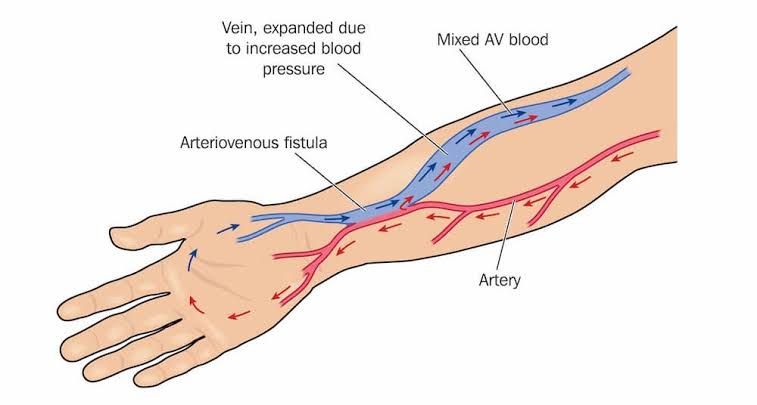
Successful vascular access is the cornerstone of effective hemodialysis, serving as the critical lifeline for patients with chronic kidney disease (CKD) and end-stage renal disease (ESRD). Without a reliable and well-functioning access, achieving optimal dialysis outcomes, maintaining patient quality of life, and preventing serious complications becomes challenging, if not impossible. While various types of vascular access exist, including arteriovenous (AV) fistulas, AV grafts, and central venous catheters (CVCs), the focus herein will be on the essential prerequisites that govern the success and longevity of any vascular access, particularly permanent ones like AV fistulas and grafts, which are preferred for their superior outcomes. Understanding these prerequisites is fundamental for healthcare professionals involved in the creation, maintenance, and utilization of vascular access.
Understanding the Desired Flow Rate
The blood flow rate (BFR), also known as pump speed, is a critical parameter in hemodialysis, dictating the efficiency with which a patient’s blood is circulated through the dialyzer to remove waste products and excess fluid. A “desired” flow rate refers not just to the machine’s set pump speed, but more crucially, to the actual flow rate within the vascular access itself, which must be sufficient to supply the machine’s demands without compromising the access or the patient.
Why is it Important? The BFR directly impacts the effectiveness of dialysis. A higher, adequate BFR ensures:
- Effective Clearance: More blood passes through the dialyzer per unit of time, facilitating greater solute removal (e.g., urea, creatinine, phosphates) and enhanced ultrafiltration (fluid removal).
- Prevention of Recirculation: Inadequate access flow relative to the pump speed can lead to “recirculation,” where dialyzed blood returning to the patient re-enters the dialyzer without passing through the systemic circulation. This significantly reduces the effective clearance and makes dialysis inefficient.
- Access Health: An optimal flow rate within the access (e.g., in a mature AV fistula) helps maintain its patency by reducing the risk of thrombosis (clotting) and supporting the integrity of the vessel wall. Conversely, an access with insufficient native flow may struggle to support high pump speeds, leading to negative pressure within the access, damaging the vessel wall, and potentially causing collapse or thrombosis.
Optimal Ranges: For most adult hemodialysis patients, the prescribed BFR typically ranges from 300 to 500 mL/min. However, the actual flow capacity of the vascular access must be significantly higher than the prescribed pump speed to prevent complications and ensure efficiency. For a mature AV fistula, an access flow of at least 600 mL/min is generally considered desirable, and often much higher (e.g., over 1000 mL/min). AV grafts typically require a flow rate of at least 400-600 mL/min.
Factors Influencing Desired Flow Rate:
- Patient Characteristics: Larger body size and higher metabolic rates often necessitate higher BFRs to achieve adequate clearance.
- Dialysis Prescription: Longer or more frequent dialysis sessions may allow for slightly lower BFRs, while shorter, more intensive sessions demand higher flows.
- Type and Caliber of Vascular Access: AV fistulas, especially mature ones, inherently support higher blood flows due to their direct arterial connection and vessel remodeling. AV grafts can also support high flows but are more prone to stenoses affecting flow. CVCs are generally limited to lower BFRs (typically 250-400 mL/min) due to their smaller lumen and length.
- Condition of the Access: Stenosis (narrowing), thrombosis, or other anatomical issues within the access or its feeding/draining vessels will inherently limit the achievable blood flow, regardless of the pump speed setting.
- Cardiovascular Status: The patient’s underlying cardiac function and blood pressure can influence the ability of an access to generate and sustain high flow rates.
Assessment of Access Flow: Access flow can be assessed through various methods, including physical examination (bruit, thrill), dynamic venous pressure monitoring during dialysis, and specialized flow studies using ultrasound or indicator dilution techniques. Regular monitoring is crucial for early detection of flow-limiting lesions.
Consequences of Inadequate Access Flow: Insufficient access flow or the inability to sustain the desired BFR for the dialysis prescription leads to:
- Suboptimal clearance of toxins.
- Increased treatment time or the need for more frequent sessions.
- Recurrent access complications such as thrombosis, recurrent stenosis, and even access loss.
- In severe cases, the need for replacement access, including temporary CVCs, which carry higher risks of infection and other complications.
Assessing Dialysis Adequacy: Urea Reduction Ratio (URR) and Kt/V
Achieving “adequate dialysis” is a primary goal of hemodialysis treatment, directly impacting patient morbidity and mortality. Adequacy is quantitatively assessed using specific metrics, primarily the Urea Reduction Ratio (URR) and Kt/V, which serve as crucial indicators of how effectively waste products are being removed from the patient’s blood.
Urea as a Marker: Urea is a small, water-soluble molecule produced from protein metabolism. Because it diffuses readily across the dialyzer membrane and correlates well with the removal of other small molecular weight toxins, urea is used as a convenient and reliable surrogate marker for overall solute clearance.
Urea Reduction Ratio (URR):
- Definition: URR measures the percentage reduction of urea nitrogen concentration in the blood from the beginning to the end of a dialysis session.
- Calculation: URR (%) = [(Pre-dialysis BUN – Post-dialysis BUN) / Pre-dialysis BUN] × 100%.
- Target: Clinical guidelines, such as those from the Kidney Disease Outcomes Quality Initiative (KDOQI), recommend a minimum URR of 65% for patients receiving thrice-weekly hemodialysis.
- Limitations: While simple and widely used, URR is sensitive to ultrafiltration and the total treatment time. It does not account for the volume of distribution of urea within the patient’s body and can be artificially inflated by significant fluid removal.
Kt/V:
- Definition: Kt/V is considered a more comprehensive and accurate measure of dialysis adequacy. It quantifies the total amount of blood cleared of urea during a dialysis session, normalized to the patient’s total body water volume (volume of urea distribution).
- K (Clearance): Represents the urea clearance rate of the dialyzer (mL/min), influenced by blood flow rate, dialysate flow rate, and the dialyzer’s efficiency (surface area, membrane type).
- t (Time): Refers to the duration of the dialysis session in minutes.
- V (Volume): Represents the volume of distribution of urea in the patient’s body (liters), which approximates total body water.
- Calculation: While complex equations exist, Kt/V is often calculated using specialized software or simplified formulas based on pre- and post-dialysis BUN levels, ultrafiltration volume, and treatment time.
- Target: For thrice-weekly hemodialysis, KDOQI guidelines recommend a minimum single-pool Kt/V of 1.2 for each session, corresponding to an average weekly Kt/V of 3.6.
- Advantages over URR: Kt/V accounts for treatment time, dialyzer efficiency, and the patient’s body size, providing a more robust and personalized measure of dialysis adequacy.
Relationship to Vascular Access: The functionality of the vascular access is inextricably linked to achieving target URR and Kt/V values:
- Blood Flow Rate (K): A well-functioning vascular access capable of sustaining high and consistent blood flow rates directly contributes to a higher ‘K’ (clearance) value, thus improving Kt/V and URR. Conversely, if the access cannot support the prescribed BFR, or if there is significant recirculation, ‘K’ will decrease, leading to inadequate dialysis.
- Recirculation: Poorly functioning access can lead to significant recirculation, where venous blood from the dialyzer re-enters the arterial needle (or vice versa in CVCs) without passing through the systemic circulation. This effectively reduces the volume of “fresh” blood reaching the dialyzer and dramatically lowers ‘K’, leading to suboptimal URR and Kt/V despite adequate machine settings.
- Treatment Time (t): Access issues (e.g., difficult cannulation, recurrent alarms) can prolong the setup time or necessitate early termination of sessions, reducing ‘t’ and thus lowering Kt/V.
- Patient Compliance: A painful or unreliable access can lead to patient non-adherence, resulting in shorter or missed treatments, consequently failing to meet adequacy targets.
Regular monitoring of URR and Kt/V is essential. If adequacy targets are consistently not met, a thorough investigation into vascular access function (e.g., flow studies, venography) is a primary step, alongside reviewing the dialysis prescription and patient compliance.
The Ability to Cannulate
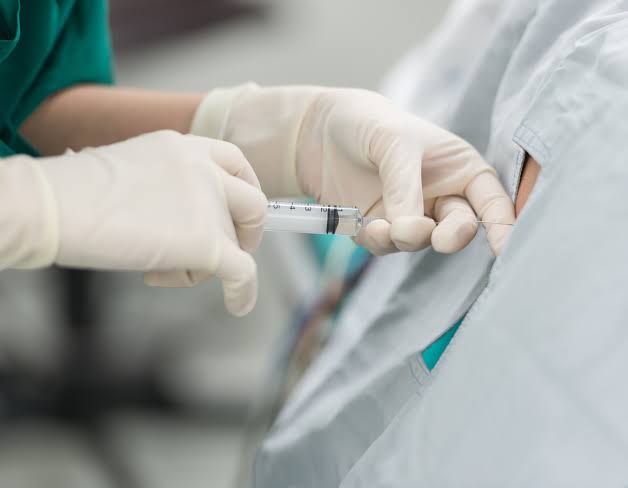
Cannulation, the process of safely inserting needles into the vascular access for connection to the dialysis machine, is a prerequisite of fundamental importance. Without successful and repeated cannulation, all other considerations regarding flow rate and adequacy become moot. The ability to cannulate efficiently, safely, and with minimal discomfort is crucial for the longevity of the access and the patient’s willingness to adhere to treatment.
Key Factors for Successful Cannulation:
- Access Maturity and Development:
- AV Fistulas: For an AV fistula, adequate maturation is paramount. This involves the arterialization of the vein, leading to increased diameter, wall thickening, and sufficient length for cannulation. The “Rule of 6s” is a common guideline: a mature fistula should have a diameter greater than 6mm, be less than 6mm deep from the skin surface, and have at least 6cm of straight cannulatable vessel length. Premature or improperly matured fistulas are extremely difficult to cannulate, leading to repeated failures and potential damage.
- AV Grafts: Grafts do not require the same maturation process as fistulas but need sufficient time for surgical swelling to subside and for the surrounding tissues to heal and stabilize around the graft material (typically 2-3 weeks post-implantation).
- Anatomical Suitability:
- Straight Segment: The access must have a sufficient length of straight vessel or graft material to allow for the placement of two needles, spaced adequately apart to prevent recirculation.
- Absence of Complications: Areas with stenosis, aneurysms, pseudoaneurysms, significant tortuosity, or infection are generally not suitable for cannulation.
- Accessibility: The access should be easily palpable and visible, not too deep, and not located under extensive scarring or difficult anatomical areas.
- Patient Factors:
- Cooperation and Education: Patients must understand the importance of stillness during cannulation and proper access care. Education on arm position, pain management, and post-cannulation care is vital.
- Skin Integrity and Hygiene: Healthy, clean skin over the access site minimizes the risk of infection. Patients should be educated on daily hygiene practices.
- Pain Tolerance and Management: Some patients experience significant pain during needle insertion. Use of topical or local anesthetics can greatly improve comfort and patient compliance.
- Body Habitus: Obesity can make even well-developed access difficult to palpate and cannulate if it lies too deep beneath subcutaneous tissue.
- Cannulator Skill and Technique:
- Needle Selection: Choosing the appropriate needle gauge (typically 15G-17G) and length based on the access characteristics and patient preference.
- Aseptic Technique: Strict adherence to aseptic technique is critical to prevent access-related bloodstream infections, a major cause of morbidity and mortality in hemodialysis patients.
- Correct Angle and Depth: Proper insertion angle and depth are crucial to enter the lumen cleanly without puncturing the back wall or causing infiltration.
- Rotation of Sites: Implementing a scheduled rotation of cannulation sites (e.g., ladder technique) or using the “buttonhole” technique (cannulating the same site at the same angle using blunt needles) helps prevent site fatigue, aneurysm formation, pseudoaneurysm development, and scarring.
- Monitoring: Vigilance for signs of infiltration, hematoma, or other complications during and after cannulation.
Consequences of Difficult Cannulation: Repeatedly difficult or failed cannulation attempts can lead to:
- Patient Pain and Anxiety: Causing significant distress and potentially leading to non-adherence.
- Access Damage: Hematoma formation, infiltration, scarring, aneurysm/pseudoaneurysm formation, vessel wall weakening, and stenosis. Each of these can ultimately compromise access function and longevity.
- Increased Risk of Infection: Each needle stick carries a risk of introducing bacteria, especially with multiple attempts or poor technique.
- Delayed or Missed Treatments: Prolonged cannulation attempts or inability to cannulate can lead to delayed or even missed dialysis sessions, compromising adequacy.
- Access Failure: Ultimately, chronic cannulation issues shorten the lifespan of the vascular access, necessitating surgical revision or creation of a new access.
Effective training and ongoing competency assessment for cannulation staff are indispensable. Patient education and empowerment regarding access care are equally important.
Conclusion
The successful creation, maintenance, and utilization of vascular access for hemodialysis are complex processes that demand meticulous attention to a range of interconnected prerequisites. The ability for an access to consistently support the desired blood flow rate, thereby enabling the achievement of optimal dialysis adequacy measured by URR and Kt/V, is fundamentally dependent on the capacity for safe, reliable, and repeated cannulation.
These three prerequisites — blood flow, adequacy, and cannulability — are not isolated factors but rather interdependent pillars supporting the edifice of effective dialysis treatment. A high-flow access is useless if it cannot be cannulated or if it fails to deliver adequate clearance due to recirculation. Similarly, perfect cannulation technique cannot overcome an access with critically low flow.
Optimal vascular access management requires a multidisciplinary approach involving nephrologists, vascular surgeons, interventional radiologists, dialysis nurses, and the patient themselves. Continuous assessment, proactive surveillance for potential complications, and timely intervention are crucial to ensure long-term access patency and functionality, ultimately improving the quality of life and clinical outcomes for individuals living with kidney failure. By prioritizing these prerequisites, healthcare teams can significantly enhance the success rates of vascular access, promoting safer, more effective, and more comfortable dialysis experiences for patients.