In the fields of pharmacology, biotechnology, and clinical diagnostics, accurately quantifying the activity of a substance is paramount. Whether it’s a pharmaceutical drug, a vaccine, an antibody, or an antimicrobial agent, its effectiveness hinges on its biological potency. Assays, which are analytical procedures, are indispensable tools for determining this potency.
Understanding Biological Potency
Biological potency refers to the quantitative measure of the biological activity of a substance. Unlike mere chemical concentration, which indicates the amount of a substance present, potency describes the strength of its effect on a living system or biological process. It is a critical parameter for therapeutic agents, reflecting the drug’s ability to elicit a specific pharmacological response at a given dose.
Key Aspects of Biological Potency:
- Quantitative Measurement: Potency is not qualitative; it’s expressed numerically, often relative to a defined standard.
- Biological Activity: It directly assesses the functional effect (e.g., enzyme inhibition, receptor binding, microbial growth inhibition, immune response stimulation).
- Dose-Response Relationship: Potency is intrinsically linked to the dose-response curve. A highly potent drug achieves a desired effect at a lower concentration or dose compared to a less potent one.
- Standardization: For many biological products (e.g., insulin, vaccines, antibiotics), potency is determined by comparing their effect to that of a reference standard recognized by international pharmacopeias (e.g., USP, BP, EP) or health organizations (e.g., WHO). This ensures consistency and comparability across different batches and manufacturers.
- Clinical Relevance: Accurate determination of potency ensures that patients receive an effective and safe dose, preventing under-dosing (leading to therapeutic failure) or over-dosing (leading to toxicity).
Factors influencing biological potency include the drug’s purity, stability, formulation, and the specific biological system (e.g., cell line, animal model, microbial strain) used for the assay.
Physical and Chemical Methods of Assay
Physical and chemical methods are widely used for the quantitative analysis of drugs and other substances, particularly when the active ingredient is a well-defined chemical entity. These methods rely on the intrinsic physicochemical properties of the analyte.
A. Physical Methods:
These methods leverage physical properties such as light absorption, scattering, or interaction with an electric field.
- Spectrophotometry (UV-Vis, IR):
- Principle: Measures the absorption (or transmission) of electromagnetic radiation by the analyte at specific wavelengths. UV-Vis spectrophotometry is used for compounds absorbing in the ultraviolet and visible regions, while IR spectrophotometry is used for compounds absorbing in the infrared region, providing characteristic “fingerprints.”
- Application: Quantification of drugs, identification of functional groups, purity testing. For example, many drugs have characteristic UV absorption maxima that can be used for their precise quantification.
- Chromatography (HPLC, GC):
- Principle: Separates components of a mixture based on their differential distribution between a stationary phase and a mobile phase.
- High-Performance Liquid Chromatography (HPLC): Used for non-volatile and thermally unstable compounds.
- Gas Chromatography (GC): Used for volatile and thermally stable compounds.
- Application: Purity assessment, quantification of active pharmaceutical ingredients (APIs), related substances determination, and separation of isomers. HPLC is a workhorse in pharmaceutical analysis.
- Principle: Separates components of a mixture based on their differential distribution between a stationary phase and a mobile phase.
- Refractometry:
- Principle: Measures the refractive index of a solution, which changes with the concentration of the solute.
- Application: Determination of sugar concentration in syrups, purity of oils.
- Polarimetry:
- Principle: Measures the rotation of plane-polarized light by optically active substances. The angle of rotation is proportional to the concentration.
- Application: Quantification of optically active drugs like steroids, sugars, and amino acids; assessment of enantiomeric purity.
B. Chemical Methods:
These methods involve chemical reactions to quantify the analyte.
- Titrimetry (Volumetric Analysis):
- Principle: Involves the reaction of a solution of known concentration (titrant) with a solution of the analyte (titrand) until the reaction is complete, indicated by an endpoint.
- Types: Acid-base titration, redox titration, complexometric titration, precipitation titration.
- Application: Quantification of acids, bases, oxidizing/reducing agents, and metal ions. For example, quantifying the acid content in a drug substance using a standardized base.
- Gravimetry:
- Principle: Determines the mass of an analyte by selectively precipitating it from a solution, filtering, washing, drying, and weighing the precipitate.
- Application: Determination of water content, inorganic impurities, or specific ions.
- Electrochemical Methods (Potentiometry, Voltammetry):
- Principle: Measures electrical properties (potential, current) related to the concentration of the analyte.
- Application: Ion-selective electrodes for specific ion determination (e.g., pH meters for proton concentration), heavy metal analysis.
Advantages: Generally precise, rapid, and cost-effective. Disadvantages: May not reflect biological activity, susceptible to interferences from other compounds, some methods require highly purified samples.
Microbiological Methods of Assay of Antimicrobial Agents
Microbiological assays are crucial for determining the potency of antimicrobial agents (antibiotics, antifungals) because their activity is defined by their ability to inhibit or kill microorganisms. These methods assess the biological effect directly.
Principle: These assays rely on comparing the inhibitory effect of an unknown sample of an antimicrobial agent to that of a known standard on a susceptible test microorganism under controlled conditions. The extent of microbial growth inhibition is proportional to the concentration of the antimicrobial agent.
A. Cylinder-Plate Method (Agar Diffusion Method):
This is the most common and robust method.
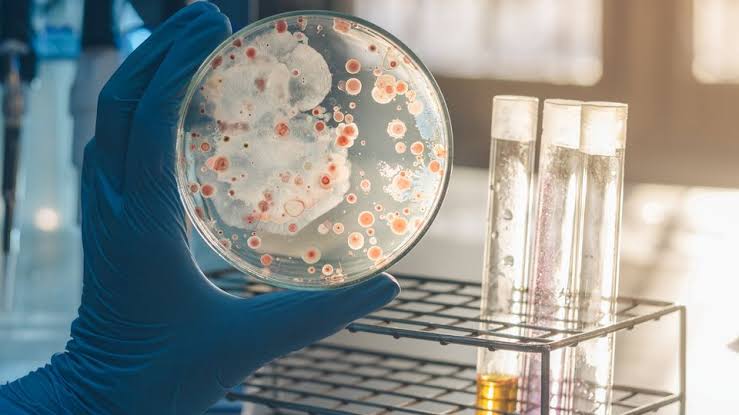
- Principle: The antimicrobial agent diffuses from a reservoir (cylinder or well) into an agar medium inoculated with a susceptible test organism. A clear zone of inhibition forms around the reservoir, its diameter being proportional to the concentration of the antimicrobial agent.
- Procedure:
- Preparation of Agar Plates: Sterile Petri dishes are filled with a suitable nutrient agar (e.g., Mueller-Hinton agar) that supports the growth of the test organism. A base layer is often poured first, followed by a seed layer inoculated with a standardized suspension of the test microorganism.
- Preparation of Standard and Test Solutions: A series of known concentrations (e.g., a 3-point or 5-point dilution) of a reference standard antimicrobial solution are prepared. The unknown sample (e.g., antibiotic bulk drug, formulated product) is also prepared, often in multiple dilutions.
- Application: Stainless steel cylinders (or wells bored into the agar) are placed on the surface of the inoculated agar. Precisely measured volumes (e.g., 20 µL) of standard and sample solutions are pipetted into the cylinders/wells. Each concentration is tested in multiple replicates.
- Incubation: The plates are incubated at an optimal temperature (e.g., 35-37°C) for a specific duration (e.g., 16-24 hours) to allow microbial growth and antimicrobial diffusion.
- Measurement and Analysis: After incubation, the clear zones of inhibition around each cylinder/well are measured (diameter in mm) using a ruler or automated zone reader. A standard curve is constructed by plotting the log of the standard concentrations against the mean zone diameters. The concentration of the unknown sample is then interpolated from this standard curve.
B. Turbidimetric Method (Tube Dilution Method):
- Principle: This method measures the inhibition of microbial growth in a liquid medium. The turbidity of the medium (indicating microbial growth) is inversely proportional to the concentration of the antimicrobial agent.
- Procedure: A series of test tubes or microtiter plate wells receive varying concentrations of the antimicrobial (standard and sample) along with a standardized inoculum of the test organism in a liquid growth medium. After incubation, the optical density (turbidity) of each tube/well is measured using a spectrophotometer. Less turbidity indicates greater antimicrobial activity.
Advantages: Directly reflects biological activity, sensitive, can detect degraded products that might not be detected by chemical assays. Disadvantages: Time-consuming, requires aseptic techniques, susceptible to variability in microbial growth, not highly specific (other growth inhibitors can interfere).
Units of Measurement in Assay
Standardization of units is vital for consistent communication of assay results and for regulatory compliance, especially for biological products whose potency can vary significantly between batches.
- International Units (IU):
- Concept: For many biological substances (e.g., hormones, vitamins, antibodies, vaccines, some antibiotics), activity is defined in International Units (IU) rather than by mass. One IU is the amount of a substance that produces a defined biological effect, as established by an international standard preparation.
- Examples: Insulin (1 IU = a defined biological activity), Heparin (1 IU = a specific anticoagulant effect), Vitamin D, Human Chorionic Gonadotropin (hCG), some vaccines. These standards are developed and maintained by organizations like the World Health Organization (WHO).
- Purpose: To overcome variability in purity, composition, and even detection methods across different manufacturers and laboratories, ensuring that a dose of “100 IU” of insulin, for example, produces the same therapeutic effect globally.
- Potency Units (1 PU):
- Similar to IU, but often used for specific products (e.g., enzymes, certain vaccines) where the “unit” is defined by the manufacturer or a specific pharmacopeia based on a particular assay and reference standard.
- Mass-Based Units (µg/mL, mg/mL, g/L):
- Used when the active substance is a pure chemical entity and its activity is directly proportional to its mass.
- Examples: Most synthetic drugs, chemical reagents.
- Molar Concentration (M, mM, µM):
- Expresses the number of moles of solute per liter of solution. Useful for understanding chemical reactions on a molecular basis.
- Examples: Enzyme kinetics, receptor binding studies.
- Units Specific to Microbiological Assays:
- Zone of Inhibition (mm): Diameters measured in agar diffusion assays.
- Minimum Inhibitory Concentration (MIC) (µg/mL): The lowest concentration of an antimicrobial agent that prevents visible growth of a microorganism after incubation.
- Colony Forming Units (CFU/mL): Used to quantify viable bacterial or fungal cells.
The choice of unit depends on the nature of the substance, its biological activity, and the regulatory requirements. For biologicals, the IU is often preferred due to the complexity of defining activity solely by mass.
Practical Microbiological Assay Using a Given Biological Sample (e.g., Serum)
This section details a step-by-step microbiological assay to determine the concentration of an antimicrobial agent (e.g., an antibiotic like Gentamicin) in a patient’s serum, using the agar diffusion method. This is critical for therapeutic drug monitoring (TDM) to ensure drug levels are within the therapeutic window.
Goal: To determine the precise concentration of the antibiotic in the patient’s serum sample.
Principle: The size of the zone of inhibition produced by the patient’s serum is compared to a standard curve generated from known concentrations of the antibiotic.
Materials Required:
- Agar Medium: Mueller-Hinton Agar (MHA) or a specific assay agar recommended for the antibiotic and test organism.
- Test Organism: A susceptible, rapidly growing, non-pathogenic strain (e.g., Staphylococcus aureus ATCC 25923 or Bacillus subtilis ATCC 6633 for Gentamicin). Must be a standardized inoculum.
- Antimicrobial Standard: Pure, USP-grade Gentamicin sulfate (or appropriate antibiotic) with known potency.
- Assay Buffer/Diluent: Sterile phosphate buffer (pH 7.0-7.2) or sterile physiological saline.
- Patient Serum Sample: Blood sample collected from the patient, centrifuged to separate serum.
- Equipment:
- Sterile Petri dishes (100 mm diameter)
- Sterile micropipettes and tips
- Sterile stainless steel cylinders (e.g., 8 mm outer diameter) or a cork borer for wells
- Incubator (e.g., 35-37°C)
- Water bath (e.g., 45-50°C for pouring agar)
- Vortex mixer
- Ruler or automated zone reader (for precise measurement)
- Autoclave (for sterilization)
Step-by-Step Procedure:
Phase 1: Preparation of Media and Organism Inoculum
- Prepare Agar Medium: Suspend the required amount of Mueller-Hinton Agar powder in distilled water according to the manufacturer’s instructions. Heat to dissolve completely, then autoclave at 121°C for 15 minutes for sterilization. Cool to about 45-50°C in a water bath.
- Prepare Test Organism Inoculum:
- From a fresh subculture (18-24 hours old) of the test organism on nutrient agar, transfer several colonies to 5 mL of sterile saline or broth.
- Adjust the turbidity of this suspension to match a 0.5 McFarland standard (approximately 1.5 x 10^8 CFU/mL). This can be done visually or with a densitometer.
- Dilute this stock suspension further (e.g., 1:100 or 1:1000, as recommended) to achieve the desired inoculum concentration (e.g., 10^6 CFU/mL, but check pharmacopeial guidelines for specific antibiotics).
- Inoculate Agar Plates (Seed Layer):
- For each Petri dish, add a specific volume (e.g., 2-4 mL) of the prepared, cooled, sterilized agar (from step 1) to a sterile Petri dish as a base layer and allow it to solidify.
- Add the appropriate volume of the standardized test organism inoculum to a calculated volume of the remaining cooled (45-50°C) agar. Mix gently but thoroughly.
- Pour this inoculated agar (the seed layer) evenly over the solidified base layer in each Petri dish. Allow it to solidify on a level surface. The final thickness should be uniform.
Phase 2: Preparation of Standard Curve
- Prepare Stock Standard Solution: Accurately weigh a suitable amount of the pure Gentamicin standard. Dissolve it in the assay buffer to create a high-concentration stock solution (e.g., 1000 µg/mL).
- Prepare Working Standard Dilutions: From the stock solution, prepare a series of at least 3-5 standard concentrations (e.g., 1.0, 2.0, 4.0, 8.0, 16.0 µg/mL) by serial dilution with the assay buffer. The concentrations should ideally bracket the expected concentration in the patient sample. Store unused dilutions at 2-8°C.
- Layout Plates: On each inoculated agar plate, arrange the sterile stainless steel cylinders (e.g., 6 cylinders per plate, equally spaced). Label each cylinder position clearly. Alternatively, bore uniform wells using a sterile cork borer.
Phase 3: Application of Samples and Standards
- Introduce Standards: Pipette a precise volume (e.g., 20 µL) of each standard concentration into its designated cylinder/well. Use replicate wells for each concentration (e.g., 3-5 replicates per plate, or across multiple plates if necessary for a robust standard curve).
- Introduce Patient Sample:
- Centrifuge the patient’s blood sample to obtain serum.
- If the expected concentration in the serum is very high, prepare dilutions (e.g., 1:2, 1:4) of the patient’s serum using assay buffer.
- Pipette an equal precise volume (e.g., 20 µL) of the patient’s neat or diluted serum into designated cylinders/wells on the plates. Also use replicates.
- Ensure proper labeling of all wells to avoid mix-ups.
Phase 4: Incubation
- Incubate Plates: Place the prepared plates immediately into an incubator, inverted (to prevent condensation from dripping onto the agar surface).
- Conditions: Incubate at the optimal temperature for the test organism (e.g., 35-37°C) for 16-24 hours. This allows for antibiotic diffusion and bacterial growth.
Phase 5: Measurement and Interpretation
- Measure Zones of Inhibition: After incubation, remove the plates. Use a precise ruler or an automated zone reader to measure the diameter of the clear zone of inhibition (including the cylinder/well diameter) around each cylinder/well to the nearest 0.5 mm or 0.1 mm.
- Construct Standard Curve:
- Calculate the average zone diameter for each standard concentration.
- Plot the logarithm of the antibiotic concentration (x-axis) against the average zone diameter (y-axis) on semi-logarithmic graph paper or using appropriate software.
- Draw the best-fit straight line through the plotted points (linear regression).
- Quality Control: Ensure the standard curve is linear and has a good correlation coefficient (R-squared value, typically >0.98).
- Determine Sample Concentration:
- Calculate the average zone diameter for the patient’s serum sample.
- Locate this average zone diameter on the y-axis of your standard curve.
- Trace horizontally to intersect the standard curve, then vertically down to the x-axis to read the corresponding antibiotic concentration.
- If the sample was diluted prior to assay, multiply the determined concentration by the dilution factor to get the original concentration in the patient’s serum.
- Reporting: Report the antibiotic concentration in µg/mL (or other relevant units) to the appropriate number of significant figures, along with the date of assay and any relevant notes (e.g., organism used, method standard).
Quality Control and Considerations:
- Sterility: All procedures must be carried out under aseptic conditions to prevent contamination.
- Reproducibility: Ensure consistent technique, accurate pipetting, and uniform agar thickness.
- Linearity: The standard curve should demonstrate a linear relationship between log concentration and zone diameter within the tested range.
- Sensitivity and Specificity: The chosen test organism must be appropriately sensitive to the antibiotic, and ideally, the assay should be specific enough to avoid interference from other substances in the sample.
- Accuracy: Run positive and negative controls. Regular calibration of equipment is essential.
- Matrix Effects: Components in biological samples (e.g., proteins in serum) can sometimes affect antibiotic diffusion or activity. This is partially mitigated by using standardized diluents and ensuring the standard curve is prepared similarly to the sample.
This detailed microbiological assay provides a robust method for quantifying antimicrobial agents in complex biological matrices, ensuring effective patient care.