Understanding Light Emission – Luminescence, Fluorescence, and Phosphorescence
The interaction of energy with matter can lead to various forms of light emission. Understanding these phenomena is crucial for appreciating the technology behind many medical imaging techniques.
(a) Luminescence
Luminescence is defined as the emission of light by a substance not resulting from heat; it is often referred to as “cold light.” Unlike incandescence, where light is produced by high temperatures (e.g., a glowing metal filament), luminescence occurs when energy, absorbed by an atom or molecule, excites its electrons to a higher energy level. When these excited electrons return to their ground state, they release the excess energy as photons of visible light. The source of the initial energy can vary, leading to different forms of luminescence:
- Photoluminescence: Light emitted after absorption of photons (light).
- Chemiluminescence: Light produced by a chemical reaction.
- Bioluminescence: Chemiluminescence occurring in living organisms (e.g., fireflies).
- Electroluminescence: Light produced by the passage of an electric current through a substance.
- Thermoluminescence: Light emitted by a substance when it is heated after prior exposure to radiation.
- Sonoluminescence: Light generated by imploding bubbles in a liquid when excited by sound.
For the purpose of fluoroscopy, photoluminescence, specifically fluorescence and phosphorescence, are of primary interest.
(b) Fluorescence
Fluorescence is a specific type of photoluminescence characterized by the rapid emission of light by a substance after it has absorbed photons (typically ultraviolet, visible, or X-ray). The key defining characteristic of fluorescence is that the light emission virtually ceases immediately (within nanoseconds or picoseconds, typically < 10⁻⁸ seconds) once the exciting radiation source is removed.
The mechanism involves:
- Excitation: An incident photon strikes an atom or molecule, exciting an electron from its ground singlet state (S₀) to a higher energy singlet state (S₁, S₂, etc.). A singlet state implies that the electron spins are paired.
- Vibrational Relaxation: The excited electron quickly loses some energy through non-radiative vibrational relaxation, bringing it to the lowest vibrational level of the first excited singlet state (S₁).
- Emission: From the S₁ state, the electron rapidly transitions back to the ground state (S₀), emitting a photon of light. Because some energy is lost during vibrational relaxation, the emitted photon typically has lower energy (longer wavelength) than the absorbed photon – a phenomenon known as Stokes Shift.
Examples of fluorescence include fluorescent dyes, optical brighteners in detergents, and the glow of a television screen (in older CRTs, though this also involves phosphorescence). In medical imaging, fluorescent screens convert X-rays into visible light.
(c) Phosphorescence
Phosphorescence is another form of photoluminescence, but distinct from fluorescence due to its delayed emission of light. Unlike fluorescence, where emission stops almost instantly, phosphorescent materials continue to emit light for a noticeable period (from milliseconds to hours) after the excitation source has been removed.
The mechanism for phosphorescence involves an additional, ‘forbidden’ quantum mechanical step:
- Excitation: Similar to fluorescence, an incident photon excites an electron from the ground singlet state (S₀) to a higher energy singlet state (S₁).
- Intersystem Crossing (ISC): Instead of immediately returning to S₀, the excited electron undergoes a “spin flip” and transitions from the singlet state (S₁) to a lower-energy triplet state (T₁). A triplet state implies that the electron spins are unpaired and parallel, which is a quantum mechanically “forbidden” process, making it slower.
- Delayed Emission: From the triplet state (T₁), the electron slowly returns to the ground singlet state (S₀), emitting a photon. Because this transition from a triplet to a singlet state is spin-forbidden, it occurs much more slowly than direct singlet-to-singlet transitions, resulting in the characteristic afterglow.
Common examples include glow-in-the-dark toys, safety signs, and some components of older CRT displays. The sustained light emission in phosphorescence is crucial in certain imaging applications, particularly where a brief afterglow is desirable or acceptable.
(d) Key Differences Summarized
| Feature | Fluorescence | Phosphorescence |
|---|---|---|
| Emission Time | Instantaneous; stops when excitation stops | Delayed; continues after excitation stops |
| Duration | Nanoseconds to picoseconds | Milliseconds to hours |
| Mechanism | Singlet-Singlet transition (S₁ → S₀) | Singlet-Triplet-Singlet transition (S₁ → T₁ → S₀) |
| Spin State | Maintains spin state | Involves spin flip (intersystem crossing) |
| Speed | Very fast | Slow |
| Energy Loss | High (Stokes Shift) | Higher (due to additional non-radiative decay) |
| Common Uses | Fluorescent lamps, biological labels, screens | Glow-in-the-dark items, safety signs, some displays |
Introduction to Fluoroscopy
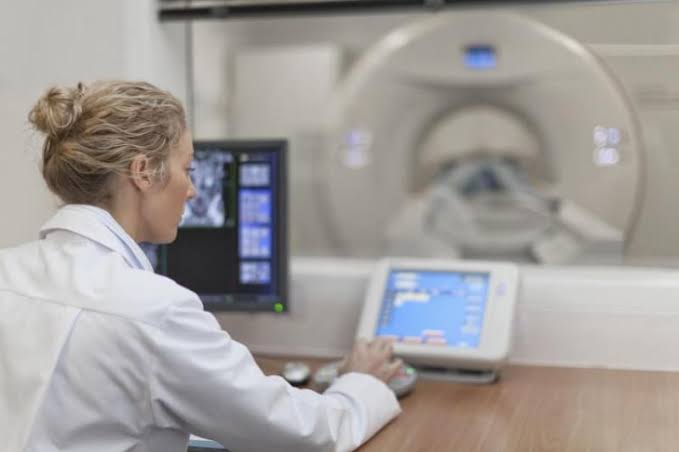
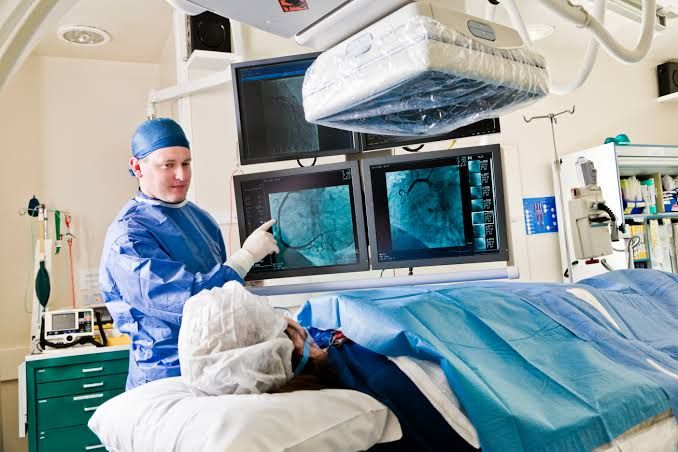
Fluoroscopy is a medical imaging technique that utilizes X-rays to obtain real-time, moving images of the internal structures of a patient. Unlike conventional radiography which produces static images (like a photograph), fluoroscopy provides a dynamic, continuous visualization of anatomical structures and their functions. This makes it invaluable for observing physiological processes in motion.
The primary purpose of fluoroscopy is to:
- Visualize the movement of organs (e.g., heart, diaphragm).
- Monitor the passage of contrast agents through vessels or tracts (e.g., gastrointestinal studies, angiography).
- Guide interventional procedures (e.g., catheter placement, pacemaker insertion, orthopedic surgeries).
To enhance the visibility of internal soft tissues, which are often not well-differentiated by X-rays alone, contrast media are frequently used. These substances, such as barium sulfate (for GI tracts) or iodine-based compounds (for blood vessels), are radiopaque, meaning they absorb X-rays more effectively, creating a clear outline of the structures they fill.
Conventional Fluoroscopy – Construction and Working Principle
Conventional fluoroscopy systems, often referred to as Image Intensifier (II)-based fluoroscopy, rapidly convert the X-ray image into a visible light image and then intensify its brightness for real-time viewing.
(a) Overview of Components
A conventional fluoroscopy system typically consists of the following key components:
- X-ray Tube: Generates the X-ray beam.
- Patient Table/Support: Holds the patient between the X-ray tube and the image receptor.
- Image Intensifier (II): The core component that converts X-rays into a bright, visible light image.
- Viewing System: Captures the intensified image and displays it on a monitor.
(b) Detailed Construction
- X-ray Tube: A high-vacuum tube that produces X-rays when a stream of electrons, accelerated by a high voltage between a cathode and an anode, strikes a target material (typically tungsten). The X-ray beam passes through the patient.
- Image Intensifier (II): This is a vacuum tube designed to convert a weak X-ray image into a much brighter, visible light image. It is the heart of conventional fluoroscopy.
- Input Phosphor: Located at the front of the II, this layer (traditionally zinc cadmium sulfide, but now predominantly cesium iodide (CsI)) absorbs incident X-ray photons and converts their energy into visible light photons. CsI is favored for its needle-like crystal structure, which reduces light spread and improves spatial resolution.
- Photocathode: Optically coupled directly behind the input phosphor, the photocathode (made of a thin layer of antimony-cesium or other photoemissive alloys) absorbs the light photons from the input phosphor and, through the photoelectric effect, emits a proportional number of electrons.
- Electrostatic Focusing Lenses: A series of charged electrodes arranged within the II vacuum tube. These lenses accelerate the electrons emitted by the photocathode towards the output phosphor and electromagnetically focus them, ensuring that the electron pattern accurately represents the X-ray image, albeit in a demagnified form.
- Anode: A positively charged electrode (typically 25-35 kV) located near the output phosphor. It pulls the electrons from the photocathode with high kinetic energy, causing them to strike the output phosphor with significant force.
- Output Phosphor: A small-diameter screen (e.g., 2.5 cm) located at the anode end of the II tube. It is typically made of silver-activated zinc cadmium sulfide. When the high-energy electrons strike this phosphor, they convert their kinetic energy back into a burst of visible light photons. Due to the acceleration and minification of the electron beam, the resulting image on the output phosphor is significantly brighter than the initial light produced at the input phosphor. This brightness gain is a combination of:
- Flux Gain: The ratio of light photons produced at the output phosphor to X-ray photons incident on the input phosphor. (Due to the energy conversion efficiency).
- Minification Gain: The reduction in image size from the input phosphor to the output phosphor (ratio of the square of input phosphor diameter to the square of output phosphor diameter).
- Brightness Gain (or Gain): The product of minification gain and flux gain, indicating the overall increase in image brightness. Typical brightness gains range from 5,000 to 30,000.
- Viewing System:
- Optical Coupling: The bright image from the output phosphor is then coupled to a viewing system, traditionally using a mirror-optical system for direct viewing or a lens system to direct the image to a camera.
- Closed-Circuit Television (CCTV) Camera: A video camera (e.g., a charge-coupled device (CCD) camera or an older vidicon camera) captures the light image from the output phosphor.
- Monitor: The electronic signal from the camera is then transmitted to a high-resolution display monitor, providing the real-time dynamic X-ray image for the radiologist or clinician.
(c) Working Principle (Step-by-Step)
- X-ray Generation and Patient Penetration: The X-ray tube generates a continuous stream of X-rays which pass through the patient. Different tissues attenuate the X-rays to varying degrees, creating a differential absorption pattern, which is essentially the latent X-ray image.
- Conversion to Light at Input Phosphor: The X-rays exit the patient and strike the input phosphor of the Image Intensifier. The input phosphor absorbs the X-ray photons and converts their energy into a proportionally patterned light image.
- Conversion to Electrons at Photocathode: The visible light image produced by the input phosphor immediately interacts with the adjacent photocathode. Through the photoelectric effect, the photocathode emits electrons in a pattern that mirrors the light image.
- Electron Acceleration and Focusing: The emitted electrons are accelerated by the high voltage between the photocathode and the anode. Simultaneously, the electrostatic focusing lenses guide and focus these electrons, ensuring they maintain their spatial relationship as they travel towards the output phosphor.
- Electron-to-Light Conversion at Output Phosphor: The accelerated and focused electrons strike the small output phosphor with high kinetic energy. The output phosphor converts this electron energy into a much brighter, visible light image. The significant reduction in image size from the input to the output phosphor (minification) further contributes to the observed brightness.
- Image Capture and Display: The intense light image from the output phosphor is captured by a camera system (e.g., CCD camera). This camera converts the light signals into an electronic video signal, which is then transmitted to a display monitor, allowing the medical professional to view the real-time dynamic X-ray image.
Limitations of Conventional Fluoroscopy
Despite its revolutionary impact, conventional Image Intensifier-based fluoroscopy systems have several inherent limitations that have driven the development of newer digital flat-panel detector technologies.
1. High Radiation Dose
- Continuous Exposure: Unlike static radiography that uses a single brief X-ray pulse, fluoroscopy often involves continuous or prolonged X-ray exposure, leading to significantly higher cumulative radiation doses for both the patient and the operating staff.
- Patient Dose: Increased dose raises concerns about deterministic effects (e.g., skin erythema, epilation, radiation burns from prolonged procedures) and stochastic effects (increased lifetime risk of cancer).
- Operator Dose: Staff in the fluoroscopy suite are exposed to scatter radiation from the patient and the imaging equipment. While protective measures (lead aprons, thyroid shields, glasses, lead barriers) are used, cumulative exposure over time can be considerable.
- Mitigation Challenges: While techniques like pulsed fluoroscopy (intermittent X-ray pulses), last image hold, image archiving, and careful collimation help reduce dose, the fundamental need for real-time imaging inherently involves higher radiation.
2. Image Quality Limitations
- Quantum Mottle (Noise): At lower radiation doses (often preferred to limit patient exposure), there are fewer X-ray photons reaching the detector, leading to statistical fluctuations in the image signal. This results in a grainy, noisy appearance known as quantum mottle, which degrades image clarity and contrast resolution.
- Spatial Resolution: The resolution of II-based systems is limited by the input phosphor’s crystal size, light spread within the input phosphor, electron optics, and the output phosphor. They generally offer lower spatial resolution compared to static radiography or modern flat-panel detectors, making it harder to discern fine details.
- Contrast Resolution: The ability to distinguish between tissues with small differences in X-ray attenuation is also limited by noise and light scatter within the II.
- Geometric Distortion: The curved input phosphor of the image intensifier, necessary for maintaining a uniform electric field, leads to several types of geometric distortions:
- Pincushion Distortion: Magnification is higher at the edges of the image than at the center, causing straight lines to appear curved inward, resembling a pincushion.
- Vignetting: A reduction in image brightness or intensity at the periphery of the image due to uneven light collection or electron focusing.
- S-Distortion: A subtle S-shaped distortion caused by external magnetic fields affecting the electron beam, often from the Earth’s magnetic field or nearby equipment.
- Veiling Glare: Light scatter within the II tube (from the input phosphor, photocathode, or reflective surfaces) that reduces image contrast, particularly in regions of high brightness.
- Lag: A slight persistence of the image due to the inherent phosphorescence of the output screen, which can be problematic for very rapid movements as it causes blurring or ghosting.
3. System Size and Rigidity
- Bulky Equipment: Image intensifiers are large, heavy vacuum tubes, making the fluoroscopy units cumbersome and less flexible for positioning, especially in tight operating rooms or for complex angulations.
- Limited Maneuverability: The size and rigid nature of the II can restrict the range of motion and projection angles achievable, potentially complicating certain interventional procedures.
4. Maintenance and Lifespan
- Degradation Over Time: The performance of image intensifiers degrades over their lifespan due to factors like aging of the photocathode, phosphor burn-in, and gas accumulation within the vacuum tube. This leads to a gradual decrease in brightness gain and image quality.
- Replacement Costs: Image intensifiers have a finite lifespan and are expensive to replace, adding to the operational costs of the system.
- Fragility: As vacuum tubes, they are relatively fragile and susceptible to damage from physical shock.
5. Lack of Digital Native Features (Compared to FPDs)
- Analog-to-Digital Conversion: Conventional II systems produce an analog video signal that must be converted to digital for processing, storage, and networking. This conversion process can introduce further noise and limit image manipulation capabilities.
- Limited Post-Processing: While digital processing can be applied, it’s often less effective than with images acquired directly by digital flat-panel detectors (FPDs) which offer immediate digital acquisition and more sophisticated post-processing algorithms (e.g., real-time noise reduction, edge enhancement, adaptive contrast).
- Archiving and Networking: Archiving and transmitting images from conventional systems often requires additional hardware and software, whereas FPD systems seamlessly integrate into digital picture archiving and communication systems (PACS).
Conclusion
Luminescence, fluorescence, and phosphorescence represent fundamental light emission phenomena, each with unique characteristics related to the speed and mechanism of photon emission. These principles are ingeniously applied in conventional fluoroscopy, a medical imaging technique that has revolutionized real-time visualization of internal body dynamics. By leveraging the image intensifier, conventional fluoroscopy converts faint X-ray patterns into bright, perceptible light, enabling critical diagnostic and interventional procedures.
However, the inherent limitations of conventional fluoroscopy, particularly concerning radiation dose, image quality artifacts, and system bulk, have spurred significant advancements in medical imaging. The transition towards digital flat-panel detectors in modern fluoroscopy systems addresses many of these drawbacks, offering improved image quality, reduced dose, and enhanced digital capabilities, thereby continuing to push the boundaries of real-time medical visualization. Understanding the conventional system, however, remains foundational to appreciating the evolution and sophistication of contemporary fluoroscopic technologies.