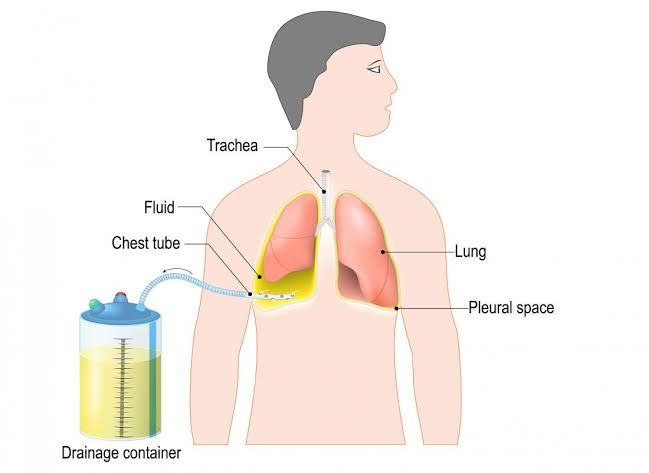
Chest tube insertion, or thoracostomy, is a common and critical procedure in medical practice, primarily performed to re-establish normal intrapleural pressure, drain abnormal accumulations of air or fluid from the pleural space, or prevent the accumulation of such substances.
Understanding Chest Tubes: An Introduction
The pleural space, a potential space between the parietal and visceral pleura, normally contains a small amount of lubricating fluid, maintaining a negative pressure that facilitates lung expansion. When this delicate balance is disrupted by air (pneumothorax), fluid (pleural effusion), or blood (hemothorax), lung collapse can occur, impairing respiration. A chest tube is a flexible, hollow tube inserted into the pleural space to drain these unwanted substances, allowing the lung to re-expand and restore normal respiratory mechanics.
Types of Chest Tubes
Chest tubes are generally categorized by their diameter and material, each suited for specific clinical scenarios:
- Small-Bore Chest Tubes (e.g., Pigtail Catheters): These tubes typically range from 8 to 14 French (Fr) in diameter. They are often made of polyurethane or silicone, which are softer and more flexible. Their design often includes multiple side holes and a “pigtail” curl at the end, which helps to secure the tube within the pleural space once inserted over a guidewire.
- Typical Use: Primarily used for draining air (spontaneous or iatrogenic pneumothorax), uncomplicated serous effusions, or small, non-viscous collections. They are less invasive and generally cause less pain during insertion.
- Large-Bore Chest Tubes (Thoracostomy Tubes): These tubes are larger in diameter, typically ranging from 20 to 36 Fr. They are usually made of PVC (polyvinyl chloride), making them stiffer and more rigid than small-bore tubes.
- Typical Use: Ideal for quickly evacuating large volumes of air, blood (hemothorax), pus (empyema), or thick, viscous fluids. Their larger lumen prevents clogging and allows for efficient drainage in emergent situations.
- Material Considerations: While PVC is common for large-bore tubes due to its rigidity, silicone tubes are increasingly preferred for long-term placement due to their biocompatibility and reduced risk of tissue irritation.
Mechanism of Action for Each Type
The fundamental mechanism of all chest tubes is to restore the negative intrapleural pressure, allowing the lung to re-expand. This is achieved by creating a pathway for air or fluid to exit the pleural space, often facilitated by a one-way drainage system.
- Small-Bore Chest Tubes:
- Mechanism: These tubes typically rely on passive drainage or low-level suction. For air drainage, they may be connected to a Heimlich valve (a one-way flutter valve that allows air to exit but not re-enter) or a simple water-seal system. For fluid, they are connected to a collection bag or a low-suction device. Their smaller lumen is effective for air and thin fluids, where rapid evacuation is not the primary concern. They often work by establishing a pressure gradient, where the higher pressure in the pleural space pushes air/fluid out through the tube.
- Large-Bore Chest Tubes:
- Mechanism: Large-bore tubes are almost always connected to a sophisticated thoracic drainage system (commonly a three-chamber system: collection, water seal, and suction control).
- Collection Chamber: Gathers the drained fluid/air.
- Water Seal Chamber (One-Way Valve): This chamber contains sterile water and acts as a one-way valve. Air or fluid can exit the chest, but air cannot re-enter, preventing pneumothorax re-formation. The water level fluctuates with respiration (tidaling), reflecting changes in intrapleural pressure. Persistent bubbling in this chamber indicates an air leak.
- Suction Control Chamber: This chamber controls the amount of negative pressure (suction) applied to the pleural space. In a wet suction system, the water level determines the suction level (e.g., 20 cm H₂O). In a dry suction system, a dial sets the desired suction level. Suction actively pulls air and fluid from the pleural space, accelerating lung re-expansion and drainage, especially in cases of large air leaks or viscous fluid.
- Mechanism: Large-bore tubes are almost always connected to a sophisticated thoracic drainage system (commonly a three-chamber system: collection, water seal, and suction control).
Sites of Insertion and Insertion Procedure
The choice of insertion site depends on the substance to be drained (air rises, fluid settles) and the patient’s anatomy. The procedure emphasizes sterility and patient safety.
- Sites of Insertion:
- Pneumothorax (Air):
- Second Intercostal Space (ICS), Midclavicular Line: Historically common for apical pneumothorax. However, due to proximity to subclavian vessels and potential for cosmetic issues, it’s less preferred now.
- Fourth or Fifth ICS, Mid-Axillary Line: The most common and safer site for general pneumothorax and effusions, as it avoids vital structures and is suitable for both air and fluid. “Safe triangle” of insertion: bounded by the anterior border of latissimus dorsi, the lateral border of pectoralis major, a line superior to the nipple, and the apex of the axilla.
- Pleural Effusion, Hemothorax, Empyema (Fluid/Blood/Pus):
- Fifth or Sixth ICS, Mid-Axillary to Posterior Axillary Line: Chosen based on the highest level of fluid on imaging. Always insert above the rib to avoid the neurovascular bundle running along the inferior border of the rib.
- Pneumothorax (Air):
- Insertion Procedure (Step-by-Step):
- Patient Preparation: Obtain informed consent. Position the patient appropriately (supine with arm abducted for anterior approach, semi-Fowler’s or lateral decubitus with arm over head for axillary approach). Administer adequate analgesia and sedation.
- Site Identification and Marking: Use anatomical landmarks and imaging (ultrasound often used) to precisely identify the insertion site. Mark the site.
- Sterile Technique: Perform thorough hand hygiene, don sterile gown and gloves, and prep the skin with antiseptic solution (e.g., chlorhexidine). Drape the area to create a sterile field.
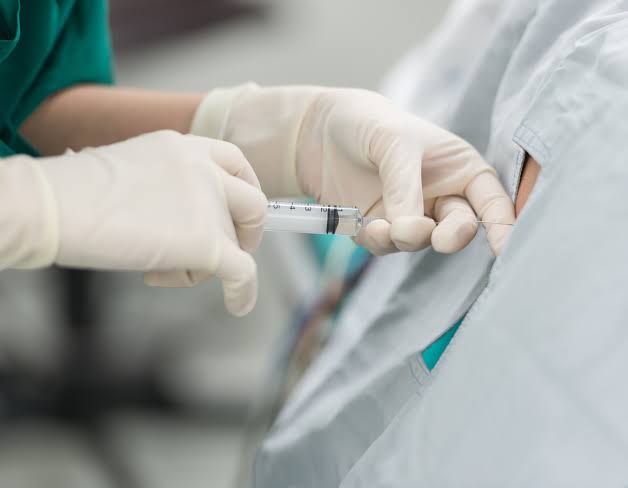
- Local Anesthesia: Infiltrate generously with local anesthetic (e.g., lidocaine) from the skin down to the parietal pleura, aspirating frequently to avoid intravascular injection.
- Skin Incision: Make a 1.5-2 cm transverse incision over the chosen intercostal space, directly above the rib (to avoid neurovascular bundle).
- Blunt Dissection: Using a blunt instrument (e.g., a large hemostat or Kelly clamp), dissect through the subcutaneous tissue and intercostal muscle. “Walk” the instrument over the superior border of the rib.
- Pleural Entry: Puncture the parietal pleura with the blunt instrument. A “pop” sensation and rush of air/fluid indicate entry into the pleural space. Use a finger to sweep the pleural space and confirm no adhesions or visceral injury.
- Tube Insertion: Grasp the chest tube with a clamp and gently advance it into the pleural space, directing it superiorly and posteriorly for pneumothorax, or inferiorly and posteriorly for fluid. Ensure all drainage holes are within the pleural cavity. For small-bore tubes, a Seldinger technique (guidewire then dilator then tube) is often used.
- Securing the Tube: Suture the tube to the skin using a strong suture (e.g., 0 silk). Apply an occlusive dressing (e.g., petroleum gauze and sterile gauze) around the insertion site.
- Connection to Drainage System: Connect the distal end of the chest tube to the appropriate drainage system.
- Post-Procedure Confirmation: Obtain a chest X-ray immediately to confirm tube position, lung re-expansion, and rule out complications.
Absolute and Relative Indications and Contraindications
Chest tube insertion is a life-saving procedure, and therefore, true absolute contraindications are rare, especially in emergencies.
- Absolute Indications (Life-Threatening):
- Tension Pneumothorax: Clinical diagnosis requiring immediate decompression, often initially with needle decompression followed by chest tube.
- Massive Hemothorax: Rapid accumulation of blood in the pleural space, often requiring surgical intervention but initially managed with a large-bore chest tube.
- Relative Indications:
- Pneumothorax: Spontaneous (primary or secondary), traumatic, iatrogenic (e.g., post-biopsy, central line insertion), persistent air leak.
- Pleural Effusions: Large symptomatic effusions, malignant effusions, complicated parapneumonic effusions, empyema (pus), chylothorax (lymphatic fluid).
- Post-Operative Management: After thoracic or cardiac surgery to drain fluid, blood, or air and prevent complications.
- Absolute Contraindications:
- None truly absolute in life-threatening situations where benefit outweighs risk.
- Relative Contraindications (Consider risks, correct if possible, or use alternative methods):
- Coagulopathy or Anticoagulation: Increased risk of bleeding. Correct coagulopathy if time permits (e.g., administer Vitamin K, FFP, platelets).
- Skin Infection over Insertion Site: Risk of introducing infection into the pleural space. Choose an alternative site if possible.
- Loculated Effusion: Requires imaging guidance (ultrasound or CT) for safe insertion to avoid organ injury or inadequate drainage.
- Pleural Adhesions: Increased risk of lung injury or inability to enter the pleural space.
- Diaphragmatic Hernia: Risk of injuring incarcerated abdominal organs.
- Prior Pleurodesis: May make insertion difficult due to adhesions.
Complications – Acute and Late Ones
Despite its benefits, chest tube insertion carries various risks.
- Acute (Immediate/Early) Complications:
- Pain: Common and requires aggressive management.
- Bleeding: Injury to intercostal vessels, lung parenchyma, or other structures. Can lead to hemothorax.
- Organ Injury: Laceration of lung, heart, diaphragm, liver, spleen, stomach, or bowel if inserted incorrectly.
- Infection: Cellulitis at insertion site, empyema (pleural space infection) from skin flora.
- Subcutaneous Emphysema: Air tracking along the tube into the subcutaneous tissue, causing swelling and crepitus.
- Re-expansion Pulmonary Edema (RPE): Rare but potentially fatal complication occurring after rapid re-expansion of a chronically collapsed lung. Characterized by dyspnea, cough, and hypoxia.
- Cardiac Arrhythmias: Can occur due to vagal stimulation during insertion or rapid re-expansion.
- Tube Dislodgement or Kinking: Can lead to ineffective drainage or tension pneumothorax.
- Late (Delayed) Complications:
- Persistent Air Leak: Air continues to escape from the lung into the pleural space for an extended period, preventing tube removal.
- Retained Hemothorax/Empyema: Incomplete drainage leading to clotted blood or pus remaining in the pleural space, potentially requiring further intervention.
- Pleural Fibrosis/Thickening: Chronic inflammation or infection can lead to scarring and restrictive lung disease.
- Frozen Shoulder: Pain and limited range of motion in the shoulder on the ipsilateral side, often due to prolonged immobility or nerve irritation.
- Nerve Injury: Intercostal neuralgia (chronic pain along the intercostal nerve distribution).
- Recurrent Pneumothorax: After tube removal, the underlying condition causing the pneumothorax may recur.
- Bronchopleural Fistula: Persistent communication between the bronchus and pleural space, leading to a large, persistent air leak.
How to Perform Bedside Examinations for Chest Tube Malfunction
Regular and systematic bedside assessment of the chest tube and drainage system is crucial for effective management and early detection of complications.
- Patient Assessment:
- Vital Signs: Monitor heart rate, respiratory rate, blood pressure, and oxygen saturation for signs of distress (e.g., increasing tachycardia, dyspnea, hypoxia).
- Respiratory Status: Assess work of breathing, symmetry of chest expansion, and breath sounds (diminished sounds may indicate re-accumulation or persistent collapse).
- Pain Level: Manage pain as it can affect breathing and compliance.
- Tube and Insertion Site Inspection:
- Tube Patency: Visually check the entire length of the tube from the patient to the drainage system for kinks, dependent loops (which can impede drainage), or clots within the tubing.
- Insertion Site: Inspect the dressing for intactness, saturation, and signs of infection (redness, swelling, purulent discharge). Palpate around the insertion site for subcutaneous emphysema (crepitus).
- Security: Ensure the tube is securely sutured to the skin and that the dressing is providing an effective seal.
- Drainage System Assessment:
- Collection Chamber:
- Drainage Type: Note the color, consistency, and amount of drainage (e.g., serous, serosanguinous, sanguineous, purulent, chylous).
- Amount: Mark the drainage level with date and time at regular intervals (e.g., every 1-4 hours) to monitor trends. Report sudden increases (e.g., >100-200 mL/hr) which may indicate hemorrhage.
- Water Seal Chamber:
- Tidaling: Observe for fluctuation of the water level with respiration. The water level should rise with inspiration and fall with expiration (reverse for patients on positive pressure ventilation).
- Presence of Tidaling: Indicates the tube is patent and connected to the pleural space.
- Absence of Tidaling: May indicate the lung has fully re-expanded, the tube is kinked, clotted, or occluded, or there is a disconnection in the system (check connections).
- Air Leak (Bubbling): Observe for bubbling in the water seal chamber.
- Initial Bubbling: Expected when a pneumothorax is being drained.
- Continuous Bubbling: May indicate a substantial air leak from the lung, a broncho-pleural fistula, or a leak in the drainage system itself.
- Intermittent Bubbling: Suggests a smaller or resolving air leak.
- No Bubbling: If initially present, suggests the air leak has resolved or the tube is occluded.
- Quantifying Air Leak: Many systems have numerical indicators (1-5) to grade the severity of the air leak.
- Tidaling: Observe for fluctuation of the water level with respiration. The water level should rise with inspiration and fall with expiration (reverse for patients on positive pressure ventilation).
- Suction Control Chamber:
- Wet Suction: Verify the water level is at the prescribed depth (e.g., 20 cm H₂O) and that gentle, continuous bubbling is present (indicating suction is active).
- Dry Suction: Ensure the bellows or float indicates the desired suction level is engaged.
- Connections: Crucially, check all connections between the patient, the tubing, and the drainage system are tight and secure. Any loose connection can be a source of air leak or dislodgement.
- Collection Chamber:
Conclusion
Chest tube management is a complex but essential skill in various medical disciplines. A thorough understanding of the types of chest tubes, their mechanisms, proper insertion techniques, indications, potential complications, and diligent bedside monitoring are paramount for patient safety and optimal outcomes. Continuous assessment allows for early detection and management of issues, ensuring the successful resolution of pleural pathology and restoration of patient respiratory function.