Acute arterial occlusion, particularly Acute Limb Ischemia (ALI), represents a critical vascular emergency characterized by a sudden and severe decrease in limb perfusion. This reduction in blood flow poses an immediate threat to limb viability, potentially leading to irreversible tissue damage, major amputation, or even death if not promptly diagnosed and treated.
Understanding Acute Limb Ischemia (ALI)
Acute Limb Ischemia is defined as a sudden onset of symptoms and signs indicating a reduction in limb perfusion, which threatens limb viability. The abrupt cessation of arterial blood flow leads to a cascade of events, from cellular hypoxia to tissue necrosis, making rapid diagnosis and revascularization paramount.
Causes of Acute Limb Ischemia
ALI typically results from one of two primary mechanisms:
- Arterial Embolism: This is the most common cause (40-50% of cases), involving the dislodgement of a clot (embolus) from a distant source, which then travels and lodges in a peripheral artery, acutely obstructing blood flow.
- Arterial Thrombosis in situ: This accounts for a significant portion (30-40%) and occurs when a clot forms directly within an artery, usually at a site of pre-existing atherosclerotic disease (e.g., peripheral artery disease – PAD). The thrombosis often occurs on a ruptured plaque or an aneurysm.
- Acute Arterial Trauma: Less common, but includes direct vessel injury, laceration, or compression that leads to occlusion.
- Arterial Dissection: A tear in the inner lining of an artery (intima) can lead to blood flowing between the layers, creating a false lumen that compresses the true lumen, causing occlusion.
- Iatrogenic Causes: Complications from medical procedures, such as arterial catheterization, can sometimes lead to acute occlusion.
- Popliteal Artery Entrapment Syndrome: A rare condition where the popliteal artery is compressed by surrounding muscles or fibrous bands, particularly during exercise.
- Thrombotic Disorders (Hypercoagulable States): Conditions that increase blood clotting risk can predispose individuals to acute arterial thrombosis.
Arterial Embolism: Etiology, Risk Factors, and Evaluation
Arterial embolism is a leading cause of ALI. Understanding its origin is crucial for effective treatment and prevention.
Etiology of Arterial Embolism
Emboli typically originate from the heart or large arteries:
- Cardiac Sources (Most Common):
- Atrial Fibrillation (AFib): The most frequent source, due to stasis of blood in the atria leading to clot formation.
- Myocardial Infarction (MI): Mural thrombi can form on the damaged ventricular wall.
- Valvular Heart Disease: Rheumatic heart disease, prosthetic heart valves, or infective endocarditis can be sources.
- Congestive Heart Failure: Reduced cardiac output can lead to blood stasis.
- Cardiac Tumors: Myxomas, particularly left atrial myxomas.
- Aortic/Aneurysmal Sources:
- Thrombus within an aortic aneurysm (e.g., abdominal aortic aneurysm).
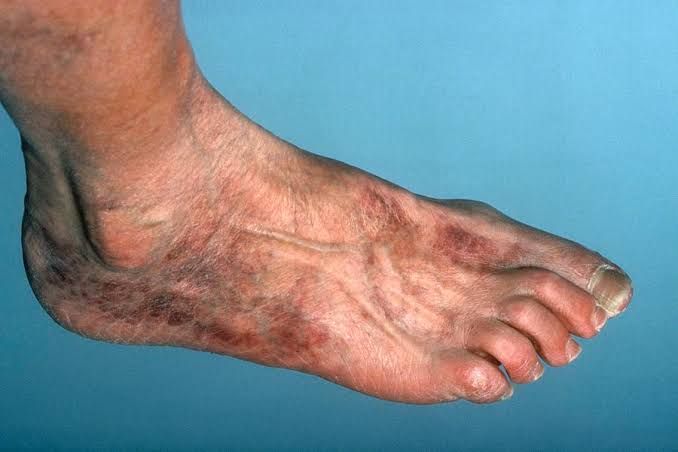
- Atheroembolism (“trash foot”) where plaque material breaks off from a diseased aorta or major arteries.
- Paradoxical Embolism: Rare, occurs when a venous thrombus (e.g., from DVT) crosses from the right to the left side of the heart through a patent foramen ovale (PFO) or atrial septal defect (ASD), entering the systemic circulation.
Risk Factors for Arterial Embolism
Key risk factors are primarily those predisposing to cardiac or arterial clot formation:
- Atrial Fibrillation (especially non-anticoagulated)
- Recent Myocardial Infarction
- Valvular Heart Disease
- Congestive Heart Failure
- History of Stroke or Transient Ischemic Attack (TIA)
- Presence of Aortic Aneurysm
- Peripheral Artery Disease (PAD)
- Hypercoagulable states (e.g., Factor V Leiden, malignancy)
Evaluation for Embolic Source
Identifying the source of an embolus is vital for preventing future events:
- Electrocardiogram (ECG): To detect atrial fibrillation or evidence of recent MI.
- Echocardiography (Transthoracic or Transesophageal): To visualize cardiac chambers, valves, wall motion abnormalities, mural thrombi, or structural defects (e.g., PFO).
- Computed Tomography Angiography (CTA) or Magnetic Resonance Angiography (MRA) of the Aorta: To identify aortic aneurysms or significant aortic atherosclerosis.
- Laboratory Tests: To assess for hypercoagulable states in younger patients or those without clear risk factors.
Pathophysiology of Acute Limb Ischemia
The pathophysiology of ALI is a complex interplay of events triggered by the sudden cessation of blood flow to a limb.
- Initial Ischemia: Lack of oxygen and nutrients leads to anaerobic metabolism, resulting in lactic acid accumulation, cellular acidosis, and depletion of ATP. This impairs cellular function, particularly in nerves and muscles, which are highly sensitive to ischemia.
- Cellular Damage: Ion pump failure leads to intracellular edema, membrane damage, and release of intracellular contents (e.g., potassium, myoglobin, creatine phosphokinase – CPK).
- Reperfusion Injury: When blood flow is restored (reperfusion), it can paradoxically cause further damage. The rush of oxygen can lead to the formation of reactive oxygen species (free radicals), inflammatory mediators are released, and neutrophils become activated, causing microvascular dysfunction, endothelial damage, and further tissue injury. This can lead to systemic effects such as acute kidney injury (from myoglobinuria), hyperkalemia, and metabolic acidosis, collectively known as “reperfusion syndrome.”
- Compartment Syndrome: Ischemic muscle swelling, exacerbated by reperfusion, can increase pressure within the inelastic fascial compartments of the limb. This elevated pressure compromises capillary perfusion, leading to further ischemia and muscle necrosis, creating a vicious cycle. If untreated, it can cause irreversible nerve and muscle damage.
Clinical Manifestations: The “6 Ps”
The clinical presentation of ALI is often described using the “6 Ps”:
- Pain: Sudden, severe, and constant, typically distal to the occlusion. It is often the first and most prominent symptom.
- Pallor: The affected limb appears pale due to lack of blood flow.
- Pulselessness: Absence of palpable pulses distal to the occlusion is a key diagnostic sign.
- Paresthesia: Numbness, tingling, or an altered sensation due to nerve ischemia. This indicates a more advanced stage of ischemia.
- Paralysis: Inability to move the limb, signifying severe nerve and muscle ischemia. This is a late and ominous sign, indicating critical limb threat.
- Poikilothermia (Polar): The limb feels cold to the touch, adopting the temperature of the environment due to absent blood flow.
Differential Diagnosis: Distinguishing ALI from Mimics
It is crucial to differentiate ALI from other conditions that may present with similar symptoms:
- Deep Vein Thrombosis (DVT): Presents with pain, swelling, and warmth, but pulses are typically present and the limb is often cyanotic rather than pale.
- Cellulitis: Characterized by redness, warmth, swelling, and pain, often with fever. Pulses are usually present.
- Peripheral Neuropathy: Chronic condition causing numbness, tingling, and weakness, but typically lacks acute onset pain, pallor, and pulselessness.
- Musculoskeletal Injury: Trauma, muscle strain, or fracture can cause severe pain but typically without the profound vascular signs of ALI.
- Spinal Cord Compression/Cauda Equina Syndrome: Can cause severe leg pain, numbness, and paralysis, but typically has back pain and bladder/bowel dysfunction. Vascular signs are absent.
- Acute Compartment Syndrome (Primary): While often a consequence of ALI, it can also occur primarily due to trauma. Presents with severe pain out of proportion to injury, pain on passive stretch, paresthesia, and tense compartments, but pulses may still be present initially.
Diagnosis: Confirming Acute Limb Ischemia
Prompt and accurate diagnosis is critical for limb salvage.
- Clinical Assessment: History (sudden onset, cardiac risk factors) and physical examination (the 6 Ps, comparing bilateral pulses, skin temperature, and motor/sensory function).
- Ankle-Brachial Index (ABI): While useful for chronic PAD, its utility in severe acute ischemia is limited as it may be immeasurable. Doppler ultrasound can confirm absent arterial signals.
- Duplex Ultrasonography: A rapid, non-invasive bedside tool to assess arterial flow, identify the level of occlusion, and characterize the thrombus (embolic vs. thrombotic).
- Computed Tomography Angiography (CTA): Often the gold standard for rapid anatomical evaluation. It precisely localizes the occlusion, assesses collateral circulation, and identifies the underlying cause (e.g., aneurysm, dissection, or severe atherosclerosis).
- Magnetic Resonance Angiography (MRA): An alternative to CTA, particularly if there are contraindications to iodinated contrast.
- Arteriography (Conventional Angiography): While increasingly replaced by CTA for initial diagnosis, it remains valuable for detailed mapping of the arterial tree, especially when planning complex endovascular interventions. It is often performed immediately before intervention.
- Laboratory Investigations:
- Complete Blood Count (CBC): To assess for infection or anemia.
- Electrolytes and Renal Function (Creatinine, BUN): To assess for electrolyte imbalances and potential acute kidney injury, especially relevant for contrast administration and reperfusion injury.
- Creatine Phosphokinase (CPK) and Lactate: Elevated levels indicate muscle ischemia and severity of tissue damage, and are crucial for monitoring reperfusion injury.
- Coagulation Profile (PT/INR, PTT): Essential before initiating anticoagulation or invasive procedures.
Rutherford Classification for Limb Ischemia
The Rutherford classification system is widely used to stratify the severity of ALI, guide treatment decisions, and predict outcomes. It assesses sensory and motor function, as well as arterial and venous Doppler signals.
- Class I: Viable Limb:
- Clinical Features: Mild pain, no sensory loss, no motor weakness. Doppler arterial signal audible. Doppler venous signal audible.
- Prognosis: Not immediately threatened, can wait for elective angiography.
- Class IIa: Marginally Threatened Limb:
- Clinical Features: Moderate pain, minimal (if any) sensory loss (numbness over toes), no motor weakness. Doppler arterial signal inaudible. Doppler venous signal audible.
- Prognosis: Salvageable with prompt treatment (within 6-8 hours).
- Class IIb: Immediately Threatened Limb:
- Clinical Features: Severe pain, more extensive sensory loss (numbness beyond toes, involving foot), mild to moderate motor weakness (clumsiness, weakness of toes). Doppler arterial signal inaudible. Doppler venous signal audible.
- Prognosis: Salvageable with immediate treatment (within 0-6 hours). Delay risks irreversible damage.
- Class III: Irreversible Limb:
- Clinical Features: Severe, profound pain (or no pain if nerves are necrotic), profound sensory loss (anesthesia), profound motor weakness (paralysis, rigor). Doppler arterial signal inaudible. Doppler venous signal inaudible (due to extensive tissue swelling or infarction).
- Prognosis: Irreversible tissue damage, major tissue loss or amputation inevitable. Salvage is not possible.
Guidelines of Treatments
Treatment of ALI is an emergency, with the primary goal being rapid revascularization to restore blood flow and preserve limb viability.
Immediate Medical Management
- Anticoagulation: Immediate intravenous unfractionated heparin bolus followed by a continuous infusion is initiated upon diagnosis to prevent clot propagation and new thrombus formation.
- Pain Control: Adequate analgesia is essential.
- Limb Positioning: Keep the limb in a dependent position to optimize what little collateral flow might be present.
Revascularization Strategies
The choice of revascularization strategy depends on the Rutherford classification, the patient’s overall health, the location and nature of the occlusion, and the surgeon’s/interventionalist’s expertise.
- Surgical Embolectomy/Thrombectomy:
- Procedure: A Fogarty balloon catheter is inserted into the artery, passed beyond the clot, and inflated, then withdrawn to pull the thrombus out. Performed via a small incision (e.g., common femoral artery).
- Indications: Preferred for acute embolic occlusions, especially in Rutherford Class IIb ischemia, where rapid flow restoration is crucial. Can be performed quickly.
- Advantages: Rapid revascularization.
- Catheter-Directed Thrombolysis (CDT):
- Procedure: A catheter is advanced into the clot, and thrombolytic agents (e.g., alteplase, urokinase) are infused directly into the thrombus over several hours (12-48 hours) to dissolve it.
- Indications: More suitable for thrombotic occlusions (where the clot is adherent to the vessel wall), especially in Rutherford Class IIa ischemia (marginally threatened), where a slightly longer time to reperfusion is acceptable.
- Advantages: Less invasive, may preserve collaterals, better for distinguishing underlying lesions.
- Disadvantages: Risk of bleeding (intracranial hemorrhage being most serious), slower revascularization.
- Percutaneous Mechanical Thrombectomy (PMT):
- Procedure: Various devices use mechanical means (aspiration, fragmentation, rheolysis) to remove or macerate the thrombus.
- Indications: Can be used alone or in conjunction with CDT. Provides faster clot removal than CDT.
- Advantages: Faster than CDT, lower bleeding risk than systemic thrombolysis.
- Bypass Surgery:
- Procedure: A surgical bypass graft (using a vein or prosthetic conduit) is created to reroute blood flow around the occluded segment.
- Indications: Primarily for severe thrombotic occlusions involving long segments of diseased artery, or failed embolectomy/thrombolysis.
- Advantages: Durable revascularization.
- Disadvantages: More invasive, higher surgical risk.
Post-Reperfusion Care and Management of Complications
After successful revascularization, close monitoring is essential.
- Reperfusion Syndrome Monitoring: Monitor for hyperkalemia, metabolic acidosis, acute kidney injury (due to myoglobinuria), and cardiac arrhythmias. Aggressive fluid resuscitation and management of electrolyte imbalances are crucial.
- Compartment Syndrome Prevention and Management: Closely monitor limb swelling and pain. If compartment syndrome develops (tense compartments, pain on passive stretch, motor/sensory deficits), emergent fasciotomy (surgical incision to relieve pressure) is required to prevent irreversible nerve and muscle damage.
- Anticoagulation/Antiplatelet Therapy: Long-term anticoagulation (e.g., warfarin, DOACs) or antiplatelet therapy (e.g., aspirin, clopidogrel) is often prescribed to prevent future thrombotic events, especially if the underlying cause is AFib or significant atherosclerosis.
- Addressing Underlying Cause: Treat the source of embolism (e.g., rate/rhythm control for AFib, valve repair) or manage atherosclerotic risk factors (e.g., statins, blood pressure control, diabetes management, smoking cessation).
- Rehabilitation: Once stable, physical therapy is important to regain limb function.
Amputation
For Rutherford Class III (irreversible) limbs, or failure of revascularization, limb amputation may be the only option to prevent life-threatening systemic complications (e.g., sepsis from necrotic tissue).
Conclusion
Acute Limb Ischemia is a true vascular emergency demanding immediate recognition and intervention. A comprehensive understanding of its varied causes, the cascade of pathophysiological events, accurate clinical and diagnostic assessment leveraging the Rutherford classification, and a tailored revascularization strategy are critical for preserving limb viability and minimizing morbidity and mortality. Prompt professional care can significantly alter the outcome for patients facing this challenging condition.