Radiological imaging plays a pivotal role in the diagnosis and management of various medical conditions, providing invaluable insights into the human body’s intricate systems. Among the specialized procedures, the loopogram stands out as a critical diagnostic tool, specifically designed to evaluate the integrity and function of surgically created urinary conduits.
Definition of a Loopogram
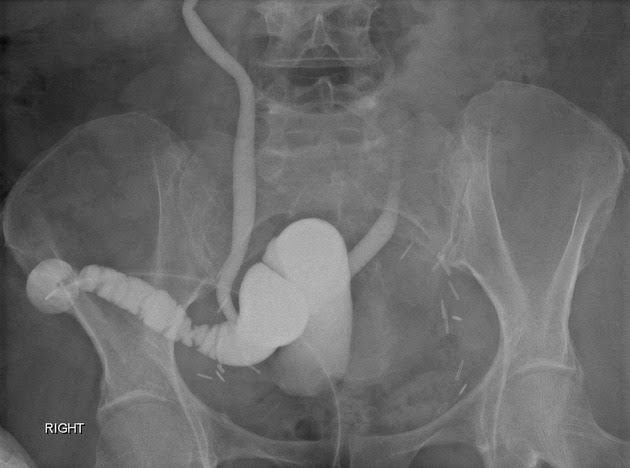
A loopogram is a specialized retrograde contrast study performed to visualize and assess a surgically created urinary conduit (such as an ileal conduit, colonic conduit, or continent urinary diversion) or a neobladder. It is essentially an X-ray examination that uses a contrast material, typically a water-soluble solution, to outline the internal structure of the urinary diversion.
The primary purpose of a loopogram is to evaluate the patency, anatomy, and function of the conduit, as well as to detect any abnormalities that may compromise urinary drainage or lead to complications. This procedure is commonly performed in patients who have undergone cystectomy (surgical removal of the bladder) due to conditions like bladder cancer, severe neurogenic bladder dysfunction, or intractable interstitial cystitis, necessitating an alternative route for urine excretion.
Key indications for performing a loopogram include:
- Assessment of surgical anastomosis: To ensure the proper healing and patency of the connection between the ureters and the conduit, or the conduit and the skin (stoma).
- Detection of strictures: Identifying narrowed areas within the conduit that can impede urine flow and lead to hydronephrosis (swelling of the kidneys due to urine backup).
- Evaluation of urine leakage or fistula formation: Identifying abnormal connections between the conduit and other organs or the skin, often indicative of complications.
- Investigation of opaque calculi (stones): While not its primary role, a loopogram can sometimes reveal the presence and location of stones within the conduit.
- Assessment of reflux: Determining if urine flows backward (refluxes) from the conduit into the ureters and potentially up to the kidneys, which can predispose to infections.
- Post-operative follow-up: Monitoring the long-term health and functionality of the conduit, especially if the patient experiences symptoms such as recurrent urinary tract infections (UTIs), unexplained fever, pain, or changes in urine output.
By providing dynamic, real-time images, the loopogram offers crucial diagnostic information that aids clinicians in making informed decisions regarding patient management, whether it involves conservative treatment, surgical revision, or further diagnostic interventions.
Description of the Procedure with Filming
The loopogram procedure is typically performed in a radiology department using fluoroscopy, a type of X-ray that allows for real-time visualization of internal structures. The process involves several key stages, from pre-procedure preparation to post-procedure care.
A. Pre-Procedure Preparation
Thorough preparation is essential to ensure patient comfort, safety, and the acquisition of high-quality diagnostic images.
- Patient Education and Consent: The patient receives a detailed explanation of the procedure, including its purpose, steps involved, potential discomforts, and expected duration. Questions are encouraged, and informed consent is obtained, ensuring the patient understands and agrees to the procedure.
- Medical History Review: A comprehensive review of the patient’s medical history is conducted, focusing on any allergies (especially to contrast materials, though non-ionic contrast is typically used and reactions are rare), current medications, and any pre-existing conditions that might influence the procedure (e.g., kidney function, although the contrast largely stays within the conduit).
- Hygiene and Stoma Care: Patients are instructed on proper stoma hygiene prior to arrival. If the stoma site is particularly soiled, it may be cleaned by nursing staff before the procedure. Light fasting may be recommended if sedation is anticipated, but for most routine loopograms, this is not a strict requirement.
- Review of Previous Imaging: Any prior imaging studies, such as CT scans, ultrasounds, or previous loopograms, are reviewed by the radiologist to provide context and guide the examination.
B. During the Procedure
The procedure is performed by a radiologist and a radiologic technologist, often with nursing support, in a fluoroscopy suite.
- Patient Positioning: The patient is typically positioned supine (lying on their back) on the fluoroscopy table. The stoma site is exposed and prepared. Oblique views may be utilized later to optimally visualize specific aspects of the conduit.
- Sterile Field and Catheter Insertion:
- The area around the stoma is meticulously cleaned with an antiseptic solution to establish a sterile field. Sterile drapes are applied.
- A lubricated, soft, flexible catheter (typically a Foley catheter with an inflatable balloon or a straight catheter) of an appropriate size is gently inserted a short distance into the stoma, into the lumen of the urinary conduit.
- If using a Foley catheter, the balloon is gently inflated with a small amount of saline (usually 1-2 mL) to secure the catheter in place and prevent contrast leakage around the stoma. Care must be taken not to overinflate the balloon, which could cause discomfort or damage the conduit.
- Contrast Administration:
- A water-soluble, non-ionic contrast medium, often diluted, is used. This type of contrast is preferred due to its lower risk of systemic reactions, especially since it is typically not absorbed into the bloodstream in significant amounts.
- The contrast is instilled slowly and gently into the conduit through the catheter. This can be done via gravity administration (hanging the contrast bag and allowing it to flow in) or by gentle hand injection using a syringe. The rate and volume of injection are carefully controlled to avoid overdistension of the conduit, which can cause patient discomfort or even rupture (though rare).
- The contrast is instilled until the conduit is adequately filled, and typically, flow into the ureters and renal collecting systems is observed if reflux is present. Patients may experience a sensation of fullness or mild discomfort as the conduit fills.
- Fluoroscopic Filming and Image Acquisition:
- As the contrast fills the conduit, the radiologist uses fluoroscopy to observe the real-time flow and distribution of the contrast. This dynamic imaging allows for immediate assessment of conduit patency, the presence of reflux, and the identification of any abnormalities.
- Spot Films: Multiple static X-ray images (spot films) are taken at various stages of filling and in different projections (e.g., anterior-posterior (AP), oblique, lateral views) to capture detailed anatomical information. These images focus on critical areas such as the ureter-conduit anastomoses, the entire length of the conduit, and the stoma.
- Dynamic Clips: In addition to still images, short video clips may be recorded to document the dynamic flow of contrast, particularly useful for demonstrating reflux or areas of restricted flow.
- The radiologist carefully observes for contrast extravasation (leakage outside the conduit), strictures (narrowing), fistulas (abnormal connections), diverticula (pouches), or filling defects (suggesting stones or tumors). The presence and degree of ureteral reflux are also noted.
- Post-Injection: Once sufficient images are obtained and the diagnostic questions are answered, the catheter balloon is deflated, and the catheter is gently removed from the stoma. Residual contrast will naturally drain from the conduit.
C. Post-Procedure Care
- Stoma Care: The stoma area is cleaned, and a fresh ostomy bag is applied.
- Hydration: Patients are encouraged to drink fluids to help flush any remaining contrast and promote urinary flow.
- Monitoring: The patient is monitored for any immediate discomfort or signs of complications. Instructions regarding potential signs of infection or other issues are provided.
- Image Interpretation and Reporting: The radiologist reviews all acquired static images and dynamic clips, interprets the findings, and generates a formal report, which is then sent to the referring physician.
Complications
While generally considered a safe procedure, like any medical intervention, a loopogram carries a small risk of complications. These can range from minor discomfort to more serious, albeit rare, events.
- Discomfort and Pain:
- Catheter Insertion: Patients may experience mild discomfort or a sensation of pressure during catheter insertion, especially if there is any stoma irritation or stenosis.
- Conduit Distension: As the contrast fills the conduit, patients may feel a sensation of fullness or mild cramping. This usually subsides once the contrast is drained.
- Urinary Tract Infection (UTI):
- This is one of the more common potential complications, particularly because the procedure involves instrumentation of a urinary system that may already be colonized by bacteria, or in which foreign bodies such as urinary stents may be present.
- Despite sterile technique, bacteria from the skin or stoma can be introduced into the conduit. Patients may be prescribed prophylactic antibiotics in some cases, or post-procedure antibiotics if signs of infection (fever, chills, increased pain, foul-smelling urine, purulent discharge from stoma) develop.
- Allergic Reaction to Contrast:
- While the contrast media used for loopograms (water-soluble, non-ionic) is generally very safe and rarely absorbed systemically, an allergic reaction is a theoretical possibility. Symptoms can range from mild (hives, itching) to severe (anaphylaxis), though severe reactions are exceedingly rare with this type of contrast and route of administration.
- Trauma or Irritation to the Conduit/Stoma:
- Improper or forceful catheter insertion can potentially cause minor trauma, irritation, or bleeding at the stoma site or within the conduit. This is usually self-limiting but can cause temporary discomfort or minor bleeding.
- Conduit Perforation:
- This is a very rare but serious complication. It can occur if excessive pressure is used during contrast injection, leading to a rupture of the conduit wall. The risk is higher in compromised or diseased conduits. Perforation can lead to extravasation of urine and contrast into the peritoneal cavity, potentially causing peritonitis and requiring surgical intervention.
- Sepsis:
- In patients with an existing infection or compromised immune system, the procedure could theoretically exacerbate an infection, leading to a systemic inflammatory response (sepsis). This is extremely rare but highlights the importance of sterile technique and careful patient selection.
- Radiation Exposure:
- The loopogram utilizes ionizing radiation (X-rays). While the amount of radiation exposure from a single examination is relatively low and generally considered safe, the cumulative effect of multiple imaging studies over a patient’s lifetime is a consideration. Radiologists and technologists adhere to the ALARA principle (As Low As Reasonably Achievable) to minimize exposure while maintaining diagnostic image quality.
In summary, the loopogram is an invaluable diagnostic tool in the management of patients with urinary diversions. Its ability to provide detailed anatomical and functional information through a step-by-step, fluoroscopically guided procedure makes it indispensable for detecting and characterizing complications, thereby guiding appropriate clinical interventions and improving patient outcomes. While complications are possible, they are generally rare, and the benefits of the procedure in providing critical diagnostic information typically outweigh the risks.