Glaucoma is a complex group of eye conditions that lead to progressive, irreversible damage to the optic nerve. This damage often results in characteristic visual field defects and, if left untreated, can culminate in permanent blindness. Often referred to as the “silent thief of sight,” glaucoma typically presents no early symptoms, making early detection and intervention critically important for preserving vision.
Defining Glaucoma
Glaucoma is an optic neuropathy characterized by a progressive degeneration of retinal ganglion cells and their axons, which form the optic nerve. This degeneration leads to structural changes in the optic nerve head (e.g., optic disc cupping) and corresponding functional visual field loss. While elevated intraocular pressure (IOP) is the primary risk factor and often associated with glaucoma, it is not the sole determinant. Some individuals with normal IOP can develop glaucoma (normal-tension glaucoma), and conversely, some with elevated IOP may never develop optic nerve damage (ocular hypertension). The diverse nature of these conditions necessitates a nuanced understanding and approach to diagnosis and management.
Incidence, Causes, and Pathology of Glaucoma
Understanding the prevalence and underlying mechanisms of glaucoma is crucial for effective public health interventions and clinical management.
Incidence:
Globally, glaucoma is the second leading cause of blindness and the primary cause of irreversible blindness.
- Prevalence: It affects an estimated 80 million people worldwide, with projections indicating this number will rise significantly in the coming decades due to aging populations.
- Demographics: Prevalence varies by ethnicity, with individuals of African and Hispanic descent having a higher risk of developing primary open-angle glaucoma (POAG), and individuals of East Asian descent having a higher risk of primary angle-closure glaucoma (PACG).
- Age: The risk of glaucoma increases significantly with age, making it predominantly a disease of older adults, though it can occur at any age.
Causes:
The causes of glaucoma are multifactorial and depend on the specific type of glaucoma.
- Primary Open-Angle Glaucoma (POAG): This is the most common form, accounting for 70-90% of all cases. Its exact cause is often unknown (idiopathic). Risk factors include elevated IOP, older age, family history, African or Hispanic descent, and certain systemic conditions like diabetes and hypertension. The “open-angle” refers to the drainage angle of the eye, which appears open and healthy but the drainage system (trabecular meshwork) is functionally impaired.
- Primary Angle-Closure Glaucoma (PACG): This type occurs when the drainage angle of the eye becomes physically blocked or very narrow, preventing aqueous humor from draining properly. This can lead to a sudden, severe increase in IOP (acute angle-closure attack), or it can develop chronically. Predisposing factors include hyperopia (farsightedness), older age, and East Asian ethnicity.
- Normal-Tension Glaucoma (NTG): In this form, optic nerve damage and visual field loss occur despite consistently normal IOP levels. Contributing factors are thought to include vascular dysregulation (reduced blood flow to the optic nerve) and increased susceptibility of the optic nerve to pressure.
- Secondary Glaucomas: These are caused by other medical conditions, eye injuries, certain medications (e.g., long-term steroid use), or other eye diseases (e.g., inflammation, pigment dispersion syndrome, pseudoexfoliation syndrome).
Pathology:
The fundamental pathology of glaucoma revolves around the damage to the optic nerve.
- Aqueous Humor Dynamics: The eye continuously produces a clear fluid called aqueous humor, which maintains the eye’s shape and nourishes internal structures. This fluid drains out of the eye through a network of tissues called the trabecular meshwork. In glaucoma, there is an imbalance between aqueous production and drainage, leading to a build-up of fluid and elevated IOP.
- Optic Nerve Damage: Sustained elevated IOP is a major risk factor because it exerts mechanical compression on the delicate nerve fibers of the optic nerve as they exit the eye. This compression can impair the blood supply to the nerve and directly damage the axons.
- Axonal Loss and Cupping: The initial damage often involves the selective loss of retinal ganglion cells and their axons. As these nerve fibers die, the optic disc (the visible portion of the optic nerve where it leaves the eye) undergoes characteristic structural changes, including enlargement and deepening of the central depression, known as “cupping.” An increased cup-to-disc ratio is a hallmark sign of glaucomatous damage.
- Visual Field Defects: The pattern of nerve fiber loss correlates with specific visual field defects. Typically, peripheral vision is affected first, progressing centrally. Patients often do not notice these peripheral defects in the early stages because the healthy parts of their vision compensate, and the brain “fills in” the missing areas. This insidious progression is why early detection is paramount.
Complications of Glaucoma
The primary and most significant complication of glaucoma is irreversible vision loss, ultimately leading to blindness if the disease progresses unchecked.
- Progressive Visual Field Loss: As the optic nerve fibers degenerate, the blind spots in the visual field expand. Initially, these may be subtle peripheral scotomas (areas of reduced vision or blindness).
- Tunnel Vision: In advanced stages, the loss of peripheral vision can become profound, leading to “tunnel vision,” where only the central vision remains, making daily tasks such as driving, navigating, and recognizing faces extremely challenging.
- Irreversible Blindness: Without timely diagnosis and effective management, the damage to the optic nerve becomes so extensive that it results in complete and irreversible blindness in the affected eye(s). Unlike cataracts, which can be surgically removed to restore sight, vision lost due to glaucoma cannot be recovered.
- Reduced Quality of Life: Vision impairment significantly impacts an individual’s independence, mobility, and overall quality of life. It can lead to social isolation, difficulty performing daily activities (reading, cooking, self-care), and an increased risk of falls and injuries.
- Psychological Impact: Living with progressive vision loss can cause significant psychological distress, including anxiety, depression, and a diminished sense of well-being.
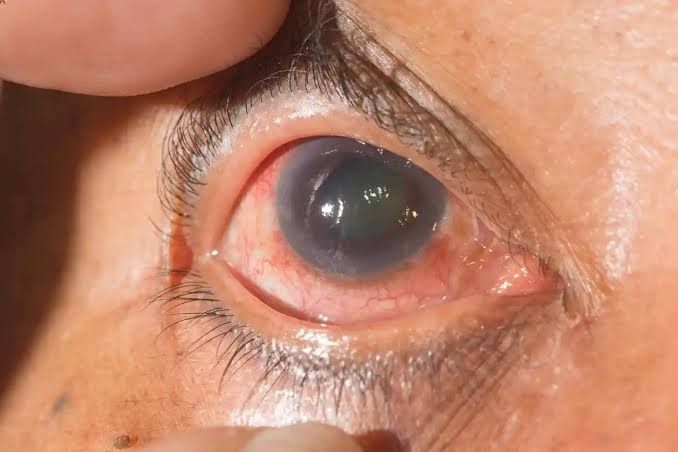
- Pain and Discomfort (Acute Angle-Closure): While chronic forms of glaucoma are often painless, an acute angle-closure attack can cause severe eye pain, headache, nausea, vomiting, and sudden vision blurring, constituting a medical emergency.
Recommended Treatments
The primary goal of glaucoma treatment is to lower intraocular pressure (IOP) to a level that prevents further optic nerve damage and preserves existing vision. Treatment options range from medication to laser therapy and surgery.
A. Pharmacological Treatment (Eye Drops):
This is typically the first line of treatment for most forms of glaucoma.
- Prostaglandin Analogs (e.g., Latanoprost, Travoprost, Bimatoprost): These are commonly prescribed and work by increasing the outflow of aqueous humor. They are often used once daily.
- Beta-Blockers (e.g., Timolol): These reduce the production of aqueous humor. They are usually used once or twice daily.
- Alpha-Adrenergic Agonists (e.g., Brimonidine): These reduce aqueous production and can also increase outflow. They are typically used two to three times daily.
- Carbonic Anhydrase Inhibitors (e.g., Dorzolamide, Brinzolamide): These decrease aqueous humor production. They are available as eye drops and oral medications.
- Cholinergic Agonists (e.g., Pilocarpine): These increase aqueous outflow by constricting the pupil, but are less commonly used due to side effects.
- Combination Drops: Many drops are available in formulations that combine two different classes of medications to maximize IOP reduction and simplify dosage regimens.
B. Laser Therapy:
Laser procedures are less invasive than traditional surgery and are often considered when eye drops are insufficient or poorly tolerated.
- Selective Laser Trabeculoplasty (SLT): Used primarily for open-angle glaucoma, SLT uses low-energy laser pulses to target specific cells in the trabecular meshwork, enhancing the natural drainage of aqueous humor. It is often a safe and effective initial or adjunctive treatment.
- YAG Peripheral Iridotomy (YAG PI): For angle-closure glaucoma or narrow angles, a YAG laser is used to create a small hole in the iris, allowing aqueous humor to flow more freely from the posterior to the anterior chamber, thus opening the drainage angle.
- Cyclophotocoagulation (CPC): This procedure uses a laser to destroy parts of the ciliary body (the tissue that produces aqueous humor), thereby reducing fluid production. It is typically reserved for more advanced or refractory cases.
C. Surgical Interventions:
Surgery is considered when eye drops and laser treatments are insufficient to control IOP or prevent vision loss.
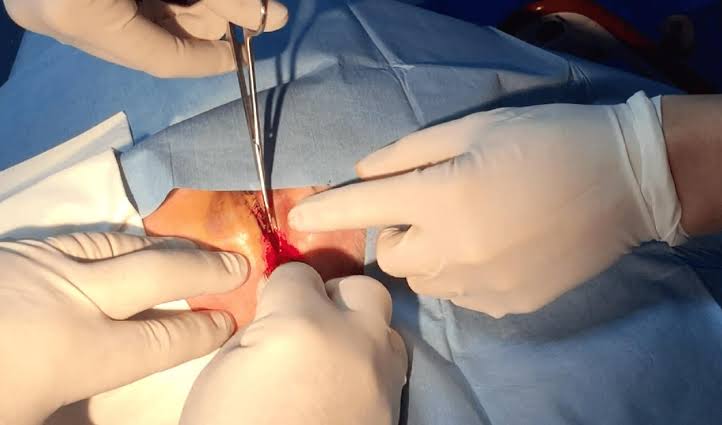
- Trabeculectomy: This is the most common and often considered the “gold standard” conventional surgery. It involves creating a new drainage pathway or “bleb” under the eyelid, through which aqueous humor can drain from the eye, bypassing the diseased trabecular meshwork.
- Glaucoma Drainage Devices (GDDs) / Tube Shunts (e.g., Ahmed, Baerveldt): These involve implanting a small silicone tube with a plate into the eye to divert aqueous humor to a reservoir created under the conjunctiva, where it is absorbed by the body. They are often used for complex or refractory cases.
- Minimally Invasive Glaucoma Surgery (MIGS): These are a group of newer, less invasive procedures designed to reduce IOP with fewer risks than traditional surgery. They are often performed in conjunction with cataract surgery. MIGS procedures typically enhance the eye’s natural drainage system or create new micro-drainage pathways. Examples include iStent, Hydrus, and Xen Gel Stent.
D. Lifestyle Management:
While not a primary treatment, certain lifestyle factors can support overall eye health:
- Regular Exercise: Moderate exercise can help lower IOP.
- Healthy Diet: A diet rich in antioxidants, vitamins, and minerals may support optic nerve health.
- Avoid Smoking: Smoking is detrimental to overall health and may exacerbate glaucoma.
- Manage Systemic Conditions: Control of diabetes, hypertension, and other systemic diseases is important.
Achieving Early Detection of Glaucoma
Early detection is paramount for managing glaucoma effectively and preventing irreversible vision loss. Given its asymptomatic nature in early stages, regular comprehensive eye examinations are the cornerstone of early detection.
A. Importance of Regular Eye Exams:
- Screening Frequency:
- Under 40 with no risk factors: Every 5-10 years.
- Ages 40-54 with no risk factors: Every 2-4 years.
- Ages 55-64 with no risk factors: Every 1-3 years.
- Age 65+ with no risk factors: Every 1-2 years.
- Individuals with risk factors (e.g., family history, African/Hispanic descent, diabetes, high myopia, long-term steroid use): More frequent exams, as recommended by an ophthalmologist, potentially starting earlier.
B. Components of a Comprehensive Glaucoma Eye Exam:
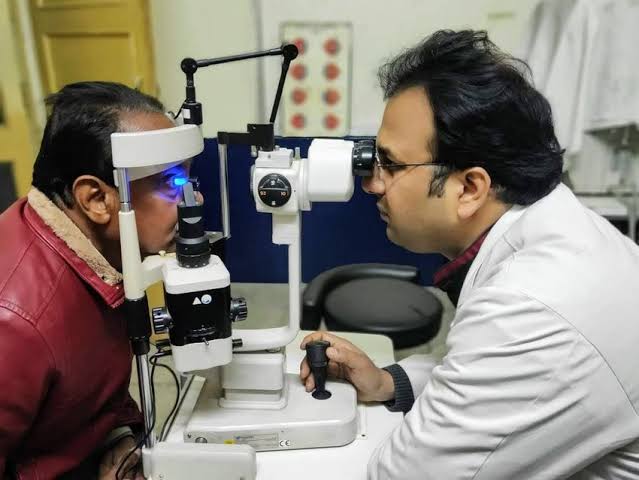
- 1. Tonometry (IOP Measurement): This measures the pressure inside the eye. While a key indicator, a single IOP reading is not diagnostic for glaucoma.
- 2. Optic Nerve Head Examination (Ophthalmoscopy): An ophthalmologist will dilate the pupils to get a clear view of the optic nerve. They look for signs of damage, such as suspicious cupping, thinning of the neuroretinal rim, or nerve fiber layer defects. This is often the most critical part of the exam.
- 3. Visual Field Testing (Perimetry): This test measures the entire area of vision (visual field). Patients look straight ahead and respond when they see lights flash in their peripheral vision. This helps detect specific patterns of vision loss characteristic of glaucoma.
- 4. Pachymetry (Corneal Thickness Measurement): This measures the thickness of the cornea. Thinner corneas can lead to an underestimation of IOP, while thicker corneas can lead to an overestimation. This measurement helps in interpreting IOP readings more accurately.
- 5. Gonioscopy (Drainage Angle Assessment): Using a special lens, the ophthalmologist can visualize the eye’s drainage angle to determine if it is open or closed, which helps classify the type of glaucoma.
- 6. Optical Coherence Tomography (OCT): This advanced imaging technique provides high-resolution cross-sectional images of the retina and optic nerve head. It can quantitatively measure the thickness of the retinal nerve fiber layer (RNFL) and ganglion cell complex, providing early detection of subtle nerve fiber loss even before visual field defects appear.
C. Risk Factor Identification:
Educating the public about key risk factors empowers individuals to seek early screening. These include:
- Age: Over 60.
- Family History: Having a parent or sibling with glaucoma significantly increases risk.
- Ethnicity: African, Hispanic, or East Asian descent.
- High Intraocular Pressure: Even without current damage (ocular hypertension).
- Certain Medical Conditions: Diabetes, hypertension, heart disease, migraine.
- Severe Myopia (Nearsightedness):
- Long-term Corticosteroid Use: Oral, inhaled, or topical steroid use.
- Eye Injury or Surgery: Previous trauma or certain eye surgeries.
D. Public Awareness Campaigns:
Implementing community-wide campaigns through various media (print, digital, local health talks) can raise awareness about the silent nature of glaucoma, emphasize the importance of regular eye check-ups, and encourage high-risk individuals to seek screening.
Role of the Health Post Incharge in Glaucoma Screening for the Community
While the definitive diagnosis and management of glaucoma require an ophthalmologist, the Health Post Incharge (HPI) plays an indispensable role in primary healthcare settings, particularly in underserved communities, by facilitating early detection through basic screening and referral mechanisms.
A. Community Awareness and Education:
- Health Talks and Workshops: Conduct regular sessions at the health post, schools, community centers, and local gatherings to educate the public about glaucoma. Explain what it is, its silent nature, major risk factors, and the importance of regular eye check-ups.
- Information Dissemination: Distribute culturally appropriate educational materials (brochures, posters) in local languages, highlighting symptoms (if any) and the necessity of screening.
- Dispelling Myths: Address common misconceptions about eye health and glaucoma.
B. Risk Factor Identification at the Community Level:
- Patient History Taking: During routine consultations or community outreach programs, the HPI can systematically inquire about glaucoma risk factors such as:
- Age (Are they over 40 or 60?)
- Family history of glaucoma (Do parents or siblings have it?)
- Presence of systemic diseases (diabetes, hypertension)
- History of prolonged steroid use
- Any complaints of gradual vision changes or unexplained headaches.
- Visual Acuity Screening: Perform basic visual acuity tests using a Snellen chart. While not diagnostic for glaucoma, unexplained poor vision or a significant difference between eyes, especially in the absence of obvious refractive error, should raise suspicion and prompt referral.
C. Establishing a Robust Referral System:
- Clear Referral Pathways: The HPI must have a clear understanding of the referral system to higher-level facilities (district hospitals, regional eye care centers, or ophthalmologists). This includes knowing who to refer to, where they are located, and how to facilitate the referral process.
- Timely Referral: Refer individuals identified as high-risk or those exhibiting suspicious signs (e.g., unexplained vision loss, persistent headaches with eye pain, strong family history) promptly for a comprehensive eye examination by an ophthalmologist.
- Communication: Maintain open lines of communication with referral centers to ensure patients are seen and to receive feedback on patient outcomes.
D. Follow-up and Adherence Support:
- Encourage Compliance: For patients diagnosed with glaucoma, the HPI can play a crucial role in counseling them on the importance of medication adherence, regular follow-up appointments, and lifestyle modifications.
- Addressing Barriers: Identify and help address barriers to care, such as transportation issues, financial constraints, or lack of understanding, by connecting patients with available resources or support groups.
- Monitoring Progress: While not involved in clinical management, the HPI can follow up with referred patients to ensure they attended their appointments and are adhering to treatment plans.
E. Data Collection and Reporting:
- Maintain Records: Accurately record details of individuals screened, those identified as high-risk, and those referred.
- Reporting: Compile and report data on glaucoma screening activities to higher health authorities. This data is vital for epidemiological surveillance, resource allocation, and planning of eye care services at district and national levels.
F. Training and Capacity Building:
- Continuous Learning: Advocate for and participate in ongoing training programs focused on basic eye care, early detection of common eye diseases like glaucoma, and referral protocols. This enhances their capacity to perform effective preliminary screening.
By proactively engaging in these activities, the Health Post Incharge acts as a critical frontline defender against glaucoma-related blindness, bridging the gap between the community and specialized ophthalmological care, thereby contributing significantly to global efforts in vision preservation.