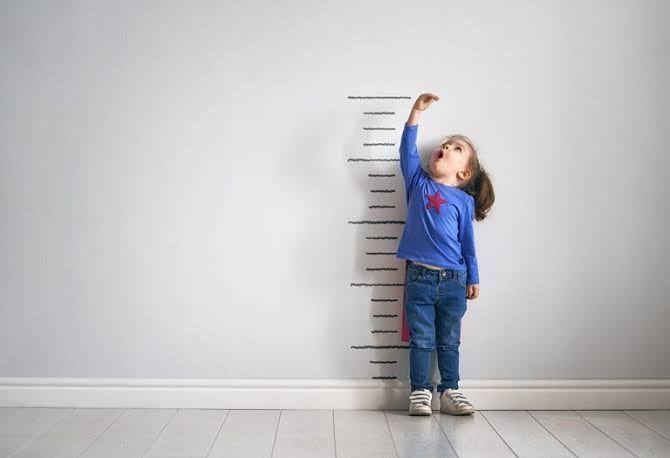
The period from birth through adolescence is a dynamic phase characterized by profound physical and cognitive changes. Understanding and monitoring a child’s growth and development are paramount for ensuring their overall well-being and identifying potential health or nutritional challenges early.
1. Understanding Child Growth and Development
While often used interchangeably, “growth” and “development” represent distinct yet interconnected processes fundamental to a child’s maturation.
1.1. What is Growth?
Growth refers to the quantitative increase in the size of a child’s body and its various parts. It is a measurable and observable phenomenon. Key indicators of growth include:
- Weight: An essential measure reflecting overall nutritional status and health. Rapid changes can indicate acute nutritional issues or underlying health conditions.
- Length (for children under two years) / Height (for children two years and older): Reflects linear growth and is an indicator of long-term nutritional status and chronic health.
- Head Circumference: Primarily assessed in infants and young children (typically up to 36 months of age) to monitor brain growth and detect potential neurological issues like microcephaly or hydrocephaly.
Growth is a continuous process, but its pace varies significantly across different stages, with rapid growth spurts occurring during infancy and adolescence. It is influenced by a complex interplay of genetic predisposition, nutritional intake, hormonal regulation, and environmental factors, including the absence of disease.
1.2. What is Development?
Development, in contrast to growth, refers to the progressive acquisition of skills and capacities over time. It is a qualitative process involving the maturation of physiological, cognitive, and psychosocial functions, enabling a child to gain increasing independence and master more complex tasks. Development is sequential, meaning skills typically emerge in a predictable order, though the pace can vary among individuals.
Development is broadly categorized into several core domains:
- Gross Motor Skills: Involve the use of large muscles for movements such as sitting, crawling, walking, running, and jumping. These skills are crucial for mobility and exploration.
- Fine Motor Skills: Involve the use of smaller muscles, particularly in the hands and fingers, for precise movements like grasping objects, drawing, writing, and self-feeding. These skills are vital for manipulation and dexterity.
- Cognitive Skills: Encompass mental processes such as thinking, problem-solving, memory, reasoning, attention, and learning. This domain includes understanding concepts, imitation, and curiosity.
- Language and Communication Skills: Involve the ability to understand (receptive language) and express (expressive language) thoughts and ideas. This includes babbling, speaking words, forming sentences, and engaging in conversations.
- Social-Emotional Skills: Refer to a child’s ability to interact with others, form relationships, understand and manage emotions, develop empathy, and adapt to social situations. These skills are foundational for healthy interpersonal connections and self-regulation.
1.3. The Interplay of Growth and Development
While distinct, growth and development are deeply intertwined. Adequate growth provides the physical foundation necessary for optimal development. For instance, sufficient brain growth (indicated by head circumference) is crucial for cognitive and language development. Similarly, good nutrition supports not only physical growth but also the energy and building blocks required for brain development and skill acquisition. Conversely, developmental delays or health issues can sometimes impact growth. Regular monitoring of both aspects provides a holistic view of a child’s evolving health status.
2. Assessing Child Growth: The Role of Growth Monitoring Charts
Systematic assessment of physical growth is a cornerstone of pediatric health surveillance. Growth monitoring charts are indispensable tools for this purpose, offering a visual representation of a child’s growth trajectory over time.
2.1. Why Monitor Growth?
Regular growth monitoring serves several critical objectives:
- Early Detection of Malnutrition: Identifies children who are underweight, stunted (too short for their age), or wasted (too thin for their height), enabling timely nutritional interventions.
- Identification of Overweight and Obesity: Helps to flag children at risk of or already experiencing excessive weight gain, allowing for early lifestyle modification advice.
- Screening for Underlying Health Conditions: Deviations from typical growth patterns can sometimes be the first indicator of chronic illnesses, endocrine disorders, or genetic conditions.
- Assessment of Intervention Effectiveness: Allows healthcare providers to track the impact of nutritional, medical, or public health interventions on an individual child’s growth.
- Health Promotion and Education: Empowers parents and caregivers by providing a clear visual of their child’s growth, fostering understanding and encouraging healthy practices.
2.2. Introduction to Growth Monitoring Charts
Growth monitoring charts are graphical representations that plot specific growth measurements (e.g., weight, height) against age, showing the distribution of these measurements in a healthy reference population. Most Child Health Divisions globally recommend the use of WHO Growth Standards for children aged 0-5 years and WHO Growth Reference Curves (or CDC Growth Charts in some regions like the USA) for children aged 5-19 years. The WHO Growth Standards are particularly significant as they describe how children should grow under optimal conditions, rather than simply how they do grow, making them prescriptive rather than merely descriptive.
The key charts typically used include:
- Weight-for-Age (W/A): Indicates whether a child is underweight, normal weight, or overweight for their age. Used primarily for children under 10 years.
- Length/Height-for-Age (L/H/A): Indicates whether a child is stunted (too short for their age), normal height, or tall. Reflects long-term nutritional status and chronic health.
- Weight-for-Length/Height (W/L/H): Indicates whether a child is wasted (too thin for their height), normal weight, or overweight/obese. Reflects acute nutritional status. Essential for children under 5 years, particularly for identifying acute malnutrition.
- Body Mass Index (BMI)-for-Age (BMI/A): Derived from weight and height, BMI-for-Age is a key indicator for assessing overweight and obesity in children over 2 years, as well as thinness.
- Head Circumference-for-Age (HC/A): Used primarily for children from birth to 3 years to monitor brain growth.
2.3. Components of a Growth Chart
A typical growth chart consists of:
- Horizontal Axis (X-axis): Represents the child’s age, usually in months or years.
- Vertical Axis (Y-axis): Represents the specific growth measurement (e.g., weight in kg, length/height in cm, head circumference in cm).
- Percentile Lines / Z-score Lines (Standard Deviation Scores): These curved lines represent the distribution of measurements from a reference population.
- Percentiles: Indicate the percentage of children in the reference population who have a measurement at or below that line. For example, the 50th percentile represents the median, while the 97th percentile means only 3% of the reference population is above that measurement.
- Z-scores (Standard Deviation Scores – SD Scores): Recommended by WHO for clinical and public health use. Z-scores express how many standard deviations a child’s measurement is from the median of the reference population. They range from -3 SD to +3 SD. Z-scores are statistically preferred because they have a fixed relationship to the healthy reference population across all ages and measurements, making interpretation consistent.
3. Interpreting Growth Charts Recommended by Child Health Division
Interpreting a growth chart involves accurately plotting measurements and understanding the significance of the plotted points and the trend they form over time.
3.1. Practical Application – Step-by-Step Guide to Plotting:
- Obtain Accurate Measurements:
- Weight: Measure with a calibrated scale, with the child minimally clothed. For infants, a precise infant scale is essential. Record to one decimal place (e.g., 5.3 kg).
- Length (0-24 months): Measure with an infantometer or measuring board, with the child lying flat. Record to one decimal place (e.g., 65.2 cm). Ensure the child is fully extended.
- Height (24 months and older): Measure with a stadiometer, with the child standing erect, heels, buttocks, and shoulders against the wall, head in the Frankfort plane. Record to one decimal place (e.g., 90.5 cm).
- Head Circumference (0-36 months): Measure using a non-stretchable measuring tape around the widest part of the head, above the eyebrows and ears. Record to one decimal place (e.g., 42.8 cm).
- Determine Child’s Age: Calculate the child’s exact age in months (for children under 2 years) or years and months (for older children).
- Select the Appropriate Chart: Choose the correct chart based on the child’s sex (male or female) and age range (e.g., 0-5 years or 5-19 years) and the specific measurement (W/A, L/H/A, W/L/H, BMI/A, HC/A).
- Locate Age on Horizontal Axis: Find the child’s age on the X-axis. If the age falls between two lines, estimate the position.
- Locate Measurement on Vertical Axis: Find the child’s measurement on the Y-axis.
- Plot the Point: Mark a dot on the chart where the horizontal line from the measurement intersects the vertical line from the age.
- Connect Consecutive Points: If previous measurements have been plotted, connect the new point to the previous one with a straight line. This creates a “growth curve” or “growth trajectory.”
3.2. Interpreting the Plotted Data (Using WHO Z-score Criteria – Common for Child Health Divisions):
The interpretation focuses on two aspects: the position of individual points and the trend of the line over time.
- Normal Growth:
- A child’s measurements typically fall between the -2 Z-score and +1 Z-score lines for Weight-for-Age and Weight-for-Length/Height.
- For Length/Height-for-Age and Head Circumference-for-Age, measurements typically fall between the -2 Z-score and +2 Z-score lines.
- A healthy growth curve generally follows along a consistent Z-score line or percentile line, maintaining its channel.
- Identifying Growth Issues (WHO Z-score Definitions for Malnutrition):
- Underweight (Weight-for-Age):
- Underweight: W/A < -2 SD (below the -2 Z-score line).
- Severely Underweight: W/A < -3 SD (below the -3 Z-score line).
- Interpretation: May indicate current or past nutritional deficiency, or a chronic illness. Less specific for acute vs. chronic issues.
- Stunting (Length/Height-for-Age):
- Stunted: L/H/A < -2 SD (below the -2 Z-score line).
- Severely Stunted: L/H/A < -3 SD (below the -3 Z-score line).
- Interpretation: Indicates chronic malnutrition or prolonged illness, reflecting failure to achieve full linear growth potential.
- Wasting (Weight-for-Length/Height):
- Wasted: W/L/H < -2 SD (below the -2 Z-score line).
- Severely Wasted: W/L/H < -3 SD (below the -3 Z-score line).
- Interpretation: Indicates acute (recent) and severe weight loss, often due to acute illness or recent inadequate food intake. It is an immediate threat to life.
- Overweight and Obesity:
- Overweight: W/L/H > +1 SD for children under 5 years, or BMI/A > +1 SD for children 5-19 years.
- Obese: W/L/H > +2 SD for children under 5 years, or BMI/A > +2 SD for children 5-19 years.
- Severely Obese: W/L/H > +3 SD for children under 5 years, or BMI/A > +3 SD for children 5-19 years.
- Interpretation: Indicates excessive weight for length/height or age and is associated with increased risk of chronic diseases.
- Underweight (Weight-for-Age):
- Interpreting Growth Trends:
- Crossing Z-score Lines: A significant crossing of Z-score lines (e.g., dropping from the 50th percentile to the 10th, or increasing from the 10th to the 50th) may indicate a change in growth velocity that requires further investigation.
- Flattening Curve: A flattening or plateauing of the growth curve (e.g., child not gaining weight for several visits) is a major red flag, suggesting growth faltering.
- Rapid Increase/Decrease: An unusually rapid increase or decrease in growth can also signal an underlying issue that needs attention.
- Consistent Channel: Growth along a consistent Z-score or percentile channel (e.g., always staying around the 25th percentile) is generally considered healthy, even if it’s not the 50th percentile, as long as it’s within the normal range.
3.3. Holistic Interpretation and Action:
It is crucial to remember that growth charts are screening tools. A single reading or a deviation from the norm does not automatically mean a child has a problem. Interpretation must be holistic:
- Consider all charts: Look at W/A, L/H/A, and W/L/H (or BMI/A) together to get a complete picture. A child might be underweight (W/A) but this could be due to stunting (chronic) or wasting (acute).
- Assess developmental milestones: Growth and development go hand-in-hand. Assess if the child is meeting their age-appropriate developmental milestones.
- Contextual Factors: Consider the child’s overall health, feeding practices, dietary intake, family history of stature, physical activity levels, and any recent illnesses.
- Professional Consultation: Any significant concerns identified through growth monitoring should always prompt consultation with a healthcare professional (pediatrician, nurse, nutritionist). They can conduct further assessments, diagnose conditions, and recommend appropriate interventions.
Conclusion
Monitoring a child’s growth and development is an essential component of comprehensive pediatric care. Growth monitoring charts provide an invaluable, standardized visual tool for tracking physical growth, detecting deviations, and identifying potential health or nutritional issues early. By accurately plotting measurements, understanding the significance of Z-scores, and interpreting trends holistically in conjunction with developmental assessment and contextual factors, healthcare professionals and caregivers can ensure that every child receives the timely support and interventions necessary to achieve their full growth and developmental potential. Regular assessment empowers proactive health management and contributes significantly to optimal child health outcomes.