Hemoglobin (Hb) is a critical metalloprotein found in red blood cells, primarily responsible for oxygen transport from the lungs to the body’s tissues and carbon dioxide transport back to the lungs. Accurate determination of hemoglobin levels is fundamental in diagnosing and monitoring various hematological conditions, including anemia, polycythemia, and other blood disorders. While modern laboratories predominantly utilize automated hematology analyzers, Sahli’s method, also known as the acid hematin method, remains a valuable educational tool for understanding basic principles of hemoglobin estimation and manual laboratory techniques. This detailed guide outlines the Sahli’s method, emphasizing proper technique, apparatus identification, and crucial precautions to ensure accuracy.
Principles of Sahli’s Method
Sahli’s method is a colorimetric technique based on the conversion of hemoglobin into acid hematin, a yellowish-brown compound, by the action of dilute hydrochloric acid. The intensity of the color produced is directly proportional to the concentration of hemoglobin. This colored solution is then visually compared against a standardized acid hematin comparator, allowing for the estimation of hemoglobin concentration.
- Chemical Reaction: Hemoglobin, when reacted with N/10 hydrochloric acid, is converted into acid hematin. Unlike oxyhemoglobin or reduced hemoglobin, acid hematin is a stable colored compound suitable for colorimetric comparison.
- Colorimetric Comparison: The intensity of the yellowish-brown color of the acid hematin solution is matched against a permanent standard acid hematin solution. The calibrated tube in the Sahli’s apparatus provides direct readings in grams per deciliter (g/dL).
- Limitations: While foundational, Sahli’s method has limitations, including:
- It does not convert carboxyhemoglobin, methemoglobin, or sulfhemoglobin into acid hematin, leading to falsely lower results in cases of poisoning or specific conditions.
- The visual comparison is subjective and prone to observer error, influenced by lighting conditions and individual perception.
- The standard color might fade over time, requiring replacement or recalibration. Despite these, its simplicity and cost-effectiveness make it a valuable teaching tool.
Apparatus and Reagents Required
Performing Sahli’s method requires specific, clean, and well-maintained equipment and reagents:
- Sahli’s Hemoglobinometer: This complete set typically includes:
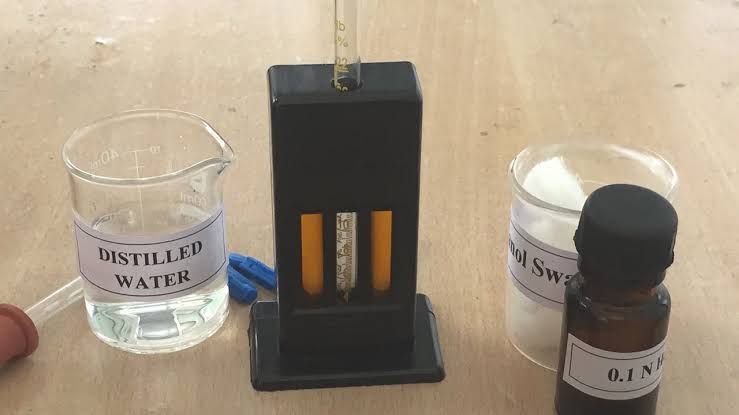
- Sahli’s Comparator Box: A rectangular box, usually made of plastic or bakelite, with two permanent colored glass standards (acid hematin) on either side. These standards provide the reference color for comparison.
- Sahli’s Calibrated Hemoglobin Tube: A specific glass test tube, calibrated on one side in grams per deciliter (g/dL) and on the other in percentages. The 2g mark is crucial for the initial addition of acid.
- Sahli’s Hemoglobin Pipette (20 µL / 0.02 mL): A specially calibrated pipette designed to accurately measure 20 microliters (µL) of blood. It has a characteristic bulb and a single mark indicating the 0.02 mL volume.
- Dropper Bottle with Distilled Water: Used for serial dilution of the acid hematin solution until its color matches the standard.
- Glass Stirrer: A thin glass rod, typically with a flattened or slightly bulbous end, used for mixing the blood and acid, and later for homogenizing the diluted solution.
- N/10 Hydrochloric Acid (HCl): The primary reagent used to convert hemoglobin into acid hematin. It is typically prepared as a 0.1 N solution.
- Sterile Lancet: A single-use, sharp device for pricking the skin to obtain a blood sample.
- Cotton Swabs and 70% Ethyl Alcohol/Spirit: For antiseptic preparation of the skin before pricking.
- Timer (Optional but Recommended): To ensure adequate time for the conversion of hemoglobin to acid hematin.
Procedure for Hemoglobin Estimation (Sahli’s Method)
Meticulous attention to detail at each step is paramount for accurate results.
A. Proper Technique for Pricking Blood
The quality of the blood sample significantly impacts the accuracy of the test.
- Patient Identification and Explanation: Confirm the patient’s identity and briefly explain the procedure to alleviate anxiety.
- Site Selection: The preferred sites for capillary blood collection are:
- Adults: The palmar surface of the distal phalanx of the ring or middle finger. Avoid the thumb and index finger due to thicker calluses, and the little finger due to thinner tissue.
- Infants: The lateral plantar surface of the heel.
- Avoid edematous, scarred, infected, or previously punctured areas.
- Preparation of the Site:
- Cleanse the chosen area thoroughly with a cotton swab soaked in 70% ethyl alcohol.
- Allow the alcohol to air dry completely. This prevents hemolysis (destruction of red blood cells) caused by alcohol contamination and ensures effective antiseptic action.
- Pricking Technique:
- Hold the selected finger firmly to restrict blood flow temporarily and provide a stable surface.
- Position the sterile lancet perpendicular to the fingerprint lines (to allow blood to well up) and make a single, swift, and firm puncture. The depth should be sufficient to ensure free flow of blood without excessive squeezing.
- Important: Discard the first drop of blood. This drop may contain tissue fluid that can dilute the sample, introduce debris, or be contaminated with alcohol.
- Gently apply pressure away from the puncture site to encourage the formation of a large, rounded drop of blood. Avoid vigorous squeezing or “milking” the finger, as this can cause hemolysis and dilute the sample with tissue fluid.
B. Assembling the Sahli’s Apparatus and Initial Setup
Preparation of the apparatus is the first step after obtaining the blood sample.
- Fill the Sahli’s calibrated tube with N/10 HCl exactly up to the 2 g mark. Exercise caution to avoid overfilling or underfilling.
- Place the filled Sahli’s tube into the designated slot in the Sahli’s comparator box. Ensure it is securely seated for accurate color comparison later.
C. Correctly Using the Sahli’s Pipette
The Sahli’s pipette is a precise instrument, and its correct manipulation is critical for drawing the exact volume of blood.
- Identify the Pipette: Locate the 0.02 mL (or 20 µL) mark on the stem of the pipette. This mark indicates the precise volume it is designed to measure.
- Drawing Blood:
- Hold the pipette horizontally or slightly tilted downwards.
- Touch the tip of the pipette to the center of the large, rounded drop of blood obtained from the finger prick.
- Gently aspirate blood by sucking on the mouthpiece until the blood level reaches the 0.02 mL mark exactly.
- Crucial: Ensure no air bubbles are trapped within the blood column in the pipette. Air bubbles lead to inaccurate volume measurement. If air bubbles are present, expel the blood, re-prick the finger if necessary, and redraw the sample.
- Carefully wipe any excess blood from the outside of the pipette tip with a clean, lint-free tissue or gauze without drawing blood from the inside.
D. Mixing Blood with Acid and Initial Dilution
The conversion of hemoglobin to acid hematin begins immediately upon contact with HCl.
- Transferring Blood: Immediately after drawing the blood, immerse the tip of the Sahli’s pipette into the N/10 HCl solution already in the Sahli’s tube, ensuring the tip is below the surface of the acid.
- Expel Blood: Gently blow out the blood from the pipette.
- Rinse Pipette: Rinse the pipette several times by drawing up and expelling the acid solution from the tube. This ensures that all blood is transferred from the pipette to the acid.
- Initial Mixing: Remove the pipette, and immediately insert the glass stirrer into the tube. Gently stir the mixture to ensure thorough mixing of blood with the acid. Avoid vigorous stirring that might cause splashing.
- Standing Time: Allow the tube to stand undisturbed for 5 to 10 minutes (preferably 10 minutes). This crucial incubation period ensures complete conversion of hemoglobin to acid hematin. Insufficient standing time will lead to an incomplete reaction and falsely low results. The solution will turn yellowish-brown.
E. Final Dilution and Color Matching
This step requires careful visual assessment and controlled dilution.
- Dilution: After the standing time, begin adding distilled water, drop by drop, to the acid hematin solution in the Sahli’s tube.
- Frequent Stirring: After adding each drop or every few drops of distilled water, gently stir the solution thoroughly using the glass stirrer. Correct usage of the stirrer involves gentle, continuous, and homogeneous mixing to ensure uniform color development throughout the solution.
- Color Comparison: Periodically, remove the stirrer, raise the Sahli’s tube, and compare the color of the solution in the tube with the standard acid hematin colors in the comparator box.
- Perform the comparison against a white background under good, diffused daylight or a consistent artificial light source (e.g., a frosted bulb). Avoid direct sunlight or fluorescent lights that can alter color perception.
- View the tubes from the top, looking down through the solution.
- Matching Point: Continue adding distilled water drop by drop, stirring after each addition, until the color of the solution in the Sahli’s tube precisely matches the color of the standard in the comparator box. The match should be exact.
- Reading the Result: Once a perfect color match is achieved, read the hemoglobin concentration directly from the scale on the Sahli’s tube. Read the value at the lower meniscus (the bottom of the curved surface) of the liquid column.
F. Cleaning and Recording
- Cleaning: Immediately after reading the result, empty the Sahli’s tube and pipette. Rinse them thoroughly with distilled water and then clean with a cleaning solution (e.g., detergent, followed by distilled water). Ensure they are completely dry before storage or reuse. A dirty apparatus can lead to inaccurate results.
- Recording: Record the hemoglobin value in grams per deciliter (g/dL) in the patient’s record or laboratory log.
Avoiding Errors and Taking Proper Precautions
Accuracy in Sahli’s method hinges on strict adherence to protocol and vigilance against potential errors.
- Pre-analytical Errors (Before the test):
- Improper Blood Collection: Insufficient or excessive squeezing of the finger during pricking can lead to hemolysis or dilution with tissue fluid, respectively, altering the true hemoglobin concentration.
- Inaccurate Blood Volume: Not drawing blood exactly to the 0.02 mL mark on the Sahli’s pipette, or the presence of air bubbles in the pipette, will result in incorrect blood volume for the reaction.
- Contamination: Alcohol not fully drying on the skin can cause hemolysis; dust or debris in the pipette or tube can interfere with the reaction or reading.
- Analytical Errors (During the test):
- Incorrect N/10 HCl Volume: Adding more or less HCl than the 2g mark will affect the conversion and subsequent dilution.
- Incomplete Conversion: Not allowing the full 5-10 minutes for hemoglobin to convert to acid hematin will yield a lighter color and a falsely low reading.
- Inaccurate Dilution: Adding too much or too little distilled water during the final dilution can lead to incorrect matching.
- Improper Stirring: Inadequate or non-homogeneous mixing of the solution, especially after adding water, will result in uneven color distribution and an inaccurate match. The stirrer must be used gently to ensure the solution is uniformly mixed.
- Subjective Color Matching: Visual comparison is inherently subjective. Differences in observer’s vision, fatigue, or color blindness can lead to errors.
- Poor Lighting: Performing the comparison under inadequate, direct, or inconsistent light sources can significantly affect color perception and matching accuracy.
- Dirty/Scratched Apparatus: Residues from previous tests, or scratches on the Sahli’s tube or pipette, can interfere with light transmission and color perception.
- Degraded Standard: The permanent acid hematin standard in the comparator box can fade over time, leading to consistent errors. Regular checking and replacement of old standards are necessary.
- Temperature Variations: Significant variations in ambient temperature can subtly affect reaction rates and color stability.
- Post-analytical Errors (After the test):
- Transcription Errors: Incorrectly recording the observed value.
- Reading at Upper Meniscus: Always read the lower meniscus for most liquid measurements unless otherwise specified.
General Precautions for Enhanced Accuracy:
- Cleanliness: Always use clean and dry Sahli’s apparatus. Wash the tube and pipette thoroughly immediately after each use.
- Reagent Quality: Use freshly prepared N/10 HCl and ensure distilled water is pure.
- Strict Timings: Adhere strictly to the 5-10 minute standing time for acid hematin formation.
- Optimal Lighting: Perform color matching under consistent, diffused daylight or a standard artificial light source.
- Calibration Check: Periodically compare the permanent standard with a known control if available, or replace it if signs of fading are observed.
- Safety: Always treat blood samples as potentially infectious. Use sterile lancets, dispose of sharps properly in a puncture-proof container, and wear appropriate personal protective equipment (e.g., gloves).
In conclusion, while Sahli’s method has largely been replaced by more precise and automated techniques, understanding its principles and mastering its execution provides invaluable insight into fundamental laboratory practices in hematology. Meticulous technique in blood collection, accurate use of the Sahli’s pipette and stirrer, and diligent adherence to precautions are paramount to obtaining reliable results from this classic method.