The Total Leukocyte Count (TLC), also known as the White Blood Cell (WBC) count, is a fundamental and critical parameter in hematological diagnostics. Leukocytes are an essential component of the body’s immune system, defending against infections and foreign invaders. Abnormalities in their count – either an increase (leukocytosis) or a decrease (leukopenia) – can indicate a wide range of underlying medical conditions, from infections and inflammation to autoimmune disorders and hematological malignancies such as leukemia.
While automated hematology analyzers are the primary method for determining TLC in modern laboratories, manual counting using a hemocytometer (counting chamber) remains an indispensable technique. It is crucial in settings where automated analyzers are unavailable, as a backup method, or for confirming abnormal results.
Theoretical Framework: Principles of Manual TLC Estimation
1. Principle of Counting: Manual TLC estimation relies on diluting a precisely measured volume of blood with a specific diluent and then counting the leukocytes within a defined area of a calibrated counting chamber (hemocytometer) under a microscope. The number of cells counted is then extrapolated to determine the concentration of leukocytes in the original undiluted blood sample.
2. The Role of Turk’s Fluid: Turk’s fluid is the standard diluent for manual WBC counting due to its unique properties:
- Glacial Acetic Acid (1-3%): This component is crucial for lysing (breaking open) the red blood cells (RBCs). RBCs are far more numerous than WBCs and, if not lysed, would obscure the WBCs and make accurate counting impossible. The concentration is carefully controlled to lyse RBCs effectively without damaging WBCs.
- Gentian Violet (or Methylene Blue): This dye stains the nuclei of the leukocytes, making them more visible and distinct under the microscope. This enhances contrast and facilitates accurate identification and counting.
- Distilled Water: Serves as the diluent base.
The typical dilution achieved with Turk’s fluid for TLC is 1:20, meaning one part blood is diluted with 19 parts Turk’s fluid. This ensures that the cells are sufficiently dispersed for counting without being too sparse or too crowded.
3. The Neubauer Hemocytometer: The Neubauer hemocytometer is a specialized thick glass slide with a precisely machined central counting area. This area consists of a large square (3mm x 3mm) subdivided into nine large 1 mm x 1 mm squares. The depth from the surface of this central platform to the coverslip, when properly seated, is exactly 0.1 mm. For TLC, counting is performed in the four large corner squares (each measuring 1 mm x 1 mm).
Materials and Equipment
Accurate TLC estimation requires meticulous preparation and the use of high-quality, calibrated equipment.
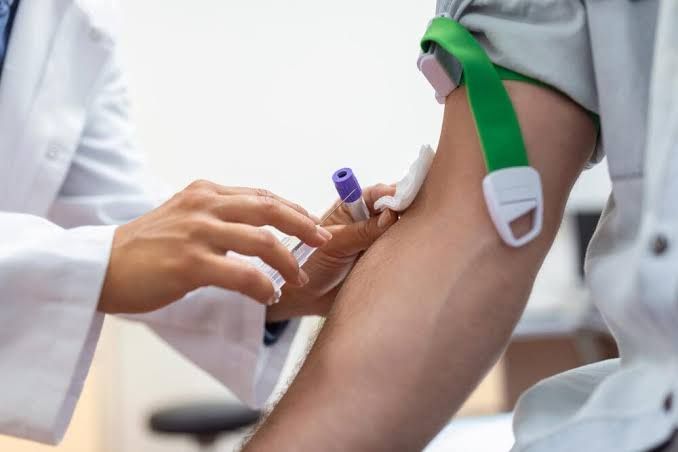
- Blood Sample: Venous blood collected in an anticoagulant-containing tube, preferably K2EDTA (purple top), which prevents clotting without significantly altering cell morphology. The sample must be well-mixed.
- Neubauer Hemocytometer: Clean, dry, and free of scratches. Ensure it comes with a specialized, optically flat coverslip.
- Micropipettes:
- Variable micropipette (e.g., 20 µL) with sterile, disposable tips for accurate blood measurement.
- Variable micropipette (e.g., 380 µL or 190 µL) with sterile, disposable tips for Turk’s fluid measurement.
- Alternatively, a WBC diluting pipette with 0.5, 1.0, and 11 marks can be used, though less common in modern labs.
- Turk’s Fluid: Ready-to-use solution or prepared in-house (composition: 1-3% glacial acetic acid, 0.01% gentian violet, 97-99% distilled water).
- Clean Test Tube/Microcentrifuge Tube: For mixing the blood and dilution fluid.
- Microscope: Compound microscope with 10x (low power) and 40x (high power) objectives.
- Timer: For accurate settling time.
- Cleaning Supplies: 70% ethanol or distilled water, lint-free tissues (e.g., Kimwipes).
- Humidifying Chamber (Optional but Recommended): A Petri dish with a moist filter paper or cotton to prevent evaporation during cell settling.
- Counter (Optional): Manual tally counter.
Preparing the Dilution
Precision in dilution is paramount for accurate results.
Sample Preparation:
- Verify Sample Integrity: Ensure the blood sample is properly collected, in an EDTA tube, and free of clots or hemolysis.
- Gentle Mixing: Gently invert the EDTA blood tube 8-10 times to ensure thorough mixing of the anticoagulant with the blood, preventing clot formation and ensuring homogeneous cell distribution. Avoid vigorous shaking, which can cause hemolysis.
Preparing the Dilution (1:20 dilution ratio):
- Method A: Using Micropipettes (Recommended for Accuracy)
- Place a clean, dry test tube or microcentrifuge tube into a tube rack.
- Using a calibrated micropipette, accurately dispense 380 µL of Turk’s fluid into the clean tube.
- Using a separate, clean micropipette tip, accurately dispense 20 µL of well-mixed blood into the tube containing the Turk’s fluid.
- Immediately and thoroughly mix the blood and Turk’s fluid. This can be done by gentle aspiration and expulsion with the pipette several times, or by capping the tube and inverting it gently for 15-20 seconds. Ensure no air bubbles are trapped.
- Allow the mixture to stand for 5-10 minutes at room temperature. This crucial step allows sufficient time for the glacial acetic acid to lyse all the RBCs and for the gentian violet to stain the WBC nuclei thoroughly.
- Method B: Using a WBC Diluting Pipette (Traditional Method)
- Draw well-mixed blood precisely up to the 0.5 mark of the WBC diluting pipette. Ensure no air bubbles are trapped.
- Carefully wipe any excess blood from the outside of the pipette tip without drawing out blood from the bore.
- Draw Turk’s fluid up to the 11 mark. This dilutes the blood 1:20 (0.5 part blood in 10 parts diluent, total volume 10.5, so 0.5/10.5 effectively, but the calculation is based on the 10-part volume to the mark, yielding 1:20).
- Remove the rubber tubing and place your index finger over the tip and thumb over the top, then shake the pipette vigorously for 30-60 seconds to ensure thorough mixing.
Charging the Neubauer Chamber
Correct charging of the hemocytometer is critical for even cell distribution and reliable counting.
- Clean the Hemocytometer and Coverslip:
- Thoroughly clean the Neubauer hemocytometer and its specialized coverslip using distilled water or 70% ethanol.
- Dry them completely with a lint-free tissue. Even a speck of dust or a smudge can lead to inaccurate counts.
- Position the Coverslip:
- Carefully place the coverslip squarely over the central raised platforms of the hemocytometer.
- Press gently on the edges of the coverslip until “Newton’s rings” (rainbow-colored interference patterns) appear. This indicates that the coverslip is properly seated and in direct contact with the counting chamber platforms, ensuring the correct chamber depth (0.1 mm).
- Mix the Diluted Sample:
- Before charging, gently invert the tube containing the diluted blood sample (or shake the WBC pipette) for 10-15 seconds to re-suspend any settled cells.
- Discard Initial Drops:
- If using a test tube, discard the first 2-3 drops from the pipette that will be used to charge the chamber. This ensures that only the well-mixed sample is charged, not just diluent from the pipette tip.
- If using a WBC pipette, discard the first 3-4 drops from the pipette to clear the stem of undiluted fluid.
- Charge the Chamber:
- Place the tip of the pipette (or the stem of the WBC pipette) at the edge of the coverslip, precisely where it meets the central platform of the hemocytometer.
- Allow a small drop of the well-mixed, diluted sample to flow into the chamber by capillary action. The fluid should fill the space under the coverslip smoothly and completely without overflowing into the moats.
- Do not overfill or underfill the chamber. Overfilling can lead to cells being washed into the moats and inaccurate counts. Underfilling leads to evaporation and uneven cell distribution.
- If charging both sides of the hemocytometer (recommended for quality control), repeat the process on the second counting area.
- Allow Cells to Settle:
- Place the charged hemocytometer in a humid chamber (e.g., a Petri dish with a moist filter paper) for 5-10 minutes. This allows the leukocytes to settle on the counting grid, preventing them from drifting during counting. The humid environment prevents evaporation of the fluid, which would alter the cell concentration.
Microscopic Examination and Counting
After the settling time, the hemocytometer is ready for microscopic examination.
- Microscope Setup:
- Place the charged hemocytometer on the microscope stage.
- Using the 10x objective lens, focus on the central large square of the counting grid. Adjust illumination for optimal visibility.
- Once the central grid is visible, switch to the 40x objective (high power) for detailed counting. The 40x objective provides sufficient magnification to clearly identify and differentiate WBCs.
- Locate Counting Area:
- The Neubauer counting chamber has nine large squares (each 1 mm x 1 mm). For TLC, you will count the leukocytes in the four large corner squares.
- Each large corner square is typically subdivided into 16 smaller squares.
- Counting Leukocytes:
- Counting Rule: To avoid counting cells twice or missing cells, follow a consistent rule. A commonly used rule is to count cells that are touching the top and left lines of the square, but not those touching the bottom and right lines. This rule applies to the outer boundaries of the 1 mm x 1 mm squares and the internal lines if you are counting within the smaller squares.
- Systematic Scanning: Count the cells systematically within each of the four corner squares. Move from one sub-square to the next in a consistent pattern (e.g., a “zigzag” or “serpentine” pattern) to ensure all cells are counted and none are missed.
- Recording Counts: Record the number of cells counted in each of the four 1 mm x 1 mm corner squares separately (e.g., N1, N2, N3, N4).
- Quality Control (Chamber Consistency): If both sides of the hemocytometer were charged, count both sides. The counts from the two sides should ideally be within 10-15% of each other. If there’s a significant discrepancy, it indicates an error (e.g., poor mixing, improper charging), and the procedure should be repeated.
Calculation of Total Leukocyte Count (TLC)
Once the counting is complete, the TLC can be calculated using a specific formula.
Components of the Formula:
- N: Total number of leukocytes counted in the designated squares. For TLC, this is the sum of cells counted in the four large corner squares (N1 + N2 + N3 + N4).
- DF (Dilution Factor): The inverse of the dilution performed. Since we diluted blood 1:20 (1 part blood to 19 parts diluent), the dilution factor is 20.
- A (Area Counted): The area of the squares in which cells were counted, in mm². Each large corner square is 1 mm x 1 mm = 1 mm². Since four such squares are counted, the total area is 4 mm².
- D (Depth of the Chamber): The constant depth of the Neubauer hemocytometer, which is 0.1 mm.
The Formula: TLC (cells/µL) = (N * DF) / (A * D)
Applying the Values for TLC with Turk’s Fluid:
- TLC (cells/µL) = (N * 20) / (4 mm² * 0.1 mm)
- TLC (cells/µL) = (N * 20) / 0.4
- TLC (cells/µL) = N * (20 / 0.4)
- TLC (cells/µL) = N * 50
Example Calculation: Suppose you counted the following number of leukocytes in the four corner squares:
- Square 1 (N1): 85 cells
- Square 2 (N2): 92 cells
- Square 3 (N3): 88 cells
- Square 4 (N4): 95 cells
- Step 1: Calculate Total Cells Counted (N): N = N1 + N2 + N3 + N4 = 85 + 92 + 88 + 95 = 360 cells
- Step 2: Apply the Simplified Formula: TLC = N * 50 TLC = 360 * 50. TLC = 18,000 cells/µL
Therefore, the estimated Total Leukocyte Count for this sample is 18,000 cells/µL. This value would then be compared to laboratory-specific reference ranges. The typical adult reference range for TLC is approximately 4,000 to 11,000 cells/µL.
Quality Control and Troubleshooting
Manual cell counting, while foundational, is prone to various errors if not performed meticulously.
1. Common Sources of Error:
- Improper Blood Sample Mixing: Leads to uneven cell distribution.
- Inaccurate Pipetting/Dilution: Significant errors in blood or diluent volumes directly impact the final count.
- Dirty Hemocytometer or Coverslip: Dirt, fibers, or smudges can be mistaken for cells or obscure them.
- Improper Coverslip Seating: Affects the chamber depth, leading to incorrect volume.
- Air Bubbles in Dilution/Chamber: Can displace fluid or interfere with counting.
- Overfilling or Underfilling the Chamber: Changes the effective volume being counted.
- Uneven Cell Distribution: Can occur due to insufficient mixing or improper charging.
- Delayed Counting/Evaporation: Cells may settle unevenly, or the sample may dry out, concentrating cells.
- Observer Error: Subjectivity in identifying cells, inconsistent counting rules, or fatigue.
- Failure to Lyse RBCs: If Turk’s fluid is old or improperly prepared, RBCs may not lyse completely, obstructing WBCs.
2. Troubleshooting and Best Practices:
- Strict Adherence to Protocol: Follow all steps meticulously, especially regarding timing and volumes.
- Regular Calibration: Ensure micropipettes are calibrated regularly.
- Thorough Cleaning: Always clean and dry the hemocytometer and coverslip immediately before use.
- Proper Lighting: Adjust the microscope’s condenser and light source for optimal clarity and contrast.
- Count Both Sides: Charging and counting on both sides of the hemocytometer serves as an internal quality control check. Results should be consistent.
- Immediate Counting: Once the settling time is complete, count the cells promptly to prevent evaporation.
- Practice and Consistency: Regular practice improves accuracy and consistency in counting kỹ thuật.
Conclusion
Manual Total Leukocyte Count estimation using a hemocytometer and Turk’s fluid is a fundamental skill in hematology. While automated analyzers handle the bulk of clinical laboratory workload, proficiency in manual methods remains essential for critical situations, resource-limited settings, and for validating automated results. By adhering to the professional, step-by-step guidelines outlined in this document—from precise dilution and meticulous chamber charging to systematic counting and accurate calculation—laboratory professionals can ensure the reliability and clinical utility of the estimated TLC, contributing directly to effective patient diagnosis and management.