Function, Structure, and Components of the Extracellular Matrix
Introduction to the Extracellular Matrix (ECM)
The extracellular matrix (ECM) is a complex network of proteins, sugars, and other components that provides structural and biochemical support to surrounding cells. It is not merely a passive scaffold; rather, it plays an active role in various cellular processes such as proliferation, differentiation, migration, and apoptosis. The ECM is crucial for maintaining tissue integrity and facilitating communication between cells.
Structure of the ECM
The ECM is organized in a tissue-specific manner and consists of multiple layers of macromolecules. Its architecture can vary significantly depending on the type of tissue it supports. The ECM can be divided into two main categories: structural proteins and non-structural proteins (glycoproteins).
- Structural Proteins: These include collagens and elastin, which provide tensile strength and elasticity to tissues.
- Non-structural Proteins: These include glycoproteins such as fibronectin and laminin that facilitate cell adhesion and signaling.
The ECM also contains proteoglycans that are essential for hydration and nutrient transport within tissues.
Components of the ECM
The major components of the ECM include:
- Collagens: Collagen is the most abundant protein in the body, comprising approximately 30 different types. It forms fibrils that provide structural integrity to connective tissues like tendons and skin. Collagen types I, II, III are categorized as fibril-forming collagens that contribute to tensile strength.
- Proteoglycans: These molecules consist of a core protein with attached glycosaminoglycan (GAG) chains. They play a significant role in retaining water within the matrix, thus contributing to its compressive strength.
- Elastin: This protein allows tissues to resume their shape after stretching or contracting. It is particularly important in elastic tissues such as skin and blood vessels.
- Cell-binding Glycoproteins: Fibronectin and laminin are examples that help anchor cells to the ECM while also mediating cell signaling pathways.
- Matrix Metalloproteinases (MMPs): These enzymes are involved in remodeling the ECM by degrading various components when necessary for processes like wound healing or tissue repair.
- Integrins: These transmembrane receptors mediate cell-ECM interactions by connecting intracellular cytoskeleton elements with extracellular matrix components.
Functions of the ECM
The functions of the extracellular matrix are multifaceted:
- Structural Support: The ECM provides scaffolding for cells, helping maintain tissue architecture.
- Cell Communication: It facilitates biochemical signaling between cells through growth factors stored within its structure.
- Regulation of Cell Behavior: The stiffness and composition of the ECM influence cell behavior including differentiation pathways.
- Wound Healing: The ECM plays a critical role in wound healing by providing a framework for new tissue formation.
- Tissue Development and Repair: During development or after injury, the ECM undergoes remodeling to accommodate new cellular activities.
In summary, understanding the composition, structure, and functions of the extracellular matrix is vital for advancing fields such as tissue engineering where scaffolds derived from or mimicking natural ECM can enhance regenerative medicine strategies.
Overview of Fibrosis
Fibrosis is a pathological condition characterized by the excessive accumulation of extracellular matrix (ECM) components, primarily collagen, in tissues. This process often results from chronic inflammation or injury and can lead to scarring, organ dysfunction, and ultimately death if left unchecked. Fibrosis can affect nearly every tissue in the body and is a common feature of many chronic inflammatory diseases.
Pathogenesis of Fibrosis
The development of fibrosis typically begins with an initial injury or insult to tissue, which triggers an inflammatory response. This response involves both innate and adaptive immune mechanisms that contribute to the activation of fibroblasts—cells responsible for producing ECM components. When fibroblasts become activated, they differentiate into myofibroblasts, which are key mediators in the fibrotic process. These myofibroblasts proliferate and secrete large amounts of ECM proteins, leading to the thickening and stiffening of tissues.
Triggers of Fibrosis
Various factors can initiate fibrosis, including genetic disorders, persistent infections, exposure to toxins or irritants (such as cigarette smoke), autoimmune diseases, and conditions like obesity or poorly controlled diabetes. Each of these triggers can lead to a sustained inflammatory response that perpetuates the fibrotic process.
Consequences of Fibrosis
As fibrosis progresses, it can result in significant structural changes within affected organs. For instance:
- In the liver, excessive collagen deposition due to conditions like hepatitis C or alcohol abuse leads to cirrhosis.
- In the lungs, idiopathic pulmonary fibrosis (IPF) results from scarring that impairs gas exchange.
- Cardiac fibrosis contributes to heart failure by increasing myocardial stiffness.
These changes can severely impact organ function and quality of life for affected individuals.
Current Understanding and Research Directions
Research into fibrosis has focused on understanding its underlying mechanisms and identifying potential therapeutic targets. While some antifibrotic therapies are being developed, there remains a significant need for effective treatments that specifically address the fibrotic process across various diseases.
In summary, fibrosis represents a complex interplay between tissue injury, inflammation, and abnormal healing processes that culminate in excessive scarring and organ dysfunction.
Healing by First Intention
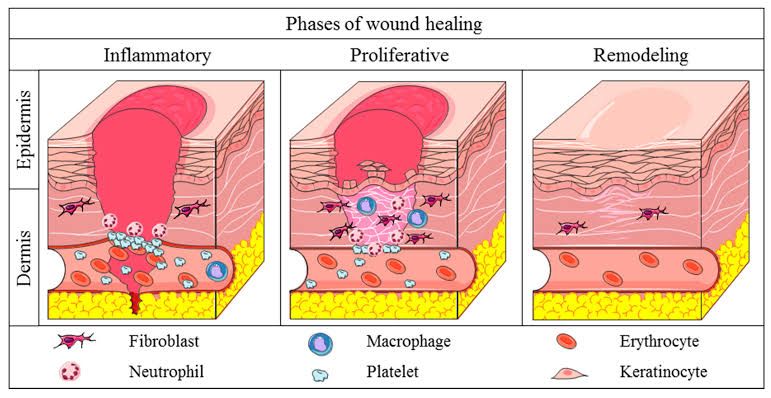
Healing by first intention, also known as primary intention, occurs when the edges of a wound are brought together (approximated) and closed using methods such as sutures, staples, or adhesive strips. This type of healing is typically seen in surgical incisions or clean cuts where the skin edges are closely aligned. The process can be broken down into four main stages:
- Haemostasis: Immediately after the injury, platelets aggregate at the site to form a clot. This clot serves as a temporary barrier to prevent blood loss and protects against infection.
- Inflammation: Following haemostasis, an inflammatory response is initiated. White blood cells migrate to the wound site to clear out debris and pathogens. This stage is characterized by redness, swelling, heat, and pain.
- Proliferation: In this phase, fibroblasts proliferate and migrate into the wound area, producing collagen and extracellular matrix that form granulation tissue. Angiogenesis occurs during this stage as new blood vessels develop to supply nutrients to the healing tissue.
- Remodelling: The final phase involves the maturation of collagen fibers and reorganization of tissue structure. Over time, the scar tissue becomes stronger and more flexible as fibroblasts undergo apoptosis (programmed cell death).
The end result of healing by first intention is typically minimal scarring and a return to normal function of the skin.
Healing by Second Intention
Healing by second intention occurs when a wound cannot be closed directly due to significant tissue loss or when the edges are not approximated. This method relies on the body’s natural healing processes and generally takes longer than first intention healing. The stages involved are similar but differ in their characteristics:
- Haemostasis: Similar to first intention, a fibrin mesh forms at the wound site to control bleeding.
- Inflammation: An intense inflammatory response occurs due to greater amounts of cell debris and potential contamination in larger wounds. This phase may last longer compared to first intention.
- Proliferation: Granulation tissue forms from the bottom up as fibroblasts migrate into the wound area. Epithelial cells can only proliferate once granulation tissue fills the defect sufficiently for coverage.
- Remodelling: Myofibroblasts play a crucial role in this phase by contracting the wound edges together while depositing collagen for structural integrity.
In contrast to first intention healing, second intention often results in more significant scarring due to larger areas of tissue loss that must heal from within outwardly rather than being stitched together.
Local Factors Affecting Wound Healing
- Venous Insufficiency: This condition occurs when there is inadequate blood flow returning to the heart, often due to obstructions such as blood clots or varicose veins. Venous insufficiency can lead to edema (swelling), stasis dermatitis, and ulcerations, all of which contribute to delayed wound healing. Patients with diabetes mellitus, deep-vein thrombosis (DVT), congestive heart failure, obesity, pregnancy, and peripheral vascular disease are at higher risk for this condition.
- Poor Oxygenation: Adequate oxygen levels are crucial for all phases of wound healing. Oxygen facilitates various processes such as angiogenesis (formation of new blood vessels), keratinocyte differentiation, fibroblast proliferation, migration, wound contraction, collagen synthesis, and re-epithelialization. Low tissue oxygenation (hypoxia) can occur due to systemic factors like diabetes and aging, leading to decreased vascular flow and impaired healing.
- Infection/Foreign Bodies: The presence of foreign bodies in a wound can lead to localized infections that disrupt the healing process. When the skin is torn or damaged, harmful microorganisms can penetrate the wound area. If infections are left untreated, they may cause widespread tissue necrosis and complications that could necessitate limb amputation or even lead to sepsis.
Systemic Factors Affecting Wound Healing
- Age: Older adults (aged 60 years and above) are at a greater risk for delayed wound healing due to several factors associated with aging. These include psychological stressors, malnutrition, medication use, immobilization, and comorbidities such as diabetes and peripheral artery disease. Aging affects every phase of wound healing by delaying angiogenesis and re-epithelialization while also decreasing overall wound strength.
- Sex Hormones: Male and female sex hormones play a significant role in wound healing dynamics. Research indicates that estrogen has beneficial effects on age-related impairments in wound healing among elderly patients. Hormonal differences can influence various biological processes involved in tissue repair.
- Diabetes: Diabetes mellitus is a chronic condition that significantly impairs wound healing due to factors like poor circulation and neuropathy (nerve damage). Elevated blood glucose levels can hinder immune function and reduce the body’s ability to fight infections effectively.
- Stress: Psychological stress can negatively impact the immune system’s functionality and overall health status of an individual, thereby affecting the body’s ability to heal wounds efficiently.
- Obesity: Excess body weight can lead to poor circulation and increased pressure on certain areas of the body, which may delay the healing process by affecting blood flow and nutrient delivery necessary for repair.
- Medications: Certain medications may interfere with normal physiological processes involved in wound healing. For example, corticosteroids can suppress inflammation necessary for initiating the healing response.
- Smoking/Alcohol Usage: Both smoking and excessive alcohol consumption have detrimental effects on wound healing by impairing circulation and reducing oxygen supply to tissues while also compromising immune responses.
Complications of Healing
Healing is a complex biological process that can be affected by various complications. Understanding these complications is crucial for effective management and treatment. Below are some of the primary complications associated with healing:
1. Infection
Infections occur when bacteria or other pathogens enter the wound site, leading to inflammation and delayed healing. Symptoms may include redness, swelling, warmth, pain, and discharge from the wound. Infections can also spread to surrounding tissues or enter the bloodstream, potentially causing systemic issues. Treatment typically involves antibiotics and may require surgical intervention to drain infected areas.
2. Hematoma
A hematoma is a localized collection of blood outside of blood vessels, often resulting from trauma or surgical procedures. It can cause swelling and pain at the site and may impede proper healing by creating pressure on surrounding tissues. Management usually involves monitoring smaller hematomas, while larger ones may require drainage.
3. Dehiscence
Dehiscence refers to the partial or complete separation of a surgical incision or wound edges before healing has occurred. This complication can result from excessive tension on the wound, infection, or inadequate tissue perfusion. Dehiscence increases the risk of infection and prolongs recovery time; treatment often requires re-suturing or additional surgical intervention.
4. Scarring
Scarring occurs as part of the normal healing process but can become problematic if excessive collagen formation leads to hypertrophic scars or keloids. These raised scars can be itchy, painful, and cosmetically concerning for patients. Treatments may include silicone gel sheets, corticosteroid injections, or laser therapy.
5. Chronic Wounds
Chronic wounds fail to progress through the normal stages of healing due to factors such as poor circulation (ischemia), diabetes mellitus, venous stasis disease, or pressure ulcers. These wounds often require specialized care and interventions like debridement, advanced dressings, and sometimes skin grafting.
6. Delayed Healing
Delayed healing can result from various factors including age, nutritional deficiencies (such as vitamin C deficiency), underlying medical conditions (like diabetes), medications (such as corticosteroids), and lifestyle factors (like smoking). Addressing these underlying issues is essential for promoting timely recovery.
7. Deep Vein Thrombosis (DVT)
DVT is a condition where blood clots form in deep veins—often in the legs—due to immobility during recovery periods after surgery or injury. Symptoms include swelling, pain, and tenderness in the affected area; however, DVT can also be asymptomatic. If left untreated, clots can dislodge and lead to pulmonary embolism—a serious condition requiring immediate medical attention.
8. Pulmonary Complications
Post-operative patients are at risk for pulmonary complications such as pneumonia due to reduced mobility and shallow breathing during recovery periods. Symptoms may include cough, fever, shortness of breath, and chest pain. Preventive measures include encouraging deep breathing exercises and early mobilization after surgery.
In summary, understanding these complications is vital for healthcare providers to implement appropriate preventive measures and treatments that facilitate optimal healing outcomes.
Basal Ganglia Nuclei
The basal ganglia are a group of nuclei in the brain that play a crucial role in coordinating movement and various cognitive functions. The main nuclei that comprise the basal ganglia include:
- Striatum: This is the largest component of the basal ganglia and is divided into two parts:
- Dorsal Striatum: Comprising the caudate nucleus and putamen, it primarily receives input from various areas of the cerebral cortex and is involved in motor control as well as cognitive functions.
- Ventral Striatum: This includes the nucleus accumbens and olfactory tubercle, which are associated with reward processing, motivation, and emotional responses.
- Globus Pallidus: This structure has two parts:
- External Segment (GPe): It plays a role in regulating voluntary movement by providing inhibitory signals to other parts of the basal ganglia.
- Internal Segment (GPi): It also provides inhibitory output but mainly projects to motor-related areas of the brain.
- Substantia Nigra: This nucleus is divided into two regions:
- Pars Compacta (SNc): It contains dopamine-producing neurons that project to the striatum, playing a significant role in movement regulation and reward.
- Pars Reticulata (SNr): It primarily sends inhibitory signals to thalamic nuclei involved in motor control.
- Subthalamic Nucleus (STN): This small nucleus receives input from both the striatum and cerebral cortex and sends excitatory projections to the globus pallidus, thus influencing motor control.
These nuclei work together through complex circuits to facilitate smooth voluntary movements, action selection, habit formation, and cognitive processes. Dysfunction within these nuclei can lead to various neurological disorders such as Parkinson’s disease, Huntington’s disease, Tourette syndrome, and obsessive-compulsive disorder.
Diencephalon
The diencephalon is a critical region of the brain located between the brainstem and the cerebral cortex. It consists of several key structures, each with distinct functions. Below are the main parts of the diencephalon along with their primary functions:
1. Epithalamus
The epithalamus is located at the posterior part of the roof of the third ventricle and includes several components:
- Pineal Gland: This endocrine gland produces melatonin, which regulates sleep-wake cycles and circadian rhythms.
- Habenular Nuclei: These nuclei are involved in emotional responses to odors and play a role in reward processing.
- Stria Medullaris: This fiber tract connects various regions of the brain and is involved in limbic system functions.
2. Thalamus
The thalamus acts as a major relay station for sensory information before it reaches the cerebral cortex:
- Sensory Relay: It processes and transmits sensory signals (except for smell) such as visual, auditory, and somatosensory information.
- Motor Function Regulation: The thalamus also plays a role in motor control by relaying information from the basal ganglia and cerebellum to the motor cortex.
3. Hypothalamus
The hypothalamus is situated below the thalamus and has vital roles in homeostasis:
- Autonomic Control: It regulates autonomic functions such as heart rate, blood pressure, and digestion.
- Endocrine System Regulation: The hypothalamus controls hormone release from the pituitary gland, influencing growth, metabolism, stress response, and reproductive processes.
- Temperature Regulation: It helps maintain body temperature by triggering sweating or shivering.
- Hunger and Thirst Regulation: The hypothalamus monitors nutrient levels and fluid balance to regulate appetite and thirst.
4. Subthalamus
The subthalamus is involved primarily in motor control:
- Motor Coordination: It works closely with basal ganglia to help regulate voluntary movements.
5. Metathalamus
This area includes structures like the medial geniculate body (auditory) and lateral geniculate body (visual):
- Sensory Processing: The metathalamus processes auditory signals (medial geniculate) and visual signals (lateral geniculate), relaying them to appropriate areas of the cortex for further processing.
In summary, each part of the diencephalon plays an integral role in sensory processing, hormonal regulation, emotional responses, motor control, and maintaining homeostasis within the body.
Cortical Areas Related to Written and Spoken Language
The understanding of language processing in the brain has evolved significantly, particularly through the contributions of early neurologists like Pierre Paul Broca and Karl Wernicke. Their foundational work laid the groundwork for identifying specific cortical areas associated with language functions, both spoken and written.
Broca’s Area
Broca’s area is located in the posterior part of the frontal lobe, typically in the left hemisphere for right-handed individuals. This area is crucial for speech production and articulation. Damage to Broca’s area results in Broca’s aphasia, characterized by difficulty in forming grammatically correct sentences while still retaining comprehension abilities. Patients may speak in short phrases that are often ungrammatical but can understand spoken language relatively well.
Wernicke’s Area
Wernicke’s area is situated at the junction of the temporal, parietal, and occipital lobes, also predominantly in the left hemisphere. This region is essential for language comprehension. When this area is damaged, individuals may exhibit Wernicke’s aphasia, where they can produce fluent speech but have significant difficulties understanding language or producing meaningful sentences. Their speech may include nonsensical words or phrases.
Angular Gyrus
The angular gyrus is located near Wernicke’s area and plays a critical role in integrating sensory information related to reading and writing. It acts as a bridge between visual stimuli (written words) and auditory stimuli (spoken words). This region helps transform visual representations of words into their corresponding sounds and meanings, facilitating reading comprehension.
Arcuate Fasciculus
The arcuate fasciculus is a bundle of nerve fibers that connects Broca’s area with Wernicke’s area. This structure allows for communication between these two regions, enabling coordinated processing of language production and comprehension. Damage to this pathway can lead to conduction aphasia, where individuals can understand language and produce speech but struggle with repeating phrases accurately.
Primary Auditory Cortex
Located in the temporal lobe, the primary auditory cortex processes auditory information from spoken language. It plays a vital role in recognizing sounds and phonetic elements necessary for understanding spoken words.
Visual Cortex
The visual cortex, located at the back of the brain in the occipital lobe, processes visual information from written text. It enables individuals to recognize letters and words visually before they are interpreted semantically through connections with other language-related areas.
In summary, various cortical areas collaborate to facilitate both written and spoken language processing:
- Broca’s Area: Speech production.
- Wernicke’s Area: Language comprehension.
- Angular Gyrus: Integration of visual and auditory information related to language.
- Arcuate Fasciculus: Connection between Broca’s and Wernicke’s areas.
- Primary Auditory Cortex: Processing auditory aspects of spoken language.
- Visual Cortex: Processing visual aspects of written text.
These interconnected regions highlight how complex cognitive functions such as language rely on specialized yet integrated brain structures.