Transmission Process at the Neuromuscular Endplate
The transmission process at the neuromuscular junction (NMJ) is a highly coordinated sequence of events that allows motor neurons to communicate with muscle fibers, leading to muscle contraction. This process can be broken down into several key steps:
- Action Potential Arrival: The transmission begins when an action potential travels down a motor neuron and reaches the presynaptic terminal at the NMJ.
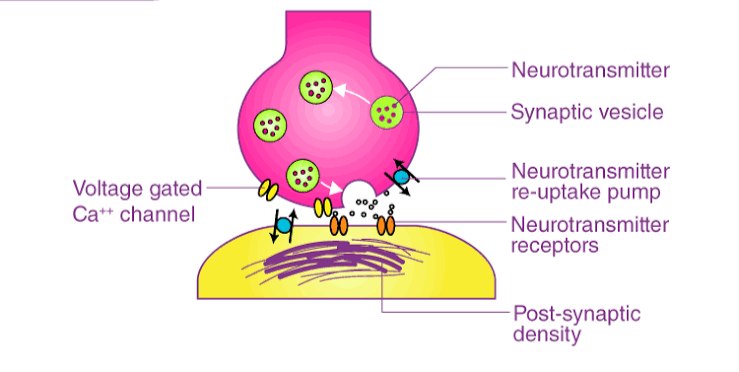
- Calcium Influx: The arrival of the action potential causes voltage-gated calcium channels in the presynaptic membrane to open. Calcium ions (Ca²⁺) flow into the presynaptic terminal from the extracellular space.
- Neurotransmitter Release: The influx of calcium ions triggers synaptic vesicles filled with acetylcholine (ACh) to fuse with the presynaptic membrane, releasing ACh into the synaptic cleft through a process known as exocytosis.
- Binding to Receptors: Acetylcholine diffuses across the synaptic cleft and binds to nicotinic acetylcholine receptors (nAChRs) located on the postsynaptic membrane (sarcolemma) of the muscle fiber. These receptors are ionotropic, meaning they function as ligand-gated ion channels.
- Muscle Fiber Depolarization: The binding of ACh to nAChRs causes them to open, allowing sodium ions (Na⁺) to enter the muscle fiber while potassium ions (K⁺) exit. This results in depolarization of the muscle fiber membrane, generating an endplate potential.
- Action Potential Generation: If the depolarization reaches a certain threshold, it triggers an action potential in the muscle fiber, which propagates along its membrane and into its interior via T-tubules.
- Muscle Contraction: The action potential ultimately leads to calcium release from the sarcoplasmic reticulum within muscle fibers, initiating contraction through interaction with contractile proteins.
- Termination of Signal: To terminate this signal and prevent continuous stimulation, acetylcholinesterase (AChE), an enzyme present in the synaptic cleft, breaks down excess ACh into acetate and choline, effectively stopping further activation of nAChRs.
Points Where Drugs Can Modify This Process
Various drugs can interfere with different stages of this transmission process at the NMJ:
- Calcium Channel Blockers: Drugs such as verapamil or diltiazem can inhibit voltage-gated calcium channels in presynaptic terminals, reducing calcium influx and consequently decreasing ACh release into the synaptic cleft.
- Acetylcholinesterase Inhibitors: Medications like neostigmine or pyridostigmine inhibit AChE activity, leading to increased levels of ACh in the synaptic cleft. This prolongs receptor activation and enhances neuromuscular transmission; these drugs are often used in treating myasthenia gravis.
- Nicotinic Receptor Antagonists: Drugs such as curare or succinylcholine block nAChRs on muscle fibers, preventing ACh from binding and thus inhibiting muscle contraction. These agents are commonly used during surgical procedures for muscle relaxation.
- Botulinum Toxin: Produced by Clostridium botulinum, this neurotoxin inhibits neurotransmitter release by blocking vesicle fusion at presynaptic terminals, effectively paralyzing muscles by preventing ACh release.
- Sodium Channel Modulators: Certain local anesthetics like lidocaine can affect sodium channels involved in action potential propagation along motor neurons, thereby altering neuromuscular transmission indirectly by affecting nerve impulse conduction.
In summary, drugs can modify neuromuscular transmission at various points including calcium influx regulation, neurotransmitter breakdown inhibition, receptor blockade or activation modulation, and interference with action potential propagation along motor neurons.
Comparison of Pharmacodynamics and Pharmacokinetics of Nondepolarizing and Depolarizing Neuromuscular Blockers
1. Overview of Neuromuscular Blockers
Neuromuscular blockers are agents used to induce muscle paralysis during surgical procedures or mechanical ventilation. They are classified into two main categories: depolarizing and nondepolarizing neuromuscular blockers. Each category has distinct pharmacodynamic and pharmacokinetic properties that influence their clinical use.
2. Pharmacodynamics
- Depolarizing Neuromuscular Blockers (e.g., Succinylcholine):
- Mechanism of Action: These agents mimic acetylcholine (ACh) at the neuromuscular junction, binding to nicotinic receptors on the motor end plate, leading to depolarization of the muscle membrane.
- Effects: The initial depolarization causes muscle fasciculations followed by paralysis as the receptor becomes desensitized to further stimulation.
- Duration of Action: The effect is typically rapid but short-lived due to rapid hydrolysis by plasma cholinesterase, resulting in a duration of action usually lasting 5-10 minutes.
- Nondepolarizing Neuromuscular Blockers (e.g., Vecuronium, Rocuronium):
- Mechanism of Action: These agents competitively block ACh from binding to nicotinic receptors at the neuromuscular junction without causing depolarization.
- Effects: They do not cause fasciculations; instead, they lead directly to paralysis as they prevent muscle contraction.
- Duration of Action: The duration varies significantly among different agents, ranging from approximately 20 minutes for rocuronium to several hours for others like pancuronium.
3. Pharmacokinetics
- Depolarizing Neuromuscular Blockers:
- Absorption and Distribution: Rapidly distributed throughout the body due to its small molecular size.
- Metabolism: Primarily metabolized by plasma cholinesterase; this leads to a quick onset and offset of action.
- Elimination: Excreted mainly through urine after being broken down into inactive metabolites.
- Nondepolarizing Neuromuscular Blockers:
- Absorption and Distribution: Generally have a larger volume of distribution compared to depolarizing agents, affecting their onset time.
- Metabolism: Metabolized by the liver or excreted unchanged by the kidneys depending on the specific agent (e.g., vecuronium is primarily hepatic).
- Elimination: Clearance rates vary widely; for instance, atracurium undergoes spontaneous degradation (Hofmann elimination), while others may require renal function for elimination.
4. Clinical Implications
The choice between depolarizing and nondepolarizing neuromuscular blockers depends on various factors including desired onset time, duration of action, patient-specific considerations (such as renal function), and potential side effects. Depolarizing agents are favored for rapid sequence intubation due to their quick onset but may be contraindicated in certain populations due to adverse effects like hyperkalemia or malignant hyperthermia risk. Nondepolarizing agents offer more flexibility in terms of duration but require careful monitoring for recovery times.
In summary, while both types serve similar purposes in anesthesia and critical care settings, their distinct pharmacodynamic profiles—where depolarizing agents cause initial muscle contractions followed by paralysis versus nondepolarizers which directly induce paralysis without fasciculations—along with their differing pharmacokinetic behaviors—such as metabolism pathways and elimination routes—highlight important considerations for clinical application.
Main Indications, Major Adverse Effects, and Drug Interactions of Nondepolarizing and Depolarizing Neuromuscular Blockers
Neuromuscular blockers are agents that cause paralysis by blocking the transmission of nerve impulses to muscles. They are primarily used in clinical settings for various indications, particularly during surgical procedures or mechanical ventilation. Neuromuscular blockers can be classified into two main categories: nondepolarizing and depolarizing neuromuscular blockers.
(a) Nondepolarizing Neuromuscular Blockers
Main Indications:
- Surgical Procedures: Nondepolarizing neuromuscular blockers are commonly used to facilitate intubation and provide muscle relaxation during surgery.
- Mechanical Ventilation: They may be employed in critically ill patients requiring mechanical ventilation to improve synchrony between the patient and the ventilator.
- Diagnostic Procedures: These agents can also be used in certain diagnostic tests where muscle relaxation is necessary.
Major Adverse Effects:
- Respiratory Depression: Due to paralysis of respiratory muscles, there is a risk of inadequate ventilation.
- Cardiovascular Effects: Some nondepolarizing agents can cause hypotension due to histamine release or vagal stimulation.
- Prolonged Neuromuscular Blockade: In patients with renal or hepatic impairment, the effects may last longer than expected.
- Allergic Reactions: There is a potential for allergic reactions, including anaphylaxis.
Drug Interactions:
- Antibiotics (Aminoglycosides): These can potentiate the effects of nondepolarizing neuromuscular blockers by interfering with presynaptic release of acetylcholine.
- Calcium Channel Blockers: These drugs may enhance neuromuscular blockade by decreasing calcium influx at the neuromuscular junction.
- Anesthetics: Certain volatile anesthetics can also potentiate the effects of nondepolarizing agents.
(b) Depolarizing Neuromuscular Blockers
Main Indications:
- Rapid Sequence Intubation (RSI): Depolarizing neuromuscular blockers like succinylcholine are often used for rapid sequence intubation due to their quick onset and short duration of action.
- Procedural Sedation: They may be utilized in emergency situations where rapid muscle relaxation is required.
Major Adverse Effects:
- Malignant Hyperthermia: A rare but life-threatening condition that can occur in susceptible individuals when succinylcholine is administered.
- Hyperkalemia: Succinylcholine can cause an increase in serum potassium levels, which may lead to cardiac complications, especially in patients with pre-existing conditions such as renal failure or burns.
- Prolonged Paralysis: In individuals with atypical plasma cholinesterase enzyme activity, there may be prolonged paralysis following administration.
Drug Interactions:
- Cholinesterase Inhibitors: These medications can prolong the effects of succinylcholine by inhibiting its breakdown.
- Other Neuromuscular Blockers: Concurrent use with other neuromuscular blockers should be approached cautiously as it may lead to enhanced effects.
In summary, both nondepolarizing and depolarizing neuromuscular blockers have specific indications primarily related to surgical procedures and critical care management but come with significant adverse effects and potential drug interactions that must be carefully managed.