Differences Between Endocrine and Exocrine Glands
The differences between endocrine and exocrine glands are as follows:
- Secretion Method: Endocrine glands secrete hormones directly into the bloodstream, while exocrine glands release their substances through ducts to the surface of the body or into internal organs.
- Type of Substances Secreted: Endocrine glands primarily secrete hormones that regulate various bodily functions, whereas exocrine glands secrete a variety of substances such as sweat, saliva, digestive enzymes, and mucus.
- Location: Endocrine glands are typically ductless and located throughout the body (e.g., pituitary gland, thyroid gland), while exocrine glands have ducts and are found in specific locations (e.g., salivary glands, sweat glands).
- Functionality: The primary function of endocrine glands is to maintain homeostasis through hormonal regulation, while exocrine glands mainly assist in digestion and lubrication.
- Examples: Examples of endocrine glands include the pituitary gland, thyroid gland, adrenal glands, ovaries, and testicles. In contrast, examples of exocrine glands include salivary glands, sweat glands, sebaceous (oil) glands, mammary glands, and gastric (stomach) glands.
Endocrine Glands and Their Functions
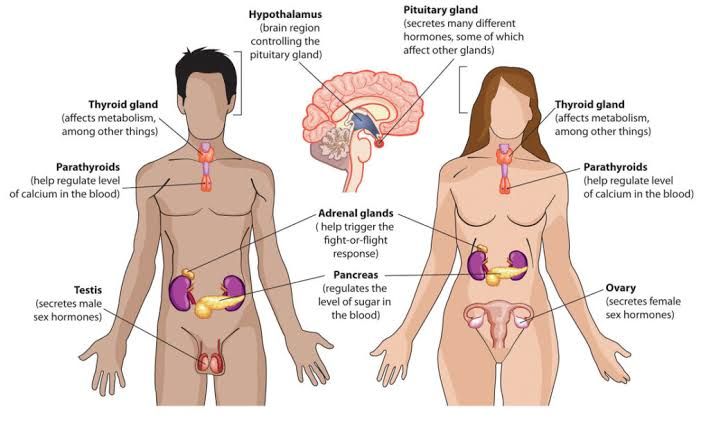
The endocrine system is composed of several glands that produce and secrete hormones, which are vital for regulating various bodily functions. Below is a detailed list of the primary endocrine glands along with their respective functions:
1. Hypothalamus
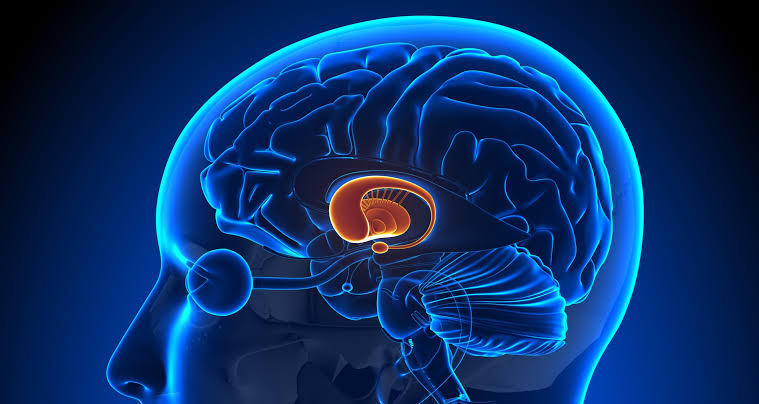
- The hypothalamus is located at the base of the brain and serves as a critical link between the nervous system and the endocrine system. It produces hormones that regulate the pituitary gland’s activity, controlling various bodily functions such as temperature regulation, thirst, hunger, sleep cycles, and emotional responses. Key hormones produced include:
- GHRH (Growth Hormone-Releasing Hormone): Stimulates the release of growth hormone.
- TRH (Thyrotropin-Releasing Hormone): Stimulates the release of thyroid-stimulating hormone.
- CRH (Corticotropin-Releasing Hormone): Stimulates the release of adrenocorticotropic hormone.
- GnRH (Gonadotropin-Releasing Hormone): Stimulates the release of luteinizing hormone and follicle-stimulating hormone.
2. Pituitary Gland
- Often referred to as the “master gland,” the pituitary gland is located just below the hypothalamus. It secretes hormones that influence other endocrine glands. Its key hormones include:
- GH (Growth Hormone): Promotes growth and development.
- TSH (Thyroid-Stimulating Hormone): Stimulates thyroid hormone production.
- ACTH (Adrenocorticotropic Hormone): Stimulates cortisol production from adrenal glands.
- FSH (Follicle-Stimulating Hormone): Regulates reproductive processes in both males and females.
- LH (Luteinizing Hormone): Triggers ovulation in females and testosterone production in males.
3. Pineal Gland
- Located deep within the brain, the pineal gland produces melatonin, a hormone that regulates sleep-wake cycles by responding to light exposure.
4. Thyroid Gland
- Situated in front of the neck, below the larynx, this butterfly-shaped gland produces thyroid hormones (T3 and T4) that regulate metabolism, energy levels, and overall growth and development. It also produces calcitonin, which helps regulate calcium levels in the blood.
5. Parathyroid Glands
- These four small glands are located on the back of the thyroid gland and produce parathyroid hormone (PTH), which plays a crucial role in regulating calcium levels in conjunction with calcitonin from the thyroid.
6. Thymus
- Located in the upper chest behind the sternum, this gland is responsible for producing thymosin, which is essential for T-cell development and immune function.
7. Adrenal Glands
- Positioned atop each kidney, these glands consist of two parts:
- The outer cortex produces corticosteroids (such as cortisol) that help regulate metabolism and stress response.
- The inner medulla produces catecholamines like adrenaline (epinephrine) that prepare the body for fight-or-flight responses.
8. Pancreas
- This organ has both endocrine and exocrine functions; its endocrine component includes clusters of cells called Islets of Langerhans that produce insulin (which lowers blood sugar) and glucagon (which raises blood sugar), thus playing a vital role in glucose metabolism.
9. Ovaries
- In females, ovaries are responsible for producing estrogen and progesterone, hormones critical for regulating menstrual cycles, pregnancy, and secondary sexual characteristics.
10. Testes
- In males, testes produce testosterone, which is essential for sperm production as well as developing male secondary sexual characteristics.
These glands work together to maintain homeostasis through hormonal signaling pathways that affect nearly every aspect of human physiology.
Structure of Endocrine Glands
The endocrine glands are specialized organs that play a crucial role in the endocrine system by producing and releasing hormones directly into the bloodstream. The structure of these glands is characterized by several key features:
1. Glandular Tissue Composition
Endocrine glands are primarily composed of glandular epithelial tissue, which is specialized for secretion. This tissue consists of cells that are organized to form clusters or sheets, allowing for efficient hormone production and release.
2. Vascularization
Endocrine glands are highly vascularized, meaning they have a rich supply of blood vessels. This extensive network of capillaries facilitates the rapid transport of hormones into the bloodstream once they are secreted. The proximity of blood vessels to hormone-producing cells ensures that hormones can quickly reach their target organs and tissues.
3. Lack of Ducts
Unlike exocrine glands, which secrete their products through ducts to specific sites (such as sweat or salivary glands), endocrine glands release hormones directly into the bloodstream without the use of ducts. This direct secretion allows for widespread distribution throughout the body.
4. Specific Hormone Production
Each type of endocrine gland produces specific hormones tailored to regulate various physiological processes. For example:
- The pituitary gland, often referred to as the “master gland,” produces multiple hormones that control other endocrine glands.
- The thyroid gland produces thyroid hormones (T3 and T4) that regulate metabolism.
- The adrenal glands produce corticosteroids and adrenaline, which help manage stress responses.
5. Cellular Arrangement
The arrangement of cells within endocrine glands can vary:
- In some glands, such as the pancreas, clusters of hormone-producing cells (islets of Langerhans) are interspersed among other types of cells involved in digestion.
- In others, like the adrenal cortex, there are distinct layers (zona glomerulosa, zona fasciculata, and zona reticularis) each responsible for producing different classes of hormones.
6. Regulation Mechanisms
The activity and secretion from endocrine glands are regulated by various mechanisms including feedback loops (both negative and positive feedback). For instance, low levels of thyroid hormone in the blood stimulate the hypothalamus to release thyrotropin-releasing hormone (TRH), which in turn prompts the pituitary gland to release thyroid-stimulating hormone (TSH), stimulating the thyroid gland to produce more thyroid hormones.
In summary, endocrine glands possess a unique structure characterized by specialized epithelial tissue for hormone production, extensive vascularization for efficient hormone delivery, direct secretion into circulation without ducts, specific cellular arrangements tailored to their functions, and regulatory mechanisms that maintain hormonal balance within the body.
An overview of Location, Relation, Blood and Nerve Supply and Lymphatic Drainage of Endocrine Glands
Location of Endocrine Glands
The endocrine glands are distributed throughout the body, each located in specific anatomical regions:
- Hypothalamus: Located at the base of the brain, near the optic chiasm.
- Pineal Body: Situated below the corpus callosum in the middle of the brain.
- Pituitary Gland: Found at the base of the brain, just below the hypothalamus.
- Thyroid Gland: Located in front of the neck, below the larynx.
- Parathyroid Glands: Attached to the posterior surface of the thyroid gland; typically four small glands.
- Thymus: Positioned in the upper part of the chest, behind the sternum and between the lungs.
- Adrenal Glands: Located on top of each kidney.
- Pancreas: Situated across the back of the abdomen, behind the stomach.
- Ovaries: Found on both sides of the uterus in females.
- Testes: Located in a pouch outside of a male’s body (the scrotum).
Relation to Other Structures
- The hypothalamus is closely related to both the pituitary gland and various parts of the nervous system, acting as a link between them.
- The pituitary gland is often referred to as the “master gland” because it regulates other endocrine glands and is connected to both hypothalamic hormones and various target organs throughout the body.
- The thyroid and parathyroid glands are anatomically adjacent, with parathyroids embedded within or attached to thyroid tissue.
- The thymus is located anteriorly to major blood vessels such as aorta and superior vena cava, while also being related to lymphatic structures due to its role in immune function.
- Adrenal glands sit atop each kidney and are closely associated with renal blood supply.
Blood Supply
Each endocrine gland has a distinct blood supply that facilitates hormone release into circulation:
- Hypothalamus: Receives blood from branches of internal carotid arteries and supplies hormones directly to pituitary via portal circulation (hypophyseal portal system).
- Pineal Body: Vascularized by branches from posterior cerebral artery and superior cerebellar artery.
- Pituitary Gland: Blood supplied by hypophyseal arteries; receives dual blood supply from both arterial systems (superior and inferior).
- Thyroid Gland: Supplied by superior thyroid artery (from external carotid) and inferior thyroid artery (from subclavian artery).
- Parathyroid Glands: Receive blood from inferior thyroid arteries primarily but can also receive contributions from superior thyroid arteries.
- Thymus: Blood supply comes mainly from internal thoracic artery and its branches (anterior intercostal arteries).
- Adrenal Glands: Supplied by three main arteries – superior suprarenal (from phrenic), middle suprarenal (from abdominal aorta), and inferior suprarenal (from renal artery).
- Pancreas: Receives blood through pancreatic branches from splenic artery, gastroduodenal artery, and superior mesenteric artery.
- Ovaries: Supplied by ovarian arteries originating from abdominal aorta; also receive some blood supply from uterine arteries.
- Testes: Blood supplied by testicular arteries that arise from abdominal aorta.
Nerve Supply
The nerve innervation varies among endocrine glands:
- Hypothalamus & Pituitary Gland: Innervated by autonomic fibers that influence hormone secretion based on physiological needs; hypothalamus receives extensive neural input from various brain regions.
- Pineal Body: Primarily innervated by sympathetic fibers originating from cervical ganglia which modulate melatonin secretion based on light exposure.
- Thyroid & Parathyroid Glands: Receive autonomic innervation primarily through sympathetic fibers which influence vascular tone but have limited direct control over hormone secretion compared to other glands.
- Thymus & Adrenal Glands: Thymus has limited nerve supply while adrenal medulla receives sympathetic innervation directly influencing catecholamine release during stress responses.
- Pancreas & Gonads (Ovaries/Testes): Pancreas has dual innervation via both sympathetic and parasympathetic fibers affecting insulin secretion; gonads receive autonomic nerve fibers that regulate reproductive hormone production.
Lymphatic Drainage
Lymphatic drainage plays an essential role in maintaining fluid balance and immune function for endocrine glands:
- Hypothalamus & Pituitary Gland: Drained into deep cervical lymph nodes via lymphatic vessels associated with surrounding tissues.
- Pineal Body & Thyroid/Parathyroid Glands: Lymphatic drainage occurs through pretracheal nodes for thyroid/parathyroid; pineal drainage is less defined due to its deep location but likely drains into cervical nodes indirectly via surrounding structures.
- Thymus: Drains into tracheobronchial lymph nodes located near major airways in thorax due to its central position within thoracic cavity.
- Adrenal Glands: Lymphatic vessels drain into lumbar lymph nodes along with renal drainage pathways due to their anatomical proximity to kidneys.
- Pancreas: Drains into pancreaticoduodenal lymph nodes before reaching celiac lymph nodes situated around major abdominal vessels; important for digestive functions as well as hormonal regulation through insulin/glucagon balance.
- Gonads: Ovaries drain into para-aortic lymph nodes while testes drain into inguinal lymph nodes before reaching lumbar region.