
Sphingolipid Metabolism and Their Disorders (Sphingolipidoses)
Overview of Sphingolipid Metabolism
Sphingolipids are a complex class of lipids that play critical roles in cellular functions, including signaling, cell recognition, and membrane structure. The metabolism of sphingolipids involves several key bioactive molecules, including sphingosine, ceramide, sphingosine-1-phosphate (S1P), and ceramide-1-phosphate. These molecules are interconverted through various enzymatic pathways, which are tightly regulated and localized within specific subcellular compartments.
The primary pathway begins with the synthesis of ceramide from palmitoyl-CoA and serine via the enzyme serine palmitoyltransferase. Ceramide can then be converted into sphingosine through the action of ceramidases or further metabolized to form S1P by sphingosine kinases. Each of these metabolites has distinct biological functions; for example, S1P is involved in promoting cell survival and proliferation, while ceramide is often associated with apoptosis.
Key Enzymes in Sphingolipid Metabolism
Several enzymes are crucial for the metabolism of sphingolipids:
- Serine Palmitoyltransferase (SPT): Initiates the synthesis of sphingolipids by combining serine and palmitoyl-CoA.
- Ceramidases: Hydrolyze ceramide into sphingosine.
- Sphingosine Kinases: Convert sphingosine to S1P.
- Ceramide Synthases (CerSs): Responsible for the formation of various ceramide species from fatty acyl-CoA and sphingosine.
These enzymes not only facilitate the conversion between different forms of sphingolipids but also regulate their levels within cells, impacting numerous cellular processes such as growth regulation, apoptosis, inflammation, and immune responses.
Disorders Related to Sphingolipid Metabolism (Sphingolipidoses)
Sphingolipid metabolism disorders primarily manifest as a group of inherited metabolic diseases known as sphingolipidoses. These conditions arise due to defects in lysosomal enzymes responsible for degrading specific sphingolipids. The accumulation of undegraded substrates leads to cellular dysfunction and various clinical symptoms.
Common types of sphingolipidoses include:
- Gaucher Disease: Caused by a deficiency in glucocerebrosidase, leading to the accumulation of glucocerebroside primarily in macrophages. Symptoms may include splenomegaly, anemia, bone pain, and increased risk of certain cancers.
- Fabry Disease: Results from a deficiency in alpha-galactosidase A, causing an accumulation of globotriaosylceramide. Patients may experience pain crises, skin lesions (angiokeratomas), kidney dysfunction, and cardiovascular issues.
- Tay-Sachs Disease: Due to a deficiency in hexosaminidase A enzyme leading to GM2 ganglioside accumulation in neurons. This disorder is characterized by neurodegeneration resulting in developmental delays and early mortality.
- Krabbe Disease: Caused by a deficiency in galactocerebrosidase leading to the accumulation of psychosine which is toxic to oligodendrocytes; it results in severe neurological impairment.
- Niemann-Pick Disease: Associated with defects in acid sphingomyelinase leading to the accumulation of sphingomyelin; it presents with hepatosplenomegaly and neurological decline.
The management strategies for these disorders typically involve symptomatic treatment along with specific therapies such as enzyme replacement therapy (ERT), substrate reduction therapy (SRT), gene therapy approaches, or hematopoietic stem cell transplantation depending on the specific condition.
Understanding these metabolic pathways is crucial for developing targeted therapies aimed at mitigating symptoms or correcting underlying biochemical defects associated with these disorders.
Biochemical Bases of Huntington Disease
Huntington’s disease (HD) is a hereditary neurodegenerative disorder characterized by progressive motor dysfunction, cognitive decline, and psychiatric symptoms. The biochemical basis of HD primarily revolves around the mutation in the huntingtin gene (HTT), which leads to the production of an abnormal form of the huntingtin protein. This section will explore the key biochemical mechanisms involved in HD.
1. Genetic Mutation and Protein Misfolding
The primary cause of Huntington’s disease is a CAG trinucleotide repeat expansion in the HTT gene located on chromosome 4. In healthy individuals, this gene typically contains between 10 to 35 CAG repeats. However, individuals with HD have 40 or more repeats, leading to an elongated polyglutamine (polyQ) tract in the N-terminal region of the huntingtin protein. The presence of this expanded polyQ tract results in misfolding of the huntingtin protein, which is believed to be toxic to neurons.
The misfolded mutant huntingtin (mutHTT) can aggregate into insoluble inclusions within neurons, disrupting normal cellular functions. These aggregates are often found in neuronal nuclei and cytoplasm and are associated with neurodegeneration.
2. Gain-of-Function Mechanisms
Research indicates that mutHTT exerts a deleterious gain-of-function effect rather than simply losing its normal function. This means that the mutated protein not only fails to perform its usual roles but also actively contributes to neuronal toxicity through several mechanisms:
- Protein Aggregation: The accumulation of mutHTT aggregates interferes with various cellular processes, including transcriptional regulation and protein degradation pathways.
- Transcriptional Dysregulation: MutHTT has been shown to interact abnormally with transcription factors and other proteins involved in gene expression, leading to altered transcriptional profiles that contribute to cell death.
- Mitochondrial Dysfunction: Mutant huntingtin disrupts mitochondrial function by impairing energy metabolism and increasing oxidative stress within neurons. This can lead to increased production of reactive oxygen species (ROS), further exacerbating neuronal damage.
3. Neurotoxicity Pathways
Several biochemical pathways have been implicated in the neurotoxicity associated with HD:
- Caspase Activation: MutHTT can activate caspases, which are enzymes that play essential roles in programmed cell death (apoptosis). This activation can lead to increased neuronal death.
- Proteasome Inhibition: The accumulation of mutHTT aggregates can inhibit proteasome activity, which is crucial for degrading damaged or misfolded proteins. This inhibition leads to further accumulation of toxic proteins within cells.
- Altered Calcium Homeostasis: Mutant huntingtin may disrupt calcium signaling pathways, resulting in dysregulated intracellular calcium levels that can trigger apoptosis or necrosis.
4. Selective Vulnerability of Neurons
One notable aspect of Huntington’s disease is its selective impact on certain types of neurons, particularly striatal medium spiny neurons (MSNs). These neurons are particularly vulnerable due to their high metabolic demands and specific synaptic connections that may be disrupted by mutHTT aggregation and toxicity.
The loss of MSNs leads to significant motor dysfunction characteristic of HD as these neurons play critical roles in coordinating movement through their connections with other brain regions such as the substantia nigra and globus pallidus.
5. Current Therapeutic Approaches
Despite extensive research into the biochemical underpinnings of Huntington’s disease, effective disease-modifying treatments remain elusive. Current therapeutic strategies focus primarily on symptomatic relief rather than addressing the underlying causes at a molecular level. Approaches include pharmacological interventions aimed at managing chorea and psychiatric symptoms but do not halt or reverse neurodegeneration caused by mutHTT.
In summary, Huntington’s disease arises from a complex interplay between genetic mutations leading to abnormal protein behavior, resulting in neurotoxic effects that selectively target vulnerable neuronal populations. Understanding these biochemical bases is crucial for developing targeted therapies aimed at mitigating or reversing the effects of this devastating disorder.
Biochemical Bases of Alzheimer Disease
Alzheimer’s disease (AD) is a complex neurodegenerative disorder characterized by specific biochemical changes in the brain. Understanding these biochemical bases is crucial for developing effective diagnostic and therapeutic strategies. The primary components involved in the pathology of AD include amyloid-beta (Aβ) plaques, tau protein tangles, neuroinflammation, and neuronal loss.
1. Amyloid-Beta Accumulation
At the core of Alzheimer’s pathology is the accumulation of amyloid-beta peptides, which are derived from the proteolytic cleavage of the amyloid precursor protein (APP). APP is a transmembrane protein whose exact function remains unclear but is believed to play a role in neuronal development. The cleavage of APP is mediated by enzymes known as secretases, which include alpha-secretase, beta-secretase, and gamma-secretase. In healthy brains, alpha-secretase cleaves APP in a manner that prevents Aβ formation; however, when beta-secretase predominates, it leads to the production of Aβ peptides.
These Aβ peptides can exist as monomers but tend to aggregate into oligomers and eventually form insoluble fibrils that constitute amyloid plaques. These plaques are found extracellularly around neurons and are associated with neurotoxicity and synaptic dysfunction. The aggregation process involves a conformational change where soluble Aβ monomers transition into beta-sheet-rich structures that promote fibril formation.
2. Tau Protein Pathology
In addition to amyloid-beta accumulation, tau protein abnormalities play a significant role in Alzheimer’s disease. Tau is a microtubule-associated protein that stabilizes microtubules within neurons. In AD, tau becomes hyperphosphorylated due to dysregulation of kinases and phosphatases responsible for its phosphorylation state. This hyperphosphorylation causes tau to detach from microtubules and aggregate into paired helical filaments that form neurofibrillary tangles inside neurons.
These tangles disrupt normal cellular function and contribute to neuronal death. The presence of both amyloid plaques and neurofibrillary tangles correlates strongly with cognitive decline in AD patients.
3. Neuroinflammation
Neuroinflammation is another critical aspect of Alzheimer’s disease pathology. It involves an immune response within the brain characterized by activation of microglia (the resident immune cells) and astrocytes (supportive glial cells). In response to amyloid deposits, microglia become activated and release pro-inflammatory cytokines such as interleukin-1 beta (IL-1β), tumor necrosis factor-alpha (TNF-α), and others.
This inflammatory response can exacerbate neuronal damage and contribute to synaptic dysfunction. While inflammation may initially serve a protective role against toxic aggregates like Aβ, chronic inflammation ultimately leads to further neurodegeneration.
4. Neuronal Loss and Brain Atrophy
The biochemical processes described above culminate in significant neuronal loss and brain atrophy, particularly affecting regions such as the temporal lobe, parietal lobe, frontal cortex, and cingulate gyrus. This degeneration manifests clinically as memory loss, cognitive decline, and other symptoms associated with dementia.
The interplay between amyloid-beta accumulation, tau pathology, neuroinflammation, and subsequent neuronal loss forms a complex cascade that characterizes Alzheimer’s disease progression. Despite advances in understanding these mechanisms, there remains an urgent need for biomarkers that can facilitate early diagnosis before clinical symptoms appear.
In summary, the biochemical bases of Alzheimer’s disease involve the accumulation of amyloid-beta plaques due to abnormal processing of APP; hyperphosphorylation of tau leading to neurofibrillary tangles; neuroinflammatory responses contributing to neuronal damage; and resultant neuronal loss causing cognitive decline.
The Role of Biochemical Mechanisms in Brain Damage Due to Stroke
Introduction to Stroke and Its Impact on the Brain
Stroke is a significant medical emergency characterized by the sudden interruption of blood supply to the brain, leading to neuronal injury and death. It primarily manifests in two forms: ischemic stroke, which accounts for approximately 80-85% of cases, and hemorrhagic stroke. The biochemical mechanisms underlying brain damage during a stroke are complex and multifaceted, involving various cellular processes that contribute to neuronal loss and subsequent functional impairment.
Biochemical Mechanisms Involved in Ischemic Stroke
- Excitotoxicity: One of the primary biochemical mechanisms involved in ischemic stroke is excitotoxicity, which occurs when there is an excessive release of neurotransmitters, particularly glutamate. During ischemia, the lack of oxygen and glucose leads to impaired energy metabolism in neurons. This results in the failure of ion pumps (such as Na+/K+ ATPase), causing an influx of sodium ions and depolarization of the neuronal membrane. The excessive depolarization triggers the release of glutamate from presynaptic terminals, which binds to NMDA receptors on adjacent neurons. This overstimulation leads to increased calcium influx into cells, activating destructive pathways that result in cell death.
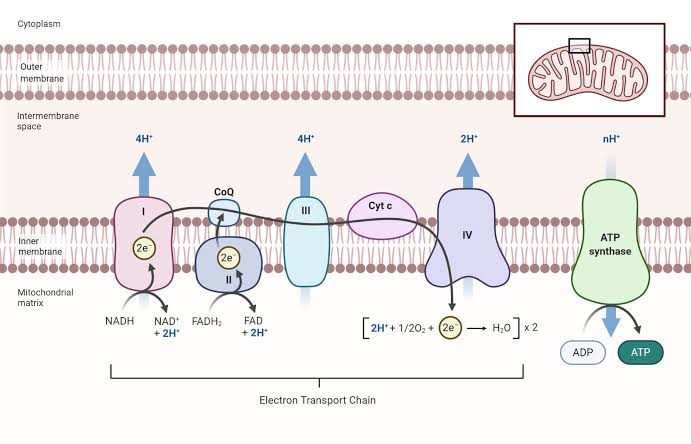
- Mitochondrial Dysfunction: Mitochondria play a crucial role in energy production through oxidative phosphorylation. In conditions of ischemia, mitochondrial function is severely compromised due to reduced oxygen availability. This dysfunction leads to decreased ATP production and increased production of reactive oxygen species (ROS). Elevated ROS levels can cause oxidative stress, damaging cellular components such as lipids, proteins, and DNA. Mitochondrial failure also activates apoptotic pathways, further contributing to neuronal loss.
- Inflammation: Following a stroke event, inflammatory responses are activated as part of the body’s attempt to repair tissue damage. However, this response can be detrimental if it becomes chronic or excessive. Activated microglia and infiltrating immune cells release pro-inflammatory cytokines (e.g., TNF-alpha, IL-1β) that exacerbate neuronal injury by promoting apoptosis and necrosis. The inflammatory milieu can also lead to blood-brain barrier disruption, allowing further infiltration of harmful substances into the brain parenchyma.
- Cell Death Pathways: Various cell death mechanisms are triggered during a stroke event:
- Apoptosis: A programmed form of cell death characterized by specific morphological changes and energy-dependent processes.
- Necrosis: A form of uncontrolled cell death resulting from acute cellular injury.
- Autophagy: While often protective under normal circumstances by removing damaged organelles and proteins, excessive autophagy can lead to cell death under pathological conditions.
- Pyroptosis: A highly inflammatory form of programmed cell death associated with caspase-1 activation.
- Metabolic Disturbances: Ischemia leads to metabolic disturbances characterized by an imbalance between energy demand and supply. The depletion of glucose stores results in anaerobic metabolism, producing lactate and leading to acidosis within affected tissues. This metabolic crisis contributes further to neuronal dysfunction and death.
- Role of Biomarkers: Biochemical markers such as S-100 protein and neuron-specific enolase have been identified as potential indicators for assessing brain injury severity post-stroke. These markers can provide insights into ongoing biochemical processes within the brain following ischemic events.
Conclusion
In summary, the biochemical mechanisms involved in brain damage due to stroke are intricate and involve multiple pathways leading to neuronal injury and death. Understanding these mechanisms is crucial for developing targeted therapeutic strategies aimed at mitigating brain damage during acute stroke management.