Autoregulation of Renal Blood Flow
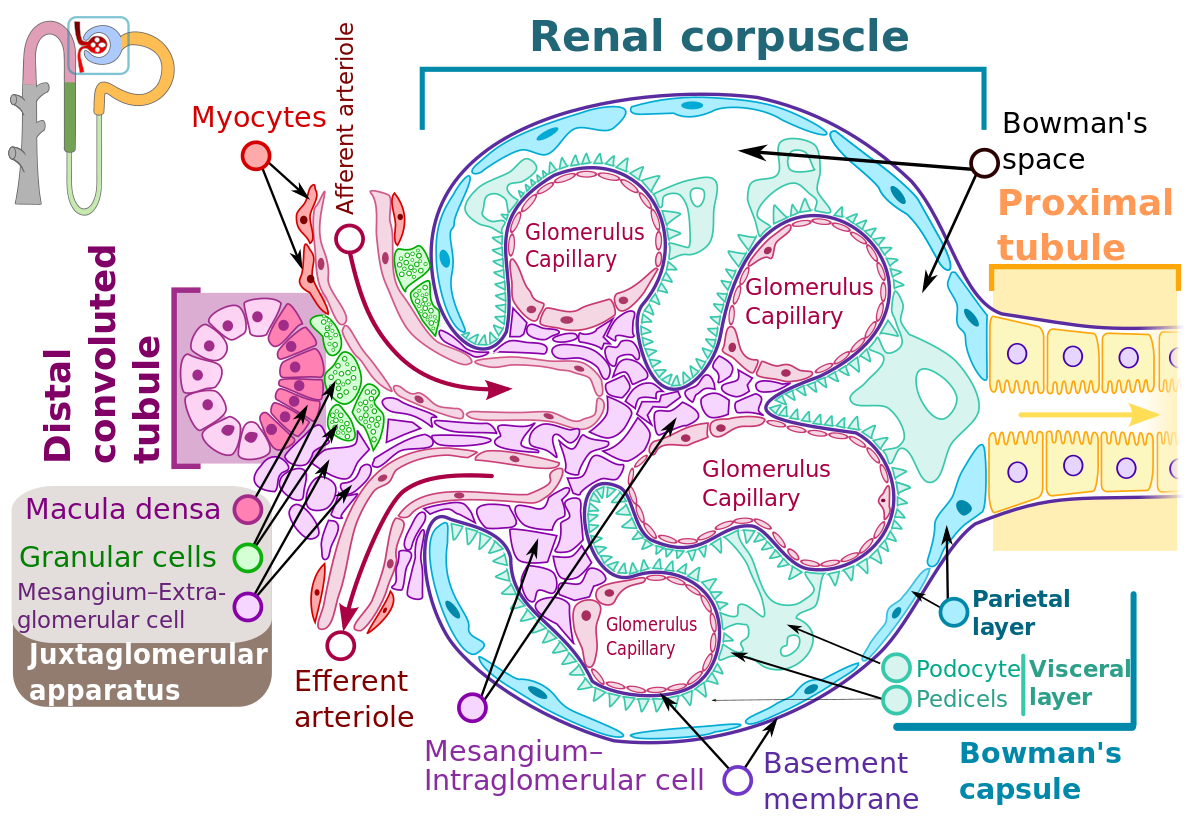
The kidneys possess a remarkable ability to maintain a relatively constant renal blood flow (RBF) and glomerular filtration rate (GFR) despite fluctuations in systemic arterial pressure. This capability is primarily mediated through two mechanisms: the myogenic response and tubuloglomerular feedback.
- Myogenic Response: This mechanism involves the contraction of afferent arterioles in response to increases in transmural pressure. When arterial pressure rises, the smooth muscle cells in the walls of these arterioles stretch, triggering a reflexive contraction that reduces blood flow into the glomeruli. This response helps protect the delicate glomerular capillaries from potential damage due to excessive pressure. The myogenic response is particularly effective at compensating for rapid changes in arterial pressure, acting within seconds to stabilize RBF.
- Range of Autoregulation: In healthy individuals, RBF remains stable across a range of mean arterial pressures (MAP). For instance, studies indicate that RBF can be maintained within normal limits even when MAP varies between 70 mmHg and 130 mmHg in humans. However, chronic conditions such as hypertension can shift this autoregulatory range to higher pressures, meaning that while RBF may still appear normal at rest, it becomes less capable of responding appropriately to acute changes in blood pressure.
- Impact of Hypertension: In hypertensive states, there is often an increase in renal vascular resistance due to structural changes such as hypertrophy of preglomerular arterioles. While baseline RBF and GFR may remain normal initially, prolonged hypertension can lead to significant alterations in autoregulation, increasing the risk for renal injury over time.
Tubuloglomerular Feedback
Tubuloglomerular feedback (TGF) is another critical mechanism by which the kidneys regulate GFR and maintain homeostasis.
- Mechanism Overview: TGF operates through a feedback loop involving the macula densa cells located at the junction of the thick ascending limb of the loop of Henle and distal convoluted tubule. These cells sense sodium chloride (NaCl) concentrations in the tubular fluid.
- Response to Sodium Chloride Levels: When NaCl concentration increases—indicating higher flow rates or increased GFR—the macula densa cells respond by releasing adenosine and other signaling molecules that cause constriction of the afferent arteriole. This constriction reduces blood flow into the glomerulus, thereby decreasing GFR back toward normal levels.
- Negative Feedback Loop: Conversely, if NaCl concentration decreases—suggesting lower GFR—the macula densa signals for vasodilation of the afferent arteriole, allowing more blood flow into the glomerulus and increasing GFR. This negative feedback mechanism ensures that GFR remains within an optimal range for effective kidney function.
- Importance for Kidney Function: TGF plays a crucial role not only in regulating GFR but also in maintaining electrolyte balance and overall fluid homeostasis within the body. It acts more slowly than myogenic responses but is essential for long-term regulation under varying physiological conditions.
In summary, both autoregulation through myogenic responses and tubuloglomerular feedback are vital for maintaining kidney function under varying systemic pressures and ensuring stable filtration rates necessary for metabolic waste clearance.
Juxtaglomerular Apparatus and Its Role in the Renin-Angiotensin System
Introduction to the Juxtaglomerular Apparatus
The juxtaglomerular apparatus (JGA) is a specialized structure located in the kidney, specifically at the junction of the afferent arterioles and the glomerulus. It plays a crucial role in regulating renal blood flow and glomerular filtration rate (GFR). The JGA consists of three main cell types: juxtaglomerular cells, macula densa cells, and extraglomerular mesangial cells.
- Juxtaglomerular Cells: These are specialized smooth muscle cells located in the tunica media of the afferent arterioles. They are responsible for synthesizing and secreting renin, an enzyme that initiates the renin-angiotensin system (RAS).
- Macula Densa Cells: Located in the distal convoluted tubule, these cells detect sodium chloride concentration in the tubular fluid. They play a vital role in tubuloglomerular feedback, which helps regulate GFR.
- Extraglomerular Mesangial Cells: These cells are situated between the afferent and efferent arterioles and have contractile properties that help regulate blood flow through these vessels.
Function of the Juxtaglomerular Apparatus
The primary function of the JGA is to maintain homeostasis within the kidney by regulating blood pressure and fluid balance through its involvement in the RAS. The process begins when juxtaglomerular cells sense changes in renal perfusion pressure or sodium chloride concentration:
- Renin Secretion Triggers:
- A decrease in renal perfusion pressure (detected directly by juxtaglomerular cells).
- A decrease in sodium chloride concentration at the macula densa.
- Stimulation from sympathetic nervous system activity via beta-1 adrenergic receptors.
When these conditions are met, juxtaglomerular cells secrete renin into circulation.
The Renin-Angiotensin System (RAS)
Renin plays a pivotal role in initiating the RAS, which is crucial for regulating blood pressure and fluid balance:
- Renin Release: Once released into circulation, renin acts on angiotensinogen, a protein produced by the liver, converting it into angiotensin I.
- Conversion to Angiotensin II: Angiotensin I is then converted to angiotensin II primarily by angiotensin-converting enzyme (ACE), which is found mainly in endothelial cells of blood vessels.
- Effects of Angiotensin II:
- Vasoconstriction: Angiotensin II causes constriction of blood vessels, leading to increased systemic vascular resistance and elevated blood pressure.
- Aldosterone Secretion: It stimulates adrenal glands to release aldosterone, which promotes sodium reabsorption in kidneys, increasing water retention and further elevating blood volume and pressure.
- Antidiuretic Hormone (ADH) Release: Angiotensin II also stimulates thirst centers in the brain and promotes ADH release from posterior pituitary gland, enhancing water reabsorption by kidneys.
- Feedback Mechanism: The increase in blood volume and pressure ultimately leads to improved renal perfusion, which reduces renin secretion through negative feedback mechanisms involving both macula densa signaling and baroreceptor responses.
Clinical Significance
Dysregulation of this system can lead to hypertension or other cardiovascular diseases. For instance, excessive renin secretion can result from conditions like renal artery stenosis or juxtaglomerular cell tumors, leading to secondary hyperaldosteronism characterized by hypertension, hypernatremia (high sodium levels), hypokalemia (low potassium levels), and metabolic alkalosis.
In summary, the juxtaglomerular apparatus is essential for maintaining kidney function through its regulation of renin secretion within the context of the renin-angiotensin system. This intricate relationship highlights how kidneys manage systemic blood pressure and fluid balance effectively.
Glomerulotubular Balance
Glomerulotubular balance (GTB) refers to the kidney’s ability to reabsorb a consistent fraction of the glomerular filtrate as it passes through the renal tubules. This process is crucial for maintaining homeostasis, particularly in regulating fluid and electrolyte balance within the body. GTB acts as a buffer against fluctuations in glomerular filtration rate (GFR), ensuring that changes in urine output do not occur excessively in response to variations in GFR. This mechanism helps prevent overloading of the distal tubules, which could lead to imbalances in fluid and electrolytes.
Mechanism of Action
The process of GTB involves several key components:
- Proximal Tubule Function: The proximal tubule is primarily responsible for reabsorbing approximately 65-70% of the filtered sodium and water. This segment utilizes various transport mechanisms, including active transport for sodium and passive diffusion for water, to reclaim these substances from the filtrate.
- Peritubular Blood Flow: The flow of blood around the renal tubules significantly influences reabsorption rates. Changes in peritubular blood flow can alter the colloid osmotic pressure within the capillaries, impacting how much fluid is drawn back into circulation from the tubular lumen.
- Intratubular Fluid Dynamics: The rate at which fluid flows through the renal tubules also affects reabsorption efficiency. Increased flow rates can enhance solute transport due to greater shear stress on tubular cells, promoting more effective reabsorption processes.
- Tubuloglomerular Feedback: This feedback mechanism allows communication between the distal nephron and glomeruli, where changes in sodium chloride concentration detected by macula densa cells influence GFR adjustments to maintain balance.
Factors Affecting Glomerulotubular Balance
Several physiological and pathological factors can impact GTB:
- Hydration Status: In states of volume expansion or dehydration, GTB may be impaired or enhanced respectively.
- Hormonal Regulation: Hormones such as aldosterone and antidiuretic hormone (ADH) play significant roles in modulating sodium and water reabsorption.
- Pathological Conditions: Diseases such as glomerulonephritis or diabetes mellitus can disrupt normal GTB by damaging glomeruli or altering tubular function.
Clinical Implications
Disruption of glomerulotubular balance can lead to various clinical manifestations:
- Edema: Excess fluid retention due to impaired sodium handling can result in swelling.
- Hypertension: Increased sodium levels may elevate blood pressure.
- Proteinuria: Damage to glomeruli may allow proteins like albumin to leak into urine, indicating a loss of filtering capability.
Diagnosis typically involves urinalysis, blood tests assessing kidney function (such as creatinine levels), imaging studies, and sometimes kidney biopsy to evaluate structural integrity.
In summary, glomerulotubular balance is a vital renal function that ensures efficient reabsorption of fluids and electrolytes while protecting against drastic changes in urine output due to variations in filtration rates.