Breech presentation is a fetal position in which the baby is positioned feet or buttocks first in the uterus, rather than the ideal head-down position. This occurs when the baby’s head is up toward the mother’s chest and its lower body is closest to the birth canal. Breech presentation can complicate delivery, often leading healthcare providers to recommend a cesarean section for safer birth outcomes.
Causes of Breech Presentation
Several factors can contribute to a fetus being in a breech position:
- Uterine Abnormalities: Structural abnormalities of the uterus, such as uterine fibroids or a septate uterus, can restrict space for fetal movement and lead to breech positioning.
- Multiple Pregnancies: In cases of twins or higher-order multiples, there is less room for each fetus to maneuver into a head-down position, increasing the likelihood that at least one will present as breech.
- Amniotic Fluid Levels: Both oligohydramnios (low amniotic fluid) and polyhydramnios (excessive amniotic fluid) can affect fetal positioning. Low fluid levels may restrict movement, while high levels may allow more freedom but also increase instability in positioning.
- Fetal Factors: Certain fetal conditions such as congenital anomalies (e.g., neural tube defects) may influence how a fetus positions itself within the uterus.
- Maternal Factors: Maternal factors such as pelvic shape and size can influence fetal positioning. A narrow pelvis may not provide enough space for optimal positioning.
- Gestational Age: Breech presentations are more common earlier in pregnancy when there is still ample room for movement; however, by term (around 37 weeks), many fetuses typically turn to a vertex position.
- Previous Breech Births: Women who have previously delivered a breech baby may have an increased risk of subsequent pregnancies resulting in breech presentations due to anatomical changes or other factors related to their previous deliveries.
- Placental Location: The location of the placenta (e.g., low-lying placenta or placenta previa) can also impact fetal positioning by restricting space within the uterus.
Types and Positions of Breech Presentation
Understanding the types and positions of breech presentation is crucial for managing delivery options effectively.
1. Complete Breech
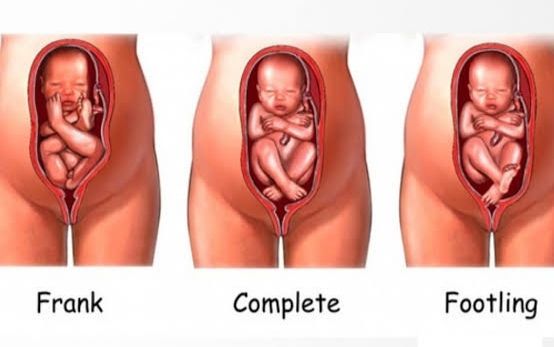
In a complete breech presentation, both of the baby’s knees are bent, and its feet are positioned near its bottom. This means that the baby is sitting cross-legged with its buttocks closest to the birth canal. This position can complicate vaginal delivery but may be more favorable than other breech types if a vaginal birth is attempted.
2. Incomplete Breech
An incomplete breech presentation occurs when one knee is bent while the other leg remains extended. In this case, one foot and the bottom are closest to the birth canal, which can create challenges during delivery due to uneven positioning.
3. Frank Breech
The frank breech position is characterized by the baby’s legs being folded flat against its body with its buttocks closest to the birth canal. The legs are straight up in front of the body, resembling a seated position with feet near the head. This type of breech presentation can pose significant risks during vaginal delivery due to potential complications with shoulder and head delivery.
4. Footling Breech
Footling breech occurs when one or both feet are presenting at the cervix instead of the buttocks. This position can lead to increased risks during labor because it may complicate delivery and increase chances of umbilical cord issues or injury during birth.
Conclusion
Breech presentations account for about 3% to 4% of all full-term pregnancies (39-40 weeks). While many fetuses will turn into a head-down position by 36 weeks, those that remain in a breech position at 37 weeks require careful monitoring and consideration for delivery methods, often leading healthcare providers to recommend cesarean sections due to associated risks with vaginal deliveries.
Complications Associated with Breech Presentation
1. Increased Risk of Birth Asphyxia
One of the most significant risks associated with breech presentation is birth asphyxia. This occurs when the baby does not receive enough oxygen during delivery, which can happen due to the abnormal positioning of the fetus. The head may become trapped in the birth canal while the body is delivered, leading to a lack of oxygen supply.
2. Trauma During Delivery
Breech births can result in physical trauma to both the mother and baby. For the baby, there is a higher risk of injury to the neck and spine during delivery due to improper positioning. For mothers, there may be increased chances of perineal tears or other injuries related to an obstructed labor process.
3. Higher Perinatal Mortality Rates
Studies indicate that breech presentations are associated with higher perinatal mortality rates compared to cephalic presentations. This increased risk can be attributed to complications such as birth asphyxia and trauma, as well as potential congenital malformations that may be more prevalent in breech cases.
4. Increased Incidence of Congenital Malformations
Certain congenital malformations may predispose a fetus to remain in a breech position. These conditions can complicate delivery further and may require specialized care immediately after birth.
5. Need for Cesarean Section
Due to the risks involved with vaginal delivery of a breech baby, many healthcare providers recommend cesarean section (C-section) as a safer alternative. While C-sections are generally safe procedures, they carry their own set of risks including infection, longer recovery times, and complications from anesthesia.
6. Potential for Prolonged Labor
Labor may be prolonged in cases of breech presentation due to difficulties encountered during delivery. This can lead to additional stress on both mother and baby and increase the likelihood of requiring surgical intervention.
7. Fetal Distress
During labor, there is an increased chance of fetal distress in breech presentations due to factors such as umbilical cord compression or inadequate oxygenation resulting from abnormal positioning.
In summary, while some breech presentations may resolve before delivery, those that persist into late pregnancy pose significant risks that necessitate careful monitoring and management strategies by healthcare providers.
Understanding How to Diagnose Breech Presentation
Clinical Suspicion
Diagnosis often begins with clinical suspicion based on physical examinations conducted by healthcare providers. During routine prenatal visits, practitioners may notice signs that indicate a breech position.
- Abdominal Palpation: The provider will palpate (feel) the abdomen to assess the fetus’s position. If the presenting part (the part closest to the cervix) feels irregular and not ballotable (able to be pushed back), or if the fetal head is felt at the fundus (top of the uterus), this may suggest a breech presentation.
- Pelvic Examination: A pelvic exam can also help in diagnosing breech presentation. If the fetal head is not felt in the pelvis, it indicates that the baby may be in a breech position.
- Fetal Heart Rate Monitoring: The location of where fetal heart sounds are heard can provide clues about positioning. If fetal heart tones are detected higher in the abdomen than expected for a cephalic presentation, this may indicate that the fetus is breech.
Ultrasound Confirmation
While clinical assessments provide initial indications, an ultrasound examination is essential for confirming a diagnosis of breech presentation:
- An ultrasound can determine not only whether the fetus is breech but also identify which type of breech presentation it is (e.g., frank breech, complete breech, or footling breech).
- It allows for assessment of other factors such as amniotic fluid levels, placental location, and potential congenital abnormalities.
Timing of Diagnosis
Breech presentation can be common in preterm pregnancies; however, it becomes more significant as pregnancy progresses:
- Preterm Diagnosis (≤36 weeks): Breech positions are often normal findings at this stage since fetuses have more room to move.
- Term Diagnosis (≥37 weeks): If diagnosed at this stage, further evaluation through ultrasound is recommended to assess fetal positioning and plan for delivery options.
In summary, diagnosing breech presentation involves a combination of clinical suspicion through abdominal palpation and pelvic examination followed by confirmation via ultrasound imaging.
Different Ways of Managing Breech Presentation
1. External Cephalic Version (ECV)
External cephalic version is a procedure where a healthcare provider attempts to turn the fetus from a breech position to a head-down (cephalic) position by applying pressure on the mother’s abdomen. This is typically performed around 36-37 weeks of gestation and can be successful in some cases, allowing for a vaginal delivery.
2. Cesarean Section (C-section)
If the baby remains in a breech position at term (after 37 weeks), many healthcare providers recommend a cesarean section as the safest option for delivery. This method reduces the risks associated with vaginal breech delivery, such as birth trauma or asphyxia.
3. Vaginal Breech Birth
In certain circumstances, vaginal delivery may still be considered if the baby is in a breech position. However, this approach carries higher risks compared to cesarean delivery and is generally only attempted if specific criteria are met, including the experience of the healthcare provider and certain fetal conditions.
4. Monitoring and Observation
In some cases, especially if breech presentation is diagnosed before 36 weeks, healthcare providers may choose to monitor the situation closely without immediate intervention, as many fetuses will naturally turn to a head-down position before delivery.
5. Preparation for Potential Complications
Regardless of the chosen management strategy, it is essential for healthcare providers to prepare for potential complications that may arise during labor and delivery due to breech presentation.
The choice of management will depend on various factors including gestational age, fetal health, maternal health history, and preferences regarding childbirth.
Importance of Ultrasound in Breech Presentation
1. Early Detection of Breech Positioning
Ultrasound is crucial for the early identification of breech presentation, which occurs when a fetus is positioned feet or buttocks first instead of head down. Detecting breech positioning before labor allows healthcare providers to plan appropriate interventions, reducing the risk of complications during delivery.
2. Assessment of Fetal Well-being
Ultrasound not only identifies the position of the fetus but also assesses its overall well-being. This includes evaluating amniotic fluid levels and fetal heart rate patterns, which are essential for determining if the fetus can tolerate a vaginal delivery or if a cesarean section is necessary.
3. Planning for Delivery Options
When a breech presentation is detected via ultrasound, healthcare providers can discuss delivery options with the expectant mother. This may include attempting an external cephalic version (ECV) to turn the baby into a head-down position or planning for an elective cesarean section if vaginal delivery poses risks.
4. Reduction of Emergency Situations
By identifying breech presentations before labor begins, ultrasound helps prevent emergency situations that could arise from undiagnosed breech births. This proactive approach minimizes maternal and neonatal morbidity and mortality associated with unexpected breech deliveries.
5. Cost-Effectiveness in Healthcare
Implementing routine ultrasounds for detecting breech presentations can be cost-effective by reducing the number of emergency cesarean sections and associated complications. Studies have shown that universal late-pregnancy ultrasound could significantly decrease healthcare costs related to managing undiagnosed breech presentations.
6. Improved Outcomes for Mothers and Babies
The use of ultrasound in monitoring fetal position contributes to better health outcomes for both mothers and babies. By ensuring that appropriate delivery methods are chosen based on fetal positioning, ultrasound reduces risks associated with vaginal breech deliveries, such as trauma to the baby or maternal complications.
In summary, ultrasound plays a vital role in managing breech presentations by enabling early detection, assessing fetal health, planning delivery options, preventing emergencies, enhancing cost-effectiveness, and improving overall outcomes for mothers and infants.
Role of Cesarean Section in the Management of Breech Presentation
The management of breech presentation often involves careful consideration of delivery methods, with cesarean section being a common recommendation.
Indications for Cesarean Section
Cesarean section is indicated in cases of breech presentation primarily due to safety concerns. Studies have shown that planned cesarean delivery significantly reduces perinatal morbidity and mortality compared to attempted vaginal delivery in breech cases. For instance, cesarean sections can prevent complications such as birth trauma, including brachial plexus injuries and severe neonatal morbidity.
Surgical Considerations
When performing a cesarean section for breech presentation, several surgical techniques are employed to ensure a safe delivery. The procedure typically involves:
- Preoperative Evaluation: Confirming fetal position through ultrasonography and external examination helps determine the best approach for surgery.
- Incision Technique: A transverse incision (Pfannenstiel incision) is commonly used; however, in cases of transverse or oblique presentations, a longitudinal incision may be more appropriate.
- Uterine Incision: The lower uterine segment is incised carefully to facilitate smooth delivery while minimizing maternal complications such as excessive bleeding or injury to surrounding organs.
Benefits of Planned Cesarean Section
Research indicates that planned cesarean sections for singleton breech presentations at term lead to better outcomes:
- Reduced Neonatal Morbidity: Studies have shown a significant reduction in perinatal death and severe neonatal morbidity when opting for planned cesarean over vaginal delivery.
- Lower Risk of Birth Trauma: Although not statistically significant across all studies, there is evidence suggesting reduced rates of birth trauma associated with cesarean deliveries.
Conclusion
In summary, cesarean section plays a crucial role in managing breech presentations by providing a safer alternative to vaginal delivery. It minimizes risks associated with complicated births and ensures better outcomes for both mothers and infants.
Maneuvers in the Delivery of the After-Coming Head and Its Arrest
The delivery of the after-coming head, particularly in cases of breech presentation during childbirth, requires specific maneuvers to ensure a safe and effective delivery. The after-coming head refers to the fetal head that follows the body during a breech birth. Here, we will discuss the various maneuvers involved in this process step by step.
1. Understanding Breech Presentation
Breech presentation occurs when the fetus is positioned with its buttocks or feet closest to the birth canal instead of the head. There are several types of breech presentations: frank breech (buttocks presenting with legs extended), complete breech (buttocks presenting with legs flexed), and footling breech (one or both feet presenting). The management of these presentations varies, especially during delivery.
2. Initial Assessment
Before attempting any maneuvers for delivering the after-coming head, it is crucial to assess the situation thoroughly. This includes evaluating fetal heart rate patterns, maternal condition, and determining if there are any contraindications for vaginal delivery.
3. Maneuvering Techniques
Once it is determined that vaginal delivery can proceed, specific maneuvers are employed:
- McRoberts Maneuver: This involves flexing the mother’s thighs sharply towards her abdomen. This position helps to straighten the sacrum and widen the pelvic inlet, facilitating easier passage of the fetal head.
- Suprapubic Pressure: Applying pressure just above the pubic bone can help guide the fetal head into a more favorable position for delivery. This technique can be used in conjunction with other maneuvers.
- Delivery of Shoulders: Once the body has been delivered up to the shoulders, gentle downward traction is applied to allow one shoulder to emerge followed by rotating it anteriorly (towards the front) so that it can be delivered easily.
- Delivery of Head: After both shoulders have been delivered, care must be taken with delivering the after-coming head:
- If there is difficulty in delivering the head, gentle rotational movements may be employed.
- The “hands-off” approach should be utilized unless necessary; excessive pulling can lead to complications such as shoulder dystocia.
4. Arrest of Delivery
In some cases, there may be an arrest in delivering the after-coming head due to various reasons such as tight nuchal cord or inadequate uterine contractions. In such situations:
- Repositioning: Changing maternal positions (e.g., all-fours position) may relieve pressure on the umbilical cord and facilitate further descent.
- Nuchal Cord Management: If a nuchal cord (cord wrapped around neck) is identified, careful unwrapping should be performed if possible without causing undue stress on both mother and fetus.
- Assisted Delivery Techniques: If manual techniques fail and there is significant delay or distress:
- Consideration for operative interventions like forceps or vacuum extraction may be warranted.
- In extreme cases where vaginal delivery poses risks, cesarean section may become necessary.
5. Post-delivery Care
After successfully delivering both body and head:
- Assess newborn for any signs of distress.
- Ensure proper airway management since neonates born via breech presentation may have increased risk for respiratory issues.
In summary, managing an after-coming head during a breech delivery involves careful assessment and execution of specific maneuvers aimed at ensuring safety for both mother and child while being prepared for potential complications that may arise during this delicate process.
Management of Breech Cases
The management of breech cases involves careful assessment and consideration of delivery options, particularly as the pregnancy progresses past 36 weeks.
Diagnosis of Breech Presentation
- Clinical Assessment: Healthcare providers typically perform abdominal palpation during prenatal visits to assess fetal position. If the presenting part feels irregular or if the fetal head is not felt in the pelvis, breech presentation may be suspected.
- Ultrasound Confirmation: An ultrasound examination is essential for confirming breech presentation, determining the type (e.g., frank, complete, or footling), assessing fetal well-being, and checking for any potential complications such as placenta previa or congenital abnormalities.
Options for Management
- External Cephalic Version (ECV):
- ECV is a procedure performed around 37 weeks gestation where a healthcare provider attempts to turn the fetus from a breech position to a head-down position through abdominal manipulation.
- ECV has been shown to decrease the incidence of breech presentation at term and reduce the need for elective cesarean sections.
- It is important to evaluate contraindications before attempting ECV, such as uterine abnormalities, certain placental issues, or fetal distress.
- Counseling on Delivery Options:
- If ECV is declined or unsuccessful, healthcare providers should counsel patients on the risks and benefits of planned vaginal birth versus elective cesarean section (ELCS).
- Vaginal breech delivery can be attempted in select cases but carries higher risks compared to cesarean delivery. Providers must discuss these risks with patients thoroughly.
- Elective Cesarean Section (ELCS):
- If a baby remains in a breech position at term (after 37 weeks), an elective cesarean section is often recommended due to lower associated risks compared to vaginal delivery.
- Studies indicate that perinatal mortality rates are significantly lower with ELCS compared to planned vaginal breech births.
- Monitoring During Labor:
- If a vaginal birth is attempted despite breech presentation, continuous monitoring of both maternal and fetal health is critical.
- Be prepared for emergency interventions if complications arise during labor.
- Postnatal Care:
- Regardless of delivery method, close monitoring of both mother and baby post-delivery is essential to address any immediate concerns that may arise from either type of birth.
By following these steps and ensuring thorough communication between healthcare providers and expectant mothers, management strategies for breech cases can be effectively implemented to optimize outcomes for both mother and child.