Understanding the Variant Definitions of Skin Lesions in Children
The classification and understanding of skin lesions in children are crucial for accurate diagnosis and effective management. Skin lesions can be categorized based on their characteristics, clinical behavior, and underlying pathology. Here’s a detailed exploration of the various types of skin lesions commonly encountered in the pediatric population.
1. Vascular Lesions
Vascular lesions are primarily divided into two categories: tumors and malformations.
- Hemangiomas: These are benign tumors resulting from hyperplastic endothelial cells. They are the most common vascular tumors in infants, affecting up to 10% of this population. Hemangiomas typically present as well-demarcated, flat erythematous patches shortly after birth, followed by a phase of rapid growth for about six months before they begin to involute. There are two main types:
- Infantile Hemangiomas: Characterized by a three-phase growth pattern (proliferation, quiescence, involution), these lesions usually complete involution by age four.
- Congenital Hemangiomas: Present at birth and may not follow the same involution pattern as infantile hemangiomas.
- Other Vascular Malformations: These include conditions like arteriovenous malformations and venous malformations that do not undergo spontaneous regression and may require different management strategies.
2. Cystic Lesions
Cystic lesions in children often arise from developmental anomalies or obstruction of sebaceous glands. Common examples include:
- Epidermoid Cysts: These are benign cysts filled with keratin that can occur anywhere on the body.
- Pilar Cysts: Typically found on the scalp, these cysts arise from hair follicles.
- Sebaceous Cysts: Often associated with sebaceous glands, these can become inflamed or infected.
These cysts generally require surgical intervention only if symptomatic or causing cosmetic concerns.
3. Pigmented Lesions
Pigmented lesions vary widely in their presentation and potential for malignancy:
- Nevi (Moles): Commonly seen in children, nevi can be classified as congenital or acquired. While most nevi are benign, changes in size, shape, or color warrant further evaluation due to the risk of melanoma.
- Melanocytic Nevi: These include common moles (junctional nevi) and atypical moles (dysplastic nevi), which have a higher risk for malignant transformation.
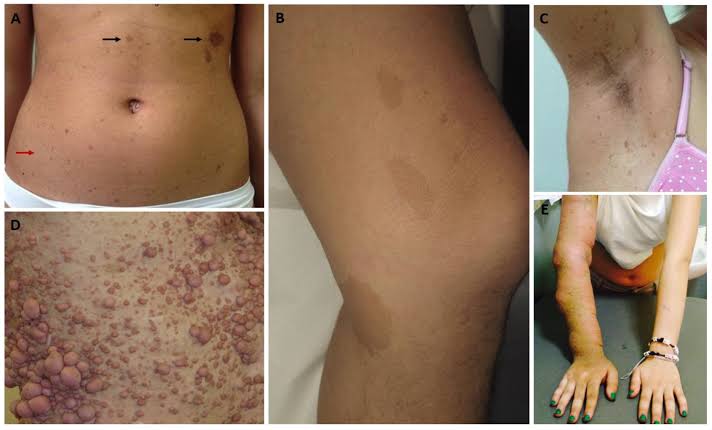
- Other Pigmented Lesions: Conditions such as café-au-lait spots or lentigines may also be observed; while typically benign, they can sometimes indicate underlying syndromes (e.g., neurofibromatosis).
4. Soft Tissue Tumors
Soft tissue tumors encompass a variety of benign and malignant entities:
- Infantile Digital Fibromatosis: This lesion is characterized by firm nodules on fingers or toes that may regress spontaneously but can also recur after excision.
- Juvenile Xanthogranuloma (JXG): A benign tumor presenting as dome-shaped papules that usually resolve without treatment within several years.
These soft tissue tumors often require careful monitoring due to their potential for spontaneous regression versus the need for surgical intervention based on functional impairment.
In summary, understanding the variant definitions of skin lesions in children involves recognizing their types—vascular, cystic, pigmented, and soft tissue—and knowing their clinical behaviors and management options. Accurate diagnosis is essential to determine whether observation or intervention is necessary.
Pathophysiology of Exanthems
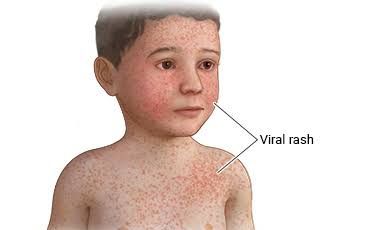
Exanthems are widespread rashes that often accompany viral infections. The pathophysiology of exanthems involves a complex interplay between the virus, the host’s immune response, and the skin’s physiological processes. Understanding this pathophysiology requires examining how viruses induce rashes and how the body responds to these infections.
Viral Infection Mechanism
- Entry and Replication: Viruses that cause exanthems typically enter the body through mucosal surfaces (e.g., respiratory tract) or direct contact with infected individuals. Once inside, they replicate in local tissues, often leading to systemic infection.
- Viral Spread: After initial replication, viruses disseminate through the bloodstream (viremia) to various organs, including the skin. This systemic spread is crucial for the development of an exanthem.
- Cell Tropism: Different viruses have specific cell types they infect preferentially. For example, measles virus targets epithelial cells in the respiratory tract and subsequently spreads to skin keratinocytes, leading to characteristic rashes.
Immune Response
- Innate Immune Activation: Upon viral infection, innate immune responses are activated. This includes the release of interferons and other cytokines that help control viral replication but also contribute to inflammation.
- Adaptive Immune Response: The adaptive immune system is engaged as T cells recognize infected cells and B cells produce antibodies against viral antigens. This immune response can lead to further inflammation in the skin.
- Cytokine Release: The activation of immune cells results in a cascade of cytokine release (e.g., TNF-alpha, IL-6), which can increase vascular permeability and promote inflammatory cell infiltration into the skin.
- Rash Development: The combination of direct viral effects on skin cells and immune-mediated damage results in clinical manifestations such as erythema (redness), papules (bumps), or vesicles (blisters). The rash may vary depending on the virus involved and individual host factors.
Specific Viral Pathways
- Measles Virus: Measles causes a characteristic maculopapular rash due to immune-mediated damage to endothelial cells in small blood vessels within the dermis.
- Varicella-Zoster Virus (Chickenpox): This virus leads to vesicular lesions due to direct cytopathic effects on epidermal keratinocytes, resulting in fluid-filled blisters that eventually crust over.
- Rubella Virus: Rubella induces a mild rash through similar mechanisms but is often less severe than measles or chickenpox due to lower levels of inflammatory cytokines produced during infection.
- Other Viruses: Other viruses like parvovirus B19 (fifth disease) or human herpesvirus 6 (roseola) also have unique pathways leading to their respective rashes based on their tropism and immune evasion strategies.
Conclusion
The pathophysiology of exanthems is multifaceted, involving viral entry, replication, systemic spread, and a robust immune response that culminates in characteristic skin manifestations. Understanding these processes is essential for diagnosing and managing viral exanthems effectively.
Main Causes of Viral and Some Bacterial Exanthems
Viral Exanthems
Viral exanthems are rashes that occur as a result of viral infections. These rashes can manifest in various forms, such as spots, bumps, or blotches on the skin, and they often accompany other symptoms associated with viral illnesses. The main viruses responsible for causing viral exanthems include:
- Measles Virus (Rubeola): Measles is a highly contagious viral infection characterized by a distinctive rash that typically starts on the face and spreads downward. It is accompanied by symptoms such as high fever, cough, runny nose, and conjunctivitis.
- Rubella Virus (German Measles): Rubella causes a mild rash that usually begins on the face and spreads to the rest of the body. Symptoms may include mild fever and swollen lymph nodes.
- Varicella-Zoster Virus (Chickenpox): Chickenpox is known for its itchy rash that develops into fluid-filled blisters. It is highly contagious and can lead to serious complications in certain populations.
- Human Parvovirus B19: This virus causes fifth disease, which is characterized by a “slapped cheek” rash in children and can also cause joint pain in adults.
- Herpes Simplex Virus: While primarily known for causing cold sores or genital herpes, HSV can also lead to rashes in certain cases.
- Cytomegalovirus (CMV): CMV can cause a variety of symptoms including fever and fatigue, along with rashes in some individuals.
- Enteroviruses: Certain enteroviruses can lead to rashes as part of their clinical presentation, particularly in children.
- Roseola (Human Herpesvirus 6): This condition typically affects infants and young children, presenting with high fever followed by a sudden rash once the fever subsides.
These viral infections are often spread through respiratory droplets or direct contact with infected individuals, making them highly contagious.
Bacterial Exanthems
While exanthems are predominantly caused by viral infections, some bacterial infections can also present with similar rashes:
- Scarlet Fever (Streptococcus pyogenes): Caused by group A Streptococcus bacteria, scarlet fever presents with a bright red rash that feels like sandpaper and is often accompanied by a sore throat and fever.
- Typhoid Fever (Salmonella typhi): This bacterial infection can lead to rose-colored spots on the abdomen along with systemic symptoms like prolonged fever and gastrointestinal issues.
- Rickettsial Infections: Diseases such as Rocky Mountain spotted fever caused by Rickettsia species can produce rashes along with severe systemic illness.
- Meningococcemia (Neisseria meningitidis): This serious bacterial infection can cause petechial or purpuric rashes due to bleeding under the skin alongside other severe symptoms like high fever and altered mental status.
- Secondary Syphilis (Treponema pallidum): This stage of syphilis presents with a widespread rash that may involve mucous membranes along with systemic symptoms such as lymphadenopathy.
In summary, while viral exanthems are more common than bacterial ones, both types of infections can lead to significant skin manifestations that require medical evaluation for proper diagnosis and management.
Recognizing the Different Presentations of Exanthems
Exanthems are widespread rashes that typically accompany systemic symptoms such as fever, malaise, and headache. They are often caused by viral infections and can present in various ways depending on the specific virus involved. Understanding these presentations is crucial for accurate diagnosis and management.
1. Chickenpox (Varicella)
Chickenpox is characterized by an itchy rash that progresses from macules to vesicles and then to crusts. The rash usually starts on the trunk and face before spreading to other parts of the body. Other symptoms include fever, fatigue, irritability, and loss of appetite. The rash appears in crops over several days, leading to different stages of lesions at any given time.
2. Measles (Rubeola)
Measles presents with a high fever, cough, runny nose, and conjunctivitis followed by a characteristic red-brown rash that typically begins at the hairline and spreads downward over three to five days. Koplik spots—small white lesions inside the mouth—are also a hallmark of measles.
3. Rubella (German Measles)
Rubella features a mild fever and a rash that starts on the face and spreads quickly to the rest of the body within 24 hours. The rash is usually pink or light red and may be less pronounced than in measles. Lymphadenopathy (swollen lymph nodes) is also common.
4. Fifth Disease (Erythema Infectiosum)
Fifth disease is known for its “slapped cheek” appearance in children, where bright red cheeks are followed by a lacy, reticular rash on the body and limbs. It often occurs with mild flu-like symptoms but can be more severe in pregnant women or individuals with weakened immune systems.
5. Roseola (Sixth Disease)
Roseola primarily affects infants and young children, presenting initially with a high fever lasting three to five days followed by a sudden onset of a pinkish-red rash that starts on the trunk before spreading to the face and extremities once the fever subsides.
6. Hand-Foot-and-Mouth Disease
This condition is marked by sores in the mouth along with a rash on the hands and feet that may appear as red spots or blisters. It commonly occurs in children under five years old and is often accompanied by mild fever.
7. Kawasaki Disease
Kawasaki disease can present with an exanthem characterized by a diffuse rash along with other systemic symptoms such as prolonged fever, conjunctivitis, swollen lymph nodes, and changes in lips or oral cavity.
Each type of exanthem has distinct characteristics that aid in diagnosis; however, some may overlap or present atypically based on individual patient factors such as age or immune status.
The recognition of these different presentations allows healthcare professionals to provide appropriate care and treatment while also considering potential complications associated with each condition.