Overview of the Urinary System
The urinary system, also known as the renal system, is a complex network of organs and structures that play a crucial role in maintaining the body’s homeostasis by filtering blood, removing waste products, and regulating fluid balance. The primary components of the urinary system include:
1. Kidneys
The kidneys are two bean-shaped organs located on either side of the spine, just below the rib cage. They serve several essential functions:
- Filtration: The kidneys filter blood to remove waste products and excess substances, including urea, creatinine, and toxins.
- Regulation: They help maintain electrolyte balance (sodium, potassium), acid-base balance (pH levels), and blood pressure regulation through the release of hormones such as renin.
- Erythropoiesis: The kidneys produce erythropoietin, a hormone that stimulates red blood cell production in response to low oxygen levels in the blood.
Each kidney contains approximately one million nephrons, which are the functional units responsible for filtering blood and forming urine.
2. Ureters
The ureters are two muscular tubes that transport urine from each kidney to the bladder. They are about 10 to 12 inches long and have a narrow diameter. The walls of the ureters contain smooth muscle that contracts rhythmically (peristalsis) to propel urine downward toward the bladder.
3. Bladder
The bladder is a hollow, muscular organ located in the lower abdomen that stores urine until it is ready to be expelled from the body. Key features include:
- Capacity: A healthy adult bladder can typically hold about 400 to 600 milliliters (approximately 13 to 20 ounces) of urine.
- Muscle Layers: The bladder walls consist of layers of muscle called detrusor muscles that contract during urination to expel urine through the urethra.
- Sphincters: Two sphincter muscles control the release of urine; one is under voluntary control (external sphincter), while the other is involuntary (internal sphincter).
4. Urethra
The urethra is a tube that carries urine from the bladder out of the body. In males, it also serves as a passageway for semen during ejaculation. The length and structure differ between genders:
- In females, the urethra is shorter (about 1.5 inches) and opens directly above the vaginal opening.
- In males, it is longer (about 8 inches) and passes through various structures before exiting at the tip of the penis.
Functioning of the Urinary System
The urinary system operates through a series of processes:
- Filtration: Blood enters each kidney via renal arteries; nephrons filter out waste products while retaining necessary substances.
- Reabsorption: Essential nutrients and water are reabsorbed back into circulation from nephron tubules.
- Secretion: Additional wastes are secreted into nephron tubules for elimination.
- Excretion: Urine formed in this process travels down through ureters into the bladder for storage until urination occurs.
Common Disorders
Several conditions can affect urinary function:
- Urinary Tract Infections (UTIs): Caused by bacteria entering through the urethra.
- Kidney Stones: Hard deposits formed from minerals and salts that can cause pain when passing through urinary tract.
- Chronic Kidney Disease (CKD): Progressive loss of kidney function over time due to conditions like diabetes or hypertension.
Overall, maintaining a healthy urinary system is vital for overall health as it plays an essential role in detoxifying blood and regulating bodily fluids.
Kidney: Understanding Its Gross Appearance, Location in the Body, Relation to Important Organs in the Abdomen
Gross Appearance of the Kidney
The kidneys are two bean-shaped organs that play a crucial role in filtering blood and producing urine. Each kidney typically measures about 10 to 12 centimeters (4 to 5 inches) in length, 5 to 7 centimeters (2 to 3 inches) in width, and about 3 centimeters (1 inch) in thickness. The outer surface of the kidney is smooth and has a reddish-brown color due to its rich blood supply.
On closer examination, the kidney can be divided into several distinct regions:
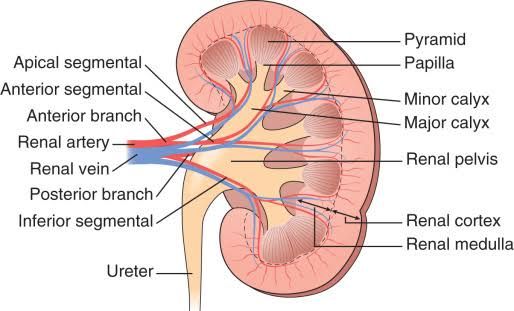
- Cortex: The outer layer of the kidney, which appears granular due to the presence of nephrons (the functional units of the kidney).
- Medulla: The inner region that contains renal pyramids; these are cone-shaped structures that help transport urine from the cortex to the calyces.
- Renal Pelvis: A funnel-shaped structure that collects urine from the calyces and channels it into the ureter.
The kidneys also have a hilum, which is an indentation where blood vessels (renal artery and vein), lymphatics, and nerves enter and exit.
Location in the Body
The kidneys are located retroperitoneally, meaning they are situated behind the peritoneum (the lining of the abdominal cavity). Specifically, they lie on either side of the vertebral column at approximately the level of T12 to L3 vertebrae. The right kidney is usually positioned slightly lower than the left due to the presence of the liver above it.
Relation to Important Organs in the Abdomen
The kidneys have significant anatomical relationships with various organs:
- Liver: The right kidney is located just below and posterior to the liver.
- Spleen: The left kidney is situated near the spleen.
- Pancreas: The tail of the pancreas lies anteriorly and slightly superiorly relative to both kidneys.
- Adrenal Glands: Each kidney is topped by an adrenal gland (suprarenal gland), which produces hormones such as cortisol and adrenaline.
- Ureters: These tubes extend from each kidney down into the bladder, transporting urine produced by each kidney.
Additionally, surrounding structures include:
- Diaphragm: Superiorly located above both kidneys.
- Intestines: The small intestine lies anteriorly relative to both kidneys.
- Abdominal Aorta and Inferior Vena Cava: These major blood vessels run along the spine adjacent to each kidney.
Understanding these relationships is essential for medical professionals when considering conditions such as nephrolithiasis (kidney stones), renal tumors, or other abdominal pathologies that may affect or be affected by nearby organs.
In summary, kidneys are vital organs with a distinct gross appearance characterized by their bean shape and internal structure comprising cortex and medulla. They are strategically located in relation to several important abdominal organs which play roles in digestion, metabolism, and hormonal regulation.
Shape of the Kidney
The kidneys are typically described as being bean-shaped, which is a common anatomical description. Each kidney has a convex lateral surface and a concave medial surface. The concave side features a notch known as the hilum, where blood vessels, nerves, and ureters enter and exit the kidney. The overall dimensions of an adult human kidney are approximately 10 to 12 centimeters in length, 5 to 7 centimeters in width, and about 2 to 3 centimeters in thickness.
Renal Capsule Dimensions
The renal capsule is a thin layer of fibrous connective tissue that surrounds each kidney. It serves as a protective barrier against trauma and infection. The thickness of the renal capsule varies but is generally around 1 millimeter thick. This capsule adheres closely to the kidney’s surface and plays a role in maintaining its shape.
Surfaces of the Kidney
As mentioned earlier, the kidney has two main surfaces:
- Lateral Surface: This is the outer convex surface that faces laterally away from the spine.
- Medial Surface: This concave surface faces medially towards the spine and contains the hilum.
In addition to these primary surfaces, there are also anterior (ventral) and posterior (dorsal) aspects of each kidney that contribute to its overall orientation within the abdominal cavity.
Poles of the Kidney
Each kidney has two poles:
- Superior Pole: This is located at the top end of each kidney.
- Inferior Pole: This is located at the bottom end of each kidney.
The superior pole typically sits slightly higher than the inferior pole due to anatomical positioning; for instance, on the right side, it may be lower because of liver placement.
Perirenal Fat Pad
The perirenal fat pad, also known as perinephric fat, surrounds each kidney and acts as an important cushion that provides protection against physical trauma while also helping to anchor the kidneys in place within the abdominal cavity. This fat pad varies in thickness among individuals but generally measures several millimeters thick around each kidney. In addition to providing cushioning, this adipose tissue plays a role in thermoregulation by insulating against temperature changes.
In summary, kidneys have a bean-like shape with distinct surfaces (lateral and medial), poles (superior and inferior), surrounded by a protective renal capsule approximately 1 mm thick. They are cushioned by perirenal fat pads that vary in thickness but serve essential protective functions.
Gross Appearance of Internal Structures
The internal structures of the kidney can be divided into several distinct regions: the cortex, medulla, calices, and pelvis. Each of these areas has unique characteristics that contribute to the overall function of the kidney.
- Cortex: The renal cortex is the outer region of the kidney and appears granular due to the presence of numerous renal corpuscles (glomeruli) and convoluted tubules. It is typically a light brown color and contains nephrons, which are the functional units responsible for filtering blood and forming urine. The cortex is about 1-2 cm thick in humans and is where most of the blood filtration occurs.
- Medulla: Beneath the cortex lies the renal medulla, which consists of several cone-shaped structures known as renal pyramids. The medulla appears darker than the cortex due to its higher concentration of collecting ducts and loops of Henle. The pyramids are arranged in a radial pattern with their bases facing the cortex and their apices (renal papillae) pointing towards the renal pelvis. The medullary region plays a crucial role in concentrating urine.
- Calices: The minor calices are small cup-like structures that surround each renal papilla, collecting urine from the tips of the pyramids. Several minor calices converge to form major calices, which then drain into the renal pelvis. The appearance of calices is smooth and funnel-shaped, facilitating urine flow from the kidneys to the ureter.
- Pelvis: The renal pelvis is a large funnel-shaped cavity located at the center of the kidney that collects urine from all major calices before it flows into the ureter. It has a smooth surface lined with transitional epithelium, allowing it to expand as it fills with urine.
Blood Supply and Distribution
The kidneys receive their blood supply primarily through the renal arteries, which branch off from the abdominal aorta. Each kidney typically receives one renal artery; however, variations can occur with additional accessory arteries present in some individuals.
- Renal Arteries: Upon entering each kidney at the hilum, renal arteries divide into segmental arteries that further branch into interlobar arteries running between renal pyramids. These interlobar arteries then give rise to arcuate arteries that arch over each pyramid’s base.
- Cortical Arteries: From arcuate arteries, cortical radiate (interlobular) arteries extend into the cortex, supplying blood directly to nephron structures such as glomeruli and peritubular capillaries.
- Venous Drainage: Venous drainage follows a similar path but in reverse order:
- Blood from peritubular capillaries drains into venules.
- These venules converge to form cortical radiate veins.
- Cortical radiate veins drain into arcuate veins.
- Arcuate veins lead to interlobar veins.
- Finally, interlobar veins merge to form one or two main renal veins that exit at the hilum and drain into the inferior vena cava.
This highly organized vascular structure ensures efficient filtration and reabsorption processes within each nephron while maintaining adequate blood flow throughout both cortical and medullary regions.
In summary:
- The cortex is granular with nephrons;
- The medulla contains pyramids for urine concentration;
- The calices collect urine from pyramids;
- The pelvis funnels urine toward ureters.
Blood supply originates from renal arteries, branching down through segmental and interlobar vessels before reaching nephrons; venous drainage follows this path back through increasingly larger vessels until returning to systemic circulation via renal veins.
Lymphatic Drainage and Nervous Control of the Kidney
1. Lymphatic Drainage of the Kidney
The lymphatic drainage of the kidney plays a crucial role in maintaining fluid balance and preventing edema. Lymphatic vessels in the kidney originate as blind-ended capillaries within the renal lobules, primarily located in the cortex. These initial lymphatic capillaries collect interstitial fluid, which is formed from capillary filtrate and fluid reabsorbed from renal tubules.
The lymphatics can follow the main arteries and veins toward the hilum or penetrate through the renal capsule to join capsular lymphatics. Unlike many other parts of the body, there are no valves present in interlobular lymphatics, allowing lymph to exit the kidney in either direction. This feature is significant because it enables efficient drainage of excess interstitial fluid, particularly during conditions that may lead to increased fluid accumulation.
The primary factors contributing to renal lymph formation include interstitial fluid volume and intra-renal venous pressure. Conditions such as cardiac failure or systemic inflammatory responses can overwhelm renal lymphatic inflow by raising venous pressure or increasing capillary permeability. Additionally, if there is an obstruction at the level of the thoracic duct due to elevated central venous pressures, this can impair lymphatic outflow.
Renal lymphatic dysfunction occurs when these vessels fail to adequately drain interstitial fluid, leading to renal interstitial edema. As edema progresses, it can collapse intra-renal collecting lymphatics and block those exiting via the capsule, further exacerbating fluid retention and potentially decreasing renal function due to increased pressure within the encapsulated kidney.
2. Nervous Control of the Kidney
The nervous control of the kidneys is primarily mediated by both sympathetic and parasympathetic divisions of the autonomic nervous system. The sympathetic innervation originates from thoracolumbar outflow (T10 to L1) and provides vasomotor supply through fibers that travel via thoracolumbar splanchnic nerves after synapsing at renal and celiac ganglia. This sympathetic input plays a critical role in regulating blood flow within the kidneys by constricting or dilating blood vessels based on physiological needs.
In contrast, parasympathetic innervation comes from fibers originating from the vagus nerve as well as those from the intermesenteric plexus (S2 to S4). While sympathetic stimulation generally promotes vasoconstriction and reduces renal blood flow during stress responses (such as fight-or-flight situations), parasympathetic activation tends to promote vasodilation and enhance blood flow during rest and digest states.
Both divisions work together to regulate various functions of the kidneys, including glomerular filtration rate (GFR), electrolyte balance, and overall homeostasis. The interplay between these two systems ensures that kidney function adapts appropriately to changing physiological demands.
In summary, the lymphatic drainage system is essential for managing interstitial fluid levels in the kidneys, while the nervous control involves both sympathetic and parasympathetic inputs that regulate vascular tone and kidney function.