Origin, Course, Branches, and Distribution of the Left and Right Coronary Arteries
1. Origin of the Coronary Arteries
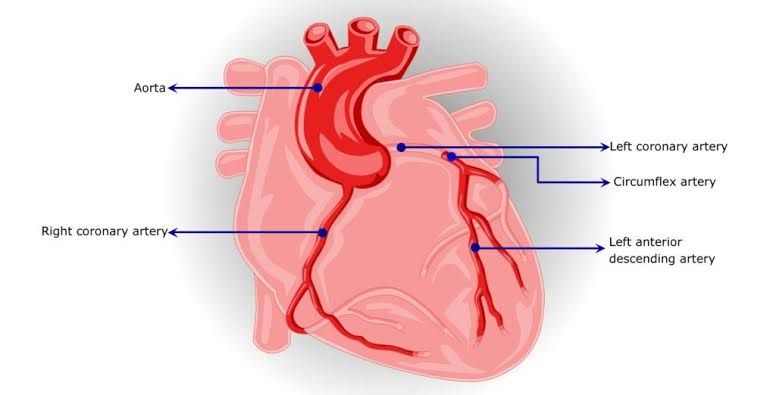
The coronary arteries originate from the aorta, specifically from the aortic sinuses located just above the aortic valve. There are two primary coronary arteries: the left coronary artery (LCA) and the right coronary artery (RCA).
- Left Coronary Artery (LCA): The LCA arises from the left aortic sinus. It is typically larger than the RCA and supplies blood to a significant portion of the heart muscle.
- Right Coronary Artery (RCA): The RCA originates from the right aortic sinus. It generally supplies blood to the right side of the heart and parts of the left ventricle.
2. Course of the Coronary Arteries
After their origin, both coronary arteries follow distinct courses:
- Left Coronary Artery (LCA):
- The LCA quickly bifurcates into two major branches:
- Left Anterior Descending Artery (LAD): This artery travels downwards in the anterior interventricular sulcus towards the apex of the heart. It supplies blood to the anterior wall of both ventricles and part of the interventricular septum.
- Circumflex Artery (LCx): This artery runs in a leftward direction around the heart in the atrioventricular groove. It supplies blood to the lateral wall of the left ventricle and often gives off branches that supply parts of the left atrium.
- The LCA quickly bifurcates into two major branches:
- Right Coronary Artery (RCA):
- The RCA descends along the right atrioventricular groove towards the inferior part of the heart. As it travels, it gives off several important branches:
- Right Marginal Artery: This branch supplies blood to the right ventricle.
- Posterior Descending Artery (PDA): The PDA typically runs in the posterior interventricular sulcus and supplies blood to both ventricles’ inferior walls and part of the interventricular septum.
- The RCA descends along the right atrioventricular groove towards the inferior part of the heart. As it travels, it gives off several important branches:
3. Branches of Each Coronary Artery
Both coronary arteries have several key branches that further supply various regions of cardiac tissue:
- Branches of Left Coronary Artery:
- Diagonal Branches: These arise from LAD and supply blood to parts of anterior wall.
- Obtuse Marginal Branches: These arise from LCx and supply lateral aspects of left ventricle.
- Branches of Right Coronary Artery:
- In addition to those mentioned earlier, RCA may also give rise to small branches such as:
- Sinoatrial Node Branch: Supplies blood to sinoatrial node in some individuals.
- Atrioventricular Node Branch: Supplies blood to atrioventricular node.
- In addition to those mentioned earlier, RCA may also give rise to small branches such as:
4. Distribution
The distribution pattern varies among individuals but generally follows these principles:
- The LCA predominantly supplies:
- Anterior wall of both ventricles via LAD.
- Lateral wall via LCx.
- The RCA primarily supplies:
- Right atrium and ventricle.
- Inferior wall through PDA.
In about 70%–80% of individuals, there is a right dominant coronary circulation where RCA provides PDA; however, in some cases (~20%–30%), there is a left dominant system where LCx provides PDA.
Understanding these anatomical features is crucial for diagnosing and treating various cardiovascular diseases, particularly ischemic heart disease where blood flow may be compromised due to blockages or narrowing within these arteries.
Sites of Anastomosis Between Branches of Coronary Arteries
Anastomoses between the branches of coronary arteries are critical for ensuring adequate blood supply to the heart muscle, particularly in cases where one or more coronary arteries may become narrowed or blocked due to atherosclerosis or other cardiovascular diseases. These connections can provide collateral circulation, which is essential for maintaining myocardial perfusion.
1. Overview of Coronary Arteries
The coronary arteries primarily consist of two main vessels: the left coronary artery (LCA) and the right coronary artery (RCA). The LCA branches into the left anterior descending artery (LAD) and the circumflex artery (CX), while the RCA supplies blood to the right atrium, right ventricle, and parts of the left ventricle.
2. Major Sites of Anastomosis
- Between Left Anterior Descending (LAD) and Circumflex Artery (CX):
- The LAD and CX are two major branches of the LCA. They have anastomotic connections at their distal ends, which can help supply blood to areas supplied by both arteries. This connection is particularly important in patients with occlusion in one of these arteries.
- Interventricular Anastomoses:
- The anterior interventricular artery (a branch of the LAD) and posterior interventricular artery (a branch of the RCA) form anastomoses at the apex of the heart. This connection helps ensure that both sides of the heart receive adequate blood flow, especially during ischemic events.
- Coronary Artery Bypass Graft (CABG):
- While not a natural anastomosis, CABG procedures create new pathways for blood flow using grafts from other vessels (such as saphenous veins or internal mammary arteries). These grafts often connect to areas supplied by both LAD and RCA, effectively creating an artificial anastomosis that enhances collateral circulation.
- Connections Between Right Coronary Artery Branches:
- The RCA has several branches that supply different regions of the heart. Anastomoses can occur between these branches, such as between the right marginal artery and posterior descending artery (PDA), providing additional routes for blood flow to areas like the right ventricle.
3. Clinical Significance
The presence of these anastomoses is clinically significant because they can compensate for reduced blood flow due to arterial blockages. In cases where one coronary artery is significantly narrowed or occluded, these collateral pathways may help prevent ischemia in myocardial tissue by allowing alternative routes for blood delivery.
In summary, understanding these sites of anastomosis between branches of coronary arteries is crucial for diagnosing and managing coronary artery disease effectively.
Normal Variation in the Course of the Coronary Arteries and Their Branches
The coronary arteries are essential for supplying blood to the heart muscle, and their anatomy can exhibit significant variation among individuals. Understanding these variations is crucial for both diagnostic and therapeutic procedures in cardiology.
1. Overview of Coronary Arteries
The coronary arteries originate from the aorta just above the aortic valve. The two main coronary arteries are:
- Left Coronary Artery (LCA): This artery typically branches into two major arteries:
- Left Anterior Descending (LAD) artery: Supplies the anterior wall of the left ventricle and parts of the interventricular septum.
- Left Circumflex (LCX) artery: Supplies blood to the lateral and posterior aspects of the left ventricle.
- Right Coronary Artery (RCA): This artery supplies blood primarily to the right atrium, right ventricle, and inferior part of the left ventricle through its branches:
- Posterior Descending Artery (PDA): Supplies the inferior wall of the heart.
- Right Marginal Artery: Supplies blood to the right ventricle.
2. Normal Variations in Anatomy
Variations in coronary artery anatomy can be classified into several categories:
- Dominance Patterns: The coronary circulation can be classified as right dominant, left dominant, or co-dominant based on which artery supplies the PDA. In approximately 70% of individuals, it is supplied by the RCA (right dominant). In about 20% of individuals, it is supplied by the LCX (left dominant), while co-dominance occurs in about 10% where both arteries contribute to supply.
- Branching Patterns: The branching patterns can vary significantly:
- The LAD may have multiple diagonal branches that supply various segments of the anterior wall.
- The LCX may give rise to additional branches such as obtuse marginal arteries that supply different areas depending on their course.
- Anomalies in Origin and Course: Some individuals may have anomalies such as:
- A single coronary artery supplying all regions of the heart.
- Anomalous origin from different locations, such as from pulmonary arteries or other systemic vessels.
- Variability in Size and Caliber: The size and caliber of coronary arteries can also differ significantly among individuals. For example, some patients may have larger or smaller LADs or RCAs, which can affect myocardial perfusion.
3. Clinical Implications
Understanding these variations is critical during procedures like angioplasty or bypass surgery. For instance:
- Anomalous coronary anatomy might complicate catheterization procedures.
- Variations in dominance could influence surgical strategies during revascularization procedures.
Additionally, imaging techniques such as computed tomography angiography (CTA) or magnetic resonance angiography (MRA) are often employed to assess these variations preoperatively.
In summary, while there are common patterns observed in coronary artery anatomy, significant normal variations exist that must be recognized for effective clinical management.
Venous Drainage of the Heart and Cardiac Veins
The venous drainage of the heart is primarily accomplished through a network of cardiac veins that collect deoxygenated blood from the myocardium (the heart muscle) and return it to the right atrium. This system is crucial for maintaining proper circulation and ensuring that oxygen-depleted blood is efficiently returned for reoxygenation in the lungs.
1. Major Cardiac Veins
Great Cardiac Vein
- Location: The great cardiac vein runs alongside the anterior interventricular artery in the anterior part of the heart.
- Drainage Area: It drains blood from the left ventricle, left atrium, and parts of the interventricular septum. It collects blood from several smaller veins, including:
- Anterior interventricular vein
- Left marginal vein
Middle Cardiac Vein
- Location: The middle cardiac vein runs along with the posterior interventricular artery in the posterior part of the heart.
- Drainage Area: It drains blood primarily from the right ventricle and parts of the left ventricle.
Small Cardiac Vein
- Location: The small cardiac vein travels along with the right coronary artery in the right atrioventricular groove.
- Drainage Area: It drains blood from the right atrium and parts of the right ventricle.
2. Other Notable Cardiac Veins
Anterior Cardiac Veins
- Location: These veins are located on the anterior surface of the right ventricle.
- Drainage Area: They drain directly into the right atrium, bypassing other larger veins.
Coronary Sinus
- Location: The coronary sinus is a large venous structure located on the posterior aspect of the heart, within the coronary sulcus (the groove between the atria and ventricles).
- Drainage Area: It serves as a major collector for most cardiac veins, including:
- Great cardiac vein
- Middle cardiac vein
- Small cardiac vein
- Posterior vein of the left ventricle
The coronary sinus empties directly into the right atrium, allowing deoxygenated blood collected from various regions of the heart to return to systemic circulation.
3. Venous Drainage Pathway
The pathway for venous drainage begins with smaller cardiac veins collecting deoxygenated blood from myocardial tissues. These smaller veins converge into larger veins (great, middle, small) which then drain into either individual structures or directly into the coronary sinus. The coronary sinus acts as a central hub that ultimately channels all collected deoxygenated blood back into the right atrium.
4. Clinical Relevance
Understanding venous drainage is critical in clinical settings such as cardiology and surgery. Conditions like myocardial infarction can affect specific areas supplied by these veins, leading to complications if not properly managed. Additionally, procedures such as catheterization often utilize knowledge about these vessels for interventions.
In summary, effective venous drainage is essential for maintaining cardiovascular health by ensuring efficient removal of deoxygenated blood from heart tissues.
Location and Termination of the Coronary Sinus and Its Tributaries
Location of the Coronary Sinus
The coronary sinus is a large venous structure located in the posterior part of the heart, specifically within the atrioventricular (AV) septum. It runs along the posterior aspect of the heart, situated in the groove between the left atrium and left ventricle, known as the coronary sulcus. The coronary sinus collects deoxygenated blood from the myocardium (the muscular tissue of the heart) through its tributaries and serves as a major conduit for this blood to return to the right atrium.
Termination of the Coronary Sinus
The coronary sinus terminates at its opening into the right atrium. This opening is located near the tricuspid valve, specifically at the junction where the right atrium meets the right ventricle. The orifice of the coronary sinus is guarded by a small fold of tissue called the “valve of Thebesius,” which helps prevent backflow into the sinus during contraction of the right atrium.
Tributaries of the Coronary Sinus
The coronary sinus receives blood from several important veins that drain various regions of the heart muscle. The main tributaries include:
- Great Cardiac Vein: This vein runs alongside the anterior interventricular artery and drains blood from areas supplied by both branches of the left coronary artery, including parts of both ventricles and some portions of both atria.
- Middle Cardiac Vein: Also known as the posterior interventricular vein, it accompanies the posterior interventricular artery and drains blood from regions supplied by this artery, primarily from the inferior wall of both ventricles.
- Small Cardiac Vein: This vein runs along with the right coronary artery in its course around to drain areas supplied by this artery, particularly parts of both atria and portions of both ventricles.
- Posterior Veins of Left Ventricle: These veins drain directly into the coronary sinus and collect blood from areas on the posterior surface of the left ventricle.
- Oblique Vein of Left Atrium: This small vein drains into a portion near where other veins enter into or near to where they join with or flow into other structures associated with cardiac venous drainage.
- Anterior Cardiac Veins: These veins drain directly into the right atrium rather than entering through the coronary sinus but are often considered in discussions about cardiac venous drainage.
In summary, these tributaries play a crucial role in draining deoxygenated blood from various regions of myocardial tissue back to systemic circulation via their convergence into the coronary sinus before it empties into the right atrium.