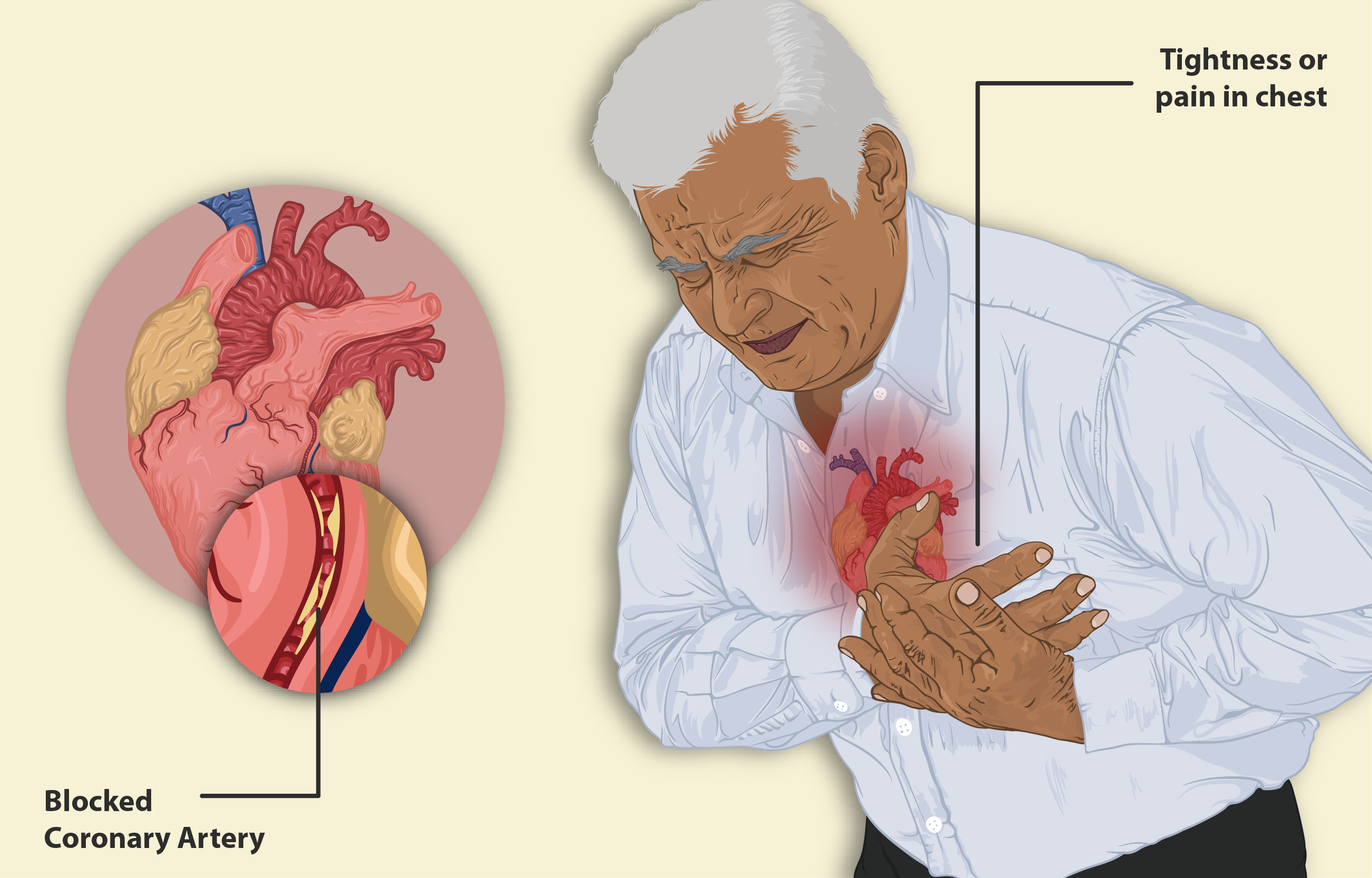
Angina pectoris, commonly referred to as angina, is a condition characterized by chest pain or discomfort that recurs. This pain occurs when a part of the heart muscle (myocardium) does not receive enough blood and oxygen. It is often a symptom of coronary artery disease (CAD), which involves the narrowing or blockage of the arteries that supply blood to the heart due to atherosclerosis or blood clots. Angina can also result from unstable plaques, poor blood flow through a narrowed heart valve, decreased pumping function of the heart muscle, or coronary artery spasms.
Pathogenesis of Angina Pectoris
Myocardial ischemia occurs when coronary blood flow is inadequate to meet the oxygen demands of the myocardium. This inadequacy can be due to various factors such as atherosclerosis, vasospasm, or microvascular dysfunction. The primary consequence of reduced blood flow is that myocardial cells switch from aerobic to anaerobic metabolism.
Metabolic Changes
During ischemia, the lack of adequate oxygen leads to a decrease in ATP production through aerobic pathways. As a result, cells rely on anaerobic glycolysis for energy, which produces less ATP and generates lactic acid as a byproduct. The accumulation of lactic acid and other metabolic intermediates contributes to cellular acidosis and further impairs cardiac function.
Chemical Mediators
Adenosine has been identified as a significant chemical mediator in anginal pain. During ischemic conditions, ATP breaks down into adenosine, which then accumulates in the myocardium. Adenosine acts on specific receptors in the heart and blood vessels, causing vasodilation and contributing to the sensation of pain.
Mechanical Stimulation
The mechanical aspect involves stimulation of sensory afferent nerve endings located in the coronary vessels and myocardium. These nerve fibers transmit pain signals from the heart to the central nervous system via the first to fourth thoracic spinal nerves. The signals ascend through the spinal cord to reach the thalamus and ultimately the cerebral cortex where they are perceived as pain.
Clinical Manifestations
The most common clinical manifestation of myocardial ischemia is angina pectoris, which typically presents as retrosternal chest discomfort described as pressure, heaviness, squeezing, burning, or choking sensation. This discomfort can radiate to other areas such as the epigastrium, back, neck, jaw, or shoulders.
Factors Precipitating Angina
Several factors can precipitate angina episodes including physical exertion, emotional stress, exposure to cold weather, or heavy meals. These activities increase myocardial oxygen demand which may not be met due to compromised coronary blood flow.
Causes of Angina Pectoris
The causes of angina pectoris can be broadly categorized into modifiable and non-modifiable risk factors:
Modifiable Risk Factors:
- Atherosclerosis: The buildup of plaques in coronary arteries.
- Hypertension: High blood pressure increases myocardial oxygen demand.
- Hyperlipidemia: Elevated levels of lipids in the blood contribute to plaque formation.
- Smoking: Tobacco use damages blood vessels and promotes atherosclerosis.
- Diabetes Mellitus: Poorly controlled diabetes accelerates vascular damage.
- Obesity: Excess body weight increases cardiovascular risk factors.
- Sedentary Lifestyle: Lack of physical activity contributes to obesity and cardiovascular disease.
Non-Modifiable Risk Factors:
- Age: Risk increases with age due to cumulative effects on vascular health.
- Gender: Males are at higher risk earlier in life; however, post-menopausal women have increased risk.
- Family History: A genetic predisposition can influence cardiovascular health.
Types of Angina Pectoris
There are four main types of angina pectoris:
- Stable Angina (Angina Pectoris): Predictable chest pain triggered by physical exertion or stress; relieved by rest or medication like nitroglycerin.
- Unstable Angina: Unpredictable chest pain that occurs at rest or with minimal exertion; indicates a higher risk for myocardial infarction (heart attack).
- Variant (Prinzmetal’s) Angina: Caused by coronary artery spasms; occurs at rest and typically follows a cyclic pattern, often at night.
- Microvascular Angina (Syndrome X): Chest pain with normal coronary arteries on angiography but abnormal microcirculation within the myocardium.
Investigations, Management, and Differential Diagnosis of Angina Pectoris
Investigations
- Clinical History and Physical Examination: The initial step in evaluating angina involves a thorough clinical history that includes the nature of the chest pain (e.g., quality, duration, triggers), associated symptoms (such as dyspnea or diaphoresis), and risk factors (including age, sex, smoking status, hypertension, diabetes mellitus, and family history of coronary artery disease). A focused physical examination can help identify signs of heart failure or other cardiovascular diseases.
- Electrocardiogram (ECG): An ECG is essential in the evaluation of angina pectoris. It may show ST-segment depression during episodes of angina or may reveal previous myocardial infarction through pathological Q waves. A resting ECG may be normal in patients with stable angina; therefore, stress testing may be required.
- Stress Testing: Exercise tolerance tests (ETT) or pharmacologic stress tests are used to provoke ischemia under controlled conditions. The results can help determine the presence and severity of coronary artery disease (CAD). Common modalities include treadmill exercise testing and dobutamine echocardiography.
- Imaging Studies: Non-invasive imaging techniques such as echocardiography, nuclear perfusion imaging (SPECT), and cardiac MRI can provide additional information about myocardial perfusion and wall motion abnormalities during stress.
- Coronary Angiography: This invasive procedure remains the gold standard for diagnosing CAD. It allows direct visualization of coronary arteries to assess for stenosis or occlusion that could be causing ischemic symptoms. This invasive procedure involves injecting a contrast dye into the coronary arteries to visualize blockages directly.
- Laboratory Tests: Blood tests including lipid profiles, glucose levels, and markers of myocardial injury such as troponins can aid in assessing risk factors for CAD and ruling out acute coronary syndromes.
Management
Management of angina pectoris aims to relieve symptoms, improve quality of life, and reduce the risk of future cardiovascular events. The treatment strategies include:
- Lifestyle Modifications:
- Smoking cessation
- Dietary changes (low-fat, low-cholesterol diet)
- Regular physical activity
- Weight management
- Medications:
- Antiplatelet Agents: Aspirin or clopidogrel to prevent blood clots.
- Beta-Adrenergic Blocking Agents: Reduce heart rate and myocardial oxygen demand.
- Calcium Channel Blockers: Help relax blood vessels and reduce heart workload.
- Nitrates: Short-acting nitroglycerin for immediate relief; long-acting nitrates for ongoing management.
- Angiotensin-Converting Enzyme (ACE) Inhibitors: Lower blood pressure and reduce strain on the heart.
- Other anti-ischemic agents as needed.
- Surgical Interventions:
- Percutaneous Coronary Intervention (PCI): Includes angioplasty with stenting to open narrowed arteries.
- Coronary Artery Bypass Grafting (CABG): Surgical creation of a bypass around blocked arteries using grafts from other parts of the body.
Differential Diagnosis
Several conditions can mimic angina pectoris, making differential diagnosis crucial:
- Esophageal Spasm/Rupture: Can cause severe chest pain similar to angina.
- Costochondritis: Inflammation of rib cartilage causing localized chest pain.
- Herpes Zoster (Shingles): Painful rash in a dermatomal distribution that can precede visible lesions.
- Pneumonia with Pleural Involvement: Chest pain associated with respiratory symptoms.
- Other conditions include:
- Acute Gastritis
- Acute Pericarditis
- Anemia
- Anxiety Disorders
- Aortic Dissection/Stenosis
- Biliary Colic/Acute Cholecystitis
- Cocaine Toxicity
- Gastroesophageal Reflux Disease (GERD)
- Hiatal Hernia
- Hypertension/Hyperthyroidism/Thyrotoxicosis
- Hypertrophic Cardiomyopathy
- Mitral Valve Prolapse/Regurgitation
- Panic Disorder/Peptic Ulcer Disease
- Pulmonary Embolism/Pneumothorax