Of the potential complications that can arise during pregnancy, placental abruption stands as one of the most serious and unpredictable. It is a condition that demands immediate medical attention, as it poses significant risks to both the mother and the fetus. Understanding its definition, recognizing its signs, and knowing the diagnostic and treatment pathways are critical for healthcare providers and essential knowledge for expectant parents.
Defining Placental Abruption: The Lifeline’s Detachment
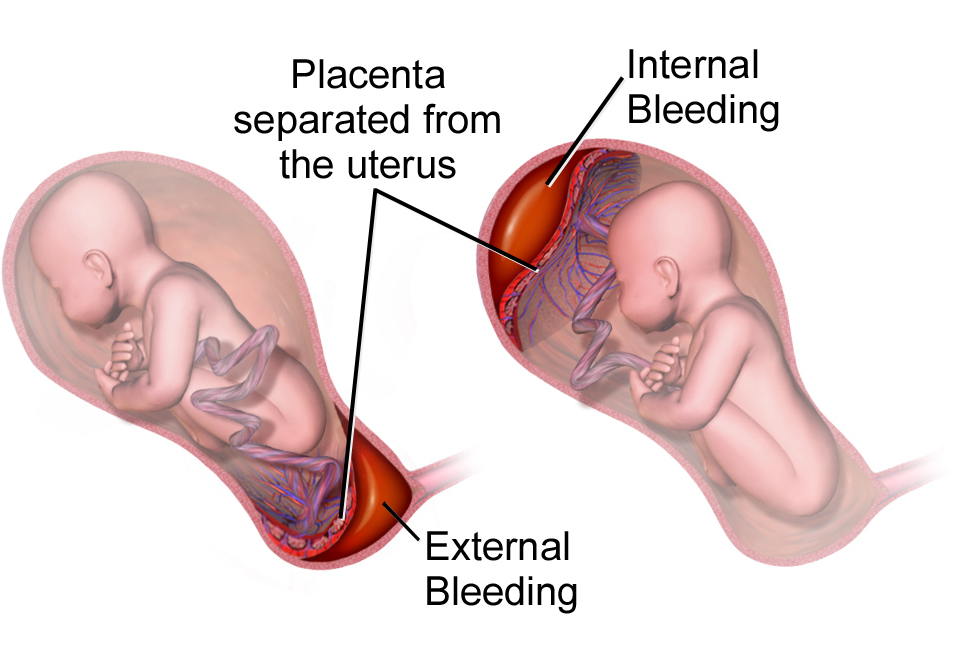
Placental abruption, medically known as abruptio placentae, is the premature separation of the placenta from its site of implantation on the inner wall of the uterus before the delivery of the fetus. The placenta is a vital, temporary organ that serves as the lifeline between mother and baby, facilitating the transfer of oxygen, nutrients, and hormones while removing waste products from the fetal circulation. A normal pregnancy involves the placenta remaining firmly attached to the uterine wall until after the baby is born, at which point it detaches and is delivered in what is known as the third stage of labor.
When an abruption occurs, typically after the 20th week of gestation, the maternal blood vessels in the layer between the placenta and uterine wall (the decidua basalis) rupture. This leads to bleeding and the formation of a hematoma (a collection of blood) that cleaves a plane of separation. As this hematoma expands, it pushes the placenta further away from the uterine wall, compromising the surface area available for fetal-maternal exchange. This disruption can severely reduce or completely cut off the supply of oxygen and nutrients to the fetus, leading to fetal distress or, in the most severe cases, fetal demise. For the mother, the primary risks are significant blood loss (hemorrhage), which can lead to shock, and a dangerous blood clotting disorder known as Disseminated Intravascular Coagulation (DIC).
Placental abruption is classified based on its severity, which correlates with the clinical presentation:
- Grade 1 (Mild): Represents approximately 40-50% of cases. There is a small area of separation with minimal vaginal bleeding, some uterine tenderness, but no signs of maternal shock or fetal distress.
- Grade 2 (Moderate): Accounts for about 25-30% of cases. The separation is larger, leading to moderate vaginal bleeding, significant uterine tenderness with tetanic (sustained) contractions, and evidence of fetal distress (e.g., abnormal heart rate patterns). The mother may show signs of early shock, such as a rapid heart rate.
- Grade 3 (Severe): The most critical form, occurring in 20-25% of cases. There is a large or complete separation of the placenta. Bleeding is often heavy but can be concealed within the uterus. The uterus is rigid and extremely painful. Maternal shock is common, and fetal death is highly likely. This grade is frequently associated with DIC.
Symptoms and Signs of Placental Abruption: Recognizing the Warning Signals
The clinical presentation of placental abruption can vary widely depending on the degree of separation. While some symptoms are classic, it’s crucial to remember that their absence does not definitively rule out the condition.
- Vaginal Bleeding: This is the most common sign, occurring in about 70-80% of cases. The blood can range from bright red (indicating fresh bleeding) to dark brown (indicating older blood). However, it is imperative to understand that the amount of visible bleeding does not always correlate with the severity of the abruption. In about 20% of cases, the hemorrhage is concealed. This occurs when the blood is trapped behind the placenta, with the edges of the placenta remaining attached to the uterine wall. In these dangerous situations, there is little to no external bleeding, but the mother and fetus are still in grave danger.
- Abdominal or Back Pain: Sudden, severe, and persistent abdominal pain is a hallmark symptom. The pain is often described as sharp and cramping, and unlike labor contractions, there is often no period of relaxation or relief. The uterus may feel tender to the touch, and the pain can radiate to the lower back.
- Uterine Tenderness and Rigidity: The accumulation of blood behind the placenta and the infiltration of blood into the uterine muscle (myometrium) act as a potent irritant. This causes the uterus to become hard, rigid, and exquisitely tender. On physical examination, the uterus is often described as “board-like” or “woody” in texture.
- Rapid or Frequent Uterine Contractions: The irritated uterus may experience a series of rapid, low-intensity contractions (tachysystole) or a single, prolonged, and painful contraction (tetany). These are distinct from the rhythmic contractions of normal labor.
- Signs of Fetal Distress: As the placental surface area for oxygen exchange diminishes, the fetus becomes compromised. The mother may notice a sudden decrease or cessation of fetal movement. On electronic fetal monitoring, signs of distress are often apparent, including a dangerously slow heart rate (bradycardia), recurrent late decelerations (dips in heart rate after a contraction), or a loss of beat-to-beat variability.
- Maternal Signs of Hemorrhagic Shock: In moderate to severe cases, the mother will exhibit symptoms of significant blood loss. These include a rapid pulse (tachycardia), low blood pressure (hypotension), pale skin, sweating, dizziness, and anxiety. These signs may seem disproportionate to the amount of visible vaginal bleeding, again pointing towards a possible concealed hemorrhage.
Diagnosis of Placental Abruption: A Clinical Puzzle
The diagnosis of placental abruption is primarily clinical, meaning it is based on the patient’s symptoms and the physical examination findings. There is no single lab test or imaging study that can reliably confirm or exclude the diagnosis in all cases.
- Clinical Evaluation: The diagnostic process begins with a thorough history and physical exam. The healthcare provider will inquire about risk factors such as maternal hypertension, preeclampsia, a history of previous abruption, abdominal trauma, smoking, or cocaine use. The physical assessment will focus on maternal vital signs, uterine size (an increasing fundal height can suggest a concealed bleed), uterine tone (checking for rigidity), and tenderness.
- Fetal Monitoring: Continuous electronic fetal monitoring (cardiotocography or CTG) is essential. It provides real-time information about the fetal heart rate and its response to uterine activity. Abnormal patterns are a key indicator of fetal compromise and often guide the urgency of intervention.
- Ultrasonography: While an ultrasound is a crucial tool in obstetrics, its role in diagnosing placental abruption is limited. It can be helpful if it identifies a retroplacental hematoma (the blood clot behind the placenta), which would confirm the diagnosis. However, ultrasound is notoriously insensitive; fresh blood may have the same echogenicity (appearance on the screen) as the placental tissue itself, making it difficult to detect. Therefore, a normal ultrasound finding does not rule out placental abruption. Its primary utility is often to exclude other causes of third-trimester bleeding, most importantly placenta previa (where the placenta covers the cervix).
- Laboratory Tests: Blood tests are performed to assess the maternal status and prepare for potential complications.
- Complete Blood Count (CBC): To determine the hemoglobin and hematocrit levels, providing a baseline and assessing the degree of blood loss.
- Coagulation Studies: Tests such as prothrombin time (PT), partial thromboplastin time (PTT), and fibrinogen levels are critical to screen for DIC.
- Blood Type and Crossmatch: This is done immediately to ensure that compatible blood products are ready for transfusion if needed.
Treatment of Placental Abruption: Balancing Maternal and Fetal Health
The management of placental abruption is an obstetric emergency that requires immediate hospitalization. Treatment is highly individualized and depends on three core factors: the gestational age of the fetus, the stability of the mother, and the status of the fetus.
- Initial Stabilization: Regardless of the specific plan, the initial steps are to stabilize the mother. This involves placing two large-bore intravenous (IV) lines for rapid fluid resuscitation and potential blood transfusions, administering supplemental oxygen, and instituting continuous maternal and fetal monitoring.
- Management Based on Clinical Scenario:
- Term or Near-Term Pregnancy (≥37 weeks): If the pregnancy is at or near term, delivery is almost always the recommended course of action. If the abruption is mild and both mother and fetus are stable, an induction of labor for a vaginal delivery may be attempted. However, if there is any evidence of maternal or fetal compromise, an immediate emergency Cesarean section is performed.
- Preterm Pregnancy (<34 weeks) with Mild Abruption and Stable Mother/Fetus: This is the most complex scenario, requiring a delicate balance. If the abruption is small, bleeding has subsided, and both mother and fetus are stable with reassuring monitoring, a conservative approach known as expectant management may be considered. This involves:
- Admission to the hospital for close observation.
- Administration of corticosteroids (e.g., betamethasone) to help accelerate the maturation of the fetal lungs in anticipation of a potential preterm delivery.
- Strict monitoring for any signs of worsening abruption, such as increased pain, bleeding, or changes in fetal heart rate patterns. The goal is to prolong the pregnancy to give the fetus more time to develop, but this can only be done if the situation remains stable.
- Moderate to Severe Abruption at Any Gestational Age: When there is significant bleeding, maternal instability (shock, DIC), or non-reassuring fetal status, immediate delivery is the only definitive treatment, irrespective of gestational age. The priority is to save the mother’s life. This almost always necessitates an emergency Cesarean section, coupled with aggressive maternal resuscitation involving IV fluids, blood, and clotting factors.
In conclusion, placental abruption is a formidable obstetric complication characterized by the premature separation of the placenta. Its classic presentation involves vaginal bleeding, abdominal pain, and uterine tenderness, but the absence of these signs does not preclude its existence. Diagnosis is made clinically, supported by fetal monitoring and laboratory tests, while management is dictated by the severity of the condition and the health of the mother and fetus. Prompt recognition and swift, decisive medical intervention are paramount to mitigating the severe risks and improving outcomes in this life-threatening emergency.
References
- Ananth, C. V., & Kinzler, W. L. (2021). Placental abruption: Pathophysiology, clinical features, diagnosis, and consequences. UpToDate. Retrieved from https://www.uptodate.com/contents/placental-abruption-pathophysiology-clinical-features-diagnosis-and-consequences
- American College of Obstetricians and Gynecologists (ACOG). (2021). Obstetric Care Consensus No. 10: Management of Stillbirth. Obstetrics & Gynecology, 137(3), e53-e71. (While focused on stillbirth, this document often discusses causative factors like severe abruption).
- Oyelese, Y., & Ananth, C. V. (2006). Placental abruption. Obstetrics & Gynecology, 108(4), 1005–1016. https://doi.org/10.1097/01.AOG.0000239439.04364.9a
- Cunningham, F. G., Leveno, K. J., Bloom, S. L., Dashe, J. S., Hoffman, B. L., Casey, B. M., & Spong, C. Y. (Eds.). (2018). Obstetric Hemorrhage. In Williams Obstetrics (25th ed.). McGraw-Hill Education.
- Mayo Clinic. (2022). Placental abruption. Retrieved from https://www.mayoclinic.org/diseases-conditions/placental-abruption/symptoms-causes/syc-20376458
- Tikkanen, M. (2011). Placental abruption: epidemiology, risk factors, and consequences. Acta Obstetricia et Gynecologica Scandinavica, 90(2), 140-149. https://doi.org/10.1111/j.1600-0412.2010.01030.x