Epidural analgesia is a cornerstone of effective pain management during labour, offering significant relief for many expectant mothers. However, several factors can contribute to inadequate epidural activation or maintenance, potentially diminishing its effectiveness and leading to increased maternal distress.
Understanding Epidural Analgesia and its Physiology
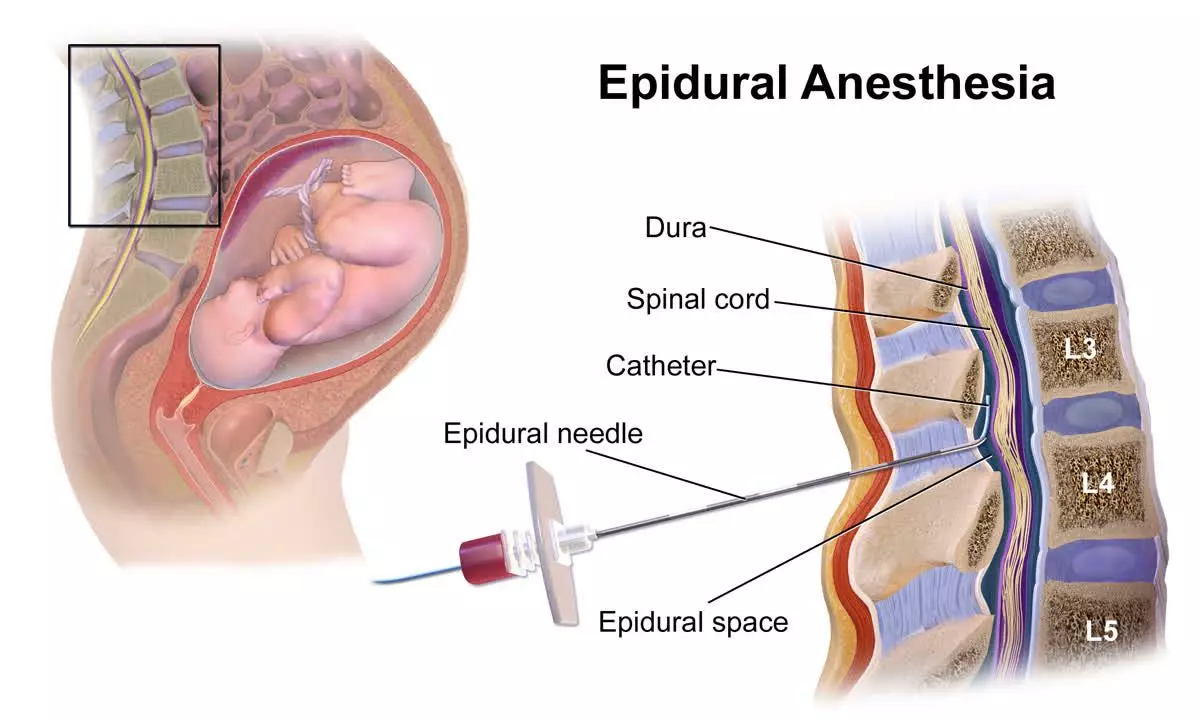
Before delving into issues of inadequacy, a foundational understanding of epidural analgesia is crucial. The epidural space is the area between the dura mater and the vertebral canal. Local anesthetics and/or opioids are introduced into this space via a catheter, blocking the transmission of pain signals from the uterus and birth canal to the central nervous system.
- Mechanism of Action: Local anesthetics (e.g., bupivacaine, lidocaine) block voltage-gated sodium channels in nerve fibers, preventing depolarization and impulse conduction. Opioids (e.g., fentanyl, sufentanil) bind to opioid receptors in the substantia gelatinosa of the spinal cord, further modulating pain perception.
- Nerve Fiber Blockade: Epidural analgesia primarily blocks sensory nerve fibers (A-delta and C fibers) responsible for transmitting pain, while minimally affecting motor fibers (A-alpha and A-beta) at therapeutic doses. This allows for mobility and a “walking epidural” in some cases.
- Pharmacology: The choice of local anesthetic and opioid, their concentrations, and the volume administered all influence the onset, density, and duration of analgesia. Higher concentrations and larger volumes generally lead to a denser block and longer duration, but also increase the risk of motor blockade and hypotension.
Identifying Inadequate Epidural Activation (Initial Bolus Failure)
Inadequate activation refers to a failure of the epidural block to provide adequate pain relief from its initial administration. This can manifest in several ways, and prompt recognition is key to addressing the issue effectively.
- Step 1: Assess Patient’s Subjective Pain Experience: The most direct indicator of inadequate activation is the patient’s report of persistent or severe pain that is not adequately managed by the epidural. This should be assessed regularly, especially during contractions.
- Step 2: Evaluate Objective Signs of Pain: Observe for non-verbal cues of pain, such as grimacing, crying out, guarding the abdomen, or increased heart rate and blood pressure (though these can be influenced by other factors).
- Step 3: Perform Sensory Blockade Assessment:
- Technique: Gently test the sensation to cold (e.g., using an alcohol swab) or light touch in dermatomes covering the expected sensory level of the block. Typically, this involves testing from the T10 dermatome (umbilicus) down to the S2 dermatome (perineum).
- Expected Outcome: A successful epidural should result in diminished sensation to cold or light touch in the relevant dermatomes.
- Inadequate Activation Indicators:
- Unilateral Block: Pain relief is present on one side of the body but absent or minimal on the other. This can occur if the catheter is positioned asymmetrically within the epidural space.
- Patchy Block: Sensation is abolished in some areas but present in others, indicating incomplete spread of the local anesthetic.
- High Dermatome Block but Inadequate Analgesia: The block may have ascended to the expected dermatome level, but the patient still experiences significant pain. This could suggest that the correct nerve roots are not being adequately blocked or that the concentration is insufficient.
- No Sensory Blockade Descending: The expected dermatome level is not reached, or sensation remains largely intact throughout the lower body.
- Step 4: Assess Motor Function (Secondary Indicator): While ideally preserved, a complete lack of motor blockade does not necessarily indicate inadequate analgesia if pain relief is sufficient. However, if the patient reports significant pain and has complete motor function, it strongly suggests an inadequate block. Conversely, although not a sign of inadequacy, excessive motor blockade (inability to move legs) alongside severe pain can also be problematic and requires further assessment.
- Step 5: Evaluate Epidural Catheter Placement and Integrity:
- Visual Inspection: Check the external portion of the epidural catheter for kinks, disconnections, or dislodgement.
- Aspiration: Periodically aspirate from the catheter to check for blood or cerebrospinal fluid (CSF). Blood can indicate intravascular placement or trauma to a blood vessel. CSF suggests intrathecal placement.
- Patient Position: Ensure the patient is in an appropriate position (often semi-recumbent) to facilitate spread of the local anesthetic.
- Step 6: Review Epidural Administration Details:
- Dose and Concentration: Confirm the correct local anesthetic and opioid, their concentrations, and the total volume administered were used as prescribed.
- Timing: Ensure sufficient time has elapsed since the initial bolus for the block to take effect. Different local anesthetics have varying onset times.
Identifying Inadequate Epidural Maintenance (Ongoing Analgesia Failure)
Inadequate maintenance occurs when an epidural that was initially effective begins to lose its analgesic properties over time. This is a more common scenario and requires ongoing vigilant assessment.
- Step 1: Monitor Patient’s Subjective Pain: Continual questioning about pain levels is paramount. Breakthrough pain, especially during contractions, is a key indicator.
- Step 2: Assess Sensory Blockade Regularly: The dermatome level of sensory blockade should be assessed at regular intervals, particularly when the patient reports increased pain or at predetermined monitoring schedules. A rising sensory level or loss of sensation in previously blocked dermatomes signifies inadequate maintenance.
- Step 3: Observe for Return of Painful Sensations: Patients may describe sensations like “pressure” returning, or specific types of pain (e.g., labour pains) becoming more prominent.
- Step 4: Evaluate the Efficacy of Intermittent Boluses or Continuous Infusion:
- Intermittent Boluses: If the labouring patient is receiving intermittent top-up doses, assess if the duration of relief between doses is shortening or if the peak pain relief achieved is less effective.
- Continuous Infusion: For patients on a continuous infusion, monitor if the pain is escalating despite a consistent infusion rate. This could indicate tolerance, catheter migration, or decreased drug efficacy.
- Step 5: Consider Factors Contributing to Decreased Efficacy:
- Catheter Migration or Dislodgement: The catheter may have shifted from its optimal position within the epidural space, leading to reduced drug delivery to the targeted nerve roots.
- Catheter Breakage or Blockage: Although rare, the catheter can kink, break, or become blocked by blood clots or fibrin sheath, impairing drug flow.
- Pharmacological Tolerance: In rare cases, patients may develop tolerance to local anesthetics or opioids, requiring higher doses for the same effect.
- Increased Analgesic Demand: As labour progresses, particularly during pushing or with cervical dilation, the demand for analgesia may increase, overwhelming the current infusion rate or bolus regimen.
- Changes in Epidural Space: With prolonged labour, inflammatory processes or fluid shifts within the epidural space might theoretically alter drug distribution.
- Patient Position: Changes in position can affect the spread of the local anesthetic.
Management Strategies for Inadequate Epidural Analgesia
Once inadequate epidural activation or maintenance is identified, a structured approach to management is essential.
- Step 1: Reassess and Reconfirm Inadequacy: Before intervening, ensure the assessment of pain and sensory block is thorough and accurately reflects the situation. Rule out other causes of pain (e.g., labour complications).
- Step 2: Reposition the Patient: Try repositioning the patient (e.g., from supine to lateral, sitting, or knee-chest position) to facilitate better spread of the local anesthetic and potentially reposition the catheter.
- Step 3: Administer a Supplemental Epidural Bolus:
- Dose and Concentration: Administer a supplemental bolus of the local anesthetic, usually at the same concentration as the initial dose but potentially a larger volume or a faster rate. The dose should be guided by institutional protocols and clinical judgment.
- Inclusion of Opioids: Consider adding a small dose of opioid to the bolus to enhance analgesia and provide faster onset of action without significantly increasing motor blockade.
- Monitoring: Closely monitor vital signs (blood pressure, heart rate) and the extent of sensory and motor blockade after the bolus.
- Step 4: Adjust the Continuous Infusion Rate (if applicable): If the patient is on a continuous infusion, consider increasing the infusion rate gradually, based on patient response and institutional guidelines.
- Step 5: Re-evaluate Catheter Placement and Integrity: If significant pain persists despite supplemental boluses and adjustments to the infusion, re-examine the epidural catheter.
- External Check: Ensure there are no kinks or obvious dislodgements.
- Aspiration: Re-aspirate to rule out blood or CSF.
- “Walking” the Catheter: In some instances, if catheter migration is suspected, a gentle maneuver to slightly reposition the catheter by the anesthesiologist might be attempted, but this should be done cautiously.
- Step 6: Consider Redosing or Replacing the Epidural Catheter:
- Redosing: If the original epidural catheter is deemed to be in situ and functioning, and the patient improves with supplemental boluses but then deteriorates again, further boluses or an adjusted infusion may be necessary. However, there’s a limit to how much local anesthetic can be safely administered within a given timeframe.
- Replacing the Catheter: If there is strong suspicion of catheter malfunction (e.g., persistent unilateral block, blockage, or dislodgement) or if repeated boluses fail to provide adequate relief, the decision to remove and replace the epidural catheter may be made. This typically involves the anesthesiologist.
- Step 7: Consider Alternative Analgesic Strategies: If all attempts to optimize the epidural fail, or if there is a contraindication to further epidural administration, alternative analgesic methods may be considered. This could include:
- Intravenous Opioids: While less effective for labour pain than epidurals, they can offer some relief.
- Nitrous Oxide: Can provide temporary relief during contractions.
- Pudendal Nerve Block: May be useful in the second stage of labour for perineal pain.
- General Anesthesia: Reserved for emergency situations where other methods are contraindicated or have failed.
- Step 8: Continue Monitoring and Reassessment: Regardless of the management strategy employed, continuous and diligent monitoring of the mother’s vital signs, pain levels, and fetal well-being is essential.
Potential Complications and Prevention
While the goal is to manage inadequate epidural analgesia, awareness of potential complications associated with interventions is crucial.
- Hypotension: Especially after administering boluses, monitor blood pressure closely. Ensure adequate fluid pre-loading and consider vasopressors if hypotension occurs.
- Nerve Injury: Though rare, direct nerve injury from the needle or catheter can occur.
- Intravascular Injection: Accidental injection of local anesthetic into a blood vessel can lead to systemic toxicity. Aspiration before and during injection, and slow administration, are key preventative measures.
- Post-Dural Puncture Headache (PDPH): Occurs if the dura is inadvertently punctured.
- Infection: Strict aseptic technique during insertion and maintenance is vital.
Conclusion
Inadequate epidural activation or maintenance during labour is a challenge that requires prompt and systematic management. By understanding the physiology of epidural analgesia, diligently assessing patient pain and sensory blockade, and implementing a stepwise approach to intervention, healthcare providers can optimize pain relief and improve the labour experience for expectant mothers. Continuous vigilance, clear communication with the patient, and prompt collaboration with anesthesiology services are fundamental to addressing these situations effectively and ensuring the safest possible outcomes.
References:
- Bhatia, N., & Cooper, J. (2021). Epidural Analgesia for Labour. In L. K. Gabbe, J. R. Niebyl, & J. L. Simpson (Eds.), Obstetrics: Normal and Problem Pregnancies (8th ed.). Elsevier.
- Covino, B. G. (1992). Pharmacology of local anesthetic drugs. Journal of Dental Anesthesia and Pain Control, 1, 1-10.
- D’Angelo, R., & McDonagh, M. S. (2012). Epidural analgesia for labour pain. American Family Physician, 85(11), 1056-1062.
- Hohmann, S. F. (2019). Regional anesthesia for labor and delivery. In R. H. L. U. R. S. (Ed.), Obstetric Anesthesia (pp. 23-57). Springer.
- Kang, S. L., & Lee, P. (2017). Epidural analgesia for labour. Best Practice & Research Clinical Obstetrics & Gynaecology, 43, 76-87.
- Loewen, P. S. (2015). Epidural analgesia and anesthesia in obstetrics. Canadian Family Physician, 61(9), 751-757.
- Pattinson, R. C. (2011). Epidural analgesia in labour. South African Medical Journal, 101(10), 713-717.
- Sultan, A. H., & Thaler, C. J. (2018). Epidural analgesia for labour: A review of current practice and controversies. Obstetric Medicine, 11(4), 160-170.
- Visser, G. H. A. (2002). Epidural analgesia and labour outcome. Acta Anaesthesiologica Scandinavica, 46(3), 239-243.