Operative vaginal delivery (OVD) is a cornerstone of modern obstetrical practice, representing a vital intervention designed to safely expedite the second stage of labor for the benefit of both mother and infant. It encompasses the use of specialized instruments—primarily the vacuum extractor and the obstetric forceps—to assist in the descent and birth of the fetus. When performed correctly by a skilled practitioner on an appropriately selected patient, OVD is a safe and effective procedure that can prevent the need for a cesarean delivery, particularly in cases of maternal exhaustion, concerning fetal heart rate patterns, or when maternal effort is compromised.
Foundational Principles and Indications for Operative Vaginal Delivery
The primary objective of an operative vaginal delivery is to shorten the second stage of labor, which is the period of complete cervical dilation until the delivery of the infant. This intervention is not undertaken lightly and is guided by a strict set of criteria to ensure patient safety. The decision to perform an OVD is based on a combination of maternal and/or fetal indications.
Key Indications:
- Prolonged Second Stage of Labor: This is one of the most common indications. The American College of Obstetricians and Gynecologists (ACOG) defines a prolonged second stage as >3 hours for nulliparous women (those who have not given birth before) with regional anesthesia, or >2 hours without. For multiparous women (those with prior births), the thresholds are >2 hours and >1 hour, respectively. In these scenarios, the mother may be unable to effectively push the fetus past the pelvic outlet due to uterine inefficiency or exhaustion.
- Suspected or Realized Fetal Compromise: Certain non-reassuring fetal heart rate (FHR) patterns during the second stage may prompt a rapid delivery. OVD can be faster than a cesarean section in this context, provided the delivery can be accomplished swiftly and safely. Examples include recurrent late decelerations, severe variable decelerations, or persistent bradycardia that does not respond to intrauterine resuscitation measures.
- Maternal Medical Conditions: Certain maternal health issues may make the Valsalva maneuver (the act of forceful pushing) dangerous or impossible. Conditions such as severe cardiac disease (e.g., certain cardiomyopathies), severe hypertension (e.g., preeclampsia/eclampsia), or cerebrovascular disease can be exacerbated by prolonged, strenuous pushing. OVD allows for delivery while minimizing these risks.
Absolute and Relative Contraindications:
It is equally important to understand when OVD is not appropriate. Performing an operative delivery under the wrong circumstances can lead to significant harm.
- Absolute Contraindications:
- Non-vertex (Breech) Presentation: OVD is strictly for cephalic (head-first) presentations.
- Incomplete Cervical Dilation: The cervix must be fully dilated (10 cm) to allow for the safe application and use of instruments.
- Uncertain Fetal Position: The exact position and station of the fetal head must be known with certainty. A “deep transverse arrest” where the head is in a transverse position is a contraindication.
- Inadequate Anesthesia/Analgesia: The mother must have sufficient pain relief, typically from an epidural or pudendal block, to tolerate the procedure.
- Fetal Demise: There is no urgency, and a cesarean delivery may be a safer option for the mother if a live birth is desired (though rare).
- Duration of Rupture of Membranes >24 hours: This significantly increases the risk of intrauterine infection, and OVD introduces an additional risk of introducing pathogens.
- Relative Contraindications:
- High Fetal Station: The fetal head must be low enough in the pelvis. An OVD should not be performed if the head is at or above the spines of the ischium (Station 0 or +1 is often considered the minimum, with +2 or lower being ideal).
- Suspected Cephalopelvic Disproportion (CPD): If the baby’s head is too large to fit through the maternal pelvis, no amount of traction will result in a safe delivery.
- Brow or Face Presentation: These presentations can often resolve spontaneously or may require a cesarean delivery.
- Fetal Bleeding Disorders: Such as hemophilia or severe thrombocytopenia, due to the risk of cephalohematoma or intracranial hemorrhage.
Pre-requisites for a Safe Operative Vaginal Delivery
Before initiating an OVD, the practitioner must confirm that all prerequisites are met. This checklist is crucial for minimizing risk and ensuring the best possible outcome.
- Full Cervical Dilation: A vaginal examination must confirm the cervix is completely dilated to 10 cm.
- Ruptured Membranes: The amniotic sac must be ruptured to allow for proper placement of the instruments on the fetal head.
- Adequate Anesthesia: The patient must be comfortable and able to remain still. Epidural anesthesia is typically sufficient, but a pudendal block can also be used.
- Knowledge of Fetal Position: The practitioner must be able to palpate the sutures and fontanelles of the fetal skull to determine its exact position (e.g., Occiput Anterior, Occiput Posterior) and degree of rotation.
- Bladder Emptying: The mother’s bladder should be emptied immediately prior to the procedure to increase the available space in the pelvis and prevent trauma to the bladder.
- Informed Consent: The patient must be fully informed of the reasons for the procedure, the potential benefits, and the risks involved, and she must provide her consent.
- Proper Personnel and Equipment: There must be at least one other skilled individual present to provide counter-traction and assist the operator. All necessary equipment (instruments, sterile supplies, neonatal resuscitation team) should be ready and immediately available. An emergency cesarean delivery team should also be on standby.
- Maternal and Fetal Conditions: The mother’s vital signs must be stable, and a non-reassuring fetal heart rate pattern must not be so severe that immediate delivery by cesarean is the only safe option.
Procedural Guide to Instrument Selection and Application
The choice of instrument depends on the clinical scenario, operator experience, and specific goals of the delivery. The two main categories are vacuum extractor and forceps.
A. The Vacuum Extractor (Ventouse)
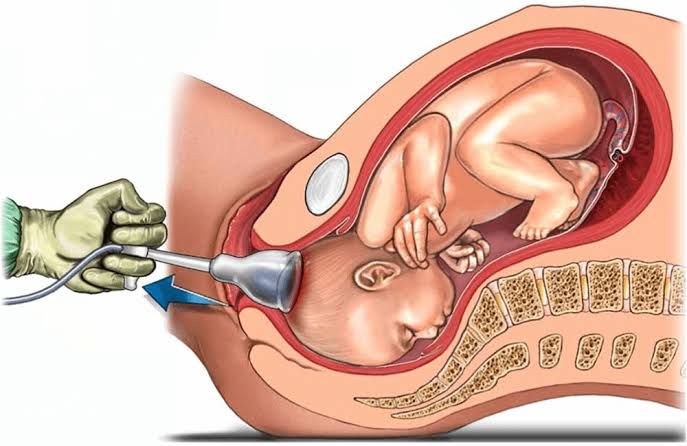
The vacuum extractor consists of a plastic or metal cup connected to a handheld vacuum pump and a traction handle. It creates negative pressure to form a “chignon” (a localized swelling of the scalp) on the fetal head, which the operator uses to apply traction.
- Step 1: Assemble and Test the Device: Before application, ensure the device is assembled correctly and test the vacuum pump to confirm it can achieve and maintain the required negative pressure.
- Step 2: Determine Cup Placement: The cup must be applied to the flexion point of the fetal head. This is the center of the sagittal suture, approximately 3 cm anterior to the posterior fontanelle. Placing it here encourages flexion of the fetal head, which is the smallest presenting diameter, and directs traction forces appropriately. It must not be applied over a fontanelle or suture line.
- Step 3: Apply the Cup: Insert the posterior edge of the cup into the vagina and slide it along the curve of the fetal head until it sits firmly on the flexion point. This is often facilitated by placing two fingers between the cup and the scalp during insertion to ensure the cervix or vaginal wall is not trapped.
- Step 4: Create Negative Pressure: Once correctly positioned, create the vacuum by activating the pump. The standard recommendation is to generate 20-30 cmHg of negative pressure (or 0.2-0.3 kg/cm²), which typically requires 2-3 pump activations. The chignon will form as the pressure is applied.
- Step 5: Apply Traction: Traction should be applied only during contractions, in concert with the mother’s voluntary pushing effort. The traction handle should be used to direct the fetal head along the pelvic axis, typically downward initially and then upward as the head crowns. The traction force should be steady, not jerky.
- Step 6: Limit Attempts and Release: The vacuum should not be in place for more than 20-30 minutes, and the number of pull attempts should be limited to three (or a total of 10-12 contractions). If the baby has not been delivered within these limits, the procedure has failed and an alternative (forceps or cesarean) must be considered. The vacuum must be released between attempts. If the vacuum cup pops off more than three times, the procedure should be abandoned.
B. Obstetric Forceps
Forceps are rigid instruments designed to grasp the fetal head. They consist of two blades that are curved to conform to the shape of the fetal head. Each blade has a cephalic curve (to fit the skull) and a pelvic curve (to align with the maternal pelvis). The blades are locked together to form a single unit.
- Step 1: The Major Principles of Application: The operator must understand the three key principles:
- Applicatio: The blades must be applied to the fetal head in the correct orientation to the pelvic diameters.
- Locking: The blades must be locked correctly.
- Traction and Rotation: Traction is applied in the correct axis, and rotation is performed only as needed and with controlled force.
- Step 2: Determine the Landmarks: A thorough vaginal exam is performed to confirm the position of the fetal head (sutures and fontanelles) and the degree of rotation.
- Step 3: Application of the Blades: The operator holds the handle of the first blade in the right hand and guides it, with the help of the left hand (often with two fingers), into the vagina along the curve of the pelvis. The blade is applied to the side of the fetal head, sliding over the malleable parietal bone. The left blade is typically applied first. Once the first blade is in place, its handle is held by an assistant. The operator then applies the second (right) blade with their right hand, using their left hand to guide it into the correct position on the opposite side of the fetal head.
- Step 4: Locking the Blades: Once both blades are correctly placed, they are locked. If the blades do not lock easily, they are likely misapplied and must be removed and reinserted. Forcing the lock can cause fetal injury.
- Step 5: The Pelvic Grip: After locking, the operator should gently wiggle the handles to ensure the blades are securely seated on the fetal head and not caught in the vaginal folds. The operator then places their hands on the handles in the pelvic grip (the non-dominant hand grasps the lock and the dominant hand grasps the handles superiorly).
- Step 6: Traction and Rotation: Traction is applied, beginning downward and forward in the axis of the pelvic outlet. As the head descends, the direction of traction is adjusted to follow the curve of the pelvis (i.e., upward). As with the vacuum, traction is synchronized with contractions and maternal effort. If rotation is needed (e.g., from Occiput Posterior to Occiput Anterior), it is performed during a contraction with controlled, steady pressure.
- Step 7: Cesarean Delivery if Fails: If no descent occurs after a few pulls with appropriate force, or if the head does not rotate when required, the diagnosis may be CPD or malposition. The procedure should be abandoned in favor of a cesarean delivery. It is critical to know when to stop.
Understanding the Risks and Potential Complications
OVD is associated with an increased risk of maternal and neonatal morbidity compared to spontaneous vaginal delivery. These risks are directly related to operator experience, instrument selection, and adherence to established guidelines.
Maternal Risks:
- Perineal Lacerations: OVD significantly increases the risk of third- and fourth-degree perineal tears (involving the anal sphincter and rectal mucosa).
- Hemorrhage: Increased blood loss is common due to trauma to the vaginal and perineal tissues and a higher incidence of uterine atony.
- Hematoma: Vulvar, vaginal, or retroperitoneal hematomas can form from trauma to blood vessels.
- Bladder Injury: Rare but serious risk, especially with forceps application.
- Increased Pain: Postpartum pain is often greater due to extensive tissue trauma.
Fetal Risks:
- Cutaneous Findings: Minor scalp abrasions and swelling (chignon with vacuum) are expected and resolve quickly.
- Cephalohematoma: A collection of blood between the periosteum and the skull bone. More common with vacuum use, it typically resolves over several weeks.
- Subgaleal Hemorrhage: A life-threatening condition where blood accumulates in the potential space beneath the galea aponeurotica. It is a rare but serious risk, more associated with vacuum extraction, and can lead to significant blood loss and shock.
- Intracranial Hemorrhage: The most severe complication, resulting from excessive traction, improper instrument placement, or application in the presence of CPD.
- Facial Nerve Palsy: Compression of the facial nerve by the forceps blade can cause temporary or, rarely, permanent weakness of the facial muscles.
- Retinal Hemorrhage: Can occur after any type of delivery but is seen more frequently with OVD. It is usually transient and clinically insignificant.
- Skull Fractures: Rare but can occur with excessive force.
Operator Training and Ethical Considerations
The safe performance of operative vaginal delivery is a complex skill that is not innate; it requires extensive training and mentorship. Proficiency is achieved through supervised practice, simulation, and a gradual progression from simple to complex cases. A critical ethical consideration is the management of a failed operative delivery. A procedure that fails and is followed by a cesarean delivery is associated with the highest rates of maternal and neonatal complications. Therefore, an operator must have the judgment and humility to recognize early when a delivery is not progressing and to convert to a cesarean delivery before exhaustion and trauma set in. In an era of declining rates of OVD, maintaining these skills through dedicated training programs and simulation is a major challenge for the obstetrical community. A provider’s clinical volume is directly correlated with their skill and outcomes.
Conclusion
Operative vaginal delivery remains an essential tool in the obstetrician’s armamentarium. It offers a safe and effective alternative to cesarean delivery for a select group of patients when performed by a skilled and experienced provider under ideal circumstances. The procedure is not a measure of convenience but a medically indicated intervention aimed at optimizing outcomes. Its successful execution relies on a deep understanding of pelvic anatomy, strict adherence to technical principles, careful patient selection, and the recognition of clear thresholds for abandoning the procedure. By following these guidelines, clinicians can harness the benefits of OVD while minimizing its inherent risks, thereby providing the highest standard of care to both mother and baby.
References
American College of Obstetricians and Gynecologists. (2020). Operative vaginal delivery (Practice Bulletin No. 215). Obstetrics & Gynecology, 136(4), e57-e65. https://doi.org/10.1097/AOG.0000000000004072
Dietz, H. P. (2019). The role of imaging in obstetric anal sphincter injury. Ultrasound in Obstetrics & Gynecology, 54(1), 12-19. https://doi.org/10.1002/uog.20253
Johanson, R. B., & Menon, V. K. (2000). Vacuum extraction versus forceps for assisted vaginal delivery. Cochrane Database of Systematic Reviews, (2), CD000446. https://doi.org/10.1002/14651858.CD000446
Lowe, B., & Swift, G. (2021). Operative vaginal delivery: A review of current practice and training. The Obstetrician & Gynaecologist, 23(3), 207-215. https://doi.org/10.1111/tog.12722
O’Mahony, F., Hofmeyr, G. J., & Menon, V. (2010). Choice of instruments for assisted vaginal delivery. Cochrane Database of Systematic Reviews, (11), CD000446. https://doi.org/10.1002/14651858.CD000446.pub2
Rossi, A. C., & Addario, V. P. (2019). Maternal and neonatal outcomes of operative vaginal delivery: A 10-year experience in a tertiary center. The Journal of Maternal-Fetal & Neonatal Medicine, 32(14), 2349-2354. https://doi.org/10.1080/14767058.2018.1446413