
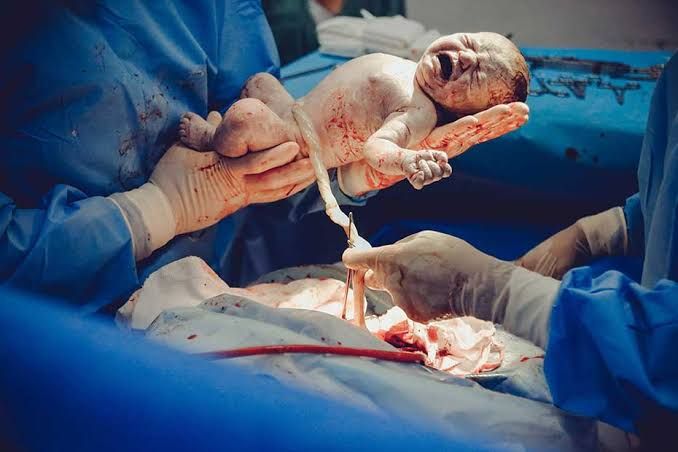
An emergent caesarean delivery is a critical obstetric procedure performed when the rapid delivery of the fetus is necessary to alleviate immediate threats to maternal or fetal well-being. It is a high-stakes, time-sensitive intervention demanding seamless coordination, expert decision-making, and swift action from a multidisciplinary team. The primary goal is to minimize morbidity and mortality for both mother and child while maintaining patient safety and adhering to best clinical practices.
Recognition and Rapid Decision-Making
The first crucial step is the prompt recognition of an emergent situation and a definitive decision to proceed with caesarean delivery. This often occurs within an extremely compressed timeframe. Clinical indications for an emergent caesarean section are diverse and include:
- Fetal Distress: Persistent severe fetal bradycardia, prolonged decelerations, severe variable decelerations, or non-reassuring fetal heart rate (FHR) patterns unresponsive to resuscitation.
- Maternal Hemorrhage: Placental abruption with active bleeding, placenta previa with severe hemorrhage, or vasa previa.
- Cord Prolapse: Umbilical cord presenting ahead of the fetal head, risking compression and fetal hypoxia.
- Uterine Rupture: Complete or incomplete rupture of the uterine wall, leading to significant maternal and fetal compromise.
- Failed Operative Vaginal Delivery: When attempts at forceps or vacuum delivery are unsuccessful or deemed unsafe.
- Eclampsia or Severe Pre-eclampsia: Rapid deterioration requiring immediate delivery to save the mother’s life.
- Other acute maternal conditions: Such as massive pulmonary embolism or acute cardiac events, where rapid delivery improves maternal survival.
The urgency of the situation is often categorized, with the widely adopted Royal College of Obstetricians and Gynaecologists (RCOG) classification being a useful framework:
- Category 1 (Immediate threat to life): Delivery should be performed immediately (e.g., within 30 minutes of decision-to-delivery interval, though often much faster) for conditions like acute fetal distress, cord prolapse, or major placental abruption.
- Category 2 (Maternal or fetal compromise not immediately life-threatening): Delivery usually required within 75 minutes, for situations like failure to progress with evolving fetal compromise.
- Category 3 (No compromise, but early delivery needed): For example, after discussion with consultants.
- Category 4 (Delivery at a time to suit patient and staff): Elective caesarean section.
For emergent cases (Category 1 and 2), the decision is made by the attending obstetrician, often in consultation with the anesthesiologist and neonatologist. Communication must be clear, concise, and immediate to activate the entire multidisciplinary team.
Immediate Preparation and Team Assembly
Concurrent with the decision to proceed, a flurry of activity must ensue. This phase focuses on rapid mobilization of personnel and preparation of the patient and operating environment.
- Team Assembly: The core team includes:
- Obstetrician(s): Primary surgeon and assistant.
- Anesthesiologist/Anesthesia Provider: Responsible for maternal anesthesia and resuscitation.
- Pediatrician/Neonatologist: To receive and resuscitate the neonate.
- Scrub Nurse/Surgical Technologist: To prepare instruments and assist the surgeon.
- Circulating Nurse: To manage the operating room (OR) environment, retrieve supplies, and document.
- Support Staff: Others like recovery room nurses, blood bank personnel.
- Patient Stabilization and Assessment:
- Intravenous Access: At least two large-bore IV lines (16G or larger) are established for fluid resuscitation and medication administration.
- Fluid Resuscitation: Crystalloids (e.g., Lactated Ringer’s) are administered rapidly to address hypovolemia or as a pre-load for regional anesthesia (though general anesthesia is often preferred for speed in Category 1 cases).
- Oxygen Administration: High-flow oxygen (10-15 L/min via non-rebreather mask) is given to the mother to optimize fetal oxygenation.
- Foley Catheter Insertion: For bladder decompression and monitoring urine output.
- Continuous Monitoring: Maternal vital signs (blood pressure, heart rate, oxygen saturation, ECG) and continuous FHR monitoring (if feasible and not delaying transfer) are maintained.
- Blood Products: Blood typing and cross-matching are initiated, and blood products (e.g., packed red blood cells) are prepared for potential transfusion, especially in cases of hemorrhage.
- Informed Consent: In true emergencies where delaying for full consent would endanger life, either verbal consent (documented) or implied consent (where intervention is medically necessary to save life, and the patient lacks capacity) may be obtained. A rapid “time-out” to confirm patient identity, procedure, and site should still be performed.
- Operating Room Setup:
- The OR should be pre-set for a caesarean section, with all necessary instruments, drapes, and supplies immediately available.
- Neonatal resuscitation equipment (warmer, suction, oxygen, intubation supplies) must be checked and ready.
- Warmed IV fluids and blankets should be prepared.
- Electrocautery unit checked and functional.
Anesthesia Management
The choice and administration of anesthesia are critical for both maternal safety and fetal outcome. In emergent situations, speed is paramount.
- Choice of Anesthesia:
- General Anesthesia: Often the preferred method for Category 1 emergencies due to its rapid onset. This is particularly true if the patient is unstable, uncooperative, or if there is insufficient time for regional anesthesia.
- Regional Anesthesia (Spinal/Epidural): While generally safer for the mother and associated with better neonatal outcomes (due to less fetal drug exposure and a more awake mother for bonding), it requires more time to administer and establish efficacy. If an existing epidural is in place and can be rapidly extended, it may be utilized for Category 2 cases.
- General Anesthesia Protocol (Rapid Sequence Induction – RSI):
- Patient Positioning: Left uterine displacement (LUD) is crucial to prevent aortocaval compression by the gravid uterus, ensuring adequate venous return and cardiac output. This is achieved by tilting the operating table or placing a wedge under the right hip.
- Pre-oxygenation: 100% oxygen is administered for 3-5 minutes to denitrogenate the lungs and create an oxygen reserve in case of difficult intubation.
- Rapid Sequence Induction (RSI): This involves the rapid administration of an induction agent (e.g., propofol, etomidate, ketamine) followed immediately by a muscle relaxant (e.g., succinylcholine) to facilitate intubation, while simultaneously applying cricoid pressure (Sellick’s maneuver) to prevent aspiration of gastric contents. Cricoid pressure is maintained until airway is secured with an endotracheal tube and cuff inflated.
- Maintenance: Anesthesia is maintained with volatile anesthetics (e.g., sevoflurane, desflurane, isoflurane) and/or intravenous agents, aiming for the lowest effective dose to minimize fetal depression.
- Monitoring: Continuous monitoring of maternal vital signs, ECG, SpO2, and end-tidal CO2 (EtCO2) is maintained.
Surgical Procedure
Once anesthesia is induced and the patient is positioned, the surgical procedure proceeds with urgency and precision.
- Skin Preparation and Draping: A rapid but aseptic skin prep (e.g., chlorhexidine or povidone-iodine solution) is performed over the abdomen, followed by sterile draping.
- Abdominal Incision: The choice of incision depends on the urgency and surgeon’s preference.
- Supra-pubic Transverse (Pfannenstiel) incision: Most common for elective and less urgent emergent cases due to better cosmetic results and lower incidence of wound complications.
- Midline Vertical incision: Preferred in extreme emergencies (e.g., massive hemorrhage, very rapid delivery required) as it offers the quickest access to the uterus and can be extended easily if needed, though it carries a higher risk of wound dehiscence and ventral hernia.
- Uterine Incision:
- Lower Uterine Segment Transverse (Kerr incision): The most common type of uterine incision due to lower blood loss, easier repair, and a stronger scar in subsequent pregnancies.
- Classical (Vertical Fundal) incision: Rarely used, reserved for specific circumstances such as severe placenta previa with the placenta in the lower segment, transverse lie with an unengaged head, or fetal anomaly requiring a particular entry. It carries a higher risk of rupture in subsequent pregnancies.
- Delivery of the Infant: The surgeon rapidly enters the uterine cavity, taking care to avoid injury to the fetus. The infant is delivered, usually by gentle traction and manipulation, often with an assistant applying fundal pressure. The time from skin incision to fetal delivery is a critical interval.
- Cord Clamping and Neonatal Care: The umbilical cord is clamped and cut immediately, and the neonate is handed over to the waiting pediatric or neonatology team for assessment, resuscitation, and stabilization. Delayed cord clamping is generally not performed in emergent situations due to the urgency.
- Placental Delivery: Following fetal delivery, the placenta is delivered, usually by controlled cord traction and gentle uterine massage. Inspection for completeness is vital.
- Uterine Repair and Hemostasis: The uterine incision is carefully repaired in one or two layers, with meticulous attention to hemostasis. Uterotonic agents (e.g., oxytocin infusion) are administered to promote uterine contraction and prevent post-partum hemorrhage.
- Abdominal Closure: The abdominal wall layers (peritoneum, fascia, subcutaneous tissue, skin) are closed systematically.
Post-operative Management and Monitoring
Post-operative care is crucial for monitoring maternal recovery and preventing complications.
- Recovery Room Monitoring: The mother is transferred to a post-anesthesia care unit (PACU) or high-dependency unit for intensive monitoring of vital signs, uterine tone, vaginal bleeding, and pain level.
- Uterine Tone and Hemorrhage: Regular fundal massage is performed to ensure the uterus remains firm. Uterotonics (e.g., oxytocin, carboprost, misoprostol, methylergonovine) are continued or administered as needed to prevent or manage postpartum hemorrhage.
- Fluid and Electrolyte Management: IV fluids are continued as per protocol, and electrolyte balance is monitored.
- Pain Management: Multimodal analgesia, including intravenous opioids, NSAIDs, and regional techniques (e.g., transversus abdominis plane block), is implemented to ensure adequate pain control.
- Antibiotics: Prophylactic broad-spectrum antibiotics are typically administered pre-operatively or intra-operatively to reduce the risk of post-operative infection.
- Thromboprophylaxis: Mechanical (e.g., sequential compression devices) and/or pharmacological (e.g., low molecular weight heparin) thromboprophylaxis is initiated to prevent venous thromboembolism.
- Early Ambulation: Encouraged as soon as medically stable to prevent complications like DVT and promote recovery.
- Breastfeeding and Bonding: Facilitated as soon as the mother and infant are stable.
Communication and Documentation
Effective communication is paramount throughout the entire process. Each team member must understand their role, and critical information must be relayed promptly. Meticulous documentation of events, timings, interventions, and outcomes is essential for continuity of care, legal protection, and quality improvement. This includes timings for decision to incision, incision to delivery, and details of anesthetic and surgical procedures, as well as neonatal condition at birth.
Potential Complications
Emergent caesarean deliveries carry inherent risks, which can be mitigated but not entirely eliminated. Potential complications include:
- Postpartum Hemorrhage: The most common and serious complication, often due to uterine atony.
- Anesthetic Complications: Aspiration pneumonitis, malignant hyperthermia, adverse drug reactions, failed intubation.
- Infection: Endometritis, wound infection.
- Injury to Adjacent Organs: Bladder, bowel, ureters.
- Thromboembolic Events: Deep vein thrombosis, pulmonary embolism.
- Neonatal Complications: Respiratory distress (especially with general anesthesia), birth trauma.
Conclusion
The management of an emergent caesarean delivery is a testament to the power of interdisciplinary teamwork, rapid assessment, and skilled execution under immense pressure. It requires continuous training, regular drills, and adherence to established protocols to optimize outcomes for both mother and infant. While the urgency demands swift action, patient safety and meticulous care remain the cornerstone of successful management, highlighting the crucial balance between speed and precision in these critical obstetric scenarios.
References:
- American College of Obstetricians and Gynecologists (ACOG). (2020). Practice Bulletin No. 222: Caesarean Delivery. Obstetrics & Gynecology, 136(6), e197-e214.
- Royal College of Obstetricians and Gynaecologists (RCOG). (2020). Caesarean Section (Green-top Guideline No. 45).
- Chestnut, D. H., Wong, C. A., Tsen, L. C., & Ngan Kee, W. D. (Eds.). (2020). Chestnut’s Obstetric Anesthesia: Principles and Practice (6th ed.). Elsevier.
- Gabbe, S. G., Niebyl, J. R., Simpson, J. L., Landon, M. B., Galan, H. L., Jauniaux, E. R. M., & Driscoll, D. A. (Eds.). (2017). Gabbe’s Obstetrics: Normal and Problem Pregnancies (7th ed.). Elsevier.
- UpToDate. (Accessed 2023). Overview of cesarean delivery. Wolters Kluwer.