
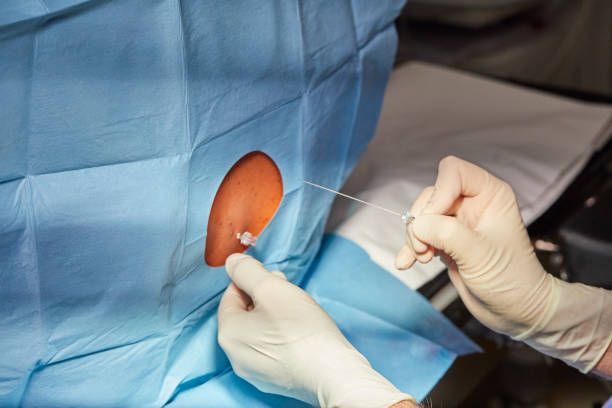
Doctor is inserting an epidural catheter into a patient's back
Spinal-induced hypotension (SIH) is the most common complication following neuraxial blockade for Cesarean delivery, occurring in 70% to 80% of unprophylacted patients. Defined clinically as a decrease in systolic blood pressure (SBP) of more than 20% from baseline, or an SBP reading below 100 mmHg, SIH is critically important due to its potential to compromise both maternal and fetal well-being. Maternal symptoms range from lightheadedness, nausea, and vomiting to severe cardiac arrest; for the fetus, sustained or severe hypotension results in reduced placental perfusion, leading potentially to fetal acidosis and low APGAR scores.
Effective management of SIH relies on a standardized, multimodal approach that integrates prophylactic measures, meticulous monitoring, and rapid, aggressive treatment guided by contemporary evidence.
Understanding the Pathophysiology
Before implementing preventative steps, it is essential to understand the dual mechanism of SIH:
- Sympathetic Blockade: Spinal anesthesia blocks the preganglionic sympathetic fibers, which typically ascend to a level higher than the sensory block (often T4 or above). This widespread blockade causes profound arterial and venous dilation (vasodilation), leading to decreased systemic vascular resistance (SVR) and a significant reduction in venous return to the heart. This consequently impairs cardiac output (CO).
- Aortocaval Compression (ACC): The gravid uterus, especially near term, compresses the inferior vena cava (IVC) and, to a lesser extent, the aorta when the mother is supine. This physical compression severely restricts venous return, exacerbating the hypotension initiated by the sympathetic block. While ACC is not directly caused by the spinal anesthetic, its presence profoundly lowers the tolerance for the vasodilation induced by the blockade.
Pre-Induction Preparation and Optimization
The initial phase focuses on preparation, patient positioning, and establishing clear physiological baselines.
1. Baseline Assessment and Patient Education
- Establish Baseline: Accurately measure and document the patient’s pre-anesthesia blood pressure (BP) and heart rate (HR). This baseline guides treatment thresholds.
- Patient Education: Inform the patient that a drop in BP is expected but manageable. Explain that reporting early symptoms like nausea, warmth, or lightheadedness will facilitate immediate intervention.
2. Optimization of Positioning
- Left Uterine Displacement (LUD): This is a mandatory maneuver. Placing the patient in a lateral position or using a wedge (such as a degree tilt wedge or a folded blanket) beneath the right hip effectively displaces the uterus to the left, partially relieving ACC on the IVC and aorta. This improves venous return and CO. LUD should be maintained at 15 to 30 degrees continuously from the time of neuraxial placement until delivery.
3. Anesthetic Agent Selection and Dosing
- Minimum Effective Dose: The extent and intensity of the sympathetic block are directly related to the dose and spread of the local anesthetic. Utilizing the minimum effective dose of hyperbaric bupivacaine, often combined with lipophilic opioids (e.g., fentanyl or sufentanil), can slightly dampen the speed and severity of the sympathetic block compared to large, high-concentration local anesthetic doses.
- Speed of Injection: While not a primary preventive measure, injecting the local anesthetic slowly (over 30–60 seconds) may produce a slightly less abrupt onset of sympathetic blockade.
Mechanical and Fluid Management Strategies
These strategies are implemented simultaneously with or immediately following the spinal injection to mechanically support CO and SVR.
1. Volume Administration: Co-loading vs. Pre-loading
- Crystalloid Pre-loading (Historical): The practice of rapid infusion of crystalloids (e.g., 1000–1500 mL Ringer’s Lactate) before the spinal block is largely abandoned. Studies show that the fluid redistributes from the intravascular space too quickly to maintain adequate volume throughout the hypotensive period. Pre-loading is generally ineffective due to poor clinical impact and can lead to increased maternal discomfort and pulmonary edema risk.
- Crystalloid Co-loading (Current Practice): The contemporary approach favors co-loading, where a rapid infusion (usually 500–1000 mL crystalloid) is started simultaneously with the administration of the spinal anesthetic. While co-loading alone is insufficient to prevent severe SIH, it complements pharmacologic strategies by optimizing the circulating volume and filling the newly dilated vascular bed.
- Colloids: While more effective at increasing intravascular volume, colloids (e.g., hydroxyethyl starch or albumin) are generally reserved for high-risk patients or those who have significant hemorrhage, due to cost and safety concerns associated with their routine use.
Prophylactic Pharmacologic Management (The Gold Standard)
Prophylactic vasopressor administration is the most critical component of modern SIH prevention. The goal is to maintain SVR and venous return until the block stabilizes.
1. Phenylephrine (The Preferred Agent)
- Mechanism: Phenylephrine is a pure, direct-acting alpha-1 adrenergic receptor agonist. It causes potent vasoconstriction, thereby increasing SVR and maintaining BP. Because it has minimal beta-adrenergic effects, it primarily supports vascular tone rather than cardiac contractility.
- Dosing Strategy: Current best practice favors prophylactic continuous infusion titrated to maintain SBP within 80% to 100% of baseline.
- Infusion: Typically started at 25–50 mcg/min immediately after the spinal block.
- Intermittent Bolus: If an infusion pump is unavailable, intermittent boluses (50–100 mcg) are administered immediately after injection and repeated every 1–2 minutes if SBP drops below the target threshold.
- Advantages: Phenylephrine has been shown to be superior to Ephedrine because it better maintains maternal CO and pH, resulting in less fetal acidosis and improved neonatal outcome measures (Apgar scores, umbilical artery pH).
- Caution (Phenylephrine-Induced Bradycardia): Due to the baroreceptor reflex triggered by the rapid increase in SVR, phenylephrine commonly causes reflex bradycardia. If maternal HR drops below 50 beats per minute (bpm), treatment with Ephedrine or Atropine is required.
2. Ephedrine (The Second-Line Agent)
- Mechanism: Ephedrine is a mixed-acting sympathomimetic (both alpha and beta effects). It increases SVR (alpha effect) and contractility/HR (beta effect).
- Role: While historically the standard, Ephedrine is now primarily reserved for situations where the patient presents with pre-existing bradycardia, or when profound hypotension is coupled with relative bradycardia (HR < 60 bpm).
- Disadvantages: Ephedrine crosses the placenta readily and is associated with increased fetal metabolic acidosis compared to phenylephrine.
Intraoperative Monitoring and Early Recognition
Continuous vigilance is necessary because even the best prophylactic regimens can fail to prevent SIH in some patients.
1. Continuous Monitoring Protocol
- Non-Invasive Blood Pressure (NIBP): BP should be measured and recorded every minute for the first 10 to 15 minutes following the spinal injection, and then every 2 to 3 minutes until delivery.
- Heart Rate and Oxygen Saturation: Continuous monitoring of HR, rhythm (ECG), and pulse oximetry (SpO2) is mandatory.
2. Recognizing Early Signs
The anesthetic team must recognize subtle signs that precede severe hypotension:
- Nausea and Vomiting (N/V): The most common early symptoms of hypotension are nausea and vomiting (occurring in up to 80% of hypotensive mothers). This is often due to cerebral hypoperfusion and increased vagal tone.
- Maternal Complaints: Lightheadedness, ringing in the ears, or a rapid feeling of warmth.
If any of these signs appear, the team should preemptively administer an additional bolus of the prophylactic vasopressor while awaiting the next scheduled BP measurement.
Active Management of Established Hypotension
When prevention fails—defined as SBP falling below the threshold (e.g., < 100 mmHg or > 20% drop from baseline)—management must be immediate and aggressive.
1. The Hypotension Treatment Bundle (Immediate Actions)
- Stop Surgical Stimulation (If Possible): While treatment proceeds, alert the surgical team.
- Reposition: Confirm and optimize Left Uterine Displacement (LUD). Tilt the table further left if necessary.
- Bolus Vasopressor: Immediately administer an IV bolus of Phenylephrine (50–100 mcg). Repeat every minute until SBP is restored.
- Increase Infusion Rate: If on a continuous infusion, increase the rate drastically (often double or triple the initial rate) until BP stabilizes.
- Increase IV Flow Rate: Open the crystalloid infusion wide temporarily to provide a rapid volume push.
2. Management of Associated Complications
- Bradycardia (HR < 50 bpm): Requires immediate treatment to prevent cardiac arrest, especially if coupled with hypotension.
- Treatment: Administer Ephedrine (5–10 mg IV) or Atropine (0.4–0.6 mg IV).
- Refractory Hypotension: If multiple doses of Phenylephrine fail to raise SBP, or if the patient is profoundly bradycardic, switch to Ephedrine (5–10 mg IV). If the patient remains unstable, consider escalating monitoring (e.g., invasive arterial line placement) and ruling out high neuraxial block, massive hemorrhage, or amniotic fluid embolism (AFE).
- Oxygenation: Administer 100% supplemental oxygen via face mask to maximize the oxygen content delivered to the placenta during the period of reduced perfusion.
- Nausea/Vomiting: Treat proactively with antiemetics (e.g., Ondansetron 4 mg IV) as nausea often resolves rapidly once BP is restored.
Conclusion
The prevention and immediate management of spinal-induced hypotension for Cesarean delivery represents a cornerstone of obstetric anesthesia safety. By implementing a standardized, multimodal protocol encompassing vigilant LUD, rapid co-loading, aggressive prophylactic vasopressor use—with phenylephrine infusion as the agent of choice—and rapid, protocol-driven treatment of established hypotension, anesthesiologists can ensure maternal hemodynamic stability and optimize fetal outcomes. Strict adherence to established monitoring protocols and a willingness to treat early signs of instability are paramount to minimizing the risk associated with this highly predictable complication.
References
- Dyer, R. A., Butwick, A. J., & Carvalho, B. (2020). The role of vasopressors in the prevention and treatment of spinal-induced hypotension in obstetric patients. Current Opinion in Anesthesiology, 33(3), 303–309.
- Ngan Kee, W. D. (2019). Prevention of hypotension after spinal anesthesia for Cesarean delivery. F1000Research, 8(F1000 Faculty Rev), 93.
- American Society of Anesthesiologists (ASA). (2020). Practice Guidelines for Obstetric Anesthesia. Retrieved from ASA official publications.
- Heesen, M., Stewart, A., Rossaint, R., & Straube, S. (2020). Efficacy and safety of phenylephrine for the maintenance of blood pressure during spinal anaesthesia for Caesarean section: a systematic review and meta-analysis. British Journal of Anaesthesia, 124(6), e246-e258.
- MacArthur, A., & Riley, E. T. (2019). The evolving role of vasopressors in obstetric anesthesia. Anesthesiology Clinics, 37(1), 163–175.
- Kinsella, S. M., et al. (2009). A national survey of the clinical management of hypotension during spinal anesthesia for Caesarean section. International Journal of Obstetric Anesthesia, 18(4), 316–322.