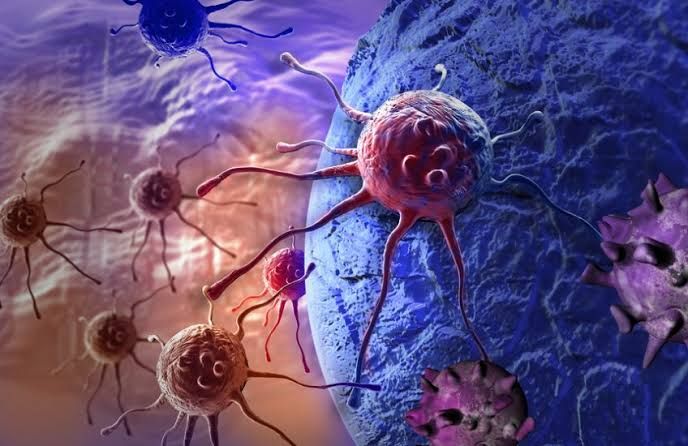
Two-Hit Hypothesis of Knudson
The Two-Hit Hypothesis, proposed by Alfred G. Knudson Jr. in 1971, explains the mechanism of tumor development in certain types of cancer, particularly retinoblastoma, a rare childhood eye cancer. This hypothesis suggests that tumor suppressor genes require two mutations (or “hits”) to be inactivated, leading to tumor formation.
- First Hit: The initial mutation can be either inherited or acquired spontaneously. In hereditary retinoblastoma, individuals inherit one mutated copy of the RB1 gene (a tumor suppressor gene) from a parent. In sporadic retinoblastoma, the first mutation occurs spontaneously in a retinal cell.
- Second Hit: The second mutation occurs in the remaining normal copy of the RB1 gene in the same cell. This can happen through various mechanisms, such as:
- Loss of heterozygosity (LOH): Loss of the normal allele due to chromosomal deletion or mitotic recombination.
- Point mutation: A new mutation in the remaining normal allele.
- Epigenetic silencing: Inactivation of the normal allele through DNA methylation or histone modification.
Once both copies of the RB1 gene are inactivated, the cell loses its ability to regulate cell growth and division, leading to uncontrolled proliferation and tumor formation.
Tumor Suppressor Genes
Tumor suppressor genes are genes that regulate cell growth and prevent uncontrolled cell division. They act as “brakes” on cell proliferation, ensuring that cells only divide when appropriate. When tumor suppressor genes are inactivated or lost, cells can grow and divide uncontrollably, leading to tumor formation.
Functions of Tumor Suppressor Genes:
- Cell cycle regulation: Some tumor suppressor genes control the cell cycle, ensuring that cells only divide when they have completed all necessary steps and have no DNA damage. Examples include RB1, TP53, and CDKN2A.
- DNA repair: Some tumor suppressor genes are involved in DNA repair, fixing errors that occur during DNA replication or due to environmental damage. Examples include BRCA1, BRCA2, and ATM.
- Apoptosis (programmed cell death): Some tumor suppressor genes promote apoptosis, eliminating cells that are damaged or have the potential to become cancerous. Examples include TP53 and BAX.
- Cell adhesion: Some tumor suppressor genes regulate cell adhesion, ensuring that cells remain in their proper location and do not invade other tissues. Examples include APC and E-cadherin.
Examples of Tumor Suppressor Genes:
- RB1: Regulates the cell cycle by binding to and inhibiting the E2F transcription factor, which is required for cell cycle progression.
- TP53: Activates DNA repair, cell cycle arrest, and apoptosis in response to DNA damage.
- BRCA1 and BRCA2: Involved in DNA repair, particularly double-strand break repair.
- APC: Regulates cell adhesion and prevents the formation of polyps in the colon.
Cellular Changes in Tumor Cells
Tumor cells exhibit several characteristic changes that distinguish them from normal cells. These changes contribute to their ability to grow uncontrollably, invade tissues, and metastasize.
- Uncontrolled proliferation: Tumor cells divide rapidly and uncontrollably, ignoring normal growth signals and cell cycle checkpoints.
- Loss of contact inhibition: Normal cells stop dividing when they come into contact with other cells, a process called contact inhibition. Tumor cells lose this ability and continue to divide even when they are surrounded by other cells.
- Anchorage independence: Normal cells require attachment to a solid surface to grow and divide. Tumor cells can grow and divide without being attached to a surface, allowing them to metastasize to distant sites.
- Evading apoptosis: Tumor cells often develop resistance to apoptosis, allowing them to survive even when they are damaged or have the potential to become cancerous.
- Angiogenesis: Tumor cells stimulate the formation of new blood vessels (angiogenesis) to supply them with nutrients and oxygen, promoting their growth and survival.
- Metastasis: Tumor cells can invade surrounding tissues and spread to distant sites in the body, forming new tumors.
- Genomic instability: Tumor cells often have mutations and chromosomal abnormalities, leading to genomic instability and further tumor progression.
- Metabolic reprogramming: Tumor cells often reprogram their metabolism to favor glycolysis, even in the presence of oxygen (Warburg effect), to support their rapid growth and division.
- Immune evasion: Tumor cells can evade the immune system by suppressing immune responses or hiding from immune cells.
DNA Repair Defects
DNA repair defects play a crucial role in cancer development. DNA repair mechanisms are essential for maintaining genomic stability by correcting errors that occur during DNA replication or due to environmental damage. When these repair mechanisms are defective, mutations accumulate in the genome, increasing the risk of cancer.
Types of DNA Repair Pathways:
- Base excision repair (BER): Repairs damaged or modified bases in DNA.
- Nucleotide excision repair (NER): Repairs bulky DNA lesions, such as those caused by UV radiation.
- Mismatch repair (MMR): Corrects mismatched base pairs that occur during DNA replication.
- Homologous recombination (HR): Repairs double-strand DNA breaks using a homologous template.
- Non-homologous end joining (NHEJ): Repairs double-strand DNA breaks without using a homologous template.
Consequences of DNA Repair Defects:
- Increased mutation rate: DNA repair defects lead to an increased mutation rate, as errors in DNA replication and damage are not corrected.
- Genomic instability: The accumulation of mutations and chromosomal abnormalities leads to genomic instability, which further promotes tumor development.
- Increased risk of cancer: Individuals with inherited or acquired defects in DNA repair genes have an increased risk of developing cancer.
Examples of DNA Repair Genes and Associated Cancers:
- BRCA1 and BRCA2: Involved in homologous recombination repair. Mutations in these genes increase the risk of breast, ovarian, and other cancers.
- MLH1, MSH2, MSH6, and PMS2: Involved in mismatch repair. Mutations in these genes cause Lynch syndrome, which increases the risk of colorectal, endometrial, and other cancers.
- ATM: Involved in DNA damage signaling and repair. Mutations in this gene cause ataxia-telangiectasia, which increases the risk of leukemia, lymphoma, and other cancers.
- Xeroderma pigmentosum (XP) genes: Involved in nucleotide excision repair. Mutations in these genes cause xeroderma pigmentosum, which increases the risk of skin cancer.
Homing of Tumor Cells
Homing of tumor cells refers to the process by which cancer cells preferentially migrate to and colonize specific distant sites in the body. This phenomenon explains why certain cancers tend to metastasize to particular organs more frequently than others.
Mechanisms of Tumor Cell Homing:
- Circulation patterns: The circulatory system plays a role in determining where tumor cells travel. Tumor cells that enter the bloodstream can be carried to any organ in the body, but they are more likely to be trapped in organs with a high blood flow or with capillaries that are easily accessible to cancer cells.
- Adhesion molecules: Tumor cells express specific adhesion molecules that allow them to bind to endothelial cells lining the blood vessels in target organs. These adhesion molecules interact with complementary receptors on the endothelial cells, facilitating the attachment of tumor cells to the vessel wall.
- Chemokines and cytokines: Chemokines and cytokines are signaling molecules that attract tumor cells to specific sites. Tumor cells express receptors for these molecules, allowing them to migrate along a concentration gradient towards the target organ.
- Growth factors: Growth factors secreted by cells in the target organ can stimulate the growth and survival of tumor cells that have metastasized to that site.
- Soil and seed hypothesis: This hypothesis suggests that the target organ (the “soil”) must be receptive to the tumor cells (the “seeds”) for metastasis to occur. The target organ may provide a favorable microenvironment for tumor cell growth and survival, including nutrients, growth factors, and immune suppression.
Development of Sustained Angiogenesis
Angiogenesis, the formation of new blood vessels, is essential for tumor growth and metastasis. Tumors require a constant supply of oxygen and nutrients to grow beyond a certain size, and they also need blood vessels to remove waste products. Tumor cells stimulate angiogenesis by secreting factors that promote the growth and migration of endothelial cells, which form the lining of blood vessels.
Steps in Angiogenesis:
- Release of pro-angiogenic factors: Tumor cells secrete pro-angiogenic factors, such as vascular endothelial growth factor (VEGF), fibroblast growth factor (FGF), and platelet-derived growth factor (PDGF).
- Activation of endothelial cells: Pro-angiogenic factors bind to receptors on endothelial cells, activating them and stimulating them to proliferate, migrate, and form new blood vessels.
- Degradation of the basement membrane: Endothelial cells secrete enzymes that degrade the basement membrane, a layer of extracellular matrix that surrounds blood vessels. This allows the endothelial cells to migrate out of the existing blood vessels and into the tumor.
- Migration of endothelial cells: Endothelial cells migrate towards the tumor, guided by pro-angiogenic factors and other signals.
- Formation of new blood vessels: Endothelial cells align themselves and form new blood vessels, which connect to the existing vasculature.
- Stabilization of new blood vessels: The newly formed blood vessels are stabilized by pericytes, cells that surround the endothelial cells and provide structural support.
Factors Regulating Angiogenesis:
- Pro-angiogenic factors: VEGF, FGF, PDGF, and other factors that promote angiogenesis.
- Anti-angiogenic factors: Angiostatin, endostatin, thrombospondin-1, and other factors that inhibit angiogenesis.
- Hypoxia: Low oxygen levels in the tumor microenvironment stimulate the production of pro-angiogenic factors.
- Oncogenes and tumor suppressor genes: Certain oncogenes and tumor suppressor genes can regulate the production of pro-angiogenic and anti-angiogenic factors.
- Immune cells: Immune cells can either promote or inhibit angiogenesis, depending on the context.
References:
- Knudson, A. G. (1971). Mutation and cancer: statistical study of retinoblastoma. Proceedings of the National Academy of Sciences, 68(4), 820-823.
- Vogelstein, B., & Kinzler, K. W. (2004). Cancer genes and the pathways they control. Nature medicine, 10(8), 789-799.
- Hanahan, D., & Weinberg, R. A. (2011). Hallmarks of cancer: the next generation. Cell, 144(5), 646-674.
- Friedl, P., & Gilmour, D. (2009). Collective cell migration in morphogenesis, regeneration and cancer. Nature Reviews Molecular Cell Biology, 10(7), 445-457.
- Carmeliet, P. (2005). Angiogenesis in cancer and other diseases. Nature, 438(7070), 932-936.