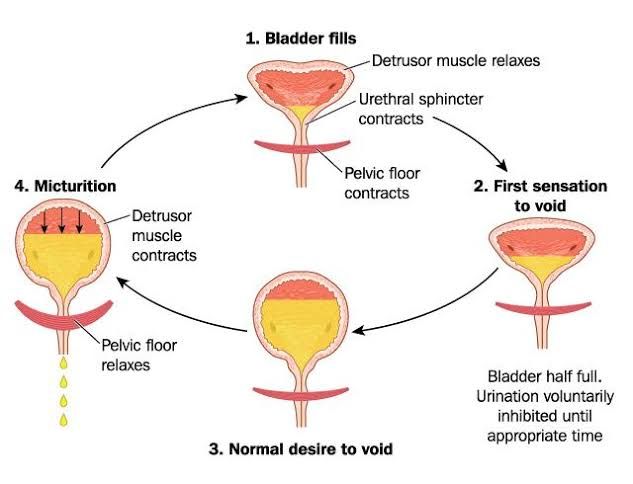
As a fundamental physiological process, micturition, commonly known as urination or voiding, represents the complex culmination of neural and muscular coordination that facilitates the elimination of urine from the body. This intricate mechanism ensures proper waste management, electrolyte balance, and overall bodily homeostasis. Understanding micturition involves delving into the sophisticated interplay between the autonomic and somatic nervous systems, the mechanics of bladder filling and emptying, and the various conditions that can disrupt this delicate balance.
Definition of Micturition
Micturition is the physiological act of expelling urine from the urinary bladder through the urethra. It is a highly coordinated process that involves both involuntary (reflexive) and voluntary control mechanisms, primarily orchestrated by the nervous system. This process is essential for maintaining fluid and electrolyte balance, as it rids the body of metabolic waste products and excess water collected in the urine.
At its core, micturition involves two principal phases:
- Storage Phase (Filling Phase): During this phase, the urinary bladder progressively fills with urine transported from the kidneys via the ureters. The bladder musculature remains relaxed, and the urethral sphincters remain contracted to prevent leakage. This phase is predominantly under sympathetic and somatic nervous system control.
- Voiding Phase (Emptying Phase): Once the bladder reaches a certain distension, stretch receptors initiate signals that trigger the micturition reflex. This reflex, modulated by higher brain centers, leads to the contraction of the bladder muscle (detrusor) and the relaxation of the urethral sphincters, allowing urine to be expelled. This phase is primarily under parasympathetic nervous system control, with voluntary override via the somatic nervous system.
The efficiency and control of micturition are vital for quality of life, and any disruption can lead to various forms of urinary dysfunction.
Process of Urine Storage, Elimination, and Its Control (Autonomic Nervous System – ANS)
The urinary bladder acts as a reservoir for urine, and its function involves two distinct, intricately regulated phases: storage and voiding. The Autonomic Nervous System (ANS), complemented by the somatic nervous system, plays a pivotal role in regulating these processes.
A. Urine Storage (Filling Phase):
During the storage phase, the bladder accommodates increasing volumes of urine without a significant rise in intravesical pressure, and urine leakage is prevented. This phase is predominantly under the influence of the sympathetic and somatic nervous systems:
- Autonomic Nervous System (ANS) – Sympathetic Control:
- Origin: Sympathetic efferent fibers originate from the thoracolumbar spinal cord segments (T10-L2) and travel via the hypogastric nerves to the bladder and urethra.
- Detrusor Relaxation: Sympathetic stimulation causes relaxation of the detrusor muscle (the smooth muscle forming the bladder wall). This is mediated by beta-3 adrenergic receptors located on the detrusor muscle, which, when activated, promote muscle relaxation, allowing the bladder to expand and store more urine at low pressure (compliance).
- Internal Urethral Sphincter Contraction: Sympathetic activity also mediates the contraction of the internal urethral sphincter (IUS), a layer of smooth muscle at the bladder neck in males and a functional sphincter in females. This contraction is mediated by alpha-1 adrenergic receptors, preventing urine outflow.
- Inhibition of Parasympathetic Activity: Sympathetic input can also inhibit parasympathetic activity, further ensuring bladder relaxation during filling.
- Somatic Nervous System Control:
- External Urethral Sphincter (EUS) Tone: The external urethral sphincter, composed of skeletal muscle, is under voluntary control via the pudendal nerve, which originates from the sacral spinal cord (S2-S4). During filling, tonic activation of the pudendal nerve maintains the EUS in a contracted state, providing an additional barrier against urine leakage. This allows individuals to voluntarily prevent urination even when the bladder is full.
- Sensory Input: As the bladder fills, stretch receptors in its wall send afferent signals via the pelvic nerves (parasympathetic afferents) to the sacral spinal cord (S2-S4) and ascend to higher brain centers, including the pontine micturition center (PMC) and the cerebral cortex. These signals provide conscious awareness of bladder fullness. Initial signals are perceived as a mild urge, progressing to a strong desire to void as volume increases.
B. Urine Elimination (Voiding Phase):
When the bladder reaches a critical volume (typically 300-500 ml) or when a voluntary decision is made to void, a coordinated series of events leads to urine expulsion. This phase is dominated by the parasympathetic nervous system, with crucial modulation from higher brain centers and the somatic nervous system.
- Autonomic Nervous System (ANS) – Parasympathetic Control:
- Origin: Parasympathetic efferent fibers originate from the sacral spinal cord segments (S2-S4) and travel via the pelvic nerves to the bladder and internal urethral sphincter.
- Detrusor Contraction: Activation of these parasympathetic fibers releases acetylcholine (ACh), which acts on M3 muscarinic receptors on the detrusor muscle, causing it to contract forcefully. This contraction dramatically increases intravesical pressure, forcing urine into the urethra.
- Internal Urethral Sphincter Relaxation: Simultaneously, parasympathetic activity also inhibits sympathetic output and may directly facilitate the relaxation of the internal urethral sphincter, although less directly than detrusor contraction.
- Inhibition of Sympathetic Activity: During voiding, sympathetic outflow to the bladder and internal sphincter is inhibited, further facilitating detrusor contraction and sphincter relaxation.
- Somatic Nervous System Control:
- External Urethral Sphincter (EUS) Relaxation: For successful voiding, the voluntary contraction of the EUS must be inhibited. This is achieved by inhibiting the activity of the pudendal nerve, leading to the relaxation of the EUS. This voluntary relaxation is a critical step in initiating and sustaining the urine flow.
- Central Nervous System (CNS) Coordination:
- The transition from storage to voiding is precisely coordinated by the Pontine Micturition Center (PMC), also known as Barrington’s nucleus, located in the brainstem. The PMC acts as a “switch” that integrates sensory input from the bladder with descending commands from the cerebral cortex.
- When voiding is appropriate, the PMC activates the parasympathetic pathways to stimulate detrusor contraction and inhibits the sympathetic and somatic pathways that keep the sphincters contracted.
- Higher cortical centers exert voluntary control, allowing an individual to override or initiate the micturition reflex based on social appropriateness and personal volition.
In essence, urine storage is a low-pressure, sympathetic- and somatic-dominant phase (filling and continence), while voiding is a high-pressure, parasympathetic-dominant phase (emptying). The precise coordination of these neural pathways ensures a socially acceptable and physiologically efficient micturition process.
The Micturition Reflex
The micturition reflex is the primary neural mechanism that governs bladder emptying. It is a spinal reflex that can be voluntarily facilitated or inhibited by higher brain centers. This reflex ensures that once a certain bladder volume is reached, the body automatically attempts to void, unless consciously overridden.
The reflex arc involves:
A. Afferent Pathway (Sensory Input):
- Stretch Receptors: As urine accumulates in the bladder, its walls stretch. Specialized stretch receptors (mechanoreceptors) embedded within the detrusor muscle and bladder wall are activated by this distension.
- Signal Transmission: These receptors transmit afferent (sensory) signals primarily along thinly myelinated Aδ fibers and unmyelinated C fibers within the pelvic nerves (which are part of the parasympathetic nervous system).
- Spinal Cord Entry: These sensory fibers enter the sacral spinal cord at segments S2, S3, and S4, forming the afferent limb of the micturition reflex arc.
- Ascending Pathways: From the sacral spinal cord, sensory signals ascend to higher brain centers:
- To the Pontine Micturition Center (PMC) in the brainstem, which is crucial for coordinating the actual voiding process.
- To the thalamus and then to the cerebral cortex (specifically the insula and anterior cingulate gyrus), providing conscious awareness of bladder fullness and the urge to void.
B. Integration and Coordination (Central Processing):
- Sacral Micturition Center: In the sacral spinal cord (S2-S4), interneurons integrate the sensory input. If the bladder is only mildly distended, the reflex may be weak or easily inhibited.
- Pontine Micturition Center (PMC – Barrington’s Nucleus): This is the crucial coordinating center for micturition. It receives input from the sacral spinal cord and descending commands from the cerebral cortex. When activated, the PMC acts as a “switch” to initiate voiding:
- It sends excitatory signals to the parasympathetic preganglionic neurons in the sacral spinal cord (promoting detrusor contraction).
- It sends inhibitory signals to the sympathetic preganglionic neurons in the thoracolumbar spinal cord (relaxing the internal urethral sphincter).
- It sends inhibitory signals to the pudendal nerve nucleus in the sacral spinal cord (relaxing the external urethral sphincter).
- Cerebral Cortex: Higher brain centers, particularly the prefrontal cortex and anterior cingulate cortex, exert voluntary control over the micturition reflex. They receive input about bladder fullness and determine the social appropriateness and timing of urination.
- Inhibition: Through descending pathways, the cortex can inhibit the PMC and enhance the tone of the external urethral sphincter, allowing an individual to suppress the urge to void even with a full bladder.
- Facilitation: When voiding is desired, the cortex actively disinhibits the PMC, allowing the reflex to proceed, and consciously relaxes the external urethral sphincter.
C. Efferent Pathway (Motor Output):
- Parasympathetic Efferents (Pelvic Nerves): Once the PMC is activated, it sends commands down to the sacral spinal cord to activate parasympathetic preganglionic neurons. These neurons then send signals via the pelvic nerves (postganglionic fibers) to the detrusor muscle. This release of acetylcholine (ACh) causes strong detrusor contraction, increasing intravesical pressure.
- Sympathetic Inhibition: Simultaneously, the PMC promotes inhibition of sympathetic outflow to the internal urethral sphincter, leading to its relaxation.
- Somatic Inhibition (Pudendal Nerve): The PMC also promotes the inhibition of the motor neurons in the sacral spinal cord that innervate the external urethral sphincter via the pudendal nerve. This causes the relaxation of the external urethral sphincter.
The coordinated contraction of the detrusor muscle and the relaxation of both urethral sphincters allows for the smooth and efficient expulsion of urine. In infants and individuals with spinal cord injuries above the sacral level, the micturition reflex operates purely reflexively, leading to automatic voiding when the bladder fills, as higher cortical control is absent or impaired.
Atonic and Autonomic Bladder
Disruptions to the neural control of micturition can lead to various forms of bladder dysfunction. Two significant types are the atonic bladder and the autonomic (or spastic/hyperreflexic) bladder, each resulting from damage to different parts of the nervous system pathways.
A. Atonic Bladder (Flaccid Bladder / Hypotonic Bladder):
- Definition: An atonic bladder is characterized by a loss of normal bladder tone and contractility, leading to an inability to empty effectively. The detrusor muscle becomes flaccid and profoundly distended, unable to generate adequate pressure to expel urine.
- Causes: This condition typically results from damage to the afferent (sensory) nerves detecting bladder stretch, the efferent (motor) parasympathetic nerves controlling detrusor contraction, or the sacral spinal cord segments (S2-S4) where the micturition reflex originates. Common causes include:
- Diabetic Neuropathy: Long-standing diabetes can damage peripheral nerves, including those supplying the bladder, leading to impaired sensation and motor function.
- Tabes Dorsalis: A late manifestation of syphilis affecting the dorsal columns of the spinal cord, impairing sensory feedback.
- Poliomyelitis: Viral infection that destroys motor neurons.
- Spinal Cord Injury (SCI) below the Conus Medullaris: Damage to the sacral spinal cord or cauda equina directly affects the sacral micturition center and its peripheral nerves.
- Radical Pelvic Surgery: Surgical procedures in the pelvis can inadvertently damage the pelvic nerves.
- Mechanism:
- Impaired Sensation: Damage to afferent nerves means the brain does not receive adequate signals about bladder fullness, leading to a lack of urgency.
- Loss of Reflex Contraction: Damage to the sacral spinal cord or efferent parasympathetic nerves prevents the detrusor muscle from contracting in response to stretch. The micturition reflex arc is interrupted, leading to a large, flaccid bladder that overfills.
- Symptoms:
- Chronic Bladder Distension: The bladder can hold excessively large volumes of urine (e.g., 1 liter or more).
- Overflow Incontinence: As the bladder continues to fill, intra-abdominal pressure or slight increases in bladder pressure cause dribbling of urine (involuntary leakage).
- Difficulty Initiating Urination: The individual struggles to start urine flow, often relying on straining.
- High Post-Void Residual (PVR): Even after attempting to void, a significant amount of urine remains in the bladder.
- Recurrent Urinary Tract Infections (UTIs): Stagnant urine provides a breeding ground for bacteria.
B. Autonomic Bladder (Spastic Bladder / Hyperreflexic Bladder / Upper Motor Neuron Bladder):
- Definition: An autonomic bladder is characterized by a loss of voluntary control over micturition, often accompanied by uninhibited, involuntary detrusor contractions. The bladder empties reflexively and frequently, but often incompletely.
- Causes: This condition typically results from damage to the spinal cord above the sacral micturition center (S2-S4), which interrupts the descending inhibitory pathways from the brain (especially the cerebral cortex and pontine micturition center). Common causes include:
- Spinal Cord Injury (SCI) above S2-S4: This is a very common cause, leading to initial spinal shock followed by development of hyperreflexia.
- Multiple Sclerosis: A demyelinating disease that can affect neural pathways throughout the CNS.
- Stroke: Brain damage can disrupt cortical control over bladder function.
- Brain Tumors: Tumors pressing on areas involved in micturition control.
- Parkinson’s Disease: Neurodegenerative disorder affecting motor control pathways.
- Mechanism:
- Loss of Inhibition: Damage to descending pathways means that the sacral micturition reflex is no longer under the inhibitory control of higher brain centers. The reflex becomes uninhibited and hyperactive.
- Detrusor Hyperactivity: Even small volumes of urine can trigger strong, involuntary detrusor contractions.
- Detrusor-Sphincter Dyssynergia (DSD): A common and problematic feature is the uncoordinated contraction of the detrusor muscle simultaneously with the involuntary contraction of the external urethral sphincter. This creates a functional obstruction, leading to high bladder pressures, incomplete emptying, and potential damage to the kidneys (vesicoureteral reflux, hydronephrosis).
- Symptoms:
- Urgency and Frequency: Strong, sudden urges to urinate, often with little warning, leading to frequent voiding.
- Urge Incontinence: Involuntary leakage of urine immediately following a strong urge.
- Small Voided Volumes: Due to frequent, uninhibited contractions.
- High Post-Void Residual (PVR) (often in DSD): Despite frequent voiding, incomplete emptying occurs due to uncoordinated sphincter activity.
- Recurrent UTIs: Due to residual urine and high intravesical pressures.
- Autonomic Dysreflexia: In high spinal cord injuries, bladder distension can trigger a potentially life-threatening sympathetic overreaction (severe hypertension, headache, sweating).
In summary, the atonic bladder is a “cold” bladder that cannot contract, leading to overfilling and overflow, while the autonomic bladder is a “hot” bladder that contracts involuntarily and often uncoordinately, leading to urgency, frequency, and often incomplete emptying with high pressures. Both conditions significantly impair bladder function and require specific management strategies.