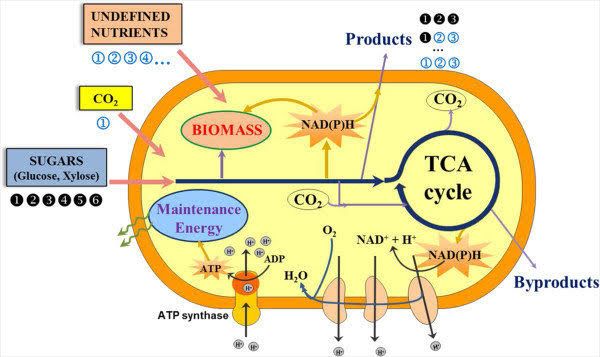
Metabolic pathways are interconnected series of biochemical reactions occurring within a cell, vital for sustaining life. These pathways meticulously manage the flow of energy and matter, transforming nutrients into energy, building blocks, and waste products. They are broadly categorized into catabolic pathways, which break down complex molecules to release energy, and anabolic pathways, which synthesize complex molecules, consuming energy.
The Embden-Meyerhof-Parnas (EMP) Pathway – Glycolysis
The Embden-Meyerhof-Parnas (EMP) pathway, commonly known as glycolysis, is a universal and ancient metabolic route for glucose catabolism, found in almost all living organisms. It serves as the primary pathway for converting glucose into pyruvate, generating a small amount of ATP and NADH in the process.
Purpose: To break down one molecule of glucose (a 6-carbon sugar) into two molecules of pyruvate (a 3-carbon compound), producing ATP and NADH.
Location: Cytoplasm of the cell.
Overall Reaction (simplified): Glucose + 2 ADP + 2 Pi + 2 NAD⁺ → 2 Pyruvate + 2 ATP + 2 NADH + 2 H⁺ + 2 H₂O
Step-by-Step Breakdown:
The EMP pathway can be divided into two main phases:
Phase 1: Energy-Investment Phase (Steps 1-5) This phase consumes two molecules of ATP to phosphorylate glucose, preparing it for cleavage.
- Step 1: Phosphorylation of Glucose. Glucose is phosphorylated by ATP to form Glucose-6-phosphate. This reaction is irreversible and catalyzed by Hexokinase (or Glucokinase in liver).
- Step 2: Isomerization. Glucose-6-phosphate is reversibly isomerized to Fructose-6-phosphate by Phosphoglucose Isomerase.
- Step 3: Second Phosphorylation. Fructose-6-phosphate is phosphorylated by another ATP molecule to yield Fructose-1,6-bisphosphate. This is a key regulatory step, catalyzed by Phosphofructokinase-1 (PFK-1).
- Step 4: Cleavage. Fructose-1,6-bisphosphate is cleaved by Aldolase into two 3-carbon sugars: Dihydroxyacetone phosphate (DHAP) and Glyceraldehyde-3-phosphate (G3P).
- Step 5: Isomerization. DHAP is reversibly isomerized to G3P by Triose Phosphate Isomerase. At this point, one glucose molecule has been converted into two molecules of G3P.
Phase 2: Energy-Payoff Phase (Steps 6-10) This phase generates ATP and NADH through the oxidation of G3P. Since there are two G3P molecules per glucose, these steps occur twice.
- Step 6: Oxidation and Phosphorylation. Glyceraldehyde-3-phosphate is oxidized and simultaneously phosphorylated to 1,3-Bisphosphoglycerate. This reaction, catalyzed by Glyceraldehyde-3-phosphate Dehydrogenase, generates one molecule of NADH per G3P.
- Step 7: Substrate-Level Phosphorylation. 1,3-Bisphosphoglycerate transfers a phosphate group to ADP, forming ATP and 3-Phosphoglycerate. This ATP generation is a substrate-level phosphorylation, catalyzed by Phosphoglycerate Kinase.
- Step 8: Phosphate Group Shift. The phosphate group on 3-Phosphoglycerate is moved from the third to the second carbon, forming 2-Phosphoglycerate, catalyzed by Phosphoglycerate Mutase.
- Step 9: Dehydration. 2-Phosphoglycerate loses a molecule of water, forming Phosphoenolpyruvate (PEP). This reaction is catalyzed by Enolase.
- Step 10: Second Substrate-Level Phosphorylation. PEP transfers its phosphate group to ADP, forming ATP and Pyruvate. This second ATP generation via substrate-level phosphorylation is catalyzed by Pyruvate Kinase.
Net Yield (per glucose molecule): 2 ATP (net gain), 2 NADH, and 2 Pyruvate.
Significance: Glycolysis is an amphibolic pathway, meaning it serves both catabolic and anabolic functions. Pyruvate can be further metabolized under aerobic conditions to acetyl-CoA (entering the citric acid cycle and oxidative phosphorylation) or under anaerobic conditions to lactate or ethanol via fermentation.
The Hexose Monophosphate (HMP) Pathway – Pentose Phosphate Pathway (PPP)
The Hexose Monophosphate (HMP) pathway, also known as the Pentose Phosphate Pathway (PPP), operates in parallel with glycolysis. Its primary roles are to generate NADPH and to produce pentose sugars (5-carbon sugars) essential for nucleotide synthesis. Unlike EMP, the HMP pathway does not directly produce ATP.
Purpose: To produce NADPH for reductive biosynthesis and protect against oxidative stress, and to provide ribose-5-phosphate for nucleotide and nucleic acid synthesis.
Location: Cytoplasm of the cell.
Overall Reaction (for complete oxidation of glucose-6-phosphate): Glucose-6-Phosphate + 12 NADP⁺ + 7 H₂O → 6 CO₂ + 12 NADPH + 12 H⁺ + Pi
Step-by-Step Breakdown:
The HMP pathway is divided into two phases:
Phase 1: Oxidative Phase (Irreversible) This phase generates NADPH and ribulose-5-phosphate, leading to the release of CO₂.
- Step 1: Dehydrogenation. Glucose-6-phosphate is oxidized to 6-Phosphogluconolactone by Glucose-6-phosphate Dehydrogenase (G6PD). During this step, the first molecule of NADPH is generated from NADP⁺.
- Step 2: Hydrolysis. 6-Phosphogluconolactone is hydrolyzed to 6-Phosphogluconate by Lactonase.
- Step 3: Oxidative Decarboxylation. 6-Phosphogluconate is oxidatively decarboxylated to Ribulose-5-phosphate. This reaction, catalyzed by 6-Phosphogluconate Dehydrogenase, generates the second molecule of NADPH and releases a molecule of CO₂.
Phase 2: Non-Oxidative Phase (Reversible) This phase interconverts various sugar phosphates, allowing the pathway to adapt to cellular needs for either NADPH or pentose sugars.
- Step 4: Isomerization/Epimerization. Ribulose-5-phosphate can be isomerized to Ribose-5-phosphate (by Ribose-5-phosphate Isomerase, used for nucleotide synthesis) or epimerized to Xylulose-5-phosphate (by Ribulose-5-phosphate Epimerase).
- Step 5: Transketolase Reactions. Transketolase transfers a two-carbon unit from a ketose sugar to an aldose sugar. For example, Xylulose-5-phosphate + Ribose-5-phosphate → Glyceraldehyde-3-phosphate + Sedoheptulose-7-phosphate.
- Step 6: Transaldolase Reactions. Transaldolase transfers a three-carbon unit from a ketose sugar to an aldose sugar. For example, Sedoheptulose-7-phosphate + Glyceraldehyde-3-phosphate → Erythrose-4-phosphate + Fructose-6-phosphate.
- Step 7: Further Transketolase Reactions. Erythrose-4-phosphate + Xylulose-5-phosphate → Fructose-6-phosphate + Glyceraldehyde-3-phosphate.
Key Products: NADPH (crucial for fatty acid and steroid synthesis, detoxification of reactive oxygen species) and Ribose-5-phosphate (a precursor for DNA, RNA, ATP, and coenzymes). The Fructose-6-phosphate and Glyceraldehyde-3-phosphate produced in the non-oxidative phase can re-enter the glycolytic pathway.
Significance: The HMP pathway is vital for anabolic processes, providing the necessary reducing power (NADPH) and precursors (ribose-5-phosphate) that are not directly supplied by glycolysis.
The Entner-Doudoroff (ED) Pathway
The Entner-Doudoroff (ED) pathway is an alternative catabolic route for glucose, distinct from glycolysis, primarily found in certain aerobic bacteria, notably many Gram-negative species like Pseudomonas and Azotobacter, and some Archaea. It is less common than the EMP pathway but is crucial for organisms that lack key enzymes of glycolysis.
Purpose: To catabolize glucose to pyruvate, generating ATP, NADH, and NADPH.
Location: Cytoplasm of bacterial cells.
Overall Reaction (simplified from glucose): Glucose + ATP + NAD⁺ + NADP⁺ → 2 Pyruvate + 1 ATP (net) + 1 NADH + 1 NADPH
Step-by-Step Breakdown:
The ED pathway shares its initial step with the EMP pathway but then diverges sharply.
- Step 1: Phosphorylation of Glucose. Glucose is phosphorylated by ATP to form Glucose-6-phosphate, catalyzed by Hexokinase.
- Step 2: Dehydrogenation. Glucose-6-phosphate is oxidized to 6-Phosphogluconate by Glucose-6-phosphate Dehydrogenase, reducing NADP⁺ to NADPH. This is similar to the first step of the HMP oxidative phase.
- Step 3: Dehydration. This is a unique and defining step of the ED pathway. 6-Phosphogluconate is dehydrated to form 2-Keto-3-deoxy-6-phosphogluconate (KDPG) by 6-Phosphogluconate Dehydratase.
- Step 4: KDPG Cleavage. KDPG is then cleaved by KDPG Aldolase into two molecules: Pyruvate and Glyceraldehyde-3-phosphate (G3P).
- Step 5: G3P to Pyruvate. The Glyceraldehyde-3-phosphate then proceeds through the second half of the EMP pathway (steps 6-10), generating one molecule of NADH and one molecule of ATP (via substrate-level phosphorylation) and ultimately yielding another molecule of Pyruvate.
Net Yield (per glucose molecule): 1 ATP (net gain, from 2 produced in EMP half-pathway, 1 consumed initially), 1 NADH, 1 NADPH, and 2 Pyruvate.
Significance: The ED pathway provides a means for glucose catabolism for organisms that lack a complete set of glycolytic enzymes, particularly PFK-1. While it yields less ATP than EMP (1 net ATP vs. 2 net ATP), it produces NADPH, which is valuable for reductive biosynthesis.
The Phosphoketolase Pathway (PKP)
The Phosphoketolase Pathway, also known as the Pentose Heterofermentative Pathway, is characteristic of heterofermentative lactic acid bacteria (e.g., Leuconostoc, Lactobacillus species) and bifidobacteria. It’s unique because it uses a key enzyme, phosphoketolase, to split a C5 or C6 sugar phosphate, leading to diverse fermentation products.
Purpose: To catabolize sugars (glucose, pentoses) into various end products like lactic acid, ethanol/acetate, and CO₂, while generating ATP and NADPH.
Location: Cytoplasm of bacterial cells.
Overall Reaction (simplified from glucose): Glucose + ADP + Pi + NAD⁺ + NADP⁺ → Lactic Acid + Ethanol/Acetate + CO₂ + ATP (net) + NADH + NADPH
Step-by-Step Breakdown (for Glucose):
The PKP starts similarly to the oxidative phase of the HMP pathway.
- Step 1: Glucose to Xylulose-5-phosphate. Glucose is first converted to Glucose-6-phosphate, then oxidized (producing NADPH) and decarboxylated (producing CO₂) to Ribulose-5-phosphate, which is then epimerized to Xylulose-5-phosphate. This part is identical to the initial steps of the HMP oxidative phase.
- Step 2: Phosphoketolase Cleavage. This is the defining step. Xylulose-5-phosphate is cleaved by the enzyme Phosphoketolase into two molecules: Glyceraldehyde-3-phosphate (G3P) and Acetyl Phosphate. This step does not require ATP and is irreversible.
- Step 3: G3P to Lactic Acid. The Glyceraldehyde-3-phosphate proceeds through the latter half of the EMP pathway (steps 6-10). It is oxidized (producing NADH) and phosphorylated (producing ATP via substrate-level phosphorylation) to pyruvate. Pyruvate is then reduced to Lactic Acid by Lactate Dehydrogenase, regenerating NAD⁺.
- Step 4: Acetyl Phosphate Metabolism. Acetyl Phosphate can be converted to different end products:
- To Acetate: If the cell needs more ATP, Acetyl Phosphate can transfer its phosphate to ADP, forming ATP and Acetate, catalyzed by Acetate Kinase. This is an additional ATP gain.
- To Ethanol: If the cell needs to regenerate NAD⁺ and/or energy is not limiting, Acetyl Phosphate can be reduced to Acetyl-CoA, then to Acetaldehyde, and finally to Ethanol, consumes NADH.
Net Yield (per glucose molecule, assuming ethanol production): 1 ATP (net, from G3P part), 1 Lactic Acid, 1 Ethanol, 1 CO₂, 1 NADPH, 1 NADH. The exact yields vary based on whether acetate or ethanol is produced.
Significance: The PKP is responsible for heterolactic fermentation, producing a mix of organic acids and alcohols. Its industrial relevance is considerable, particularly in the production of fermented foods like sauerkraut, yogurt, and sourdough, where the distinct flavor profiles are attributed to these varied end products.
Combination of Pathways in Microorganisms
Microorganisms exhibit remarkable metabolic flexibility, often possessing and differentially regulating multiple metabolic pathways. This allows them to adapt to diverse nutrient sources and environmental conditions, optimizing energy harvest and precursor synthesis.
- Escherichia coli (A Facultative Anaerobe):
- Dominant Pathway: E. coli primarily utilizes the EMP pathway (glycolysis) for glucose catabolism, especially under anaerobic or microaerobic conditions where it leads to mixed-acid fermentation products.
- Complementary Pathway: It also possesses a highly active HMP pathway. This pathway is crucial for providing NADPH (for numerous anabolic reactions, e.g., fatty acid synthesis, detoxification) and Ribose-5-phosphate (for nucleotide synthesis). The interconversion steps of the HMP pathway also allow for the recycling of carbon back into glycolysis.
- Conditional Pathway: While not its primary glucose pathway, E. coli also contains the genes for the ED pathway and can express it under specific conditions or when metabolizing certain non-glucose substrates (e.g., gluconate). This demonstrates its metabolic versatility.
- Pseudomonas aeruginosa (An Obligate Aerobe):
- Dominant Pathway: Unlike most organisms, Pseudomonas aeruginosa lacks key glycolytic enzymes such as Phosphofructokinase-1. Consequently, it relies almost exclusively on the Entner-Doudoroff (ED) pathway for glucose catabolism. This is a classic example of an organism for which ED is the primary glucose breakdown route.
- Complementary Pathway: It also utilizes the HMP pathway for NADPH generation and pentose synthesis, similar to other organisms. This combination allows efficient aerobic respiration.
- Zymomonas mobilis (Ethanol Producer):
- Dominant Pathway: Zymomonas mobilis is renowned for its highly efficient ethanol production and uses the Entner-Doudoroff (ED) pathway almost exclusively for glucose fermentation. It lacks a complete EMP pathway. This unique metabolic setup contributes to its high fermentation rates and makes it a significant microorganism in industrial ethanol production.
- Heterofermentative Lactic Acid Bacteria (Leuconostoc mesenteroides, Lactobacillus brevis):
- Dominant Pathway: These bacteria characteristically employ the Phosphoketolase Pathway for glucose metabolism. They often lack key EMP enzymes (e.g., Aldolase), preventing them from performing glycolysis fully.
- Product Diversity: This pathway allows them to produce a diverse range of fermentation products from glucose, including lactic acid, ethanol, and carbon dioxide, which are essential for flavor development in fermented foods. For example, Leuconostoc mesenteroides is crucial in sauerkraut production due to its mixed acid and alcohol fermentation.
Conclusion
The diversity of metabolic pathways for glucose catabolism – the ancient EMP pathway, the versatile HMP pathway, the specialized ED pathway, and the unique Phosphoketolase pathway – underscores the incredible adaptability of life at the cellular level. Microorganisms, in particular, serve as prime examples of how the strategic combination and regulation of these pathways enable survival in varied environments and the exploitation of diverse nutrient sources. Understanding these intricate biochemical networks is not only fundamental to molecular biology but also holds profound implications for biotechnology, medicine, and industrial processes leveraging microbial metabolism.